Chorioamnionitis: Causes, Symptoms & Treatment
Know the signs of chorioamnionitis, its causes, diagnosis, and treatment to better understand this pregnancy-related infection.





Medically Reviewed By
Dr. Rima Sonpal
(Gynecologist/Obstetrician)

This health content has been medically reviewed by qualified experts and follows the FirstCry Parenting editorial policy to ensure accuracy and reliability.
Chorioamnionitis or intra-amniotic infection (IAI) is an infection within the womb which, with reference to pregnancy, means infection in the membranes or the amniotic fluid. It is a serious condition in pregnant women but is usually not life-threatening when diagnosed and treated on time. If left untreated, however, the infection can lead to several complications for both the expectant mother and the foetus.
The complications can range from the mother giving birth to a premature baby to heavy bleeding after delivery, along with health issues in the baby such as infections, breathing difficulties, or seizures. Early diagnosis and timely medical care play a crucial role in reducing these risks and ensuring the safety of both mother and child.
In this article, we will explore everything you need to know about chorioamnionitis in pregnancy and how it can be managed effectively.
What Is Chorioamnionitis?
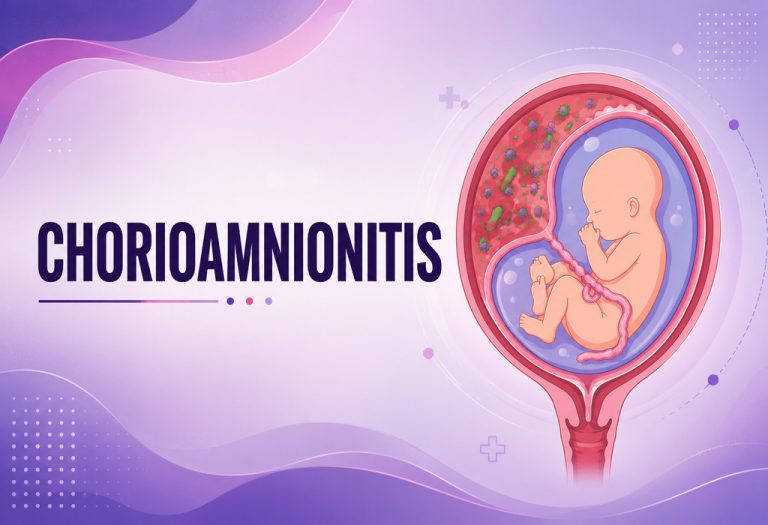
Chorioamnionitis is an inflammation of the foetal membrane (Amnion and Chorion) due to bacterial infection. It affects pregnant women. Amnion and Chorio infection occurs when bacteria travel from the vagina to the uterus especially after the fetal membranes have ruptured and during labour. This can lead to infections in the mother as well as the foetus (1).
How Common it Is?
Chorioamnionitis is considered a relatively common pregnancy-related infection, especially in prolonged or complicated labours. It occurs in about 1-5% of term pregnancies and is more frequently seen in preterm births (2) (3). The risk increases when the water breaks long before delivery, during long labour, or when multiple vaginal examinations are performed during childbirth.
Causes of Chorioamnionitis
IAI during pregnancy is caused due to various reasons. Some of the reasons are given below (4):
- E-Coli, Group B Streptococci, and Anaerobic bacteria are common causes of Chorioamnionitis during pregnancy (3).
- The bacteria travel from the rectum, anus or vagina to the uterus where the foetus is. This infects the membrane and the amniotic fluid causing chorioamnionitis.
- Prolong hours of labour can also cause infection. The bacteria present in the vagina goes up into the uterus and causes the infection.
- The doctor examining the vagina during the last month of pregnancy to check the position of the baby can also result in IAI.
Who Is at the Risk of Maternal Chorioamnionitis?
Pregnant women are most at the risk of maternal chorioamnionitis are (5):
- Women who have never given birth before.
- Women who experience long hours of labour.
- Women who ruptured their membranes when the baby is at a premature stage.
- Women who have had a previous history of Chorioamnionitis.
- Women who have weak immunity due to poor nutrition and stress.
- Women who have undergone multiple digital vaginal examinations under unhygienic conditions.
- When the amniotic fluid is stained with meconium.
- When they have urogenital or cervical infections.
- Women who have intrauterine pressure catheters.
- Women who have sexually transmitted infection.
- Women who take alcohol or tobacco.
Chorioamnionitis Symptoms

Although the symptoms of chorioamnionitis may not always be visible, some may have the following signs (2):
- Persistent high fever for more than an hour
- The mother’s heartbeat may be rapid along with the foetus’
- Sweating
- Vaginal discharge with a foul smell
- Pain in the lower abdomen
- Tender and painful uterus
Diagnosis
The diagnosis for IAI is essentially done by two methods (3) (6):
1. Clinical Diagnosis
- Having a fever (more than 100.4).
- Uterine tenderness.
- Checking for abnormal heartbeat (Tachycardia) of the expectant mother and the foetus.
- Foul smelling vaginal discharge.
Along with the presence of fever, any other two clinical symptoms are essential for diagnosis.
2. Pathological Diagnosis
- WBC count of >12000/mm3 or >15000/mm3 is a sign of IAI. However, this alone in the absence of other symptoms could be due to several other conditions like labour and steroid use.
- Blood tests check for high levels of C-Reactive protein (CRP), Lipopolysaccharide binding protein (LBP), soluble intercellular adhesion molecule 1 (SICAM1) and Interleukin 6.
- Amniotic fluid is taken and cultured to check for any sign of infection.
- Histology of the placenta and umbilical cord are done to check for any changes in the chorion of the placenta and the amnionic membrane.
Complications Associated With Chorioamnionitis
Chorioamnionitis can cause a lot of complications to the mother, the foetus and the newborn. In case of severe infection, it can also prove to be fatal. Some of the complications of IAI are (3) (6):
- Premature rupture of the amniotic sac
- High chances of caesarean birth
- Infection in the bloodstream of the mother
- Excessive bleeding after delivery due to haemorrhage
- Collection of pus around the uterus
- Clotting of blood in the legs of the mother
- The oxygen levels in the bloodstream of the foetus decrease
- Due to the chorio infection on the newborn, he may suffer from seizures
- Infection in the foetus may result in pneumonia and meningitis in the newborn
- The baby may be affected by lifelong disability due to disorders like Cerebral Palsy
Complications to the Mother
- Caesarean delivery
- Pre-term delivery
- Risk of a miscarriage
- Stillborn baby
- Heavy bleeding after delivery
- There is an increase in the chance of contracting endometritis, wound infection, pelvic abscess, bacteremia and postpartum haemorrhage.
- In rare cases, the woman may suffer septic shock, adult respiratory distress syndrome and in extreme cases may also die.
Complications to the Newborn
- The complications of Chorio infection on a newborn may show adverse effects at birth or shortly after birth. These dreadful results may range from asphyxia, neonatal sepsis, septic shock, pneumonia, intraventricular haemorrhage, cerebral white matter damage, lifelong disabilities, cerebral palsy (7).
- In some cases, it can also cause prenatal death.
- Pre-term babies may even experience respiratory distress.
How Does Chorioamnionitis Affect Labour and Delivery?
Chorioamnionitis can affect labour as well as the delivery of the baby. Below are some of the chorioamnionitis effects on the baby:
- Chorioamnionitis causes infection not just to the expectant mother but to the foetus as well. In order to stop the infection from harming the baby, doctors advise C-section.
- The foetal heart rate increases due to the stress caused by the infection.
- Oxygen deficiency to the foetus during labour may cause foetal distress.
- Babies born to mothers suffering from IAI have a chance of getting pneumonia, meningitis or bacteremia.
- In some cases, Chorioamnionitis on baby can prove to be fatal.
Chorioamnionitis Treatment
Immediate treatment of the infection in the mother can reduce the chances of complications and the baby from getting infected. Treatment includes –
1. Antibiotics
Antibiotic interferes with the bacterial cell wall, making it difficult to multiply (3) (8).
- Ampicillin: Most doctors prescribe this medication to patients suffering from chorioamnionitis (4).
- Clindamycin/Cephalosporin: There are cases where the patient is allergic to penicillin. Here, Clindamycin/Cephalosporin are given which also bactericidal properties.
- Cefotaxime: The WHO has mentioned this in their list of essential medicines because of it is highly effective. However, some patients may experience a common side effect which is swelling at the injection site. It is not recommended for patients allergic to penicillin.
- Erythromycin: It is sometimes used if the patient is allergic to penicillin. However, some doctors are sceptical of its performance.
2. Surgery
- Caesarean can be an option for quick delivery.
- Surgeries are conducted in case of brain abscess, subcutaneous abscess or bone/joint infections.
3. Supportive Care (In Case of Neonatal Sepsis)
- To be kept in warmth in the NICU and monitored properly.
- To be kept in ventilation.
- To be treated for Hypovolaemia (decreased volume of circulating blood in the body), metabolic acidosis (a condition wherein the kidneys do not remove enough acid from the body) and respiratory distress.
- Glucose homeostasis (blood sugar regulation).
- Treating thrombocytopenia (deficiency of blood platelets) or coagulopathy.
Chorioamnionitis Prevention
Chorioamnionitis during pregnancy can prove to be dangerous to the mother as well as the baby. Therefore doctors take every safety measure to make sure that the infection does not begin in the very first place. This can be done through several ways (5).
- Expectant mothers must make sure to attend prenatal checkups with her doctor regularly.
- In between the 35th week and the 37th week of pregnancy, the doctor will perform a test called Group B Strep test. This is done to rule out any infection. In case the test report comes positive, then antibiotics will be administered during labour through IV. This will help in protecting the baby from getting infected.
- For women who are at great risk of pre-term delivery, the doctor will conduct a test known as Bacterial Vaginosis at the end of the second trimester. If the test result is positive, the assigned medical professional will start administering antibiotics to prevent the infection from developing and spreading out.
- During labour, doctors should restrict vaginal examinations to the least. By this way, the risk of rupturing the membrane will be less.
- Internal monitoring should only be an option under compelling circumstances like foetal distress or Tachycardia.
Acute Chorioamnionitis Prognosis
The severity of the infection and the pregnancy period in which it was first diagnosed plays a vital role in telling us the likely course of the disease. The complications will be less if the infection is contracted at the later stages of pregnancy than at the early stages. However with the advent of good facilities and professionals in the field of medicine, the future of treatment for Chorioamnionitis, looks bright (9).
- Unlike earlier times, future of the medicine looks good. Therefore, it is hard to find lifelong or long-term effects of the disease either in the mother or the baby.
- There is a risk of complications only in premature births. Nevertheless, to be on the safer side, even full-term babies born to chorioamnionitis infected mothers are monitored carefully.
- In some cases, it is seen that chorioamnionitis affects the expectant mother even in her later pregnancies too if she was infected in her first pregnancy.
- The women who had been affected by the infection earlier have no fertility issues later. They can easily conceive and give birth to more children later. However, the infection should not be left untreated for long.
Things to Remember
Medical science has come a long way in treating infections like chorioamnionitis and getting positive results in the process. However, it should be remembered that it is a dreaded condition which if left untreated could prove to be fatal to the mother as well as to the baby. Immediately consult your Gynaecologist/obstetrician in case you experience any of the following symptoms during pregnancy (5).
- You notice amniotic fluid leaking. In case you are unsure whether it is amniotic fluid or some vaginal discharge, call someone experienced to check or immediately consult your doctor.
- Your vaginal discharge has a very foul smell.
- Your urine gives out the ammonia-like odour.
- Pain in your lower abdomen.
FAQs
1. Can a woman have a healthy pregnancy after chorioamnionitis?
Yes, many women go on to have healthy pregnancies after recovering from chorioamnionitis. Proper prenatal care, regular health check-ups, and early treatment of infections can help reduce the risk in future pregnancies.
2. Can chorioamnionitis develop without symptoms?
Yes, in some cases the infection may develop with very mild or unnoticed symptoms, especially in the early stages. This is why regular prenatal check-ups and monitoring during labour are important for early detection.
3. Can chorioamnionitis lead to a Caesarean delivery?
Yes, in some cases doctors may recommend a Caesarean section if the infection causes complications or if labour is not progressing safely for the mother or the baby.
Chorioamnionitis is quite common during pregnancy. Although not fatal in most cases, it could lead to serious consequences in some. Women with the said condition could lose their baby or even if their baby survived, it could suffer congenital disabilities and disorders. Therefore, being fully aware of the symptoms and consulting your doctor if you feel a hitch can be your first step towards having a good pregnancy and a healthy full term baby.
Also Read:
Leaking Amniotic Fluid
Amniotic Fluid Embolism (AFE)
How to Deal With Amniotic Band Syndrome (ABS)
How to Increase and Decrease Amniotic Fluid during Pregnancy Naturally?
Was This Article Helpful?
Parenting is a huge responsibility, for you as a caregiver, but also for us as a parenting content platform. We understand that and take our responsibility of creating credible content seriously. FirstCry Parenting articles are written and published only after extensive research using factually sound references to deliver quality content that is accurate, validated by experts, and completely reliable. To understand how we go about creating content that is credible, read our editorial policy here.
1. Cleveland Clinic – Chorioamnionitis
2. Tommy’s – Chorioamnionitis: causes, symptoms and treatment
3. Clinical Microbiology and Infection – Chorioamnionitis: from pathogenesis to treatment
4. National Library of Medicine – Chorioamnionitis
5. Stanford Medicine Children’s Health – Chorioamnionitis
8. Frontiers – Clinical chorioamnionitis: where do we stand now?
- Author
- Expert Reviewer

Related Articles
-

Breast Pain During Pregnancy: Causes, Effects & Remedies
-
Mumps in Pregnancy - Causes, Symptoms and Vaccination
-
How Can You Avoid a Miscarriage?
-
Back Pain During Pregnancy – Types, Reasons & Remedies
-
Second Hand Smoking in Pregnancy - Risks & Tips to Stay Safe
-
Facial in Pregnancy - Safe Types and What to Avoid