

Calming Corner: Benefits, Ideas, and How to Create One for Kids
Try simple calm down corner ideas to help kids feel safe, relaxed, and ready to handle emotions.




In this Article
- What Is a Calming Corner?
- Benefits of a Calming Corner for Children
- When Can a Child Start Using a Calming Corner?
- How to Create a Calming Corner at Home?
- What to Put in a Child’s Calming Corner?
- Calming Corner Ideas
- Rules for Using a Calming Corner
- Mistakes to Avoid When Creating a Calming Corner
- FAQs
View More
Every child has those moments when a small disappointment turns into a big meltdown, a noisy room becomes too much, or they simply need some time alone. Instead of expecting children to manage these feelings on their own, a calming corner gives them a space to slow down and feel more settled. It can be as simple as a cosy corner with a few comforting items, but when thoughtfully put together, it can become a useful part of a child’s everyday routine.
So, what exactly makes a calming corner helpful, what should you put in one, and how can you create a space your child feels comfortable using? Read on to learn how to create a calm-down corner for kids that actually works.
What Is a Calming Corner?
A calming corner is a quiet, comfortable space where children can go when they feel overwhelmed, upset, frustrated, or simply need some time to themselves. It gives them a safe place to pause, settle their emotions, and practise simple calming strategies (1).
Unlike a punishment or time-out space, a calming corner is designed to help children regulate their feelings and return to the activity when they feel ready. It might include soft cushions, books, sensory toys, stuffed animals, breathing cards, or other familiar items that help the child feel comfortable (2).
Benefits of a Calming Corner for Children
A calming corner can become a helpful part of a child’s routine in several ways. Here are some key benefits to consider (3) (4):
- Helps manage emotions: Gives children a quiet place to pause, recognise their feelings, and calm themselves when they feel overwhelmed.
- Encourages self-regulation: Helps children learn simple ways to cope with frustration, stress, and sensory overload.
- Creates a sense of security: A familiar, comfortable space can help children feel safe and supported when they need time alone.
When Can a Child Start Using a Calming Corner?
A child can generally start using a calming corner around age 2-3, when they can begin understanding simple emotions and following basic instructions. The space should be adapted to their developmental level, with adult guidance for younger children.
How to Create a Calming Corner at Home?
Wondering how to make a calming corner your child will actually want to use? Here are some simple ways to get started (5).
- Choose a Quiet Spot: Pick a peaceful area of your home that is away from busy walkways, loud noises, and frequent distractions. It should be easy for your child to access whenever they need a quiet break.
- Make It Comfortable: Add a soft mat, cushion, small chair, or blanket to make the corner feel cosy. Choose items that help your child feel relaxed and comfortable.
- Add Calming Items: Include a few simple items your child enjoys, such as storybooks, stuffed toys, sensory toys, colouring materials, or breathing cards. Avoid filling the space with too many things, as this can become distracting.
- Make It Familiar and Inviting: Let your child help choose some of the items or decorate the space. When children have a say in how their calming corner looks, they may feel more comfortable using it.
- Teach Your Child How to Use It: Explain that the calming corner is a safe place to take a break when they feel overwhelmed, upset, or need some quiet time. Show them how to use the items, practice calming techniques together, and explain that they can return to their activities when they feel ready.
What to Put in a Child’s Calming Corner?
To make the space comfortable and useful, include a mix of familiar items that your child can turn to when they need a quiet break. You can start with the following (2):
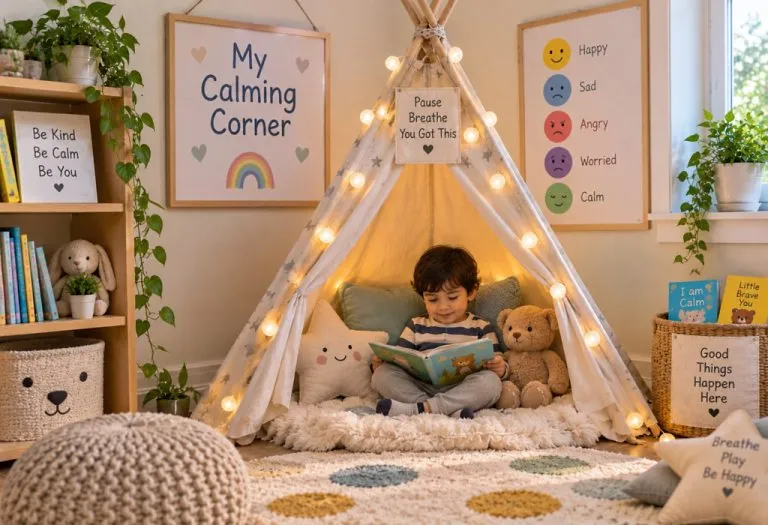
- Soft cushions or pillows: Provide a comfortable place for your child to sit, rest, or curl up.
- Favourite stuffed animals: Familiar toys can offer comfort and help your child feel more secure.
- Storybooks: Simple, calming books can give children something quiet to focus on while they settle down.
- Sensory toys: Items such as stress balls, fidget toys, or textured objects can provide a gentle sensory outlet.
- Breathing cards: Simple visual prompts can remind children to take slow, deep breaths when they feel overwhelmed.
- Colouring materials: Crayons, colouring books, and drawing paper can give children a quiet activity to express themselves.
- Calming music: Soft music or familiar sounds can help create a peaceful atmosphere when your child needs to unwind.
- A feelings chart: Pictures or simple emotion cards can help children identify and communicate how they are feeling.
- A cosy blanket: A soft, familiar blanket can make the space feel more comfortable and reassuring.
Calming Corner Ideas
There are plenty of simple ways to create a peaceful space at home. Here are a few cool down corner ideas you can try, depending on the space you have:
1. Cosy Tent Corner
Set up a small play tent with soft cushions, blankets, and a few favourite books to create a snug space where your child can retreat. Keep the entrance open and make sure there is enough room for your child to sit comfortably without feeling cramped.
2. Canopy Nook
Hang a lightweight canopy from the ceiling or use a freestanding frame to create a gentle sense of privacy. Add a floor cushion, soft toys, and a small basket for books or sensory items. Choose breathable, lightweight fabric and keep it securely fitted.
3. Window-Side Corner
Use a quiet spot beside a window and add a small rug, floor cushion, and a basket of calming activities. Natural light can make the space feel open and pleasant. If the window receives strong sunlight, add a curtain or blind so the area stays comfortable.
4. Cushion-Filled Floor Space
Keep things simple with a soft floor mat, oversized cushions, and a blanket. This works especially well when you have limited space. Add one or two favourite items rather than filling the area with toys, which can make the corner feel busy.
5. Bookshelf Corner
Place a low bookshelf beside a comfortable chair or floor cushion. Keep a small selection of favourite books within easy reach, along with a few quiet activities such as colouring sheets or puzzles. A low shelf also allows children to choose what they want without needing help.
6. Canopy Chair Corner
A hanging chair or a small indoor cocoon chair can give your child a defined space to sit quietly. Add a soft cushion and a few comforting items nearby. Make sure the chair is properly installed and suitable for your child’s age and weight.
7. Under-the-Stairs Nook
If you have unused space under the stairs, turn it into a small retreat with a soft rug, cushions, books, and gentle lighting. Keep the area well ventilated and free from sharp edges or items that could become tripping hazards. A small basket can help keep the space tidy.
Rules for Using a Calming Corner
To help your child get the most from their calming corner, keep its purpose clear and the expectations simple. A few helpful calm corner rules to introduce are:
- Explain that the corner is a place to relax, take a break, and manage strong feelings, not a place for punishment.
- Encourage quiet activities and gentle behaviour so the corner remains a comfortable space for everyone.
- Do not allow tablets, video games, or other highly stimulating electronics in the corner (2).
- Let your child return to their usual activity once they feel calmer rather than setting a strict time limit.
Mistakes to Avoid When Creating a Calming Corner
A few common mistakes can make a calming corner less useful, so keep these simple points in mind while setting one up.
- Avoid sending your child there as a consequence for misbehaviour. It should feel like a safe place to take a break.
- Too many toys, colours, or activities can make the space distracting. Choose a small number of items your child finds comforting.
- Avoid placing the corner in a high-traffic or noisy area where your child may struggle to settle.
- Give your child time to become familiar with the space. Encourage its use without making it feel like an obligation.
FAQs
1. What if my child refuses to use the calming corner?
Avoid forcing your child to use it. Instead, introduce the space during calm moments and explain that they can use it whenever they need a quiet break.
2. Can siblings share the same calming corner?
Yes. Siblings can share a calming corner as long as they understand the rules and have enough space to use it peacefully when needed.
3. How do you teach a child to use a calming corner?
Show your child how to use the space when they are calm. Practice simple techniques, such as taking deep breaths or choosing a quiet activity, so they know what to do when emotions become intense.
4. Can a calming corner replace talking about emotions?
No. It is a tool for helping children calm down first. Once they feel settled, talking about their emotions can help them understand what triggered their feelings.
The best calming corner is one that fits naturally into your child’s everyday life. Let them explore the space, notice what they enjoy, and make changes as they grow. It does not have to be perfect. It just needs to feel like a place where they can pause, breathe, and take a moment for themselves.
Also Read:
Meditation for Kids
Benefits of Mindfulness for Children
Tips to Calm Down a Hyper Toddler
Was This Article Helpful?
1. Nebraska Children and Families Foundation – Cozy, Calming Corners
3. Action for Healthy Kids – Calm Down Corner
4. Children’s Home Society of California – Aug 2025 Positive Outcomes in Creating a Calming Corner
5. Brown University Health – Creating a Calming Corner: A Simple Way to Help Kids Feel Better
- Author


Related Articles
-

Is Adding Rice Cereal to Your Baby's Bottle Safe?
-
Baby Development Milestone Chart - 1 to 12 Months
-

Using Evening Primrose Oil for Fertility
-

Dog Allergies in Babies - Causes, Symptoms and Prevention
-

Herpangina in Children - Causes, Symptoms and Treatment
-
9 Important Things To Check When Hiring a Maid, If You Have a Baby At Home


.svg)