
Blood Test in Pregnancy – Types, Timing, and What They Reveal





Medically Reviewed By
Dr. Deepinder Kaur
(Gynaecologist)

This content has been reviewed by a qualified expert and follows the FirstCry Parenting editorial policy to ensure accuracy and reliability.
The moment you see those two lines on the pregnancy test, your entire life changes. According to the American College of Obstetricians & Gynecologists (ACOG), as pregnancy progresses, your body goes through several physical and hormonal changes, so regular prenatal check-ups become an important part of ensuring that you stay on track and find any health issue sooner rather than later (1). Blood tests during pregnancy are among the routine checks your doctor may recommend to assess your overall health and look for any underlying conditions that could affect you or your baby. Depending on your pregnancy’s requirements and medical history, recommendations for blood tests for a pregnant woman may include checking your blood group, haemoglobin levels, immunity and certain infections. This article explains the common blood tests, when they are performed, and what their results may reveal.
Why Do You Need to Do Plenty of Blood Tests During Pregnancy?
It can be overwhelming to take so many tests during pregnancy, especially if you are going through morning sickness or are very tired, but they are important. Getting them done is a part of the routine checkup. There are many reasons why you will be asked to take blood tests during your pregnancy. The important ones are (2):
- A blood test is done to confirm your blood group. It is also done to identify any infections or diseases you may have. The test also indicates if the foetus is at risk of any abnormalities.
- It throws light on your overall health and whether there is a possibility of any issues later during your pregnancy.
- Doctors check if you are Rh-positive or negative through a blood test.
What Details Do Pregnancy Blood Test Results Show?
All blood tests are done to determine whether the foetus is growing well and is healthy. Blood tests during pregnancy reveal if there are any problems or complications at present or if they could arise as the pregnancy progresses. Some important results that the first, second and third trimester screening blood tests confirm are:
- The blood group and type of the mother.
- If there are any diseases like Rubella, Syphilis, or Hepatitis B affecting the mother.
- If she has gestational diabetes or is suffering from any other infectious illness.
- If the foetus is healthy and growing well without any birth defects.
Which Blood Test Will the Doctor Prescribe in First Appointment?

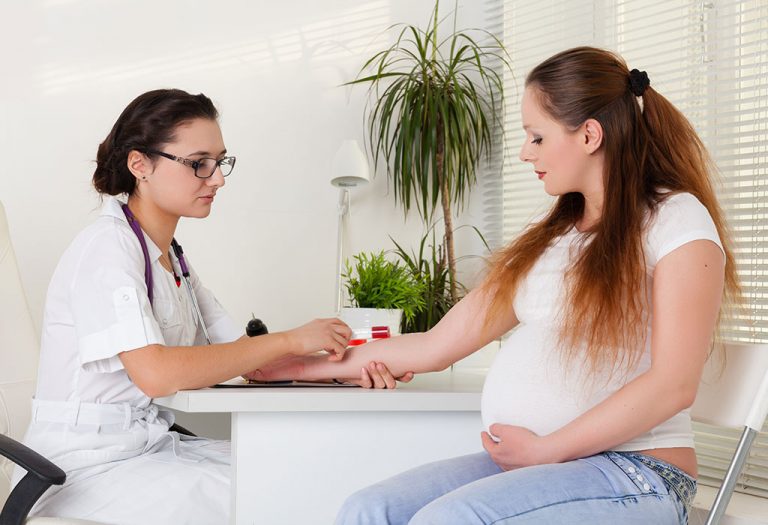
With that one prick during your first prenatal appointment, your doctor can gather a lot of information about your body and health.
Your first blood test looks for:
- HCG levels in your bloodstream; this will help your gynaecologist to determine your due date since HCG levels increase as the pregnancy progresses.
- Blood group and Rh factor test.
- Sexually Transmitted Diseases.
- Vitamin and iron deficiencies.
- Genetic risks like cysts or fibroids.
- Blood sugar levels.
Since all the blood tests are not done at one go, some awareness about it can help you prepare yourself for when the time comes to get a blood test done. Read on to know the blood tests that you are likely to get done in each trimester.
Blood Test in the First Trimester
The first trimester is the start of a wonderful journey into motherhood. You will be required to take good care of yourself and follow a healthy lifestyle. During your first antenatal checkup, your doctor will recommend certain tests to be done, which will give more insight into your pregnancy and foetus. The 10-week blood test during pregnancy are:
1. Blood Group Test
This is simply to confirm which blood group you belong to, i.e. A, B, AB or O.
2. Rhesus Factor Test
Once your blood group is confirmed, the next step is finding out your Rh type. This is done to determine whether you have the ‘D’ antigen on the surface of your red blood cells. If you do, then you are Rh-positive, and if you don’t, then you are Rh-negative. If your baby’s blood group is positive and so is yours, there isn’t any problem, but if your blood group is negative and that of your baby is positive, then your body may produce antibodies against your baby’s blood. This won’t affect the current pregnancy but may affect any future pregnancies. If the Rh types of the parents do not match, the doctor administers a shot of Rh immunoglobulin, which will prevent the mother’s body from producing antibodies now or even for future pregnancies (3).
3. Anaemia
A blood test can show whether you are anaemic, i.e. whether your haemoglobin levels are low, and if it is due to iron deficiency. If so, you will be prescribed iron supplements and advised to eat iron-rich foods. The test can also check your platelet count; increased white blood cells could be signs of an infection.
4. Rubella Test
The rubella virus, if contracted during pregnancy, can cause serious issues like miscarriage, preterm birth, stillbirths and also a variety of birth defects. This test checks the level of antibodies, if present, against the rubella virus in your blood and whether you are immune to it. Usually, women are immune to it, either because they were vaccinated or because they had contracted rubella as a child. If you aren’t immune, then you will need to avoid exposure to anyone who has a Rubella virus infection or avoid travelling to places where the virus is prevalent. Do note that one can’t be vaccinated during pregnancy but only after conception.
5. HIV Testing
One of the most important and mandatory tests is for Human Immunodeficiency Virus that causes AIDS. If you do test positive, you can get the treatment that will help you stay healthy and also reduce the chances of your baby becoming HIV positive (4).
6. Hepatitis B
Hepatitis B is a disease that affects the liver. Many women don’t even realise they have it and unknowingly pass it to their baby during labour. This blood test will check if you are a carrier of Hepatitis B. If so, your doctor will give your baby a Hepatitis B Hepatitis B Immune Globulin (HBIG) injection and the first shot of Hepatitis B vaccine within 12 hours of birth (5). Later on, your baby will need to take the second shot in the first month and the third shot in the sixth month.

Blood Test in the Second Trimester
Typically, pregnant women see their doctors once a month for regular checkups. During your second trimester, apart from your routine checkup, there will be a few blood tests to be done as well. Some tests include:
1. Triple Screen Test
All pregnant women over the age of 35 will be offered the Triple Screen Test. This is also known as the “multiple marker screening” or “AFP plus”. The mother’s blood will be tested for (6):
- AFP – a protein produced by the fetus.
- HCG – a hormone that’s produced by the placenta.
- Estriol – produced by both the mother and the foetus.
These screening tests will check for abnormal levels of these substances. Later, these results are considered along with other factors like the mother’s age, health history, and ethnicity. The triple screen test can detect abnormalities in the foetus like Down syndrome, trisomy 18 syndrome and spina bifida.
2. Gestational Diabetes
Gestational Diabetes is caused by high levels of sugar (glucose) in the blood. This usually happens during the 28th week of pregnancy and disappears once the baby is born. With a blood test, it can be diagnosed, and your doctor can treat you appropriately.

3. Cell-Free Foetal DNA Test
Cell-Free Foetal DNA Test is a relatively new test. It helps to assess the risk of the foetus having chromosomal abnormalities. The genetic material released from the placenta is called Cell-Free DNA, which can be detected in the mother’s blood. This will reveal if the foetus has any chromosomal disorders (7).
Blood Tests in the Third Trimester
The final trimester brings mixed emotions; you are almost there, and in a few months, you will be ready to see your little munchkin in your arms. The blood tests in pregnancy at 28 weeks are:
1. Glucose Testing
You will need to check your blood sugar levels again and determine if it’s normal. You will be given a sugary liquid, and an hour later, a blood test is done (8). If the sugar level is excessive, then an additional blood test for gestational diabetes will be done.
2. Hematocrit
This test is done to check for iron deficiency in the mother. If the test shows low levels of iron in the expectant woman, the doctor will prescribe iron supplements (9).
3. Sexually Transmitted Disease (STDs)
A blood test will be done to check for STDs like HIV that can cause AIDS. Although a test for HIV is usually prescribed during the first trimester, you could have to get it done for other diseases like syphilis. A mother can have syphilis even without her knowing and pass it on to the baby during birth. If she tests positive for the bacteria, she can be treated with antibiotics while pregnant, and the baby can receive the antibiotic just after birth.

Pregnancy can be a roller-coaster ride for most mothers. There’s no alternative to blood tests because your and your baby’s health is a priority. Luckily, several pathology labs offer home pick-up of blood samples. But is it safe for you to use such services? Let’s find out.
Where Is It Safe to Get Blood Tested – At Home or a Collection Centre?
Taking a blood test at home these days isn’t an issue. It is quite convenient, especially if you are pregnant and don’t want to venture outside. But make sure you select a reputed diagnostic centre that has trained and experienced staff who know how to collect and store blood appropriately without contaminating it.
But, heading out will give you a change of scene, especially during the last trimester; a trip to the diagnostic centre may just prove to be a welcome change.
For some, blood tests could be a cause of worry. The pregnancy could also elevate anxiety, fears and concerns. These tips given below can help you manage your worries and get the blood tests without stressing yourself too much.
Blood Tests During Pregnancy – Tips and Precautions
Now, we know it can be quite daunting for some to get blood tests done. But there isn’t an alternative when it comes to you and your baby’s health. These tips and precautionary steps can help you ease into the routine blood tests and manage your anxiety.
- Check with the doctor and the lab if you should get the test done before or after meals.
- Carry a snack and a bottle of water, especially if you are required to fast for a few hours before giving the blood sample.
- Ensure you have someone with you in case it is a long commute to the laboratory.
- Wear comfortable clothing and footwear.
- Read or listen to music to relax.
- Make sure the technician removes a syringe in front of you from a brand new package.
FAQs
1. What blood tests are commonly done during pregnancy?
Common blood tests while pregnant may include a complete blood count, blood group and Rh typing, and screening for infections such as HIV, hepatitis B, hepatitis C and syphilis. Additional tests may be recommended based on your health, family history or pregnancy risk factors.
2. When should I have my first blood tests during pregnancy?
Many routine blood tests are performed during the first prenatal visit or early pregnancy. Some screening tests have specific time windows. Your obstetrician will chart your schedule accordingly.
3. Can blood tests during pregnancy detect problems with the baby?
Some blood-based screening tests estimate the chance of certain genetic or developmental conditions, but screening does not provide a definite diagnosis. Further tests, then, may be recommended. An abnormal screening result may lead to additional testing or evaluation (10).
4. Does having a blood test during pregnancy hurt the baby?
No. A routine maternal blood test involves drawing a small amount of blood from the pregnant woman’s vein. It does not involve taking blood directly from the baby and does not harm the baby in any way.
5. What if my blood test result is abnormal during pregnancy?
An abnormal result does not always mean that you or your baby has a serious problem. Your doctor may repeat the test, order additional investigations or recommend treatment depending on what the result shows.
6. Do I need blood tests again in the later months of pregnancy?
Some tests may be repeated later in pregnancy, particularly when any condition or the risk of a condition is there which requires close monitoring. For example. Some women may need repeat screening for infections during the third trimester.
The blood tests and other pregnancy-related tests are recommended to check the well-being of both the baby and the mother. Many of these tests are mandatory, and all pregnant women must take them. These blood tests are harmless and can give a clear picture of your baby’s growth and can allow medical intervention if any defects are discovered.
Also Read:
Pregnancy Test
Nonstress Test in Pregnancy
Genetic Testing during Pregnancy
Was This Article Helpful?
Parenting is a huge responsibility, for you as a caregiver, but also for us as a parenting content platform. We understand that and take our responsibility of creating credible content seriously. FirstCry Parenting articles are written and published only after extensive research using factually sound references to deliver quality content that is accurate, validated by experts, and completely reliable. To understand how we go about creating content that is credible, read our editorial policy here.
1. American College of Obstetricians & Gynecologists – Prenatal Care
2. Pregnancy Birth and Baby – Blood tests during pregnancy
3. Nemours KidsHealth – Rhesus (Rh) Factor Incompatibility During Pregnancy
4. CDC – Screening and Testing for HIV, Viral Hepatitis, STD & Tuberculosis in Pregnancy
5. Hepatitis B Foundation – Pregnancy and Hepatitis B
6. American Pregnancy Association – Triple Screen Test
7. MedlinePlus – Prenatal Cell-Free DNA Screening
8. Johns Hopkins Medicine – Common Tests During Pregnancy
- Author
- Expert Reviewer