
Pregnancy Acne – Cause, Treatment, and Prevention
Understand why pimples appear during pregnancy and explore gentle care tips and remedies to support clearer, healthier-looking skin.




In this Article
- Is It Common to Have Acne During Pregnancy?
- What Causes Acne and Pimples During Pregnancy?
- What Do Pregnancy Acne and Pimples Look Like?
- Safe Treatments for Acne During Pregnancy
- Natural Home Remedies for Pregnancy Acne & Pimples
- Treatments Unsafe for Pregnancy Acne
- How to Treat Pregnancy Acne Without Using Drugs?
- How to Prevent Acne and Pimples During Pregnancy?
- When to Consult a Doctor?
- FAQs
View More
Pregnancy acne is a common occurrence due to hormonal changes in the maternal body that bring a whole set of unexpected skin changes. These develop when the hormonal fluctuations increase the excess production of sebum in the sebaceous glands, causing the pores to become clogged and leading to inflammation and pimples. The American Academy of Dermatology notes that generally used acne medications might not be suitable during pregnancy, so extra caution is necessary (1).
If you’ve been having trouble with pregnancy acne lately, you might wonder whether these breakouts are normal, how long they may last, and what you can safely do about them. Read on as we discuss how to deal with acne and pimples in pregnancy’s first, second and third trimesters.
Is It Common to Have Acne During Pregnancy?
Yes, it is fairly common to have acne during pregnancy. Most cases are mild and do not require treatment; however, some can be severe and require medical attention. Although the hormonal changes during pregnancy are largely considered responsible for pregnancy acne, there are other reasons as well that are interrelated and can lead to acne on the face. Let’s take a look at them below.
What Causes Acne and Pimples During Pregnancy?
Pimples and pregnancy together may not be a happy welcome, but learning what causes them can provide some relief and a window to treatment and prevention. Here’s what causes acne and pimples during pregnancy:
1. Hormonal Fluctuations
The primary cause of pregnancy pimples is hormonal fluctuation, especially an increase in the hormone progesterone, which stimulates the skin cells to produce more natural oils. When the excess oil buildup mixes with dead skin cells and bacteria, it clogs the pores and leads to breakouts.
2. Change in Diet
One should choose healthy, non-oily foods during pregnancy. Oily and junk foods badly affect the skin and can trigger acne. Include plenty of fresh fruits and vegetables and always have freshly made, home-cooked, nutritious food that can help you keep your energy levels high, your digestion proper, and your skin healthy.
3. Genetic Pattern
Acne might be hereditary, too. You are more likely to have it if your parents had it. Pre-existing acne might exacerbate during pregnancy.
4. Medication
Your doctor will only advise necessary medications during pregnancy. However, some may have unwanted side effects, including acne. You can get your medications changed if you experience acne as a side effect.
5. Stress
Pregnancy can induce a lot of stress, especially for first-time mothers. Stress can aggravate your acne. Simple yoga or meditation exercises can help beat stress.
As most health issues can be managed, you would think if there is a way to manage acne during pregnancy too. Well, there is, but it may or may not show positive results. In the rest of the article, we will talk about safe and unsafe ways to treat acne during pregnancy. While you may try the safe remedies, it is best to avoid unsafe ways as it could affect your child’s health.
What Do Pregnancy Acne and Pimples Look Like?
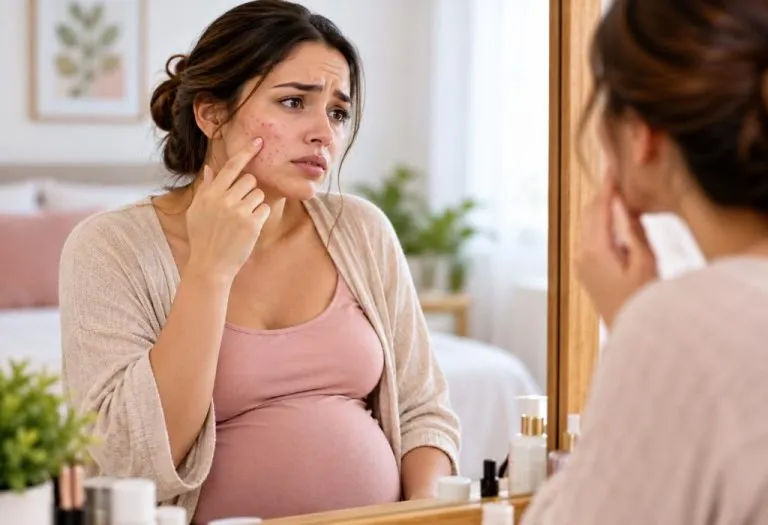
Being pregnant with pimples is not a good boost to morale. Pregnancy acne can look much like ordinary acne, although hormonal changes may make breakouts more noticeable in some women. Pregnancy, Birth and Baby notes that pregnancy acne can appear as (2):
- Small red or skin-coloured bumps on the face, particularly around the forehead, cheeks, chin and jawline
- Whiteheads and blackheads
- Red, swollen pimples that are tender and painful
- Pus-filled inflamed pimples with a white or yellowish centre.
Picking or squeezing these spots can worsen inflammation and increase the chance of scarring.
Safe Treatments for Acne During Pregnancy
Acne during pregnancy is a natural condition that usually resolves after childbirth. So, the safest course of action is good skincare. But severe cases may need medical attention. Read below to learn about some safe treatments for acne.
The American College of Obstetricians & Gynecologists (ACOG) states that over-the-counter (OTC) products, including topical benzoyl peroxide, topical salicylic acid, glycolic acid, and azelaic acid (3).
Prescription medicines containing erythromycin or azelaic acid. These medications are believed to be safe during pregnancy and do not pose an increased risk of birth defects. However, make sure never to self-medicate without first discussing it with your doctor.
If you do not want to take medicines for pregnancy acne, you may try the natural remedies given below.

Natural Home Remedies for Pregnancy Acne & Pimples
These natural remedies are simple and safe for pregnant women. However, your body could read a little differently than before, so bear in mind that these natural remedies may not always show good results.
1. Apple Cider Vinegar
Mix 4 parts of vinegar and 1 part distilled water to make a cleanser high in alpha hydroxyl acids. This combination also has natural enzymes. Use a cotton ball to apply apple cider vinegar on the acne. This remedy makes the skin oil-free, thus helping in the treatment of acne.
2. Citrus Fruit Extract
Citrus fruits are rich in hydroxy acids. When applied on the skin, the extract can help open blocked skin pores and get rid of the dead cells. It also works as an exfoliant due to its antibacterial properties. Use a cotton ball to apply directly obtained extract. Allow it to dry for some time, and then rinse off with water.
4. Honey
Honey has antiseptic and antibacterial properties. It is also skin-soothing. Before you apply honey, wash your face with lukewarm water. Then, apply honey to the affected regions and keep it for 20 to 30 minutes before you wash it off with plain water.
5. Oatmeal and Cucumber
Oatmeal and cucumber have cleansing, cooling and soothing properties. They can help cleanse the accumulated oil and reduce the appearance of pregnancy pimple. Grind a few slices of cucumber and about a teaspoon of oatmeal. Adjust the ingredients so that you get a smooth paste that can be applied directly on the acne. Keep the paste on for 15 to 20 minutes and then wash off with clean room temperature water.
7. Lemon juice
Lemon juice is rich in vitamin C and has antiseptic properties too. It can be applied to the affected areas of the face after diluting it in some water. Leave the juice on for 5 to 10 minutes and then wash your face with some clean water.
8. Aloe Vera Gel
Aloe Vera has many medicinal properties and is frequently used in cosmetic products. Aloe acts as a coolant for itchy skin and also hydrates dry skin. It can be a great replacement for your store-bought moisturiser during pregnancy.
9. Turmeric
Turmeric is one of the simplest, oldest, and most trusted remedies for pimples during pregnancy. Take a pinch of turmeric, add a few drops of rose water and apply the paste to your pimples. Let it dry before washing your face.
Treatments Unsafe for Pregnancy Acne
Pregnancy is a critical time, and expectant mothers should not try anything that could put their and their little one’s health at risk. Therefore, you must avoid these treatments at any cost during pregnancy.
1. Hormonal Therapy
Pregnancy pimples are usually due to hormonal changes – excess male hormone (androgen) or low levels of the female hormone (oestrogen). Hormonal treatment for acne includes supplementing the “female” hormone (oestrogen), the anti-androgen flutamide, and spironolactone. However, these treatments may be unsafe for the developing foetus and are best avoided during pregnancy.
2. Oral Tetracyclines
This treatment includes antibiotics such as tetracycline, doxycycline and minocycline. However, they can inhibit bone growth and discolour permanent teeth. Tetracycline and oral isotretinoin, both of which are contraindicated (i.e. not advisable for treatment), can cause birth defects. Therefore, it is advisable to avoid most systemic medications during pregnancy.
Note: Erythromycin is considered safe for pregnancy acne treatment.
3. Topical Retinoids
The American Academy of Dermatology advises strictly avoiding topical retinoids like Retin-A, tretinoin, isotretinoin, and tazarotene, and spironolactone as all these are unsafe during pregnancy (1). This is because skin absorption and secretion into breast milk have been reported and can cause birth defects in babies (4). The safety of topical beta-hydroxy acid (BHA) and salicylic acid has also not been clearly shown in pregnant women. Therefore, all of these are better avoided.
Here’s a quick overview of what is safe and what is unsafe during pregnancy (4).
| Ingredient/Chemical | Safe/Unsafe |
| Topical benzoyl peroxide | Safe, in moderation |
| Topical salicylic acid | Safe, in moderation |
| Topical glycolic acid | Safe, in moderation |
| Tretinoin | Unsafe; avoid |
| Clindamycin phosphate (topical) | Safe, after doctor’s consultation |
| Erythromycin (oral or topical) | Safe, after doctor’s consultation |
| Hydroquinone | Unsafe; avoid |
| Isotretinoin | Unsafe; avoid |
| Topical retinoids (tretinoin, adapalene, isotretinoin, tazarotene) | Unsafe; avoid |
| Oral isotretinoin | Unsafe; avoid |
| Oral tetracycline antibiotics | Unsafe; avoid |
| Oral spironolactone | Unsafe; avoid |
How to Treat Pregnancy Acne Without Using Drugs?
To treat pregnancy acne safely and successfully, start with self-care. Here’s what Mayo Clinic suggests you can do (5):
- Use a gentle cleanser: Wash your face with mild soap and warm water twice a day. Avoid using chemical products which may irritate the skin and subsequently worsen your acne. Excessive washing and scrubbing of the face may increase your irritation.
- Shampoo your hair: You can consider doing this more frequently if you have a problematic scalp. Many times, dandruff is the main culprit.
- Tie your hair: Dirt and oils from the hair can also trigger acne. Keeping them away from the face and cleansing your face can help you prevent acne.
- Do not prick or pull acne: Doing this may cause inflammation.
- Avoid skin irritants: Oily cosmetics and sunscreens can also trigger acne. Prefer natural alternatives that are less likely to cause acne.
How to Prevent Acne and Pimples During Pregnancy?
Here are some simple tips you can use to avoid acne during pregnancy:
- Do not touch or squeeze any acne. It causes local inflammation and scarring.
- Ensure adequate hydration. Keep away from caffeine, bottled water, and sweet beverages.
- Eat loads of vegetables and fresh fruits. Avoid packaged foods.
- Get adequate rest. Stress may be a reason for acne.
- Change your bedding and linen often.
- Avoid repeated touching of the face.
- Practice regular hand washing.
- Prefer using oil-free make-up, which is less likely to trigger acne. Do wash your face before you go to bed.
- Do not self-medicate. Ingredients like salicylic acid and Vitamin A could be unsafe during pregnancy.
- Avoid touching your face unnecessarily, especially with unclean hands. Do not rest your face on your palms.
- Hydrate yourself by drinking a lot of water. Water flushes your system and helps clear the skin.
When to Consult a Doctor?
You should consult your obstetrician about pregnancy acne if:
- your acne still persists or worsens even after using non-prescription medicines.
- you were on acne medication before getting pregnant and should confirm whether to continue the medication
FAQs
1. When do pimples appear in pregnancy?
You may get pimples about 6 to 8 weeks into your pregnancy or sometime later as well.
2. Are pimples during pregnancy harmful to the baby?
No, pimples or acne during pregnancy do not harm the fetus.
3. Can I use salicylic acid for acne during pregnancy?
Yes, low-strength, over-the-counter topical salicylic acid is safe to use for pregnancy pimples.
4. Can I use benzoyl peroxide during pregnancy?
Yes, mild, topical benzoyl peroxide can be used to treat pregnancy pimples.
5. What over-the-counter (OTC) products can I use to treat my acne during pregnancy?
Topical benzoyl peroxide, topical salicylic acid, glycolic acid, and azelaic acid are safe to use during pregnancy for acne (1). However, moderation and a doctor’s consultation before using any product are important.
6. Can I use retinoids during pregnancy to treat my pregnancy acne?
No. Topical retinoids like Retin-A or adapalene are not safe during pregnancy and should be completely avoided.
7. Which vitamins help improve skin health during pregnancy?
Vitamin C, E, and B generally help support skin health by boosting collagen and reducing inflammation. However, it is not advised to take any supplements or topical treatments without consulting your doctor.
Pregnancy pimples, though disturbing, are a common and normal occurrence. General hygiene with healthy eating habits can help prevent them from occurring, but even if they do occur, remember that they will go away after childbirth if you keep your diet healthy. Overtreatment with drugs is best avoided at this time as it may pose a risk for your baby.
Also Read:
Boils in Pregnancy
PUPPP Rash in Pregnancy
Salicylic Acid while Pregnant
Skin Changes during Pregnancy
Was This Article Helpful?
Parenting is a huge responsibility, for you as a caregiver, but also for us as a parenting content platform. We understand that and take our responsibility of creating credible content seriously. FirstCry Parenting articles are written and published only after extensive research using factually sound references to deliver quality content that is accurate, validated by experts, and completely reliable. To understand how we go about creating content that is credible, read our editorial policy here.
- Author


Related Articles
-

Pregnancy Travel Insurance - What It Covers and How It Helps You
-
Tdap Vaccine During Pregnancy: Benefits, Safety, & Best Time to Get It
-

Malnourishment During Pregnancy - Risks for Mother and Baby
-

Bleeding From Anus in Pregnancy: Causes, Symptoms, & Treatment
-

Vaginal Itching During Pregnancy: Causes, Signs & Treatment
-

Taking Omeprazole During Pregnancy - Is It Safe?