
Pregnant and Ears Ringing (Tinnitus) – Causes and Treatment





Medically Reviewed By
Dr. Sharfa Afreen
(ENT)

This health content has been medically reviewed by qualified experts and follows the FirstCry Parenting editorial policy to ensure accuracy and reliability.
Key Takeaways
- Tinnitus feels like an unexpected ringing or buzzing sound in your ears.
- The condition is usually temporary during pregnancy.
- Hormonal changes, stress, dental issues, and migraines are some reasons that could cause tinnitus during pregnancy.
- Approximately 66% of women who have tinnitus before pregnancy may notice heightened tinnitus while pregnant.
- As per the WHO, there is no definitive cure for tinnitus.
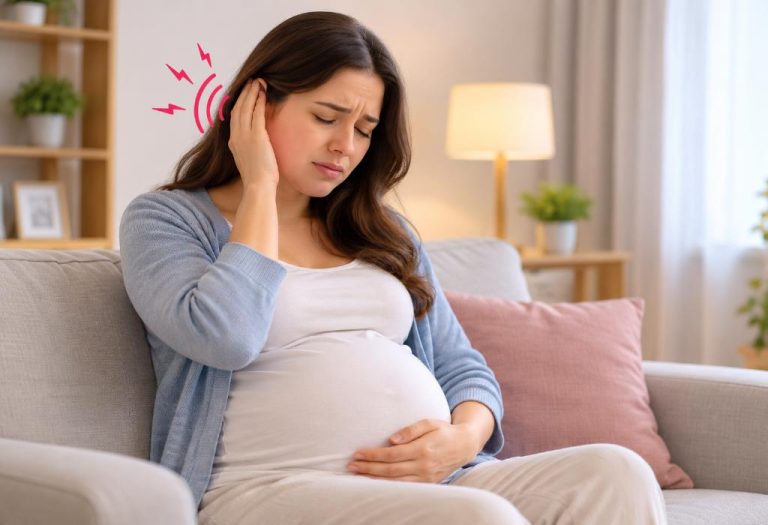
Among many physical changes, hearing a ringing or buzzing sound in your ears can be an unexpected experience. Ringing in the ears while pregnant, medically known as tinnitus, can occur even when there is no external sound. You may notice it in one ear or both, and the noise may be constant or come and go. Hormonal changes and changes in blood circulation may contribute to tinnitus in pregnancy. While ringing sounds during pregnancy are often not so serious, they should not be ignored, especially if they accompany weird or concerning symptoms. Join us as we discuss how tinnitus and pregnancy move along, when it’s normal, and when to seek advice.
What Is Tinnitus?
Tinnitus can be described as ringing sounds in the ears. Sometimes, the sounds may be categorised as whistling, ringing, buzzing, hissing, throbbing, or clicking in the ear. This condition can be temporary, chronic or persistent. The NHS says that mild cases of ringing ears during pregnancy usually get better by themselves (1).

Is Tinnitus Common Among Pregnant Ladies?
Tinnitus is predominantly seen in the older population, i.e. in people aged 50 years and above. Also, it is more common in men than in women. However, you may experience ringing in your ears during pregnancy due to fluctuating changes in the pregnancy hormones: oestrogen and progesterone, which is a common phenomenon too (2). Experiencing ears ringing in pregnancy might be weird in the beginning until you get it diagnosed.
Therefore, if you hear a weird ringing sound, you are not hallucinating, but you may be suffering from pregnancy tinnitus. Ringing in the ears in the first trimester is very common (3), and it could last until the end of your pregnancy.
What Causes Ringing in the Ears While Pregnant?
During pregnancy, you may hear ringing, clicking, whooshing or buzzing sounds. Some women may also hear sounds that resemble sounds like the heartbeat (also called pulsatile tinnitus pregnancy sounds). Here are some health conditions women experience during pregnancy that may cause tinnitus (4):
1. Tinnitus in Previous Pregnancy
If you have had tinnitus in your previous pregnancy or pregnancies, then there is a high possibility that you may have it in your subsequent pregnancies too.
2. Iron Deficiency
Iron deficiency during pregnancy may also cause tinnitus.
3. Stress
Experiencing a lot of stress during pregnancy may put you at a higher risk of suffering from tinnitus.
4. High BP
High blood pressure during pregnancy may put you at a higher risk of having tinnitus.
5. Increased Progesterone
Increased progesterone production during pregnancy can also lead to tinnitus.
6. Migraine
Women suffering from migraine also develop tinnitus during pregnancy.
7. Dental Issues
In some cases, ringing in the ears develops due to dental issues, especially bite problems. Some of the most common symptoms of a bite problem are a stiff jaw, dull pain in the jaw and headaches. Sometimes, all these symptoms are accompanied by tinnitus (5).
8. Neck Injury
At times, neck injuries can also cause ringing in the ear.
9. Hormonal Changes
Fluctuations in hormone levels during pregnancy can lead to tinnitus.

How Long Does It Take to Recover From Tinnitus During Pregnancy?
Pregnancy-induced tinnitus is self-limiting, and you may recover from its symptoms soon after the birth of your baby, or within a few days after that. It is just a matter of time, but in most cases, it will go away. In case it doesn’t, you should seek medical help immediately.
Treatment of Tinnitus During Pregnancy
Tinnitus during pregnancy can occur for more than one reason. Therefore, there is no effective treatment for the condition, as most causes are part and parcel of pregnancy. Nonetheless, if the ringing sounds are due to earwax build-up, dental bite issues and neck injuries, you may seek immediate treatment and check if there is an improvement in the condition (6). For other reasons, you may use one of the tips provided below to reduce the effects of tinnitus.
Tips to Manage Tinnitus During Pregnancy
Various factors may lead to ringing ears in pregnancy. Here are some tips that can help you manage tinnitus during pregnancy:
1. Manage Your Stress Levels
You may battle with various issues during pregnancy, such as fatigue, sleeplessness, restlessness, etc., which may lead to stress and anxiety during pregnancy. Apart from giving rise to other complications, stress may also lead to tinnitus. Therefore, it is very important to manage your stress levels during pregnancy.
2. Meditation
One of the best ways to relieve stress and feel rejuvenated is to practice meditation. Try several meditation techniques and use the one that helps the most for this condition.
3. Stay Away From Loud Noise
Loud noise may aggravate the symptoms of tinnitus and cause more discomfort. Try and avoid all kinds of loud noise during pregnancy.
4. Exercise
The importance of exercising cannot be undermined during pregnancy. When you exercise, it has a positive effect on your body and mind. Improved blood circulation also helps in dealing with the symptoms of tinnitus. Avoid rigorous exercises, though, as they can aggravate the condition. Yoga, especially pranayama, can provide considerable relief from the ringing sounds.

5. Consume a Balanced Diet
Eat a healthy and well-balanced diet during pregnancy to maintain your fitness and remain energetic. Also, limit your salt intake as it is a possible trigger for high blood pressure, which may increase your possibility of tinnitus.
6. White Noise Music or Music Therapy
You may try white noise therapy or music therapy for dimming the ringing sounds in your ears. Listening to white noise or some relaxing music can be very effective in helping you relax and sleep well as well.
7. Stay Away From Possible Food Triggers
Some food items, such as sugary foods, caffeinated beverages, foods with MSG, etc., may further enhance the symptoms of tinnitus. You must stay away from all these triggers.
8. Supplements
At times, your doctor might prescribe supplements, especially zinc supplements, that could help reduce the effects of tinnitus. Usually, your prenatal supplements have the supplementary nutrients; however, it is always a good idea to check with your gynaecologist and an ENT specialist before taking any supplements for tinnitus.
9. Maintain a Relaxing Environment
Create a calming atmosphere at home by minimising loud noises, using white noise machines, or playing gentle, soothing music. This can help distract from the tinnitus and promote relaxation.
10. Practice Stress-reduction Techniques
Engage in activities like deep breathing exercises, meditation, or prenatal yoga to reduce stress levels. High stress can exacerbate tinnitus, so finding ways to relax is important.
The tips mentioned may or may not help reduce the effects or symptoms of tinnitus. It is, therefore, advisable that you seek medical assistance before you opt for any of these. Let’s also take a look at when you must see a specialist/doctor.
When to Consult a Doctor?
If you notice that your symptoms are not subsiding or reducing, then it is suggested that you seek medical help. You may be referred to an ENT specialist, who will conduct a more comprehensive check-up and advise you the best treatment option. If you have had an earlier bout of tinnitus or had this condition during your previous pregnancy, you may like to share the information with your doctor to help him treat it effectively.
FAQs
1. When does tinnitus start during pregnancy?
Approximately 66% of women who already have tinnitus prior to pregnancy note a heightened intensity of their tinnitus while pregnant, particularly in the middle trimester (between the fourth and sixth months). In cases where tinnitus emerges for the first time during pregnancy, it tends to persist throughout the pregnancy and typically improves or disappears after childbirth.
2. Is there a cure for tinnitus?
The WHO says that there is no definitive cure for tinnitus, but the condition resolves on its own if caused by temporary factors, like an ear infection or short-term exposure to loud noise (7).
3. Can stress make tinnitus worse?
Although there’s limited research, several experts believe that stress does seem to play a vital role in the development of tinnitus (8).
Tinnitus when pregnant can be managed effectively, and it is recommended that you seek immediate medical advice as soon as you notice any symptoms of this condition.
Also Read:
HCG Injection in Pregnancy
Anti-D Injection during Pregnancy
Tetanus Toxoid (TT) Injection when Pregnant
Was This Article Helpful?
Parenting is a huge responsibility, for you as a caregiver, but also for us as a parenting content platform. We understand that and take our responsibility of creating credible content seriously. FirstCry Parenting articles are written and published only after extensive research using factually sound references to deliver quality content that is accurate, validated by experts, and completely reliable. To understand how we go about creating content that is credible, read our editorial policy here.
- Author
- Expert Reviewer


Related Articles
-
Gestational Sac in Pregnancy: What It is & What It Indicates
-

Hydrocortisone Cream During Pregnancy: Is It Safe to Use?
-

Teeth Whitening in Pregnancy – Is It Safe?
-
Positions of the Baby in the 8th Month of Pregnancy
-

Using Cough Drops During Pregnancy - Is It Safe?
-

Best Exercise for Normal Delivery in 9th Month of Pregnancy