

4 Month Old Baby Activities to Boost Growth & Skills
Best activities for a 4 month old baby to encourage learning movement and sensory play.





In this Article
- What You Should Expect from a 4-Month-Old Child?
- Things to Avoid While Playing With Your 4-month-old Baby
- 4 Months Baby Activities for Better Development of Your Child
- FAQs
- Infographic: 4 Month Old Baby Activities
View More
You’ve welcomed your little one, and as she enters her fourth month, you’ll notice her becoming more alert, curious, and expressive. While she isn’t crawling yet, she is learning to interact socially, move with intention, and respond to familiar faces and sounds. This stage is ideal for four-month-old activities that support cognitive, emotional, and physical development. Simple playtime, eye contact, and gentle interaction go a long way. From peekaboo to mimicking facial expressions, 4-month-old activities help babies explore their world through play. Spending time on the floor together encourages bonding and learning. Understanding age-appropriate play, including things to do with 4 month old babies, ensures safe, engaging, and meaningful experiences while avoiding overstimulation or unsafe practices.
What You Should Expect from a 4-Month-Old Child?
If you’re wondering what your little one is capable of doing at this phase of time, here’s what you must know (1)–
1. Facial Expressions – Your little one is able to identify the faces of his caregivers, including yours. They can also gauge expressions.
2. Colours – He can differentiate between bright shades of colour, such as orange and red. Bright colours will charm your little one at this point.
3. Rolling Around – All that crawling transitions into rolling around this phase. Your baby will be getting plenty of tummy time and exploring his surroundings, shapes, colours, touch, and textures.
4. Social Bugs – Your baby’s babbling will improve as he learns new words and syllables. You may find yourself dealing with a chatty critter, and that’s a good thing.
Things to Avoid While Playing With Your 4-month-old Baby
Here are the things to avoid when engaging in activities with a 4-month-old (2):
- Avoid placing any sharp objects around the baby.
- Because you will be playing with your little one, ensure you wear comfortable and soft clothes that do not prick the baby or get stuck anywhere.
- Make sure your pockets are empty. Many a time, parents forget to do that and end up hurting the baby or themselves.
- Never let the baby go out of sight.
- Keep only the toys that are not choking hazards.
4 Months Baby Activities for Better Development of Your Child
We have listed down some of the best and most suitable activities that your 4-month-old baby can enjoy. Also, the requirements are methods — how to play with a 4-month-old baby are also mentioned to ease parenthood.

1. Reading and Bonding
Reading is a fun activity that boosts your little one’s imagination and vocabulary. It’s never too early to read to a child, and here’s what you must know.

Skill Development: Cognitive (4)
What You Will Require: Well-illustrated picture books
How to Do It:
- Get a broad book with big colourful images and illustrations, and dive right into the story.
- Encourage your little one to touch and feel the book.
- Your baby may have a short attention span and jump to the next page. Even a few seconds of seeing counts as normal.
- Be expressive, use gestures and explain in an entertaining or storytelling way.
2. Talk to Him
Talking to your babbling baby is one of the best, surefire ways to help him learn the nuances of language and master babbling better. Here’s how you can do it.

Skill Development: Cognitive and motor skill development
What You Will Require: Some one-on-one time with your little one (a few minutes)
How to Do It:
- Put your four-month-old on tummy time for a few seconds every now and then to help develop the back and neck muscles. Make sure your short tummy time intervals add up to roughly an hour a day.
- Speak out the names of objects around you and make funny faces to encourage the baby to babble or giggle.
- You can try making animal noises or funny cartoon sounds, too.
- Take it up a notch by tickling his feet or tummy.
3. Exploration Time
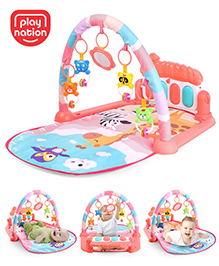
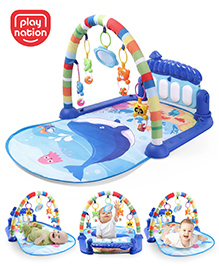
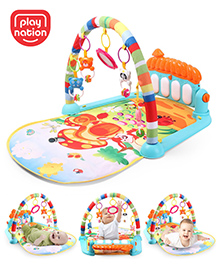
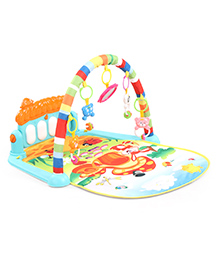
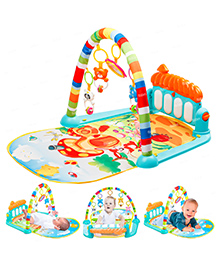
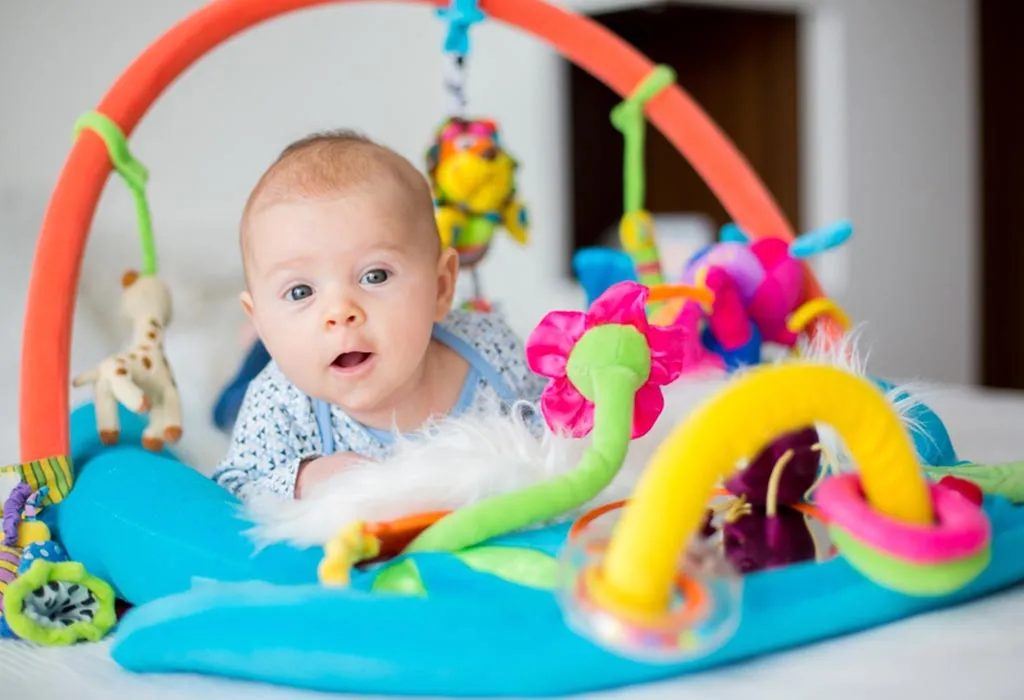
Letting your four-month-old play with colourful toys on a play mat is a great way to introduce him to the world of textures. The baby will touch all his toys and even be introduced to the cause of his actions. For example, he will know that an object goes far away when he throws it.
Skill Development: Sensory development and understanding of cause and effect
What You Will Require: A few toys or household objects
How to Do It:
- Get some pillow or cushion covers and mats with textures such as velvet and wool. Let your little one touch and feel the different fabrics.
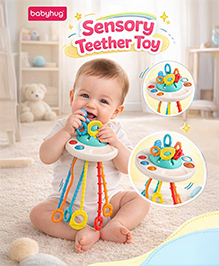
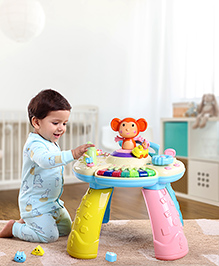
- Grab a couple of age-appropriate toys which are not choking hazards and let your child fiddle with them.
- Toys such as rattles, bouncy balls and action figures will also help them understand the meaning of cause and effect.
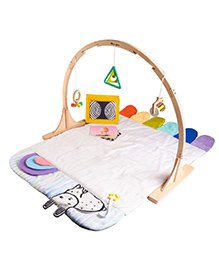
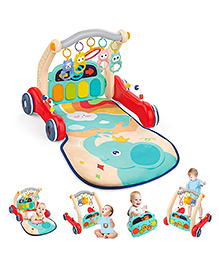
- Exchange toys to and fro, and consider buying an activity gym for more fun and exploration.
4. Look at the Mirror
Looking at himself by staring at the mirror has an appealing charm and joy that very few can explain.
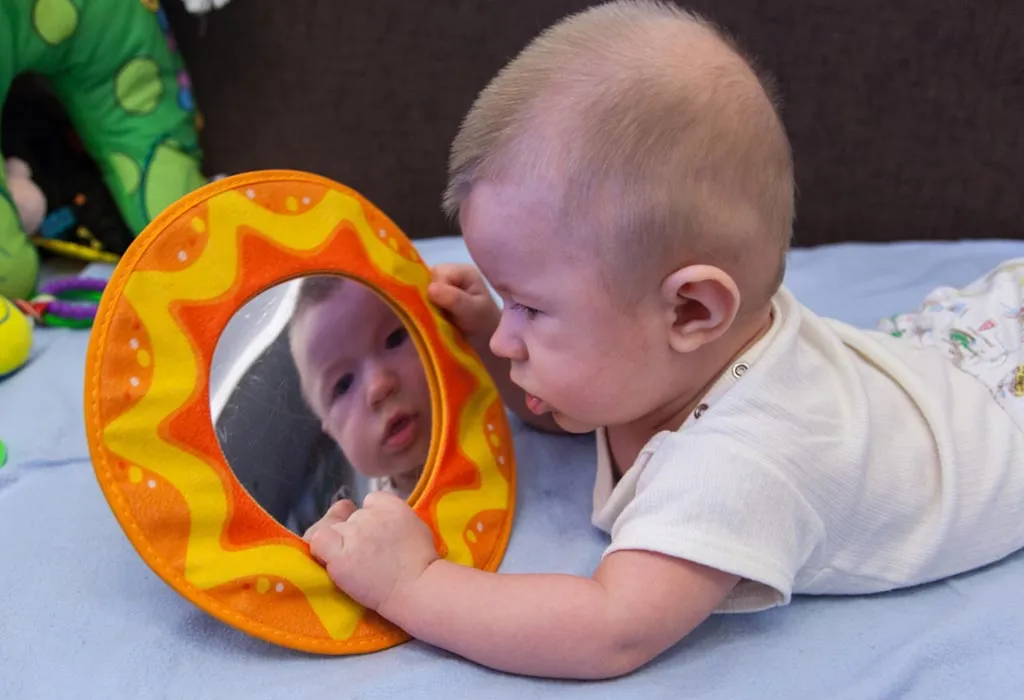
Skill Development: Social and motor skills (5).
What You Will Require: A mirror at her eye level, which is unbreakable.
How to Do It:
- Leave your little one alone with the mirror beside her crib for him to explore.
- Give him time to observe his own facial expressions and gestures.
- Your baby won’t realise that it’s himself staring at the mirror, and you can watch as the fun and social development unfolds.
5. Simple Workouts
Maybe it’s finally time for your little one to branch out and try exercising those arms and legs a bit more. If you notice your little one getting energetic, then it’s time to put that energy to good use.

Skill Development: Cognitive and motor skills development.
What You Will Require: Some space and time.
How to Do It:
- Start by lifting your baby up and down. Encourage him to shuffle her arms and feet in the air as you hold him
- Place him gently on the ground and encourage him to practice rolling and
- Set apart different toys on the floor and spread them out to encourage him to chase them and pivot himself along the way.
6. The Bubble Game
Your little one will have tons of fun playing the bubble game. Here’s how you do it.

Skill Development: Hand-eye coordination, cognitive development
What You Will Require: A bubble blower and soapy water
How to Do It:
- Set your young one on a chair and grab a bubble blower.
- Ready the soapy water and dip the blower in it. Blow bubbles in different directions, but make sure they don’t touch your baby’s eyes and mouth.
- Your little one will try to catch them and react gleefully when he pops them. Allow him to pop bubbles on his arms, legs and different body parts and make sure you name them out loud to help her identify them and remember.
7. The Rowing Game
Remember the “Row Row Row Your Boat” nursery rhyme? Well, it’s time to put it into action!

Skill Development: Gross Motor Skills
What You Will Require: Some pillows for cushioning the back and a few minutes to spare
How to Do It:
- Sit your baby comfortably on the bed and place a cushion on their back.
- Hold their hands gently and lean them forward slowly while singing the nursery rhyme “Row Row Row Your Boat.”
- Slowly push them back and move in such a way as if you’re teaching them how to row a boat.
- Repeat a few times for a gentle but effective motor skill workout.
8. Sing to Her
You are your baby’s favourite singer, and singing is an awesome way to boost their cognitive and social skills. Children connect with music way better than language. Thus, this activity is sure to hold her attention and inculcate a sense of bonding in your little one.

Skill Development: Cognitive and social skill development
What You Will Require: A few minutes with your baby
How to Do It:
- Sing your favourite tunes or nursery rhymes to your little one, like “Baa Baa Black Sheep Have You Any Wool?”
- Make sure you add the words mommy, daddy and the names of other family members in your rhymes in a creative way.
- Use gestures and facial expressions to grab your baby’s attention.
- Repeat the rhymes often to help your baby grasp new words and remember them better.
9. Roll the Ball
Rolling the ball will show your baby the true meaning of cause and effect. They’ll be gawking at how a simple ball can roll over like that and wonder about it.

Skill Development: Sensory skills, cause and effect understanding, motor skills.
What You Will Require: Softballs of different colours and textures.
How to Do It:
- Spread out the balls in different directions and allow your little one to chase them.
- Let them lie down on their tummy and play with the balls, experiment with different textures and sizes, and encourage them to push the balls across the floor towards you.
10. Arrange a Play Date
A playdate encourages your little one to interact with other babies and socialise. Making friends will help develop his brain really fast, and he will also have fun playing with more kids.
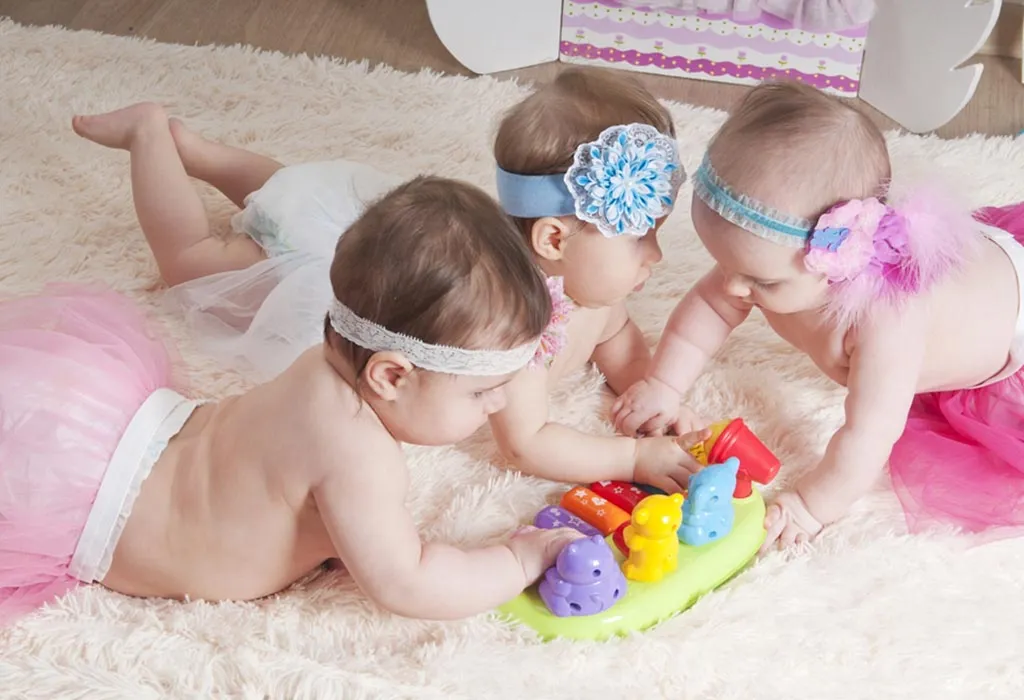
Skill Development: Cognitive and social skill development
What You Will Require: A few friends in your baby’s age group and some free time
How to Do It:
- Invite your friends to your house or the mothers living in the neighbourhood for a playdate. Make sure their babies are in the same age group.
- Place some toys on the floor and allow the babies to play with each other.
- If you feel up to it, you could join in on the fun by playing a little peek-a-boo with them.
11. Exercise his Eyes
As your baby is getting a hand of new things around him, he starts using his sensory organs. This activity is perfect to encourage your baby to use his proprioceptive sense.
Skill Development: Proprioceptive position sense
What You Will Require: A bottle with some glycerine, water, and glitter in it.
How to Do It:
- Mix equal parts of water and glycerine, and add the glitter to it.
- Close the bottle cap tightly and mix.
- Shake the bottle and keep it in front of him.
- Let the baby watch the glitter settle down.
- Repeat the activity until you have his attention.
12. Tummy Time with Toys
Tummy time becomes more engaging when toys are added to the mix, and helps strengthen your baby’s upper body (3).
Skill Development: Gross motor skills, neck and shoulder strength
What You Will Require: Soft toys, rattles, or a play mirror
How to Do It:
- Place your baby on their tummy on a soft mat.
- Position colourful toys just within their line of sight.
- Encourage them to lift their head or reach out for the toy.
13. Gentle Massage Time
This is one of the best sensory activities for a 4-month-old. A soothing massage helps your baby relax while also supporting physical development and bonding.
Skill Development: Sensory awareness, emotional bonding
What You Will Require: Baby-safe massage oil and a quiet space
How to Do It:
- Gently massage your baby’s arms, legs, and tummy using slow strokes.
- Talk or sing softly to keep them calm and engaged.
14. Sound Exploration Play
Introducing different sounds helps your baby recognise variations in tone and volume.
Skill Development: Auditory and cognitive skills
What You Will Require: Rattles, bells, or soft sound-making toys
How to Do It:
- Shake toys gently from different directions.
- Watch your baby turn their head toward the sound and respond with excitement.
FAQs
1. How long should a 4-month-old stay engaged in structured play each day?
At four months, babies benefit more from short, frequent interactions rather than long sessions. Their attention span is limited, so brief engagement spread throughout the day supports learning without causing overstimulation.
2. Can overstimulation slow a baby’s development at this age?
Yes, too much sensory input at once can overwhelm a 4-month-old. Signs like fussiness, turning away, or crying indicate the baby needs a break, making balanced interaction essential for healthy growth.
3. How does parental involvement impact skill development at four months?
Consistent caregiver interaction helps strengthen emotional security, communication skills, and early brain development. Babies learn best through responsive engagement rather than passive observation.
4. Are developmental milestones the same for all 4-month-old babies?
No, every baby develops at their own pace. While general milestones exist, small variations are normal and usually not a cause for concern unless delays are significant or persistent.
If you notice your little one lagging behind or taking some extra time to learn new things, do not fret. Not every baby is the same, and everyone develops at a different pace. Be gentle, be kind and give plenty of time and room for your child’s development. The important thing is to keep exposing your baby to different developmental activities and letting him have fun since that’s what speeds up cognitive, emotional and social growth.
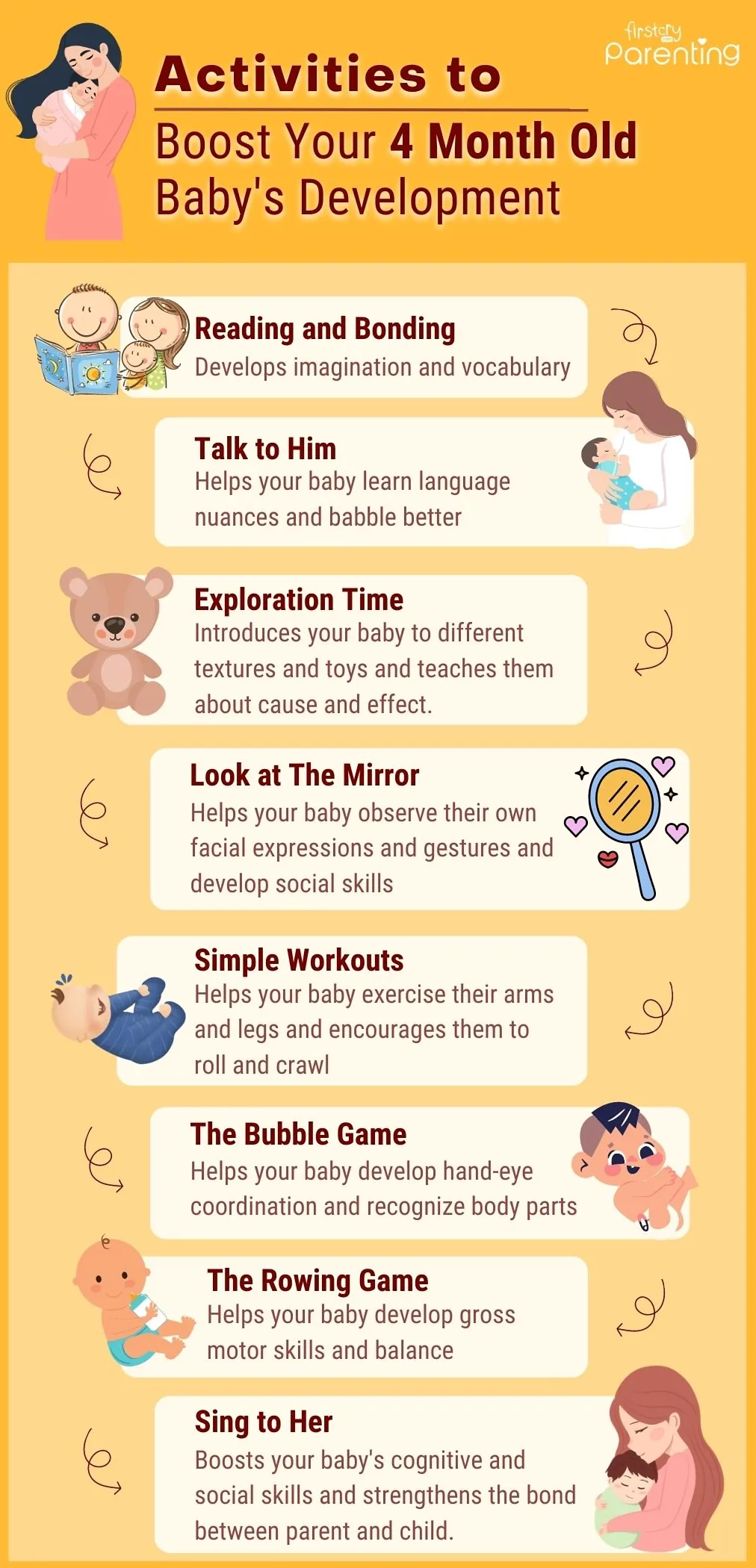
Infographic: 4 Month Old Baby Activities
Also Read:
4 Months Old Checkup
4 Months Old Baby Care
4 Months Old Baby Milestones
4 Months Old Baby Growth and Development
Was This Article Helpful?
Parenting is a huge responsibility, for you as a caregiver, but also for us as a parenting content platform. We understand that and take our responsibility of creating credible content seriously. FirstCry Parenting articles are written and published only after extensive research using factually sound references to deliver quality content that is accurate, validated by experts, and completely reliable. To understand how we go about creating content that is credible, read our editorial policy here.
- Author
 About the Author
Mahak Arora
Related Articles
-

Introducing your Baby to Swimming
-
Baby Activities - Fun Things To Do With Your Babies
-
5 Genius Hacks With Stuff Kids Have Outgrown
-
Choosing Age-Appropriate Toys and Play Ideas For Your Baby
-
Tell Us Your Child's Favourite Toy, We'll Tell You His Personality!
-

Discover The Relationship Your Baby Has With His Lovey


.svg)