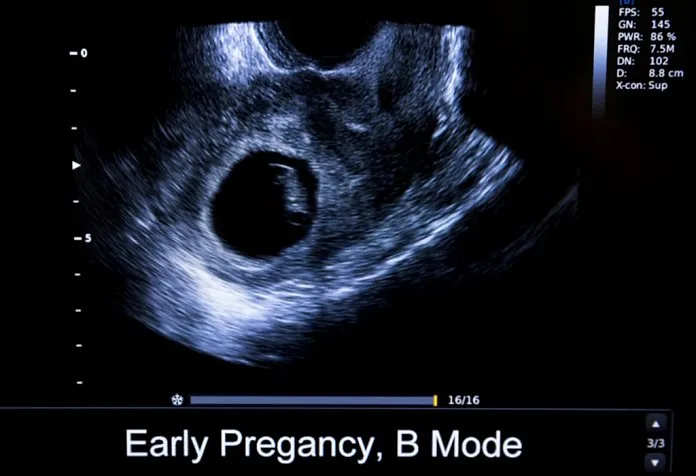


Treadmill in Pregnancy – Is It Safe to Use
Can you use a treadmill during pregnancy? This gynecologist reviewed guide covers its benefits and safe workout tips.





Medically Reviewed By
Dr. Sabiha Anjum
(Gynecologist/Obstetrician)

In this Article
- Can Pregnant Women Use a Treadmill?
- Benefits of Using a Treadmill Safely During Pregnancy
- How to Perform Treadmill Workout in Pregnancy?
- Recommended Treadmill Workout for Each Trimester
- Tips to Consider While Using a Treadmill When Pregnant
- When to Stop Running on a Treadmill During Pregnancy?
- Treadmill vs. Other Cardio Options During Pregnancy
- FAQs
View More
This health content has been medically reviewed by qualified experts and follows the FirstCry Parenting editorial policy to ensure accuracy and reliability.
Pregnancy and treadmill is one of the most cautioned topics that women often seek answers for. While exercise is of great importance during pregnancy, what type you indulge in matters as well. Using a treadmill during pregnancy, when going outdoors is a challenge, seems like a safer alternative. The treadmill provides a controlled environment that minimises the risk of falls and allows you to adjust the intensity according to your comfort level. The American Pregnancy Association states that exercising for 30 minutes at most, can benefit pregnancy status (1). However, the same treadmill can pose risks too – inclination of the treadmill, speed, and balance. So, before you start your pregnancy treadmill workout with a plan to improve your health, we recommend reading more about walking on the treadmill in pregnancy.
Can Pregnant Women Use a Treadmill?
It is true that women are asked to follow a major list of restrictions, especially when it comes to exertion, exercises and movements of the body. While running or sprinting outside or on the treadmill is a no-go, you can definitely indulge in some normal or speed walking on the treadmill to keep yourself healthy. Yes, treadmill can be safely used to provide you with a safe and protected environment for her while exercising (2).
The American College of Obstetricians and Gynecologists (ACOG) also states that pregnant women should refrain from contact sports and activities that pose a risk of falling or injuring the abdomen (3). In the case of a treadmill, while contact is absent, the risk of losing your balance and falling is present.
Thus, it is important to consult your doctor before starting your prenatal treadmill workout.
Benefits of Using a Treadmill Safely During Pregnancy
Maintaining an active lifestyle during pregnancy is essential for both your health and your baby’s well-being. Using a treadmill safely can offer numerous benefits while allowing you to exercise in a controlled environment. Here are some key advantages of using a treadmill during pregnancy:
- Treadmills provide a stable and controlled environment, reducing the risk of tripping or falling compared to outdoor walking surfaces (4).
- You can easily adjust the speed and incline of the treadmill to match your comfort level and fitness goals, ensuring a safe and effective workout.
- Walking on a treadmill offers a low-impact exercise option, which helps minimize stress on your joints and ligaments, especially important as your body undergoes changes during pregnancy.
- Regular treadmill exercise can enhance cardiovascular health, improve circulation, and increase overall stamina, which is beneficial for both you and your baby.
- Using a treadmill helps manage weight gain, which can contribute to a healthier pregnancy and potentially ease the delivery process.
- Physical activity, including walking on a treadmill, can help alleviate stress, reduce symptoms of depression, and improve overall mood, contributing to a more positive pregnancy experience.
How to Perform Treadmill Workout in Pregnancy?
Before beginning any kind of workout, it is important to talk to your doctor or gynaecologist and get their go-ahead for the same. If any risks of pregnancy complications exist, it is best to stay away from it. If you get a go-ahead from your gynaecologist, here is how you can perform a treadmill workout in pregnancy.
- Begin with a small warm-up for a few minutes to bring up your heart rate gradually.
- Then, increase the speed a bit and walk until you start to breathe with some effort.
- Lower the speed again and walk calmly for a couple of minutes.
- Follow up by increasing the incline and continue walking for another 5 minutes.
- Bring down the speed and walk calmly before increasing the incline further and continuing with it.
- Now start reducing the incline every 30 seconds and reduce the pace gradually, before ending the walk.
- Undergo a stretching session to cool down and return to normalcy.
Recommended Treadmill Workout for Each Trimester
Treadmill workouts can be an excellent way to maintain fitness levels throughout the trimesters, but it’s important to adjust the workout according to the stage of pregnancy. Below is a recommended treadmill workout plan for each trimester, focusing on time, intensity, speed, and incline.
| Trimester | Time/Duration | Intensity | Speed | Incline |
|
First |
20-30 minutes | Low to Moderate | 2.5-3.5 mph | 1-2% |
| Second | 25-35 minutes | Moderate | 3.0-4.0 mph | 2-3% |
| Third | 20-30 minutes | Low | 2.5-3.0 mph | 0-1% |
Tips to Consider While Using a Treadmill When Pregnant
Using the treadmill when you are pregnant won’t be as easy as before. Staying within the limits of safety is highly important. There are a bunch of tips you can utilise to keep track of your well-being as well as ensure that you stay in optimum health throughout the exercise.
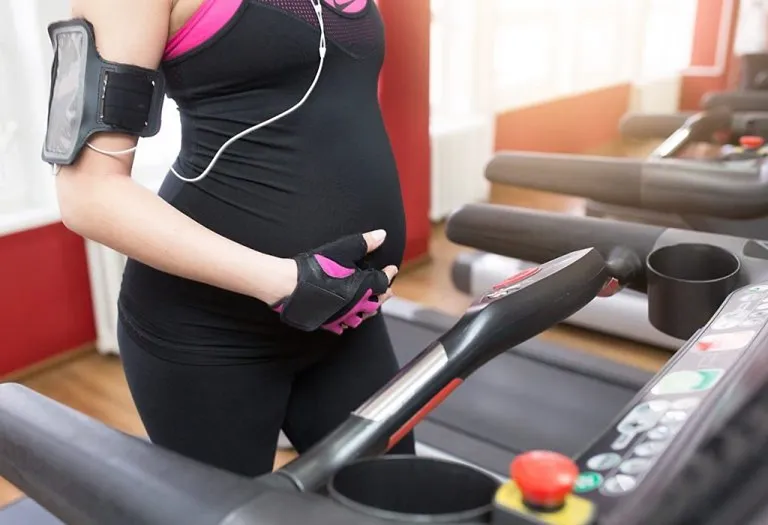
1. Hug Your Tummy When You Walk
Your abs are going to take the biggest brunt of strain during pregnancy and even during exercise. Hold your hands close to your stomach and try to hug your tummy, as if you were holding the baby close to you. When doing so, you will inherently feel the internal muscles contract. This muscle exercise helps in strengthening your core, which is quite essential to give you the strength necessary during delivery as well as cut down on the stress experienced by your back.
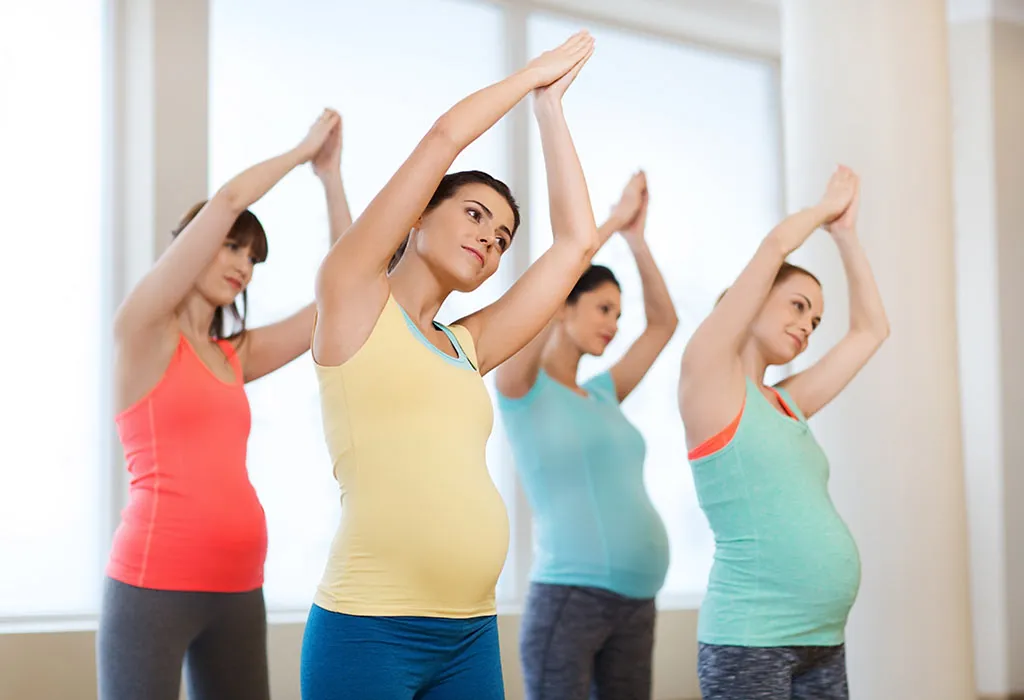
2. Stretch Gently Before and After the Walk
Stretching is a necessary precursor for any exercise regimen. It makes sure that your muscles and tendons are ready to undergo exercise and can also be relaxed once it is done. However, during pregnancy, you should take care not to stretch beyond what’s comfortable for you. The changed physical structure of your body leaves many muscles and joints looser than before, which may not respond ideally to the stretching.
3. Stay Hydrated Throughout Your Treadmill Regimen
Any kind of exercise, even walking for extended periods, results in the burning of fat reserves in your body, which raises your core temperature within you. Maintaining optimal body temperature is vital to keep your baby safe and sound. Sweating will also drain your water levels, so the NHS suggests to keep drinking water regularly (5).
4. Establish a Level of Exertion That is Specific to You
Whether you’ve been exercising before pregnancy or have decided to keep yourself healthy during this phase, you would have a good idea of how much pressure you might be under at a particular point during your workout. Try to establish a scale of sorts, ranging from 1 to 10, where 10 is the most intense for you. During pregnancy, it is best to remain somewhere between 5 and 6.5 at the most.
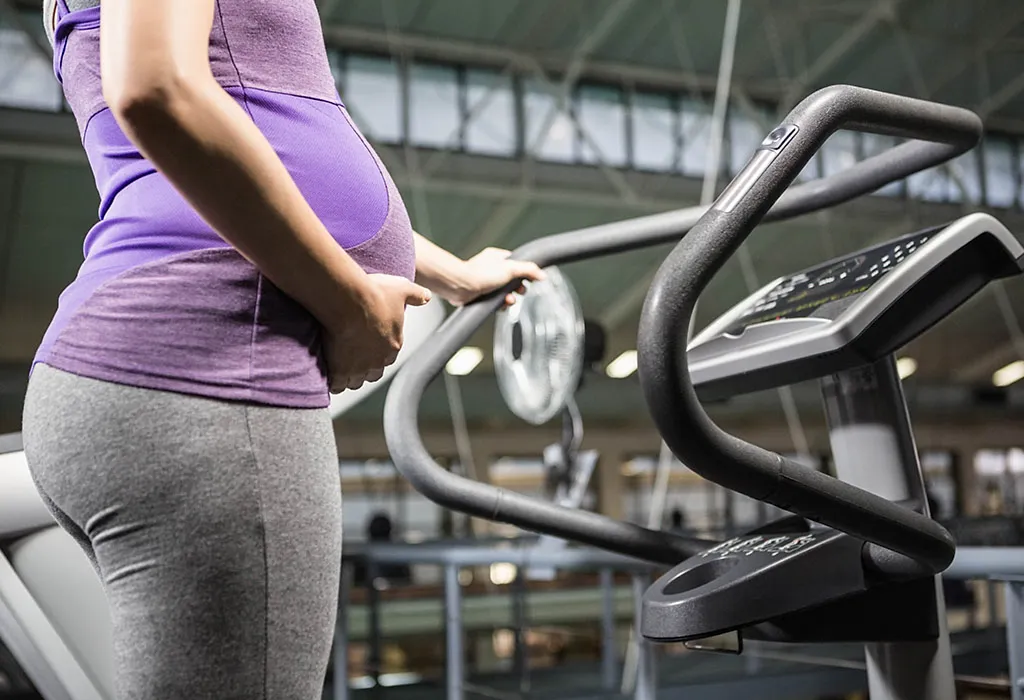
5. Use the Railings on the Treadmill as Liberally as You Want to
When walking on the treadmill, especially if you are using an incline, there is a chance you might lose your balance since the weight is shifted to one end. You might be young but you are also carrying a baby within you. So use the railings to keep yourself steady when you walk.
6. Make Use of Your Previous Workout Statistics as a Reference Point
If you’ve already been engaging in basic workout regimens prior to getting pregnant, then it should be simple to set a new pregnancy workout regimen. The major focus during pregnancy is to maintain a good level of fitness and health, without aiming for any specific goals. Therefore, you can cut down on the actual time you spend on the treadmill and instead increase the duration of warming up as well as cooling down.

7. Support Your Baby Bump
Your tummy will increase rapidly in size and will begin to make its weight felt as your pregnancy progresses. Certain specific movements can lead to pain since your bump will put extra pressure on your back for support. Therefore, make use of a band or a strap that supports your tummy and allows you to use the treadmill easily.
8. Opt for Progressively Angular Walks Instead of Faster Ones
Using the treadmill when you are pregnant will feel quite different if you are already used to an intense regimen prior to your pregnancy. While you may want to stay within the safety limits, it might feel good to push yourself a little at times. Try to adjust the inclination of the treadmill instead of the speed to aid this. This helps in strengthening your legs without affecting your heartbeat.
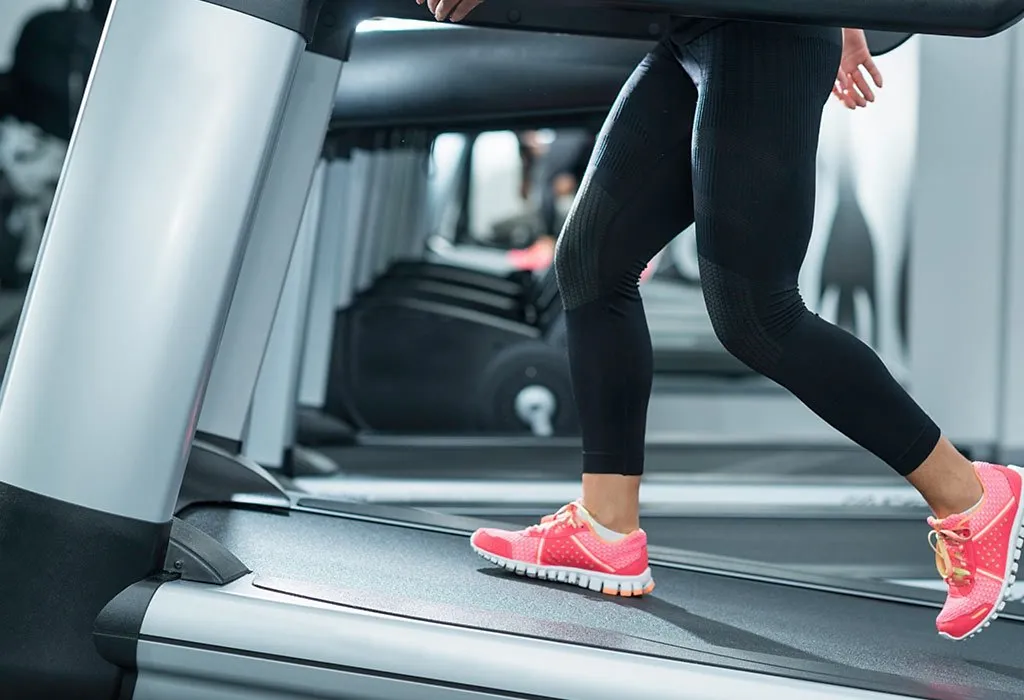
9. Converse With Yourself as a Way to Gauge Your Intensity
It may not always be possible to monitor your heart rate or other factors when using the treadmill, as well as knowing if you are overexerting yourself. The easiest way to do so is to try and talk alone as if you are conversing with someone else. If you cannot hold a conversation easily, it means you are pushing yourself too hard and should cut down immediately.
10. Adjust With Progress in Pregnancy
As your pregnancy progresses, make sure your treadmill regimen slows down to stay in pace with it. Your baby’s safety is more important than being fit and you will be able to return to your regimen after the delivery.

When to Stop Running on a Treadmill During Pregnancy?
Despite being fit and healthy, exercising during pregnancy could, in fact, be harmful in some cases and affect your pregnancy as well. Treadmill during pregnancy in the first, second and third trimesters is safe, but with precautions. Noticing any of the signs mentioned below should immediately be brought to your doctor’s notice, preceded by ending your workout then and there.
- Observing that the baby’s kicks and movements have reduced in frequency
- Experiencing exhaustion, difficulty breathing, or weak muscles
- Experiencing pain resembling contractions at regular intervals
- Pain in the chest that can get extreme
- An extreme headache, often accompanied by dizziness or even spells of fainting
- Leakage from the vagina either in the form of blood or any other discharge
- Pain or swelling in the legs
Treadmill vs. Other Cardio Options During Pregnancy
For a healthy pregnancy, aerobic activity is very important. A treadmill can be a convenient option to do moderate exercise, especially when walking outdoors is challenging. Walking on a treadmill is generally considered a safe moderate-intensity activity. The American College of Obstetricians & Gynecologists (ACOG) states that pregnant women should get at least 150 minutes of moderate-intensity aerobic activity each week (3).
- However, a treadmill is not the only cardio option. Swimming and water workouts are good alternatives that help support the growing body and reduce painful pressure on the joints (2).
- A stationary bicycle, on the other hand, is another great cardiovascular exercise that balances cycling and indoor safety (6).
- Similarly, Pilates and prenatal yoga can help with flexibility, relaxation, strength, and relief from joint and back aches.
Every workout choice, at the end, should be chosen keeping fitness level, physical comfort, and safety in mind.
FAQs
1. Can treadmill workouts help manage pregnancy-related back pain?
Yes, regular treadmill workouts can help strengthen your back and core muscles, which may alleviate some pregnancy-related back pain. However, it’s important to listen to your body and consult your healthcare provider for personalized advice.
2. Can treadmill exercise cause round ligament pain during pregnancy?
It’s possible for treadmill exercise to exacerbate round ligament pain if the intensity or speed is too high. To minimize discomfort, ensure you maintain a moderate pace and avoid sudden movements or jerky motions. If pain persists, consider adjusting your routine or consulting your healthcare provider.
3. How can I safely incorporate intervals into my treadmill workout while pregnant?
Interval training can be safe if done correctly. Focus on low-impact intervals, such as alternating between a brisk walk and a moderate pace, rather than high-intensity bursts. Ensure you listen to your body and avoid overexertion. Consult your healthcare provider to tailor intervals to your fitness level and pregnancy stage.
4. What should I do if I experience pelvic pressure during treadmill exercise?
Pelvic pressure can occur as the uterus expands. If you experience this, consider reducing the incline and speed of your treadmill workout. Opt for a more level surface and avoid exercises that cause excessive strain. If the pressure is persistent or painful, consult your healthcare provider for personalised guidance.
5. What speed should I prefer for walking on a treadmill when pregnant?
You can walk on a treadmill at the same speed you used to walk before pregnancy, only if you have no health complications. A safe and constant speed is ideal to maintain your balance. You can also take the ‘talk test.’ If you hold a conversation while walking, then your treadmill speed is OK.
6. Who should avoid using a treadmill during pregnancy?
According to ACOG, women who are diagnosed with conditions such as high blood pressure (preeclampsia), a weakened cervix, heart or lung disease, problems with the placenta, or having a risk for early labour should avoid exercise during pregnancy. A doctor’s consultation is advised in such cases.
This was all about pregnancy and treadmill. It is good to know that walking on the treadmill while pregnant has its advantages when you follow the right steps and keep yourself safe and hydrated. A healthy body is highly necessary during pregnancy since it directly impacts the health of the baby.
Also Read:
Squats in Pregnancy
Zumba during Pregnancy
Jumping while Pregnant
Weight Lifting when Being Pregnant
Was This Article Helpful?
Parenting is a huge responsibility, for you as a caregiver, but also for us as a parenting content platform. We understand that and take our responsibility of creating credible content seriously. FirstCry Parenting articles are written and published only after extensive research using factually sound references to deliver quality content that is accurate, validated by experts, and completely reliable. To understand how we go about creating content that is credible, read our editorial policy here.
1. American Pregnancy Association – Exercise During Pregnancy
2. National Library of Medicine – Pregnancy and Exercise
3. American College of Obstetricians and Gynecologists – FAQs: Exercise During Pregnancy
4. Tommy’s – Running in pregnancy
5. NHS – Exercise in pregnancy
6. National Academy of Sports Medicine – Safe pregnancy exercises for each trimester: prenatal workouts
- Author
- Expert Reviewer


Related Articles
-

Anti-D Injection Dose During Pregnancy: Benefit & Side Effects
-
20 Safe Abdominal Exercises To Do During Pregnancy
-

Vitamin B Complex in Pregnancy – Importance and Food Sources
-

Belly Dancing in Pregnancy – Safety, Benefits, and Precautions
-
This Pregnancy Breathing Exercise Promises to Cut Down Labour Time by 70%
-

Pregnancy Body Odour - Causes and Remedies