
Chhath Puja 2026 – History, Importance, Story, Traditions, & Rituals
A complete guide to Chhath Puja 2026 date, arghya timings, rituals, and full significance.




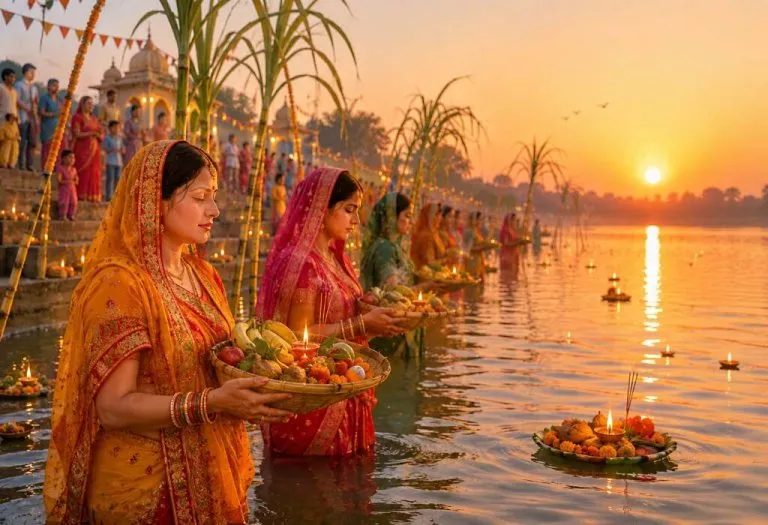
Chhath Puja 2026 is just around the corner, and devotees across India are getting ready to celebrate this deeply spiritual festival with faith and devotion. It is one of the most revered Hindu festivals, celebrated with immense enthusiasm, especially in Bihar, Jharkhand, Uttar Pradesh, and Nepal. Dedicated to Surya Dev, the Sun God, and Chhathi Maiya, this four-day festival is a beautiful expression of gratitude, faith, and devotion to nature. From observing a strict fast to offering arghya to the setting and rising Sun, every ritual carries a special spiritual meaning. But have you ever wondered how this ancient festival began or why its traditions are so unique?
In this article, we’ll explore the history, importance, story, traditions, and rituals of Chhath Puja, along with the beliefs that make this festival so meaningful.
What Is Chhath Puja?
Unlike many Hindu festivals celebrated with idols, elaborate decorations, and grand festivities, Chhath is known for its simplicity, discipline, and strict rituals. The Chhath Puja meaning is rooted in expressing gratitude to the Sun and nature for sustaining life and bringing health and prosperity.
The word Chhath means “sixth” in Hindi, as the festival is traditionally observed on the sixth day of the lunar month of Kartika, usually falling in October or November. Devotees observe fasts, take holy dips in rivers or other water bodies, and offer prayers to both the setting and rising Sun. Chhath Puja is celebrated as both a religious tradition and a vibrant community festival that brings families together.
Dates & Timings of Chhath Puja 2026
Chhath Puja 2026 will be observed over four days, from Friday, November 13 to Monday, November 16, 2026. The sunrise and sunset timings for the four days are as follows:
Day 1 – Chaturthi (Nahay Khay)
Date: 13th November 2026, Friday
- Sunrise at 06:42 AM
- Sunset at 05:28 PM
Day 2 – Panchami (Lohanda and Kharna)
Date: 14th November 2026, Saturday
- Sunrise at 06:43 AM
- Sunset at 05:28 PM
Day 3 – Shashthi (Chhath Puja, Sandhya Arghya)
Date: 15th November 2026, Sunday
- Sunrise at 06:44 AM
- Sunset at 05:27 PM
Day 4 – Saptami (Usha Arghya, Parana Day)
Date: 16th November 2026, Monday
- Sunrise at 06:44 AM
- Sunset at 05:27 PM
Note: The above sunrise and sunset timings may vary depending on the location. Devotees should check their local Panchang for the exact timings.
Story & History of Chhath Puja
If you’re looking for Chhath Puja history in English, several fascinating legends from Hindu traditions explain how this ancient festival became associated with Surya Dev and Chhathi Maiya. Although there is no single documented origin, stories from the Ramayana and Mahabharata, along with other popular legends, have helped preserve the significance of Chhath Puja across generations. Here are some of the most popular stories associated with the festival.
1. Chhath Puja and the Ramayana
One popular belief connects the Chhath Puja story with Lord Rama and Goddess Sita. According to tradition, after returning to Ayodhya following their 14-year exile, Rama and Sita observed a fast and worshipped Surya Dev. Their prayers to the Sun are believed to be linked with the tradition of offering prayers to the setting and rising Sun during Chhath.
2. Chhath Puja and Karna
Another well-known story comes from the Mahabharata. Karna, believed to be the son of Surya Dev, is said to have worshipped the Sun by standing in water and offering prayers. His deep devotion to Surya is often associated with the origins and traditions of Chhath Puja.
3. Draupadi and the Pandavas
The Mahabharata also has another connection with Chhath. According to popular belief, Draupadi observed a fast and worshipped the Sun for the well-being of her family. Some traditions say that her devotion helped the Pandavas overcome difficulties and regain their kingdom.
4. Goddess Sita and Chhathi Maiya
A tradition associated with Bihar’s Munger region says that Goddess Sita performed Chhath rituals at the site now associated with Sita Charan. According to this belief, she worshipped Chhathi Maiya and received blessings for the well-being of her children, Luv and Kush. This story for kids is particularly important in the local traditions of Munger and surrounding areas.
5. King Priyavrat and Goddess Shashthi
Another popular legend tells the story of King Priyavrat and Queen Malini, who were unable to have a child. After performing a yajna, they were blessed with a son, but the child was born lifeless. The grieving couple prayed to Goddess Shashthi, also known as Chhathi Maiya. According to the legend, the goddess blessed the child and brought him back to life. The story is one reason Chhathi Maiya is traditionally associated with the protection and well-being of children.
Why Chhath Puja Is Celebrated?
The significance of Chhath Puja lies in its deep spiritual values, as devotees pray for health, prosperity, family well-being, and happiness. Let’s take a closer look at its importance and the reasons behind these cherished traditions.
- Worship of Surya Dev: The Sun is regarded as the source of life and energy. Devotees offer arghya to Surya Dev while seeking good health, prosperity, and a long life.
- Devotion to Chhathi Maiya: Chhathi Maiya is worshipped for health, happiness, and family welfare. She is also believed to protect children and bless devotees with prosperity.
- Focus on Purity and Discipline: Fasting, cleanliness, and following strict rituals are an important part of Chhath. These practices encourage self-control, devotion, and both physical and spiritual purity.
- Respect for Nature: Chhath does not require elaborate idols or decorations. Instead, devotees worship natural elements such as the Sun and water and prepare offerings using traditional, natural ingredients.
Rituals of Chhath Puja
How Is Chhath Puja Celebrated?
Chhath Puja is celebrated over four days with a combination of fasting, prayers, traditional offerings, and rituals dedicated to Surya Dev and Chhathi Maiya. Families come together to follow each ritual with devotion, while communities gather near rivers, ponds, and other water bodies for the main offerings.
- Beginning With Nahay Khay: The celebration starts with Nahay Khay, when devotees take a holy bath and prepare a simple, pure meal. This marks the beginning of the four-day observance.
- Observing Kharna: On the second day, devotees observe a day-long fast and perform Kharna after sunset. They prepare traditional prasad, offer it during prayers, and share it with family and others.
- Offering Sandhya Arghya: On the third day, devotees gather near a water body in the evening to offer arghya to the setting Sun. Traditional offerings such as fruits, sugarcane, and thekua are carried in bamboo baskets or soops.
- Performing Usha Arghya: On the final day, devotees return to the water body before sunrise to offer arghya to the rising Sun. This is the concluding major ritual of Chhath Puja.
- Breaking the Fast: After completing the morning prayers and offering arghya, devotees conclude their fast through Parana. Prasad is then shared among family members, relatives, and the wider community.
What to Eat During Chhath Puja?
Food has a special place in Chhath Puja, with every dish prepared with purity, simplicity, and devotion. Here are some of the popular foods prepared and offered during the festival:
1. Thekua
Thekua is one of the most popular and essential offerings of Chhath Puja. This traditional sweet is usually made with wheat flour, jaggery, and ghee, then shaped and deep-fried until crisp. It is offered to the deities and later shared as prasad.
2. Kheer
Kheer is commonly prepared during Chhath, particularly for the Kharna ritual. Made with rice, milk, and jaggery, this simple sweet dish is offered as prasad after evening prayers.
3. Fruits
Fresh fruits are an important part of Chhath offerings. Devotees commonly include bananas, sugarcane, coconuts, and other seasonal fruits in their soop or bamboo baskets. These natural offerings are presented during the arghya rituals.
4. Rice and Dal
Simple preparations of rice and dal may also be eaten during the festival, particularly as part of the Nahay Khay meal. These dishes are prepared without onion and garlic and with careful attention to cleanliness and traditional practices.
Places to Visit During Chhath Puja
Want to see how Chhath Puja is celebrated beyond the rituals at home? From the sacred ghats of the Ganga to peaceful ponds and rivers, these destinations offer a chance to experience the festival’s traditions, devotion, and vibrant community celebrations up close.
1. Patna, Bihar
Patna is one of the most popular places to experience Chhath Puja. The ghats along the Ganga, including Gandhi Ghat and Patna Sahib, fill with devotees offering arghya to the setting and rising Sun. The decorated ghats, devotional songs, and festive atmosphere make the celebrations especially memorable.
2. Varanasi, Uttar Pradesh
The famous Ganga ghats of Varanasi take on a beautiful spiritual atmosphere during Chhath Puja. Devotees gather in large numbers to perform rituals and offer prayers to the Sun, while the illuminated ghats and rows of diyas create a stunning sight.
3. Ranchi, Jharkhand
Ranchi is another wonderful destination to witness Chhath Puja, particularly for those who prefer a more peaceful setting. The city’s ponds, lakes, and water bodies become gathering points where devotees perform rituals and celebrate the festival with traditional fervour.
4. Delhi
Delhi hosts large-scale Chhath Puja celebrations, particularly around designated ghats and water bodies. The city’s diverse communities come together to observe the rituals, making it a great place to experience the festival’s traditions and community spirit.
5. Kathmandu, Nepal
Chhath Puja is also celebrated with great devotion in Kathmandu, especially among the Nepali Hindu community. Rivers, ponds, and other water bodies become lively worship spaces where devotees follow traditional rituals and offer arghya to the Sun.
FAQs
1. What should devotees avoid during Chhath Puja?
Devotees generally avoid non-vegetarian food, alcohol, smoking, and practices considered impure during the festival. They also try to maintain cleanliness, self-discipline, peaceful behaviour, and a positive state of mind throughout the four-day observance.
2. Who can celebrate Chhath Puja?
Chhath Puja can be observed by anyone who wishes to follow its traditions with faith and devotion. While the main rituals and strict fasting are traditionally performed by vratis, family members and other devotees can also participate by helping prepare prasad, joining the prayers, and offering arghya to Surya Dev. The festival is open to people of all ages and backgrounds, with specific practices often varying according to family and regional traditions.
3. How can children participate in Chhath Puja?
Children can take part in Chhath Puja by helping their families prepare offerings, learning about the festival’s traditions, joining prayers, and visiting the ghats. A Chhath Puja for kids can be explained through simple stories, traditional songs, and age-appropriate activities without expecting children to follow strict fasting rituals.
4. Can Chhath Puja be celebrated without fasting?
Yes, people can participate in Chhath Puja without observing the strict fast. While the vrati follows specific fasting practices, other family members can participate in prayers, prepare prasad, visit the ghat, and assist with the rituals according to their family traditions.
Now that you are all armed with information about Chhath Puja, explain the festivities to your children. Let them help you with arranging the prasad, setting up the pandal, and preparing the materials for the Puja. When sunrise and sunset arrive, you can pray to the Sun God together and wish for millions of sunlit, beautiful days ahead. As you prepare to welcome the Chhath Puja Festival 2026, make these traditions a meaningful experience for the whole family and pass their values on to the next generation.
Also Read:
Why Chhath Puja Holds a Special Place For Women
35 Best Chhath Puja Wishes, Messages & Quotes for Your Loved Ones
Was This Article Helpful?
Parenting is a huge responsibility, for you as a caregiver, but also for us as a parenting content platform. We understand that and take our responsibility of creating credible content seriously. FirstCry Parenting articles are written and published only after extensive research using factually sound references to deliver quality content that is accurate, validated by experts, and completely reliable. To understand how we go about creating content that is credible, read our editorial policy here.
- Author


Related Articles
-

National Girl Child Day - History, Objectives and Celebration
-
Style Tips to Keep you Safe at a Kids' Birthday Party!
-
80 Are You Smarter Than a 5th Grader Questions
-
International Day of the Girl Child 2026 – History, Theme, Facts & More
-
20 Perfect Christmas Gifts for Pregnant Women in 2025
-
Helping your Child Make & Keep New Year's Resolutions