

LH Surge and Ovulation: Importance, Test & Levels
Learn what an LH surge means, how to test for it, and why tracking LH levels is key to predicting ovulation accurately.





Medically Reviewed By
Dr. Deepinder Kaur
(Gynaecologist)

In this Article
- What Is Luteinizing Hormone?
- What Are Normal Luteinizing Hormone Levels?
- What Is LH Surge?
- Importance of LH Surge
- When Does LH Surge Occur?
- What Does It Look Like?
- Does It Occur in All Women?
- How Is the LH Surge Detected?
- How Is LH Test Performed?
- How Frequently Should You Test for LH Surge?
- How Long Does Surge in Luteinizing Hormone Last?
- What are the Causes of No LH Surge?
- LH Surge Chart
- Is There Any Relation Between FSH and LH?
- FAQs
View More
This health content has been medically reviewed by qualified experts and follows the FirstCry Parenting editorial policy to ensure accuracy and reliability.
An LH (luteinizing hormone) surge is a sudden rise in luteinizing hormone that signals ovulation is likely to occur within the next 24-36 hours, marking the most fertile time in the menstrual cycle. If you’re wondering about the luteinizing hormone meaning, LH is a reproductive hormone that helps trigger ovulation. Since the timing of the LH surge and ovulation is closely linked, tracking this hormonal change can help identify your fertile window and improve the timing of intercourse when trying to conceive.
In this article, you’ll learn how an LH surge works, when it occurs, how to detect it, what factors can influence its timing, and why it matters for increasing your chances of pregnancy.
What Is Luteinizing Hormone?
If you want to define luteinizing hormone, it is a hormone produced by the pituitary gland that regulates key processes in the female reproductive system (1). It stimulates the final maturation of ovarian follicles and triggers ovulation through a sharp rise in hormone levels known as the LH surge. Because of this, tracking LH levels can help identify the fertile window for couples trying to conceive.
What Are Normal Luteinizing Hormone Levels?
Luteinizing hormone (LH) levels vary based on sex, age, and the stage of the menstrual cycle. In women, LH levels fluctuate throughout the cycle and peak just before ovulation, while men typically maintain relatively stable LH levels. The table below outlines the normal LH ranges for different groups (1).
| Sex and Factors | Normal LH Levels (IU/L) |
| Women (Weeks 1-2 of the menstrual cycle) | 1.37-9 IU/L |
| Women (Week 2, before ovulation) | 6.17-17.2 IU/L |
| Women (Weeks 3-4 of the menstrual cycle) | 1.09-9.2 IU/L |
| Women (After menopause) | 19.3-100.6 IU/L |
| Men | 1.42-15.4 IU/L |
What Is LH Surge?
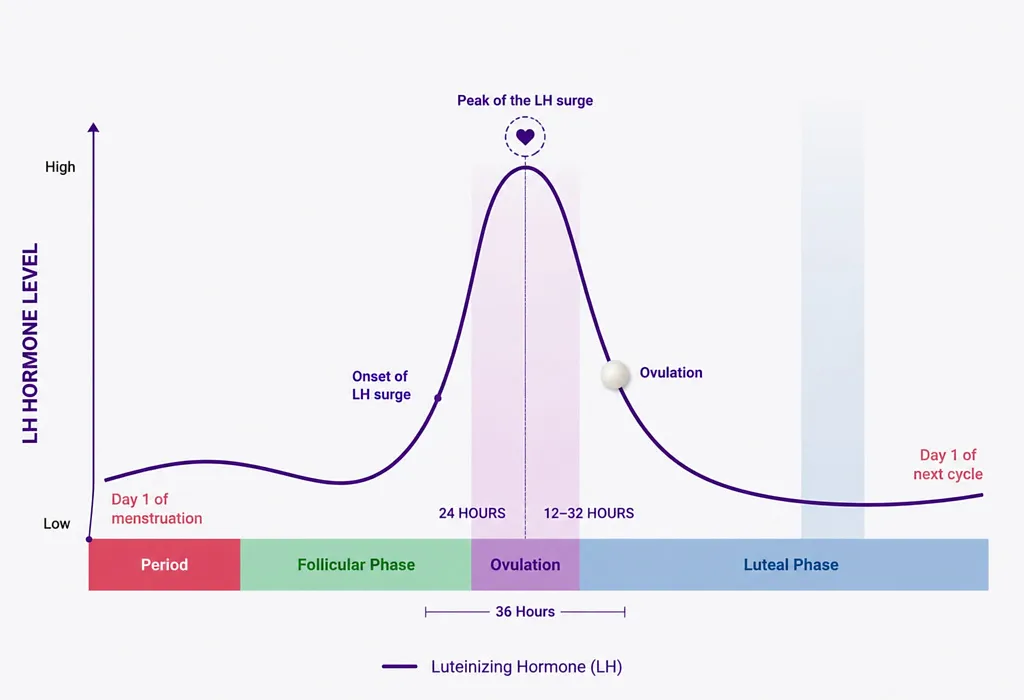
An LH surge is a rapid increase in the level of luteinizing hormone (LH) that occurs approximately 24-36 hours before ovulation (2). This hormonal spike signals the ovary to release a mature egg, marking the start of the most fertile period in the menstrual cycle.
Source: https://www.ncbi.nlm.nih.gov/books/NBK279054/
Importance of LH Surge
Timing the efforts to conceive a baby, based on the LH surge, has been found to be a better alternative to trying blindly, in most couples. The LH surge itself occurs so as to trigger the release of the egg or facilitate the process of ovulation in the females who are fertile (3). By measuring the levels of LH in the female, couples can time their efforts better in order to have a higher chance of conceiving a child.
When Does LH Surge Occur?
The LH surge to ovulation time is typically 12-48 hours, with ovulation occurring after a sharp rise in luteinizing hormone (LH). On average, the LH surge begins about 36 hours before ovulation, although the exact timing can vary from one woman to another.
What Does It Look Like?
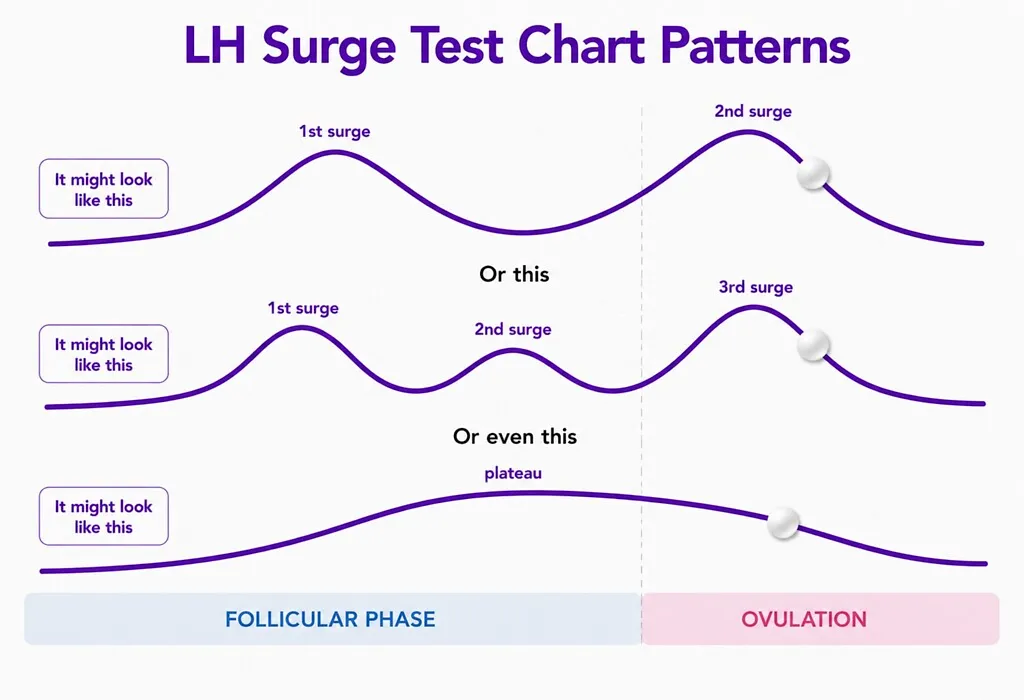
An LH surge doesn’t always appear as a single sharp spike. Research shows that LH levels can rise in different patterns from one menstrual cycle to another, and each pattern can still be considered normal if ovulation occurs.
Source: https://www.ncbi.nlm.nih.gov/books/NBK279054/
1. Rapid Spike (Single Peak)
A rapid spike is the classic LH surge pattern, where LH levels increase sharply and then decline within a short period. Although this is the pattern most people associate with ovulation, it occurs in fewer than half of ovulatory cycles.
2. Double Peak
Some women experience two separate LH surges within the same cycle, often a few days apart. While the first surge may not always lead to ovulation, the second surge can trigger the release of the egg. This pattern is generally considered a normal variation.
3. Biphasic Peak
In a biphasic pattern, LH levels rise, dip briefly, and then increase again the following day. The second peak may be higher or lower than the first, and this two-step surge is commonly seen in ovulatory cycles.
4. Plateau Peak
Instead of rising and falling quickly, LH levels may remain elevated for two to three days before declining. Because the hormone stays high for longer, ovulation predictor kits may show positive results over multiple consecutive days.
5. Multiple Peaks
Some menstrual cycles show more than two LH rises before ovulation. In many cases, this is a normal hormonal variation. However, frequent multiple peaks may sometimes be associated with conditions such as polycystic ovary syndrome (PCOS) or cycles where ovulation does not occur, especially if accompanied by irregular periods or other symptoms.
Does It Occur in All Women?
The surge of LH levels does not occur in all women, but this is often an indication of an underlying condition that causes lower-than-normal levels of the hormone in the female body. Common conditions that contribute to and cause low levels of LH in females are – the Kallmann Syndrome, eating disorders, and hypothalamic suppression. However, higher than normal LH levels in females can also cause problems with fertility and LH surge, and this might be caused due to conditions like premature menopause, Swyer syndrome and polycystic ovary syndrome (4).
How Is the LH Surge Detected?
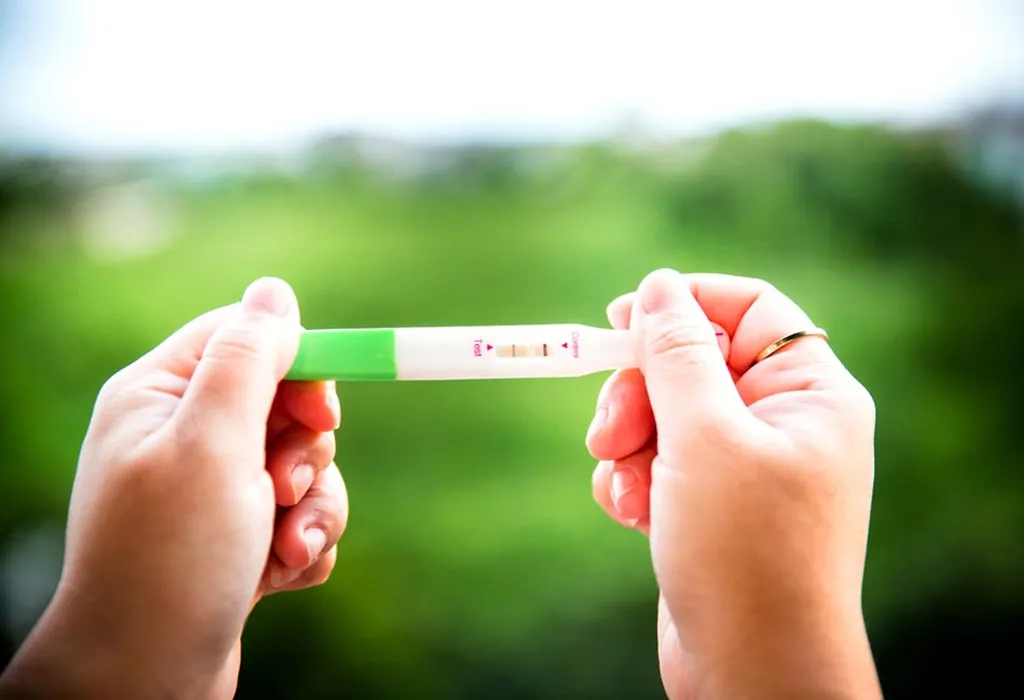
Luteinizing Hormone tests are available in the market and can be used to measure the levels of LH in the body of a female. These require you to urinate on a stick, and the indicator of a positive result is when you have a certain level of LH in your urine. A positive test means that you are in the midst of your LH surge, so you can try to conceive in a more planned manner.
How Is LH Test Performed?
It is commonly performed using a urine-based ovulation predictor kit (OPK) at home or a blood test, depending on the reason for testing. Here’s how each method works:
1. Urine LH Test (Ovulation Predictor Kit)
A urine LH test is the most common method for detecting an LH surge at home. You collect a urine sample or place the test strip directly in your urine stream, following the manufacturer’s instructions (5).
2. Blood LH Test
A blood LH test is performed by a healthcare professional, who draws a small blood sample from a vein in your arm. The sample is then analysed in a laboratory to measure the exact LH level. This test is often recommended when evaluating fertility issues, irregular menstrual cycles, or hormonal disorders (4).
How Frequently Should You Test for LH Surge?
Ovulation usually occurs around two weeks before your periods, so you can start testing for the LH surge around two or three days before you start ovulating, which equates to around 16 days before your period occurs. The LH surge is supposed to occur at that time, and you will see a marked spike in your LH levels.
How Long Does Surge in Luteinizing Hormone Last?
The surge itself may last around 12-24 hours, right before ovulation occurs. There may be an increase of at least up to 5 times the normal levels of LH in the female body.
Things to Remember
- To increase your chances of conception, start on the day you get a positive result, and continue for the next three days.
- LH is usually produced in the morning, so test your levels during the afternoon or the evening.
- You should remember to hold your urine for around 4 hours before testing for the surge.
- Test twice a day, since the surge is short and sudden in some women.
What are the Causes of No LH Surge?
Ovulation does not take place if LH surge doesn’t occur, and this might happen due to several causes.
1. No Follicular Development
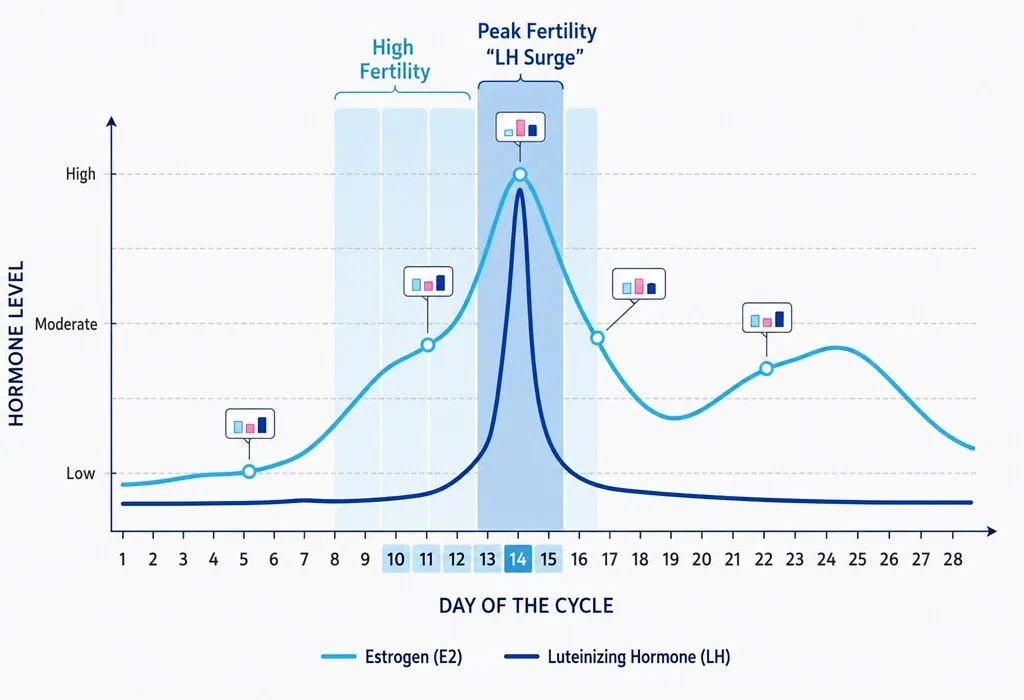
Sometimes, the LH surge is caused by rising levels of estradiol, which in turn are due to developing follicles. If there is a lack of follicular development, it can result in low levels of estradiol, which in turn prevents the occurrence of an LH surge.
2. Poor Follicular Growth
The growth of the follicle may sometimes stop abruptly, but the follicle may still continue to produce oestrogen for the body. However, this might not be enough for an LH surge to occur, so the egg remains unreleased.
3. LH Suppression With Medication
Assistive reproduction technology, like In Vitro Fertilization techniques, use many medications which can prematurely release follicles before the egg retrieval. This results in the LH surge not occurring in the female.

LH Surge Chart
Source: https://www.ncbi.nlm.nih.gov/books/NBK279054/
Is There Any Relation Between FSH and LH?
FSH (follicle-stimulating hormone) and LH (luteinizing hormone) are reproductive hormones that work together to regulate ovulation. FSH helps an egg grow and mature inside the ovary, while LH triggers the release of that mature egg during ovulation. Because these hormones act one after the other, a healthy balance of both is important for regular menstrual cycles and successful conception (6).
FAQs
1. Can I ovulate even if I get a negative LH test result?
The LH surge is often short and sudden in women, so it may be possible that you missed the surge entirely. This means that you will still ovulate, regardless of the test results at times. To ensure the reliability of the test, you can ensure that you test only in the afternoons or evenings.
2. Is it possible to get a positive test result and not ovulate?
This is rare, but it is still possible to not ovulate after a positive result. You can use ultrasonography or fertility chart methods to predict ovulation if you are doubtful as to whether ovulation is occurring.
3. How accurate is the kit used for detecting LH Surge?
Although the tests are highly accurate, the kits are still not foolproof – ovulation can still occur with or without the egg being released. Therefore, they must never be used as a planning method for contraception.
4. Can you have an LH surge in pregnancy?
No. An LH surge in pregnancy does not occur because ovulation stops once pregnancy begins. After conception, LH levels naturally decrease, and the luteinizing hormone normal range during pregnancy is generally less than 1.5 IU/L.
LH surge plays a huge role in triggering the release of the unfertilised egg, and therefore, can help families increase their chances of conceiving a child. Kits are available to detect LH surge in the female body, but make sure to follow the instructions and understand the drawbacks of using them.
Also Read:
Pregnancy Planning
How to Get Pregnant Fast
How Long Does it Take to Get Pregnant
Was This Article Helpful?
- Author
- Expert Reviewer


Related Articles
-

5 Ways to Unwind While Trying to Conceive
-

Taking Cough Syrup to Get Pregnant - Does it Really Help?
-
You Need to Know THIS to Maximise Your Chances of Conception + 4 Ways to Prevent Infertility
-
Basal Body Temperature (BBT): Chart, Tracking, & more
-

12 Foods to Avoid When Trying to Conceive
-

Implantation Bleeding – Signs, Symptoms & When to Worry