
Elderberry in Pregnancy – Is It Safe?
Curious about elderberry in pregnancy? Get clear information on its safety, benefits and potential risks.





Image Credit : AI Generated Image
Elderberries are generally considered safe during pregnancy. However, there isn’t enough data, study, and research available to specify any adverse side effects of consuming Elderberry during pregnancy. Every individual’s body reacts differently, and many people do not even experience any side effects. It is generally available as teas, tablets, and extracts to treat the common cold, flu, constipation, and many other symptoms.
US Department of Agriculture guidelines warn that berries need to be cooked before they can be eaten. Raw elderberries for pregnancy are harmful as they have toxins; hence, cooking removes the toxicity of the berries, as the unripe berries are toxic and should be strictly avoided. So, if you want to include an elderberry syrup pregnancy dish in your diet, do so after consulting your physician. Read on to learn all about elderberry and pregnancy.
What Is Elderberry?
Elderberry refers to the dark purple fruit of the elder tree, scientifically known as Sambucus nigra. These berries are commonly used in traditional medicine and culinary applications. They are known for their potential health benefits, as they are rich in antioxidants and vitamins and may offer immune-boosting properties (1). It’s important to note that consuming elderberries should be done cautiously, as some parts of the plant can be toxic if not properly prepared. It’s recommended to use commercially available elderberry products from reputable sources. Always consult a healthcare professional before adding any new supplement or food to your diet.
Nutritional Profile of Elderberry
Elderberries, the dark purple fruit of the elder tree, are valued for their potential health benefits and nutritional richness. They are packed with various essential nutrients and antioxidants, making them a popular choice in traditional medicine and culinary applications.
- Rich in Antioxidants: Elderberries are abundant in anthocyanins, flavonols, and other antioxidants, which help combat oxidative stress and support overall health.
- Vitamin C Content: These berries are a notable source of vitamin C, an essential nutrient for immune function, skin health, and wound healing.
- Dietary Fibre: Elderberries provide a good amount of dietary fibre, promoting healthy digestion and potentially aiding in weight management.
- Vitamin A and Beta-Carotene: They contain vitamin A and beta-carotene, which are crucial for vision, skin health, and immune function.
- Potassium and Calcium: Elderberries offer minerals like potassium and calcium, which are important for maintaining proper heart function and bone health.
- Low in Calories and Fat: They are relatively low in calories and fat, making them a nutritious option for those looking to manage their calorie intake.
Can You Take Elderberry While Pregnant?
Is elderberry safe during pregnancy? Consuming elderberry is safe for pregnancy, and the ripe ones can be eaten in moderation. You can consider turning to Elderberry to cure commonly occurring health issues like cold and flu rather than consuming conventional medicines when pregnant. However, there is no tangible and quantifiable data, study, or research to prove the side effects, reactions on other drugs and food nutrients when a pregnant woman consumes cooked or commercially available elderberry supplements.
All studies and research performed are small in numbers. Hence, more detailed and larger studies must be conducted. Consult your doctor first to know if you are ok to take Elderberry while pregnant! Upon receiving your doctor’s confirmation to try Elderberry for your symptoms, you can buy fresh ripened or dried elderberries and try the DIY recipes mentioned in this article. For example, you could try Elderberry syrup during pregnancy.
Health Benefits of Eating Elderberry During Pregnancy
Elderberries are usually a good source of vitamins, flavonoids, and amino acids, which help maintain good health and prevent diseases. Here are some more benefits of elderberry during pregnancy:
1. Immunity Booster
Elderberries fight cold and flu. The presence of vitamin C, antibacterial and antiviral properties boosts the immune system. They also increase the production of cytokines, which further boosts the immunity system.
2. Improves Heart Health
Elderberries are an excellent source of fibre. They help remove bad cholesterol and increase good cholesterol levels in the body. Additionally, the presence of fibre improves heart health and acts as a protection against cardiovascular disease (2).
3. Heals Upper Respiratory Infections
Elderberries help in soothing inflammation and irritation in the respiratory tract. The presence of rich bioflavonoids clears out excessive phlegm or mucus and improves respiration. Elderberries also help in healing strep-throat, bronchitis, cold, and cough (3).
4. Improves and Toughen Bone Health
Elderberries are used as an herbal medicine to provide relief from joint pains, arthritis, etc. Anthocyanins make it an excellent source of antioxidants and anti-inflammatories to heal soreness in joints and reduce tissue damage from oxidative stress (4).
5. Improves Eye Vision
The multiple benefits of anthocyanins abundantly available in elderberries include nutraceuticals that aid in maintaining eye vision. It helps improve night vision by offering protection for eyesight (5).
6. Nutritional Value
Elderberries are wholesomely nutritious. Besides having antioxidants, they are a rich source of proteins, carbohydrates, phytosterols, fatty acids, and many vitamins and minerals. These promote the overall well-being and good health of an individual.
7. Neuroprotective
The dark and black-purpled colored elderberries are an excellent source of anthocyanins that help protect the nerves and the brain.
Healthy Recipes Using Elderberry for Pregnant Women
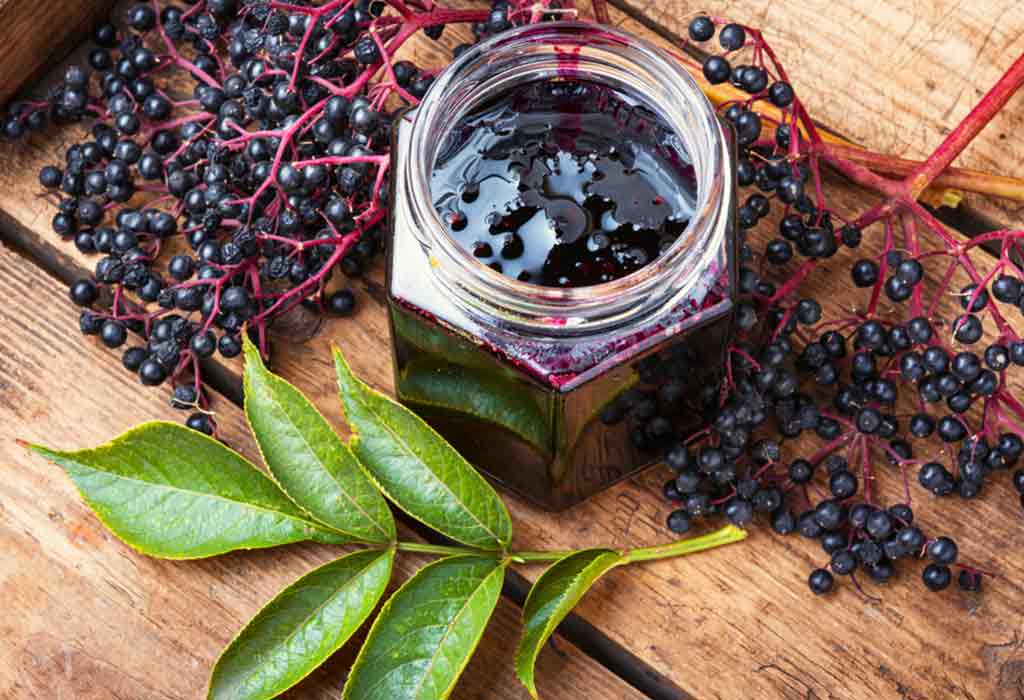
Elderberry has long been cultivated for its use in wine, jams, and juices. However, its therapeutic benefits stand out. Here are some recipes to consume elderberries in different forms that can be cooked easily at home to reap the benefits. Do consult your doctor before you choose to consume them to suit your dietary requirements. You can also ask the doctor if Elderberry tea is safe during pregnancy.
1. Elderberry Jam
Ingredients
- Ripe Elderberries- 700 grams
- Lemon Juice- extract of ½ a lemon
- Sugar- 700 grams
Instructions
- Take a pan and put elderberries and lemon juice in it, and cook it on medium heat.
- Once the juice begins to run and boil, turn the heat down and cook it for 20 minutes.
- Now add sugar to the mix and continuously stir until it dissolves. Boil it at 105 °C to reach its set point.
- Take a sterilised jar or container to store the jam. Tightly close the lid and keep it in an excellent place to store.
- Savour the jam as you like it.
2. Elderberry Gummies
Ingredients
- Elderberry Syrup- 1 cup
- Gelatin (unflavored) – 4 tablespoons
Instructions
- Take a pan and mix the elderberry syrup and gelatin.
- Keep the pan over a low flame and continuously whisk or give it a good stir until the gelatin completely dissolves.
- Now transfer the mixture into silicone moulds and refrigerate until it solidifies. It will generally take 30-45 minutes to solidify.
- After it solidifies, you can remove the gummies from the mould and store them in an airtight jar.
- Keep a couple of gummies if necessary.
3. Homemade Elderberry Syrup
Ingredients
- Dried Elderberries- 3/4th cup
- Water – 3 cups
- Cinnamon Powder – 1 teaspoon
- Clove Essential Oil – 1 drop
- Ginger Essential Oil – 1 drop
- Honey- 1 cup
(Note: You can alternately use one teaspoon each of fresh ginger and dried cloves if you do not have the essential oils handy.)
Instructions
- Take a pan and add elderberries, cinnamon, clove oil, and ginger oil, and bring it to a boil.
- Now decrease the flame/heat and simmer until the liquid has reduced by half. This would take about 45 minutes.
- Now take the pan off the heat and let it cool. After that, drain the liquid using a filter.
- Press and squeeze all the liquid out of the berries
- Now add honey and mix it well.
- Store the syrup in an airtight glass container in the refrigerator.
- Once refrigerated, you can use the elderberry syrup in pregnancy for up to two months.
4. Elderberry Chia Seed Pudding

Image Credit: Pinterest
Ingredients
- 1/4 cup chia seeds
- 1 cup almond milk (or any preferred milk)
- 2 tablespoons elderberry syrup (commercially prepared)
- 1 tablespoon honey (optional)
- Fresh berries and nuts for topping
Instructions
- In a bowl, combine chia seeds and almond milk. Stir well to prevent clumping.
- Add elderberry syrup and mix thoroughly.
- Cover and refrigerate overnight or for at least 4 hours to allow the chia seeds to absorb the liquid and form a pudding-like consistency.
- Before serving, stir the pudding to ensure an even texture.
- Optionally, drizzle honey for additional sweetness.
- Top with fresh berries and a sprinkle of nuts for added texture and flavour.
- Serve chilled as a nutritious and satisfying dessert or breakfast option.
5. Elderberry Oatmeal Breakfast Bake
Ingredients
- Rolled Oats – 2 cups
- Milk of choice – 2 cups
- Elderberry Syrup – 1/2 cup
- 1 large egg, lightly beaten
- 1 teaspoon vanilla extract
- 1 teaspoon cinnamon
- 1/2 cup mixed berries (fresh or frozen)
Instructions
- Preheat your oven to 375°F (190°C) and lightly grease a baking dish.
- In a large bowl, combine the rolled oats, milk, elderberry syrup, beaten egg, vanilla extract, and cinnamon. Mix until well combined.
- Gently fold in the mixed berries.
- Pour the mixture into the prepared baking dish and spread it evenly.
- Bake for 35-40 minutes, or until the top is golden and the oatmeal is set.
- Let it cool for a few minutes before serving. This can be stored in the refrigerator and reheated for a quick breakfast.
Side Effects of Eating Elderberry When Pregnant
Ripe and cooked Elderberry, when consumed in moderation, is considered safe. However, overconsumption has some side effects. Here are the risks of taking elderberry when pregnant:
- Elderberries can cause stomach ache, diarrhoea, and abdominal cramps because of their laxative effect
- Parts of the elderberry plant, like the roots, bark, leaves, and stems, have a poisonous substance known as glycosides and cyanogens.
- Unripe elderberries have alkaloids, hydrocyanic acid, and sambucine, which cause vomiting and nausea (6). It is also green and is astringent, which causes toxicity.
- One could also experience dizziness, numbness, and, at times, respiratory issues.
FAQs
1. Is it safe to consume elderberries every day during pregnancy?
Daily consuming elderberry while pregnant should be approached with caution. While they offer health benefits, moderation is key due to potential side effects and the need for proper preparation. Consulting a healthcare professional is advised.
2. What can I take instead of elderberry during pregnancy?
Due to insufficient research on consuming elderberry in pregnancy, opting for tart berries can serve as an alternative. Additionally, if you desire tea, consider incorporating green tea into your pregnancy diet.
3. Can I take elderberry while breastfeeding?
While there isn’t sufficient research on the safety of consuming elderberry during and after pregnancy, it’s recommended to avoid it. Explore alternative options to elderberry for a safer choice during this period.
This was all about black elderberry in pregnancy. It is hard to ignore the numerous medicinal benefits of Elderberry, considering its medicinal purposes and use for thousands of years. However, due to the lack of sufficient study, the use becomes relatively questionable. Hence, taking the advice of your doctor or health consultant is extremely important before you begin consuming elderberries.
Also Read:
Eating Grapefruit While Pregnant
Consuming Oranges During Pregnancy
Eating Saffron When Pregnant
Consuming Walnuts in Pregnancy
Was This Article Helpful?
Parenting is a huge responsibility, for you as a caregiver, but also for us as a parenting content platform. We understand that and take our responsibility of creating credible content seriously. FirstCry Parenting articles are written and published only after extensive research using factually sound references to deliver quality content that is accurate, validated by experts, and completely reliable. To understand how we go about creating content that is credible, read our editorial policy here.
- Author
 About the Author
Priyadarshika Ingle
Related Articles
-

Black Gram (Urad Dal) in Pregnancy - Benefits and Precautions
-
Apple Cider Vinegar During Pregnancy - Is It Safe?
-
Eating Plums (Aloo Bukhara) During Pregnancy
-
Jujube (Ber) Fruit in Pregnancy – Benefits, Side Effects, and Recipes
-
Eating Avocado in Pregnancy - Benefits and Precautions
-
Taking DHA (Docosahexaenoic Acid) in Pregnancy