

Henna in Pregnancy – Is It Safe to Use?
Know when henna in pregnancy is safe, which types to avoid, and key precautions for skin application and hair colouring use.





Medically Reviewed By
Dr. Sabiha Anjum
(Gynecologist/Obstetrician)

In this Article
- Can Pregnant Women Use Henna?
- Are There Any Benefits of Using Henna in Pregnancy?
- Conditions When You Should Avoid Applying Henna in Pregnancy
- Which Henna Is Safe in Pregnancy?
- Using Henna for Colouring Hair
- Applying Henna on the Skin While Pregnant
- Is Black Henna Safe for Pregnant Ladies?
- Precautions to Take While Using Henna
- When to Take Medical Help?
- FAQs
View More
This health content has been medically reviewed by qualified experts and follows the FirstCry Parenting editorial policy to ensure accuracy and reliability.
Henna is generally considered safe during pregnancy when it is natural and free from harmful additives. If you are pregnant and wondering whether henna can be used safely during pregnancy, you are not alone in having this concern. Many expectant mothers prefer henna as a gentle, plant-based option for body art and hair care during this special time. In this article, we explain everything you need to know about henna and pregnancy, including its benefits, possible risks, and simple safety tips to help you make informed choices and use it confidently and safely throughout your pregnancy journey.
Can Pregnant Women Use Henna?
Yes, pregnant women can safely use henna. However, it is recommended to use the pure henna in its natural form and avoid the one that has chemicals in it. The chemical mix henna variants available in the market may give better colour, but the chemicals may cause problems for you or your baby.
However, there are some studies that suggest the avoidance of henna or mehndi for pregnant ladies. A 2016 study concluded that use of Lawsonia inermis (henna plant) during pregnancy may lead to abortion. Therefore it should be considered as contraindication or must be used with great caution (1).
Are There Any Benefits of Using Henna in Pregnancy?
Yes, there are certain benefits of using henna or mehndi while pregnant.
1. Ocassion
It marks a festive occasions and wakes up the festive spirit. It looks so beautiful and you can make multitude of designs. Plus, it is not at all permanent or painful unlike tattoos. You are in the super festive mood, then you can also get a henna design on the babybump. Pregnant henna tattoo belly photograph can be a nice addition to your pregnancy photoshoot.
2. Cooling Effects
Henna or mehndi has a cooling effect. When applied on the hands or feet, it can help soothe the swelling pain.
3. Reduces Stress
For some people, applying henna is a art which can help promote relaxation.
4. Anti-inflammatory Effects
Henna is known to have anti-inflammatory, antimicrobial, and antioxidant proprerties.
Conditions When You Should Avoid Applying Henna in Pregnancy
Though using henna in pregnancy is completely safe, you should avoid using henna if you or your previous-born kid has any of the following conditions:
- G6DP deficiency (1)
- Anaemia
- Hyperbilirubinemia
- Any blood or immune system-related problem.
Which Henna Is Safe in Pregnancy?
Henna obtained from the henna plant is the safest form of henna that you can safely use in pregnancy. The natural henna will leave red, orange, brown, cinnamon, brick, coffee or chocolate colour on the skin. The natural henna never leaves a black stain. If it does, then it may indicate the presence of chemicals and thus should not be used in pregnancy. The colour of natural henna may stay from one to four weeks.
Using Henna for Colouring Hair
If you are fond of colouring your hair, you may have to skip this routine in pregnancy, as chemical dyes may pose a threat to you or your unborn baby’s health. Though there is not enough scientific evidence to support this claim, however, it is advisable to give chemical dyes a miss during pregnancy. Many health experts recommend dyeing hair until after week 13 to be safe (2). You may use semi-permanent pure vegetable dyes, like pure, unadultered henna to colour your hair during pregnancy (3) (4). Henna hair dye during pregnancy is not only extremely safe, but it also nourishes and makes your hair shine. The only drawback is that you can only dye your hair in a single colour, and you may have to keep it on your hair for almost four hours to achieve the desired colour.
Applying Henna on the Skin While Pregnant
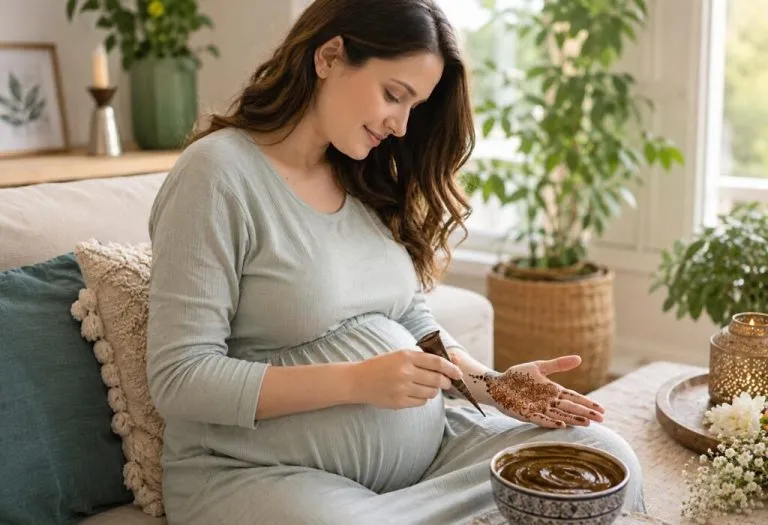
Are you wondering if mehndi can be applied to hands during pregnancy? The answer is yes; you can apply henna safely during pregnancy. In many customs, henna is applied on the hands and even on the belly to celebrate pregnancy. The pure form of henna has no side effects, and thus, applying mehndi during pregnancy is extremely safe for you or your baby. However, you may apply henna for its other beneficial properties. It brings down the body temperatures and helps cool your system. It is beneficial for curing cracked heels and fungal infections, and it also nourishes the nails. To achieve a rich, darker colour, you may leave the henna on your hands for a longer time. Applying clove oil or mustard oil after you wash off the henna from your hands helps develop a darker colour.
Is Black Henna Safe for Pregnant Ladies?
There are many variants of henna available on the market, and one such variant is black henna. Black henna should be strictly prohibited in pregnancy and non-pregnancy cases because of the following reasons (5):
- Black henna contains PPD or paraphenylenediamine (5); this is a chemical that is usually used in chemical dyes.
- PPD has been proven to cause blisters, burns and other skin reactions and allergies that may be harmful to you or your unborn child.
- It is suggested that you exercise great caution while selecting henna during pregnancy to avoid any health complications.
If you were using black henna before pregnancy to dye your hair, you should stop this practice as soon as you get pregnant. Pregnancy makes you more susceptible to falling ill or having an allergic reaction due to a weakened immune system.
Precautions to Take While Using Henna
Henna is safe and does not cause any complications, however as a mommy-to-be you have to be doubly sure for the sake of your unborn baby. Your immune system is compromised, and thus, you need to be more cautious about your health. Therefore, you may exercise the following caution while using henna during pregnancy:
- Though natural or pure henna is very safe, if you are sensitive or prone to allergies, it will be a good idea to do a patch test. You may apply henna on a small portion of your skin for approximately half an hour. If there is no reaction, then you may safely apply henna.
- It is recommended that if you wish to apply henna on your hair for colour or conditioning, you may get it done from a parlour or ask someone to help you. This is because applying henna can get tedious and may tire you unnecessarily.
- Sit in a comfortable room and on a comfortable chair during the process of henna application as it usually takes a long time. You may make use of extra pillows or stools to provide support to your legs or arms.
- Do not cover your hands after applying henna. The cooling effect of henna will help your body feel relaxed and cool.
- You may take help, even while washing henna from your hair, to avoid unnecessary exertion.
- In case you experience any kind of discomfort, joint pain, discharge or bleeding, you should seek immediate medical help.
- In case you had experienced any reaction after applying henna before you were pregnant, there is a strong likelihood that you may still have it. Therefore, refrain from using henna during pregnancy.
When to Take Medical Help?
Though the henna application does not pose any threat to you or your unborn baby, if you notice any of the following symptoms then it will be wise to take medical help:
- Bleeding
- Dizziness
- Joint pain
- Fever
- Increasing blood pressure
- Cramping
- Nausea
- Vomiting
All the above-mentioned symptoms may indicate some medical complications. It is recommended that you get in touch with your doctor to avoid any complications. If you have any medical condition, then it will be a good idea to consult your doctor before applying henna to your hands or hair.
FAQs
1. How often can henna be used during pregnancy?
There is no strict limit, but moderate use is recommended. Occasional application for hair or skin is generally considered safe. Overuse or frequent application of any product, even natural ones, should be avoided during pregnancy.
2. Can henna be used in early pregnancy?
Yes, natural henna is generally considered safe even in early pregnancy when used externally on skin or hair. However, since early pregnancy is a sensitive stage, it is always best to ensure the henna is chemical-free and to do a patch test before full application.
3. How long should henna be kept on the skin during pregnancy?
Henna is usually kept on the skin for 2–6 hours depending on how dark you want the stain. During pregnancy, there is no need to change this timing, but it’s best to remove it as soon as the desired colour develops and avoid leaving it on too long if you have sensitive skin.
It is suggested that you opt for natural and pure mehndi in pregnancy. The various variants available in the market are marketed has ‘natural’ and ‘pure’ but many are contaminated with chemicals and dyes that may cause serious medical complications that may harm you or your baby. So, if you have suspect the henna being unadulterated, its better to avoid it during pregnancy (6). Only buying good quality and authentic henna from a popular brand is the best idea.
Also Read:
Skin Care while Pregnant
Wearing Make up when Pregnant
Using Perfume and Deodorant in Pregnancy?
Is Calamine Lotion Safe to Use during Pregnancy?
Was This Article Helpful?
Parenting is a huge responsibility, for you as a caregiver, but also for us as a parenting content platform. We understand that and take our responsibility of creating credible content seriously. FirstCry Parenting articles are written and published only after extensive research using factually sound references to deliver quality content that is accurate, validated by experts, and completely reliable. To understand how we go about creating content that is credible, read our editorial policy here.
2. Cleveland Clinic – Is It Safe To Dye Your Hair While You’re Pregnant?
3. NHS – Is it safe to use hair dye when I’m pregnant or breastfeeding?
4. American Pregnancy Association – Hair Treatment During Pregnancy
5. American Pregnancy Association – Can You Get a Tattoo While Pregnant?
6. Gynec Doctor – CAN I PUT HENNA / GET TATTOOS DURING PREGNANCY?
- Author
- Expert Reviewer


Related Articles
-

20+ Fun Things to Do While on Maternity Leave
-

Pregnancy Glow: What It Is, Causes & When It Starts
-

Beautiful Christmas-Themed Baby Shower Ideas
-

Riding a Two Wheeler During Pregnancy - Precautions & Safety Tips
-

Diwali Celebration During Pregnancy - Safety Tips To Enjoy the Festival
-

Lactose Intolerance in Pregnancy: Causes, Symptoms & Treatment