
Hives (Urticaria) During Pregnancy: Causes, Symptoms, and Treatment





Medically Reviewed By
Dr. Rashmi Sriram
(Dermatologist)

This health content has been medically reviewed by qualified experts and follows the FirstCry Parenting editorial policy to ensure accuracy and reliability.
During pregnancy, a woman’s body undergoes several physical changes. These changes may sometimes include skin changes, like dry skin and pimples. Some women might experience severe skin issues like hives or urticaria in pregnancy, which are generally caused by hormonal changes, stress, an allergic reaction to food, infections, insect bites, and even chemicals (1). It is, therefore, always a good idea to be aware of such ailments to prevent them or to treat them immediately. In this article, we have tried to provide as much information as possible about hives during pregnancy that you might find useful in preventing or treating the condition. Read on to know more.
What Are Pregnancy Hives?
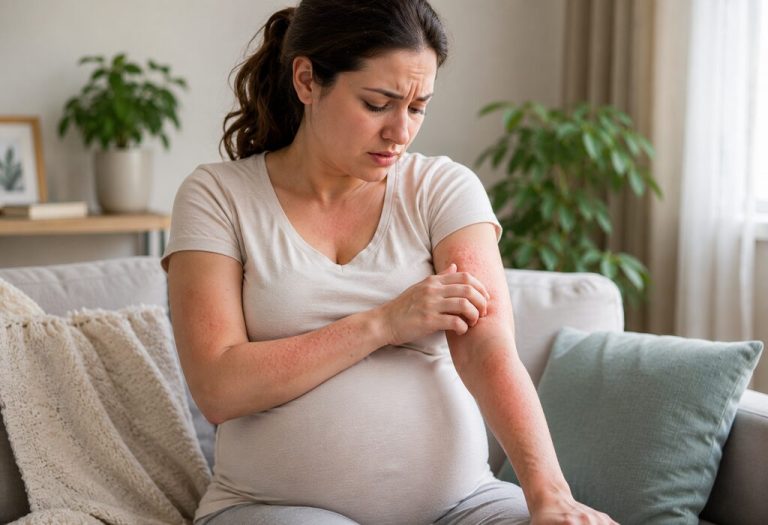
Hives when pregnant may occur at any stage. Even if you have never had this skin condition in your life, you may have it while you are pregnant, just like pregnancy acne. Hives appear as pale red, raised bumps on the skin, and they represent an allergic reaction to food, insect bites, medicine, chemicals, etc. With the increase in hormones and changes that happen in your body, it is possible that there is sensitivity to pathogens. Usually, pregnant women develop hives after the skin goes extremely dry and stretches as the fetus grows (1). However, there could be other reasons for developing hives during pregnancy. Therefore, you must consult a medical practitioner at the sight of pale red, raised bumps on the body.
Are Hives Dangerous in Pregnancy?
Luckily, not all cases of hives and pregnancy are a serious threat to the would-be mother or her unborn baby. It is, however, that a few cases may end up with serious complications. Therefore, if you’re pregnant and hives can be seen erupting, you should get yourself checked by a doctor to rule out any complications as soon as you notice any symptoms, especially around your genitals (including a rash). Pregnant women can also develop hives as an allergic reaction, which could also cause serious complications like anaphylaxis. Other symptoms of hives may include tightness in the throat, difficulty in swallowing, wheezing, extreme shortness of breath, dizziness, etc. We shall discuss the symptoms a little more in detail in the article below.
Now that you know what hives are and if they can be dangerous during pregnancy, let’s look at some of their causes.
Causes of Hives During Pregnancy
So, you may be asking – Why am I getting hives while pregnant? While some causes of hives are difficult to establish, some common ones are as follows (2):
- Insect bites.
- Consumption of food items that cause hives as an allergic reaction.
- Coming in contact with insect and animal dander.
- Pollen or exposure to certain chemicals that cause hives.
- Taking certain medicines during pregnancy may cause hives as a side effect.
- Pregnancy leads to weight gain, and when you put on weight, your skin stretches and loses its moisture. The loss of skin moisture causes severe dryness, itching, and, in some cases, hives.
- In some cases, anxiety and stress may also cause hives during pregnancy.
- Low immunity during pregnancy makes you more prone to allergies and infections, thus increasing your chances of developing hives.
- Bacterial infections, such as urinary tract infections and strep throat
- Blood transfusions
- Latex
During pregnancy, you must know the symptoms of this skin condition to get immediate medical attention. Here’s what you should look for when you suspect you have hives during pregnancy.
Symptoms of Pregnancy Hives
How will you establish that you have hives during pregnancy? Here, we have some common signs and symptoms of hives that will help identify the condition and seek medical help immediately (3):
- You will notice raised wheals on different parts of your body. These weals can be extremely uncomfortable and painful.
- You may experience itching on the breasts, thighs, buttocks and tummy. These are the areas where pregnancy weight accumulates, thus stretching the skin and causing hives.
- You may experience extreme skin dryness around your tummy, buttocks and thighs.
- You will notice welts in small groups or across your body. These weals could keep changing places, too. However, in most cases, welts are observed around the legs, arms and back.
- Hives can also appear on or around the eyes, causing itchy, raised welts or severe eyelid swelling (4).
Now, let’s check out the treatment of this condition.
How to Treat Hives During Pregnancy?
For hives during pregnancy treatment, avoid self-medicating with over-the-counter drugs. Always consult your healthcare provider and adhere to their prescribed treatments. In the case of pregnancy-related hives, your doctor might recommend over-the-counter antihistamines. Some antihistamines are safe to use in the first trimester, but that can’t be said for all types (5). Thus, it is best to consult your doctor for a prescription.
For more severe skin rashes like PUPPP, they may propose oral medications like oral antihistamines and anti-itch creams like topical corticosteroids (6). In extreme cases, a healthcare professional might prescribe a low dose of corticosteroids or topical creams with corticosteroids for prompt healing. However, it is strongly advised not to use these medications without proper consultation.
Natural Remedies to Treat Hives in Pregnancy
There are many over-the-counter medications available for treating hives. However, it is recommended to abstain from self-medication during pregnancy. You may, however, try some home remedies to reduce the discomfort and soothe the skin safely. Whatever the case may be, you should seek your doctor’s consent for the same. Here are some treatment options for urticaria or hives during pregnancy (7):
- A sure-shot remedy to treat hives is to moisturise your skin. You can use a good moisturising lotion to nourish your dry and itchy skin.
- Drying agents, such as harsh soaps, can aggravate the symptoms of hives; therefore, refrain from using harsh chemical-based soap. You may use mild moisturising bars that will help you keep your skin soft and moist.
- You can use oatmeal to provide relief against itching and dryness (8).
- Your doctor may prescribe ointments and oral medicines to help relieve the symptoms of hives.
- Drinking plenty of water is a simple yet essential natural remedy. Staying hydrated supports overall skin health and can contribute to managing hives during pregnancy.
- Applying cold compresses to the affected areas can help reduce inflammation and soothe itching.
- Applying pure aloe vera gel to the hives may provide relief and promote healing.
- Using chamomile tea bags in a cool compress or applying chamomile cream may help alleviate itching and inflammation due to its anti-inflammatory properties.
We know you would agree when we say prevention is better than cure. Why wait for conditions like these to appear when you can prevent them in the first place? Read on to learn how you can prevent hives.
How to Prevent Hives While Pregnant?
There is no need to be scared of this skin condition because proper care and preventive methods can help you keep hives at bay. Here are a few ways you can prevent the outbreak of hives in early pregnancy:
- Refrain from wearing tight-fitted clothes during pregnancy, as they may cause skin irritation. You should wear loose cotton clothes that let your skin breathe and ensure utmost comfort.
- Refrain from using harsh chemical-based products that may cause dryness or irritation of your skin and lead to hives.
- Do not take hot baths/showers during pregnancy. These will not only deprive your skin of its moisture, but they are also unsafe for your baby. Take warm water baths and moisturise your skin well after each bath.
- Adopt various relaxation techniques to soothe your mind and body because hives are sometimes caused by anxiety and stress. Prenatal meditation and yoga can be pretty helpful during pregnancy.
Do Pregnancy Hives Go Away on Their Own?
In many cases, pregnancy hives may resolve on their own after giving birth. However, it varies from person to person. It’s essential to consult with a healthcare provider to manage symptoms and determine the underlying cause.
Things to Remember When You Have Hives During Pregnancy
At times, the outbreak of hives cannot be prevented during pregnancy. When you see the symptoms, you must immediately consult a doctor to prevent the welts from growing or spreading to other parts of the body. And, while you are treating it according to the doctor’s instructions, you may want to follow these simple steps to heal faster or at least feel better.
- In case you feel the urge to itch, refrain from doing so because scratching may further aggravate the itching.
- You may ask your doctor to know if it is safe for you to use calamine lotion on the rashes.
- Manage stress.
- Keep yourself hydrated.
- Eat foods that nourish the skin.
- Avoid all the foods that you are allergic to.
- Keep our house clean. Vacuum as often as possible.
FAQs
1. Can hives during pregnancy harm my baby?
Most cases of hives affect the mother’s skin and do not directly harm the baby. However, severe allergic reactions require immediate medical attention.
2. Do hives lead to miscarriage?
Hives themselves do not typically lead to miscarriage. However, underlying causes of hives should be addressed, and it’s crucial to consult with a healthcare provider for proper evaluation and management during pregnancy.
3. Are hives common during pregnancy?
Hives can occur during pregnancy due to hormonal changes, allergies, infections, stress, or other triggers. Some women may experience them for the first time while pregnant.
4. Can having twins cause hives?
While having twins does not directly cause hives, pregnancy-related factors such as hormonal changes or increased stress may contribute to hives. Consultation with a healthcare provider is recommended for personalised advice and treatment options.
5. Can stress trigger hives during pregnancy?
Yes, it is possible. Emotional and physical stress are recognised triggers that may worsen or contribute to hives in some individuals.
6. Can women with urticaria or hives in pregnancy still breastfeed?
Yes, women with urticaria in pregnancy can still breastfeed while continuing the treatment under a specialised doctor. Your doctor will discuss this with you based on your individual treatment plan (7).
Although you cannot eliminate the chances of getting hives during pregnancy, proper care and precaution may surely help you deal with them. Ensure you do not stress about it because it is quite normal to get hives during pregnancy. Speak to your doctor if you need more clarity on this skin issue, and you should be able to manage it or keep it away throughout the pregnancy term.
Also Read:
Scabies when Pregnant
Eczema while Pregnant
Skin Darkening in Pregnancy
Skin Changes during Pregnancy
Was This Article Helpful?
Parenting is a huge responsibility, for you as a caregiver, but also for us as a parenting content platform. We understand that and take our responsibility of creating credible content seriously. FirstCry Parenting articles are written and published only after extensive research using factually sound references to deliver quality content that is accurate, validated by experts, and completely reliable. To understand how we go about creating content that is credible, read our editorial policy here.
1. American Pregnancy Association – Hives During Pregnancy
2. American College of Allergy, Asthma & Immunology – Hives
3. NHS – Hives
4. Mayo Clinic – Hives and angioedema
5. Sanford Health – Are allergy medications safe to use during pregnancy?
6. National Library of Medicine – Pruritic Urticarial Papules and Plaques of Pregnancy
7. European Academy of Dermatology & Venereology – Urticaria in pregnancy and during breastfeeding
- Author
- Expert Reviewer