

Seat Belt in Pregnancy: How to Wear It Safely




In this Article
- Is it Safe to Use a Seat Belt During Pregnancy?
- How to Wear a Seatbelt When Pregnant?
- Safety Measures for Wearing a Seatbelt When Pregnant
- Tips for Being Comfortable While Wearing a Seat Belt During Pregnancy
- FAQs
View More
Seat belt in pregnancy safety is something many pregnant women feel wary about as their belly grows. Although it is an important step to wear a seat belt to protect both the baby and the mother, a seat belt pressing against the abdomen may feel uncomfortable. However, in the event of a crash, an airbag alone is not sufficient; thus, a seat belt for pregnant women is necessary. The National Highway Traffic Safety Administration (NHTSA) recommends wearing a lap-and-shoulder belt throughout pregnancy (1). In this article, we cover every nuance related to a seat belt and pregnancy, how to safely wear a seat belt during pregnancy, and help you have a safe journey throughout pregnancy.
Is it Safe to Use a Seat Belt During Pregnancy?
It is safe to use a seat belt in a car when you are pregnant. Studies show that women who do not wear seat belts are more likely to lose their babies if they are in an accident than women who do wear them. Buckling up in all stages of pregnancy will keep you and your growing baby safe and protected in the event of a crash or accident (2). Thus, if you wear it properly, there is no harm.
Pregnant women are recommended to wear three-point seat belts to keep themselves and the fetus safe (3). In fact, as many fear for the safety of their baby due to wearing seat belts when pregnant, it was observed in a study that there was no elevated injury risk to pregnant occupants from wearing a seat belt during motor vehicle collisions (4).
How to Wear a Seatbelt When Pregnant?
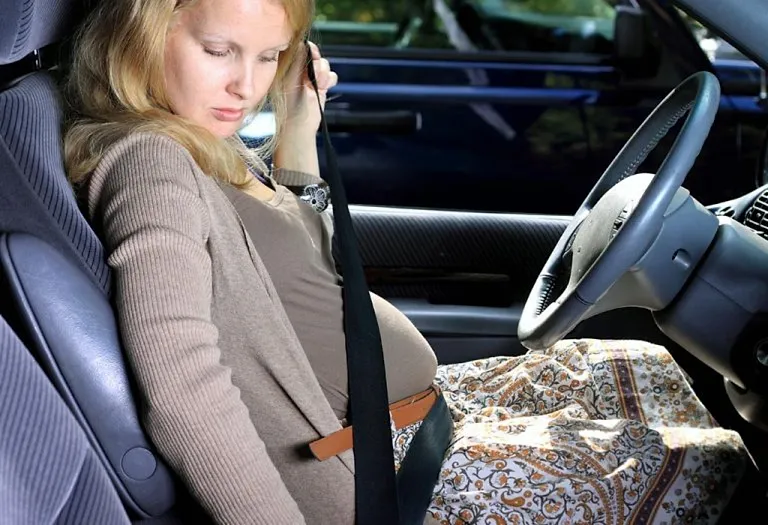
If you wear your seatbelt in the correct way, it can protect both you and your baby from serious harm. So, here are a few tips to wear your seat belt the right way (5):
- Pregnant women should stick to the three-point seat belt. In a 3-point seat belt, a strap goes diagonally across the shoulder and one strap across the lap.
- Wear the belt snugly on the hips.
- During the first trimester, wear your belt the same way you usually do.
- Tilt the seat back in order to make more room for your tummy.
- Make sure you wear the shoulder strap between your breasts and a little to the side of the belly. It is important to wear it, as it will keep your weight off the baby if you get into an accident.
- Place the lap belt under the belly to avoid an injury or unwanted pressure on the baby.
Safety Measures for Wearing a Seatbelt When Pregnant
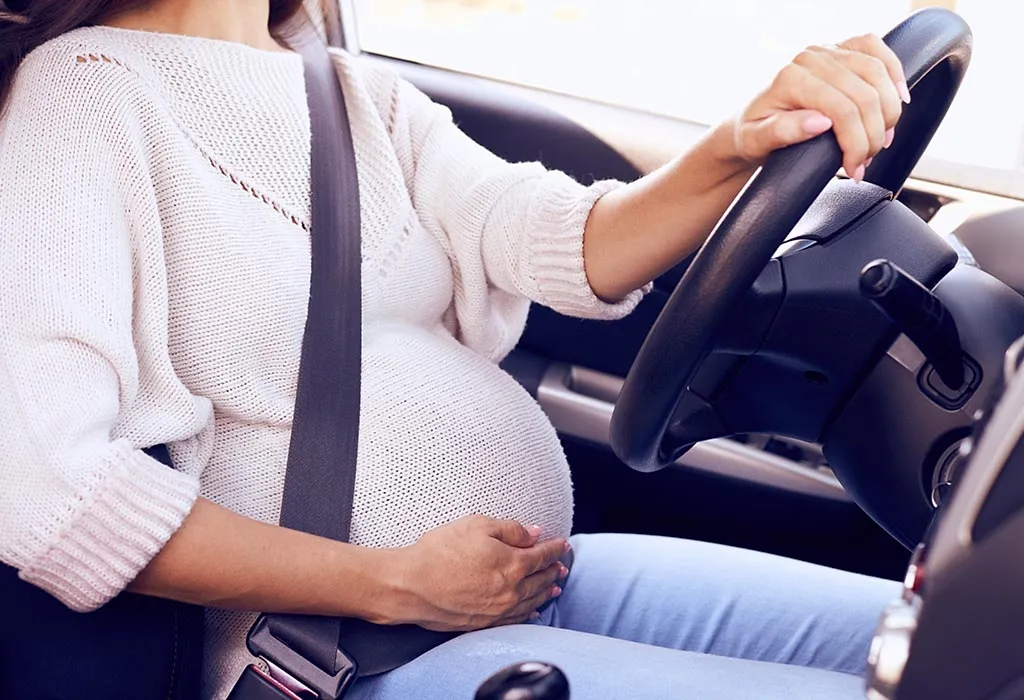
You know that it is better safe than sorry, so here we have put together some safety measures you can take when sitting in a car:
- Wear your seatbelt in the proper way during pregnancy.
- Move your seat back as far as you can if you have airbags.
- Do not try to dismantle the airbag, as it can save your life as well as your baby’s.
- Try sitting in the backseat if you are a passenger, as injuries sustained in the backseat are often less serious than those sustained from the front.
- If you are driving, make sure to tilt the steering wheel towards your head instead of allowing it to remain facing your chest or belly.
- Do not place the shoulder strap behind the back.
- If you are wearing an extra layer of clothing, such as a jacket, remove it for the time being if it interferes with the lap strap by either making it too tight or causing it to slide around.
- If you are carrying twins, try not to drive until you have delivered.
- From your second trimester onwards, use a cushion or a folded blanket under your butt to raise you up until you are sitting flat. This will reduce the chances of you getting backaches and a posterior baby.
Tips for Being Comfortable While Wearing a Seat Belt During Pregnancy
The thought of going for a long drive and having to bear the heavy straps of a seat belt across your body may not sound pleasant. Therefore, here are two tips that will make wearing a seat belt during pregnancy a comfortable experience:
- If you are going for a long drive, make sure that you take a break often. You should get the chance to stretch your legs and allow blood circulation.
- To prevent a backache, carry a cushion and use it to support your lower back.
FAQs
Here are some frequently asked questions about seat belts during pregnancy:
1. Should I wear a seat belt during every stage of pregnancy?
Yes. You should wear a properly positioned lap-and-shoulder seat belt throughout pregnancy, including during the early months.
2. Do I ned to buy a pregnancy seat belt?
There is a special kind of pregnancy seatbelt on the market that has been tested for safety, and it is designed to keep the lap belt away from the belly by securing the seat belt across the thigh and not across your lower abdomen region that is sensitive and could injure your baby. However, a regular seat belt will work just fine if you wear it correctly.
3. Should I move the car seat farther back during pregnancy?
If you are driving, sit upright and keep as much distance as reasonably possible between your abdomen and the steering wheel while maintaining comfortable control of the vehicle. If you are on the passenger seat, you can move the seat back as far as practical.
4. Are seat belt positioning devices safe during pregnancy?
Most seat belt positioning devices are not tested, and this makes them unsafe for anyone, let alone a pregnant woman. Try not to use seat belt positioning devices, but stick to the standardised ones instead. The seat belt positioning devices have been known to place the lap belt on the uterus due to poor design, and that is a very dangerous place for the seat belt to be.
Despite being careful, people can sometimes get into accidents. If you get into a car accident, no matter how small, go see your doctor and have a check-up immediately. Even if you do not feel like you were injured, it is always best to check if all is well with your baby as any extra pressure to your abdomen may have unpleasant impacts on your baby. If something turns out to be wrong, it is better to catch it as soon as possible so treatment can begin.
Also Read:
Car Driving while Pregnancy
Travelling by Car in Pregnancy
Safety Tips for Travelling during Pregnancy
Was This Article Helpful?
Parenting is a huge responsibility, for you as a caregiver, but also for us as a parenting content platform. We understand that and take our responsibility of creating credible content seriously. FirstCry Parenting articles are written and published only after extensive research using factually sound references to deliver quality content that is accurate, validated by experts, and completely reliable. To understand how we go about creating content that is credible, read our editorial policy here.
- Author


Related Articles
-
Baby Shower Thank You Notes - What You Should Write
-

Loratadine in Pregnancy - Is It Safe to Take?
-

Dry Skin in Pregnancy – Causes, Complications, and Treatment
-

Leukocytes (White Floaties) in Urine During Pregnancy
-
Common Placenta Positions in Pregnancy
-

Ketones in the Urine During Pregnancy - Causes, Treatment, and Prevention