
Essay on Swami Vivekananda for Students & Children
Inspiring essay on Swami Vivekananda for students and children, highlighting his life, teachings, and contribution to Indian culture and youth.




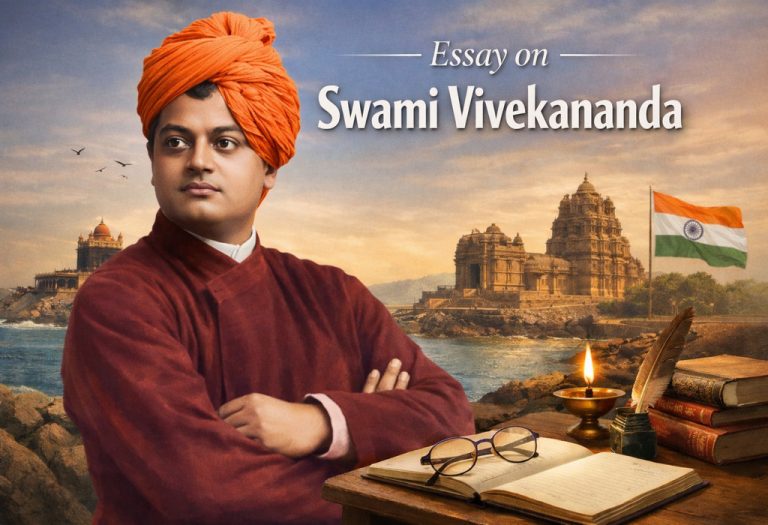
Image Source: AI-Generated Image
One such inspiring figure is Swami Vivekananda, a spiritual teacher whose words continue to motivate young minds worldwide. Students often hear about great leaders from history, but a few personalities leave a deeper impression because their ideas still feel meaningful today. Children can learn a great deal about this enigmatic person’s courage, knowledge, and service to humanity by reading a Swami Vivekananda essay, and then curating one in their own words. An essay about Swami Vivekananda is especially meaningful for students because his journey shows how education, strong values, and self-belief can shape a person’s destiny.
From a curious boy named Narendranath to a respected spiritual leader who represented India on a global stage, his life is full of moments that teach us how to think boldly and act with kindness. For children and young learners, learning about him is more than studying history. It is about understanding how ideas, discipline, and compassion can guide a meaningful life.
10 Lines on Swami Vivekananda
In Indian history, Swami Vivekananda is one of the most inspiring spiritual leaders. His life continues to guide students and young minds who want to live with courage and purpose. Even today, many children learn about his values through simple lessons about confidence, kindness, and self-belief. These lines highlight a few important facts and ideas from his remarkable life.
- Swami Vivekananda was born on 12th January 1863 in Kolkata, India.
- His childhood name was Narendranath Datta.
- He was a bright, curious child who loved learning music, sports, and reading.
- He became a disciple of the great spiritual teacher Ramakrishna Paramahamsa.
- Vivekananda believed that education should build character strength and confidence.
- He became famous after speaking at the Parliament of Religions in Chicago in 1893.
- His speech began with the words Sisters and Brothers of America which touched many hearts.
- He worked to spread the message of peace, unity, and spiritual wisdom across the world.
- He founded the Ramakrishna Mission to serve society and help people in need.
- His teachings continue to inspire students to believe in themselves and work for the good of others.
Paragraph on Swami Vivekananda
Swami Vivekananda is remembered as one of the most inspiring spiritual leaders in Indian history. His life continues to guide students who wish to build wisdom and compassion. Many teachers introduce their ideas to children through a Swami Vivekananda paragraph in 100 words so they can understand the message in a simple way. His journey shows how strong values and self-belief can shape a meaningful life.
Swami Vivekananda was born in 1863 in Kolkata and was known as Narendranath Datta during his childhood. He was intelligent, curious, and deeply interested in spirituality. After meeting his guru Ramakrishna Paramahamsa, his life took a new direction. Vivekananda later represented India at the Parliament of Religions in Chicago in 1893, where he shared some powerful words that impressed the world. He encouraged young people to develop confidence and compassion. His teachings still inspire students to work hard, believe in themselves, and serve humanity with kindness.
Swami Vivekananda Essay in English in 150 Words
Swami Vivekananda is one of the most respected spiritual leaders in Indian history. His thoughts continue to inspire students, teachers, and young minds across the world. He believed that true education should build strength, confidence, and good character. Learning about his life helps children understand the importance of courage, discipline, and service to others.
Swami Vivekananda was born on 12th January 1863 in Kolkata, and his childhood name was Narendranath Datta. From a young age, he was curious, intelligent, and deeply interested in spiritual ideas. His life changed after meeting his guru Ramakrishna Paramahamsa, who guided him toward a path of wisdom and selfless service. Vivekananda later became famous for his speech at the Parliament of Religions in Chicago in 1893. He spoke about peace, harmony, and unity among religions. He travelled widely to share the teachings of Indian philosophy and encourage people to live with confidence and compassion. His message to young people was simple: believe in yourself, work hard, and serve humanity with kindness.
Swami Vivekananda Essay in 300 Words
Swami Vivekananda is remembered as a spiritual leader who inspired millions through his ideas and courage. His teachings still guide students who want to build confidence and wisdom in their lives. Teachers often introduce his story to young learners through a Swami Vivekananda composition so they can understand his values in a simple way. His life reminds us that strong character and faith in oneself can lead to meaningful achievements.
Swami Vivekananda was born on 12th January 1863 in Kolkata. His childhood name was Narendranath Datta, and he grew up in a well-educated family. From a young age, he showed great intelligence, curiosity, and a deep interest in spirituality. He loved reading books, learning music, and taking part in discussions. These experiences helped shape his thoughtful and fearless personality.
A turning point in his life came when he met his guru, Ramakrishna Paramahamsa. Under his guidance, Narendra discovered a deeper understanding of spirituality and service to humanity. After his guru’s passing, he became a monk and took the name Swami Vivekananda. He then began travelling across India, where he saw the struggles of ordinary people. These journeys inspired him to work for social upliftment and spiritual awareness.
Swami Vivekananda became internationally known after his speech at the Parliament of Religions in Chicago in 1893. His words about harmony between religions and respect for humanity impressed people around the world. Through his lectures and writings, he encouraged people to develop inner strength, discipline, and self-belief. He also impressed people with his calm and peaceful demeanour, which later on became an example for everyone.
He later founded the Ramakrishna Mission, which continues to serve society through education, health care, and social service. Even today, his teachings inspire students to work hard, stay confident, and help others. His life remains a powerful example of how knowledge, faith, and compassion can create positive change in the world.
Essay on Swami Vivekananda in 500 Words
Swami Vivekananda is remembered as one of the most inspiring spiritual leaders in Indian history. His ideas about courage, education, and service continue to guide young minds even today. An essay on Swami Vivekananda in English is greatly helpful in teaching children about the legend without boring them. His journey from a curious child to a respected spiritual teacher remains a powerful example for children and students.
Early Life and Education of Swami Vivekananda
The legendary peace supporter, Swami Vivekananda, was born on 12 January 1863 in Kolkata. His childhood name was Narendranath Datta. He grew up in a family that valued both education and spirituality. His father, Vishwanath Datta, was a lawyer who believed in rational thinking, while his mother, Bhuvaneshwari Devi, shared stories from Indian scriptures and taught him moral values.
Narendra was a bright and energetic child. He loved reading books, practising music, and taking part in physical activities. He studied at Presidency College and later at Scottish Church College in Kolkata. During his student years, he developed a strong interest in philosophy, religion, and social issues. His habit of asking deep questions about life and spirituality made him different from many others of his age.
Meeting with Ramakrishna Paramahamsa
A major turning point in Narendra’s life came when he met the spiritual teacher Ramakrishna Paramahamsa at Dakshineswar. Narendra had always sought answers to the existence of God and the purpose of life. When he asked Ramakrishna whether he had seen God, the saint replied with great confidence that he had experienced God as clearly as he saw Narendra.
This answer deeply influenced Narendra. Under the guidance of Ramakrishna, he began to explore spiritual practices and learn about devotion, humility, and service to others. Over time, he accepted Ramakrishna as his guru. After the passing of his teacher, Narendra and other disciples formed a spiritual brotherhood, and later he became known as Swami Vivekananda.
Visit to the Chicago Parliament of Religions
One of the most memorable moments in Swami Vivekananda’s life was his visit to the Parliament of Religions in Chicago in 1893. He travelled to the United States to represent the spiritual heritage of India and share the message of harmony among religions.
His speech began with the words Sisters and Brothers of America which created a strong emotional connection with the audience. The crowd responded with a long round of applause. Through his speech, he explained the importance of tolerance, respect, and unity among different faiths. His powerful words made him famous across the world and introduced many people to Indian philosophy.
Teachings and Philosophy of Swami Vivekananda
His teachings focused on inner strength, self-belief, and service to humanity.
- Education should build strong character and confidence
- Every individual has divine potential within
- Service to people is a form of worship
- Unity among religions brings peace to society
- Hard work and discipline lead to personal growth
Works and Contributions of Swami Vivekananda
Swami Vivekananda dedicated his life to spreading spiritual knowledge and encouraging social service. After returning from the West, he established the Ramakrishna Mission in 1897. The organisation works in areas such as education, healthcare, disaster relief, and rural development.
He also delivered many lectures across India and other countries, where he spoke about the importance of strength, courage, and moral values. His writings and speeches encouraged people, especially the youth, to believe in their abilities and work for the welfare of society. Through his efforts, he helped bring global recognition to Indian philosophy and culture.
Death of Swami Vivekananda
Swami Vivekananda passed away on 4 July 1902 at the young age of 39 at Belur Math near Kolkata. Even though his life was short, his impact was immense. His thoughts and teachings continue to inspire millions of people around the world.
Today, he is remembered not only as a spiritual teacher but also as a guide for young minds. His message encourages students to stay confident, seek knowledge, and serve humanity with compassion.
Points to Remember When Writing Your Own Essay on Swami Vivekananda
Writing about Swami Vivekananda can feel meaningful because his life carries many lessons for students. His enigmatic yet peaceful personality is worth talking about. When children learn about him, they often begin with a few lines on Swami Vivekananda to understand his story in a simple way. As you write your own essay, it helps to focus on the most important events and ideas from his life. A thoughtful essay should show respect for his teachings and explain why his message still matters today.
- Begin with a short introduction about who Swami Vivekananda was and why he is important.
- Mention his birth in Kolkata in 1863 and his childhood name, Narendranath Datta.
- Explain how his family and education influenced his thinking and personality.
- Include his meeting with his guru Ramakrishna Paramahamsa, which changed his life.
- Write about his famous speech at the Parliament of Religions in Chicago in 1893.
- Describe his teachings about confidence, strength, and service to humanity.
- Mention the Ramakrishna Mission and its work in helping society.
- Keep your language simple, clear, and easy for readers to understand.
- Focus on important events instead of adding too many small details.
- End the essay with a message about how his ideas can inspire students today.
What Will Your Child Learn From Swami Vivekananda Essay?
Reading about Swami Vivekananda helps children understand the value of confidence and strong character. His life teaches students that courage, discipline, and belief in oneself can shape a meaningful future. Children also learn the importance of kindness, respect for others, and service to society. These lessons gently guide young minds to grow into thoughtful, responsible, and compassionate individuals.
FAQs
1. Who was Swami Vivekananda?
Swami Vivekananda was a great spiritual leader and philosopher from the Indian subcontinent who inspired people through his teachings on strength, confidence, and service to humanity.
2. Why is Swami Vivekananda important for students?
His life teaches students the value of self-belief, discipline, hard work, and compassion toward others.
3. What is Swami Vivekananda most famous for?
He is widely known for his inspiring speech at the Parliament of Religions in Chicago in 1893, where he spoke about unity and respect among religions.
Swami Vivekananda’s life continues to inspire students and young minds across generations. His journey shows that courage, knowledge, and strong values can shape a meaningful life. Through his words and actions, he encouraged people to believe in themselves and serve others with compassion. His teachings remind us that true education builds character, confidence, and a sense of responsibility toward society. Even today, his ideas guide students to work hard, stay positive, and help those around them. Learning about his life helps children understand that one determined individual can bring positive change to the world.
Also Read:
Interesting Cow Facts That You Should Know About
Interesting Dragon Facts for Kids
Essay on Butterfly for Students and Children
Was This Article Helpful?
Parenting is a huge responsibility, for you as a caregiver, but also for us as a parenting content platform. We understand that and take our responsibility of creating credible content seriously. FirstCry Parenting articles are written and published only after extensive research using factually sound references to deliver quality content that is accurate, validated by experts, and completely reliable. To understand how we go about creating content that is credible, read our editorial policy here.
- Author
 About the Author
Rama Aiyer
Related Articles
-

Teaching Days of the Week to Children - Simple and Easy Ways
-
Amazing Chimpanzee Facts and Information for Kids
-
16 Popular Festivals of India - Interesting Facts for Kids
-
Verbs That Start With X in English (With Meanings & Examples)
-
Montessori vs Traditional Preschool - Which Is Best for Your Child?
-
Facts and Information About the Planet Venus for Kids








.svg)