

Does Baby Powder Expire: Shelf Life & Safety Tips
Does baby powder expire? Learn its shelf life, expiry signs, safe storage tips, and when to replace it.




In this Article
- Does Baby Powder Have an Expiry Date?
- How Long Does Baby Powder Last?
- Does Unopened Baby Powder Go Bad Over Time?
- Is It Safe to Use Baby Powder After the Expiry Date?
- How to Store Baby Powder to Make It Last Longer?
- FAQs
View More
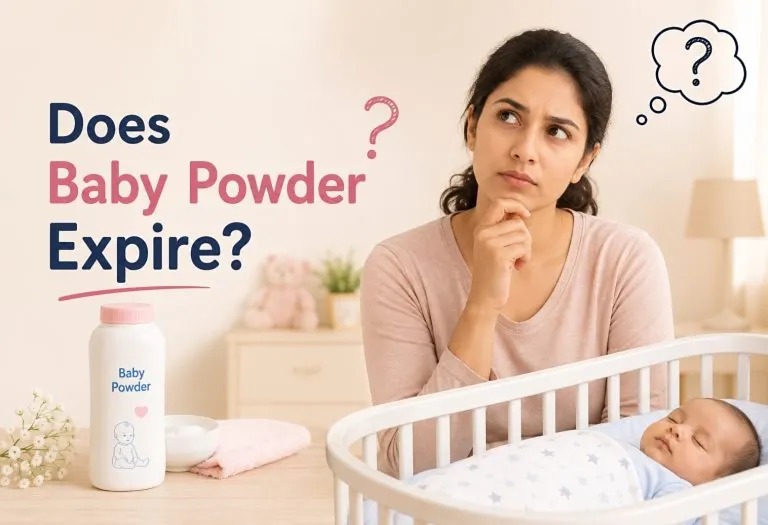
Does baby powder expire? Yes. Like most personal care products, baby powder has a shelf life, and using it long after its expiration date is not always a good idea. Even if an old container looks perfectly fine, its quality can decline over time because of moisture, air exposure, or poor storage. That’s why checking the expiration date before using an old container is always a good idea, especially if it’s been sitting in your cabinet for a long time.
In this article, you’ll find out how long baby powder typically lasts, what happens after it expires, how to spot signs that it has gone bad, and the best ways to store it so it stays safe and effective for as long as possible.
Does Baby Powder Have an Expiry Date?
Yes, most baby powder comes with an expiry date, although it isn’t always easy to find. Depending on the brand, you might see it printed on the bottom of the bottle, the back label, or the outer packaging. Some products may show a manufacturing date or a Period After Opening (PAO) symbol instead. If you can’t find any of this information, it’s worth checking the brand’s website before using an older bottle.
How Long Does Baby Powder Last?
Baby powder has a long shelf life because it is a dry product that is less likely to spoil than many other personal care products. However, it can still lose its quality over time. How long it lasts mainly depends on whether it is made with cornstarch or talc, along with how it is stored after opening.
1. Talc-Based Baby Powder
Talc-based baby powder generally has a longer shelf life because talc is a naturally stable mineral that does not break down easily (1). Most manufacturers recommend using it within 3 years of the manufacturing date.
However, talc-based baby powders are no longer recommended for routine use, especially on infants. Some talc products have been found to contain asbestos, a known carcinogen, due to contamination during mining (2). Even asbestos-free talc powders can pose inhalation risks if the fine particles are breathed in (3).
2. Cornstarch-Based Baby Powder
Cornstarch-based baby powder is the most common type available today (4). Since cornstarch is a natural ingredient, it can gradually lose its freshness if exposed to moisture or humidity. An unopened container typically lasts 18 to 36 months, while an opened one is best used within 12 months to maintain its quality.
Does Unopened Baby Powder Go Bad Over Time?
Finding an unopened bottle of baby powder tucked away in a cabinet might make you wonder if it’s still safe to use. While a sealed container lasts longer than an opened one, it does not stay fresh forever. Here’s what happens as unopened baby powder gets older.
- Fragrance May Fade: The added fragrance is often the first ingredient to change with age. If the powder has a weak, stale, or unusual smell instead of its original scent, it may no longer be at its best.
- Moisture Can Still Affect the Powder: Although the container is sealed, tiny amounts of moisture can gradually make their way inside over the years. This is more likely if the bottle has been stored in a humid place, such as a bathroom, and may lead to clumping or other signs of deterioration.
- Follow the 3-Year Guideline: If an unopened bottle is more than 3 years old or has passed its expiration date, it is generally best to replace it.
Is It Safe to Use Baby Powder After the Expiry Date?
Using expired baby powder may not seem like a big deal, especially if it still looks and smells normal. However, once the product passes its expiry date, its quality can gradually decline. Let’s take a closer look at the risks you should be aware of.
1. Skin Irritation
As baby powder ages, some ingredients can become less stable, increasing the chance of redness, itching, or irritation. This is especially important for babies because their skin is much more delicate than an adult’s.
2. Bacterial or Mold Growth
If moisture has entered the container, cornstarch-based baby powder can become a breeding ground for bacteria or mold. Using contaminated powder may worsen diaper rash or lead to other skin problems.
3. Reduced Performance
Expired baby powder may become clumpy and lose its ability to absorb moisture or reduce friction. Instead of keeping the skin dry and comfortable, it may feel gritty and not work as well as it should.
How to Store Baby Powder to Make It Last Longer?
You don’t have to do anything complicated to make baby powder last longer. A few simple storage habits can help preserve its quality and keep it fresh until its expiration date.
- Store it in a Cool, Dry Place: Keep the container away from humidity and direct sunlight. Avoid storing it in the bathroom, where moisture levels are often high.
- Keep the Lid Tightly Closed: Always close the container immediately after use. This helps prevent moisture, dust, and other contaminants from getting inside.
- Use Clean, Dry Hands: If you handle the container while your hands are wet or dirty, moisture and bacteria can be transferred to the product. Make sure your hands are clean and dry before using baby powder.
FAQs
1. How can I tell if baby powder has gone bad?
Look for signs such as clumping, discoloration, an unusual smell, or visible moisture inside the container. If you notice any of these changes, it is best to throw the powder away.
2. Can baby powder expire before the printed expiration date?
Yes, improper storage can shorten its shelf life. Exposure to heat, humidity, or moisture may cause the powder to deteriorate even before the expiration date.
We hope you now have a clear answer to can baby powder expire and feel more confident about checking an old bottle before using it. When in doubt, choosing a fresh product is always the safer option. If there’s anything else you’d like to know about baby powder or baby care, leave a comment below. We’re always here to help.
Also Read:
Banana Powder for Babies
Is it Safe to use Baby Powder?
When Can you Put Lotion on a Newborn?
Was This Article Helpful?
Parenting is a huge responsibility, for you as a caregiver, but also for us as a parenting content platform. We understand that and take our responsibility of creating credible content seriously. FirstCry Parenting articles are written and published only after extensive research using factually sound references to deliver quality content that is accurate, validated by experts, and completely reliable. To understand how we go about creating content that is credible, read our editorial policy here.
- Author






.svg)