Do Babies Have Nightmares – Signs, Causes, and Solutions
Learn do infants get nightmares, common signs, causes, and simple ways to comfort your baby during sleep.




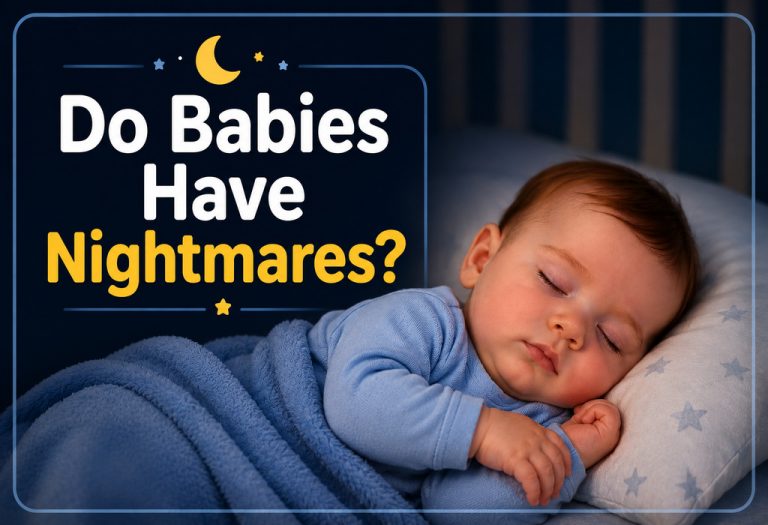
Ever wondered and asked yourself: Do babies have nightmares? It’s a fair question, and you are not alone in asking it. The honest answer concerning infants and nightmares is more layered than a simple yes or no. Whether bad dreams in infants are truly nightmares in the way older children and adults experience them depends on the age of the baby, the stage of sleep they are in, and what is happening in their developing brain. This article exploring newborn nightmares breaks down everything in simple terms, whether babies have nightmares, what signs to look for, what causes sleep disturbances in babies, whether it is safe in the long-term, and most importantly, what you can do about it.
Do Infants Get Nightmares?
Nightmares are vivid, emotionally distressing dream sequences that are recalled upon waking, and require a level of cognitive and memory development that very young infants simply have not yet reached. A newborn or young infant does not have that much of a neural build to construct a narrative dream, store it in memory, and then experience fear or anxiety in response to its content. Their brains are still in the developing stage.
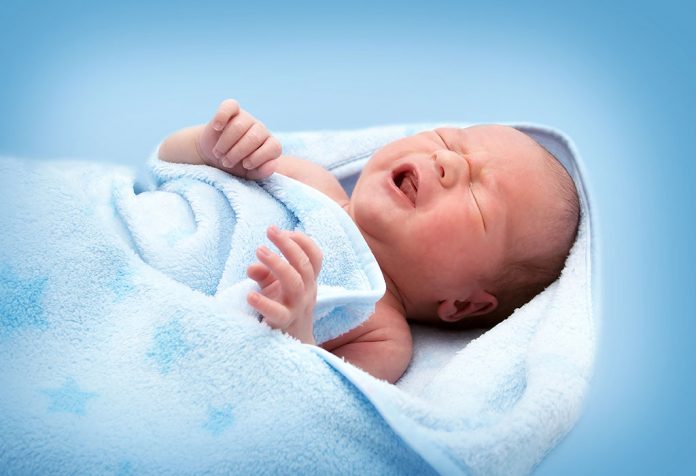
So, can babies have nightmares in the true sense? Well, for the first few months of life, almost certainly not. What parents observe in young babies that looks like nightmare-related distress, like sudden crying, jerking movements, and grimacing of face during sleep, is most likely the result of active REM (Rapid Eye Movement) sleep, which is the sleep stage associated with dreaming in older children and adults.
Newborns spend about 50% of their sleep time in REM sleep, compared to roughly 20 to 25% in adults. During REM sleep, the brain is highly active, and babies in this stage often twitch, make small sounds, move their lips, flutter their eyelids, and even cry briefly. This is totally normal and does not mean there is any distress; it just means their brain is doing important developmental work.
By the time a child reaches 18 months to 2 years of age, when imagination and memory are developing more rapidly, true nightmares become much more reasonable. The ages 2 to 3 years are informally called the peak nightmare years, as nightmares at this time are common and a normal part of childhood development.
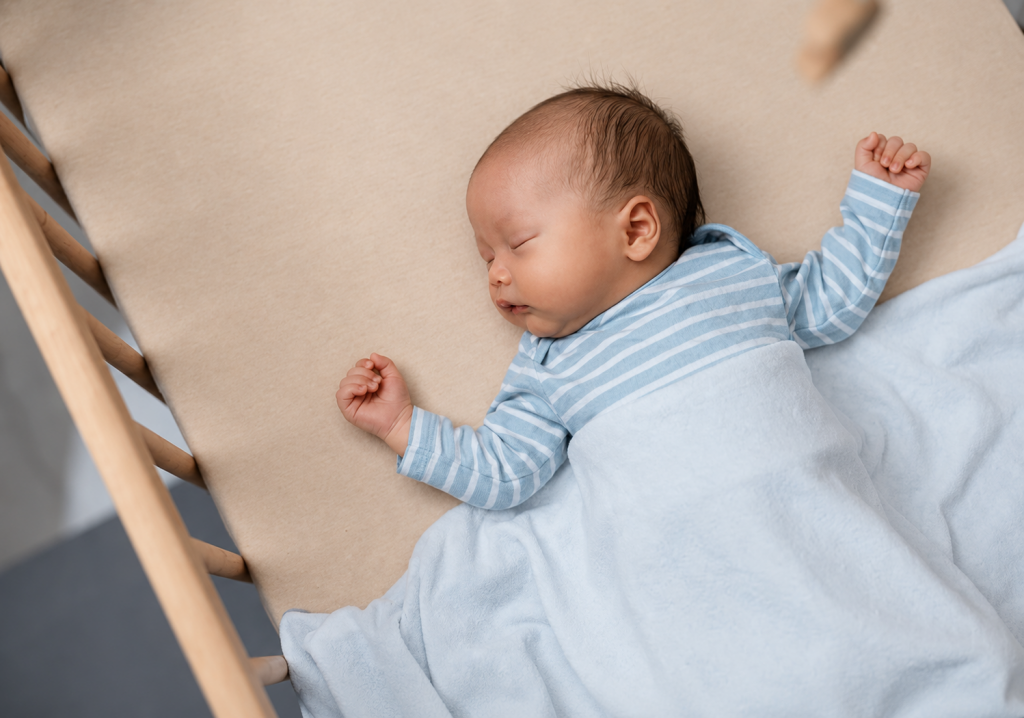
When Do Babies Start Having Nightmares?
There is no particular age at which babies start having nightmares because it depends on the speed at which they gain cognitive and emotional development. However, observations from research and clinical studies point to a consistent developmental pattern that most children follow.
In the first year of life, what may seem like nightmares are actually REM sleep behaviours or normal night waking, but definitely not distressing dreams.
In short, newborn nightmares are not medically recognised because of the fact that a newborn’s brain isn’t developed enough yet to process an experience into a stimulating dream.
The toddler years, from around 18 months to 3 years, are when nightmares become more probable. during their REM sleep (1). Children at this age can form mental imagery, have enough memory to carry emotional impressions from real life into sleep, and respond well to a bad dream.
By age 3 to 6, nightmares are extremely common and well-documented as a normal part of development (2). Newborns having bad dreams in the clinical sense is not part of this picture, but by the time a child is approaching their second birthday, it is entirely reasonable for parents to start seeing genuine sleep disturbances with an emotional component.
Signs of Baby Nightmares
Because babies cannot tell you what they just dreamed, you are working with behavioural clues to determine whether a sleep disturbance might be nightmare-related. Here are the most common signs that parents notice, along with what each one means:
- Sudden crying or screaming mid-sleep
- Facial expressions of discomfort, fear, or distress during sleep
- Intense thrashing, kicking, or flailing limbs while sleeping
- Waking suddenly and being difficult to console
- Increased night waking after a change in childcare, a new sibling, an illness, or a developmental leap
- Sleep talking – talking, crying out, or whimpering without fully waking
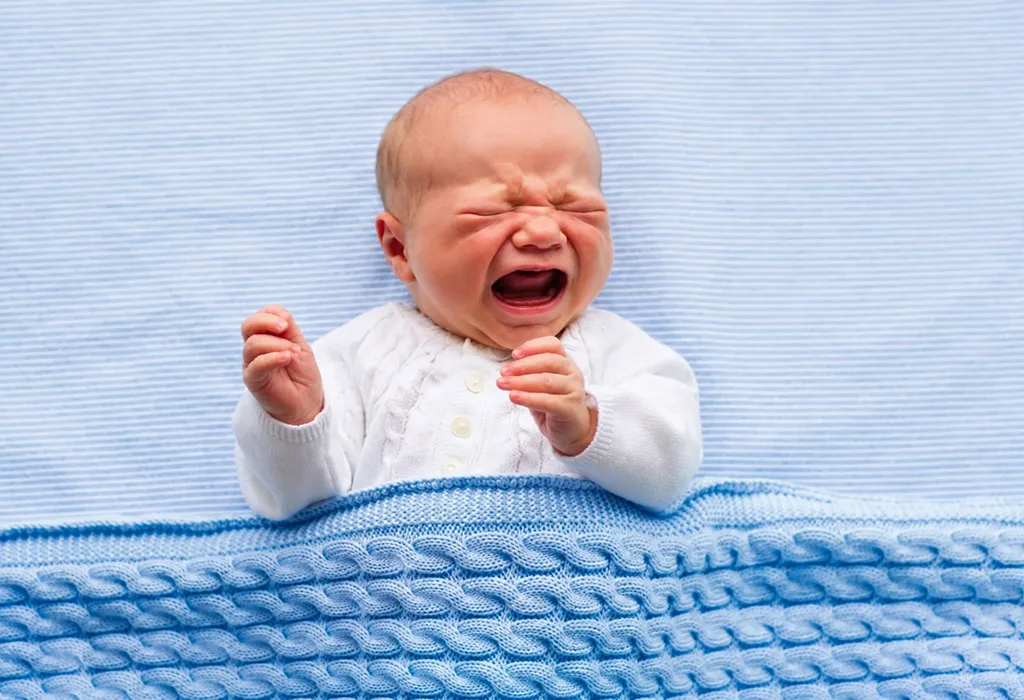
Causes of Baby Nightmares
There’s no way to be sure what babies dream about, especially nightmares, or if they even have them. But there are several possible reasons why babies cry in their sleep, which is mistaken for nightmares. Understanding these triggers can help you respond better to your baby’s needs during sleep disturbances.
- Hunger: Hunger can cause babies to cry while sleeping or wake up and cry (3).
- Developmental leaps and rapid brain growth: Infants go through extraordinary periods of brain development, often called developmental leaps. Because their brains are rapidly building new neural connections, you may observe some fussiness, clinginess, and sleep disruption (4).
- Overstimulation before bedtime: Overstimulation in babies close to bedtime, whether from screen exposure, loud play, or a disrupted routine, can lead to unsettled sleep, making babies cry.
- Illness, pain, or physical discomfort: Physical discomfort is one of the most common causes of babies’ crying in sleep. Teething pain, ear infections, gas, reflux, or generalised illness can all disrupt normal sleep and make babies restless.
- Stress or changes in routine: Babies are extremely sensitive to changes in their environment and routine. For example, changes in the surrounding temperature could make the baby fussy, resulting in sleep disturbances.
What to Do if a Baby Has a Nightmare?
If your baby wakes up in distress, which you suspect could be a nightmare, your little one will likely be upset and call for you. Here’s what you can do to help them relax and fall back asleep.
- Pick up your baby, hold them close and let the warmth of your body and familiar smell calm your baby’s nervous system.
- Gently rock, pat, and sway to drift your baby back to sleep.
- Use a calm, low, reassuring voice to calm your baby down. You can even sing a soft lullaby. Your baby will respond to the tone of your voice, not the content.
- Keep the environment calm and dimly lit without any noise.
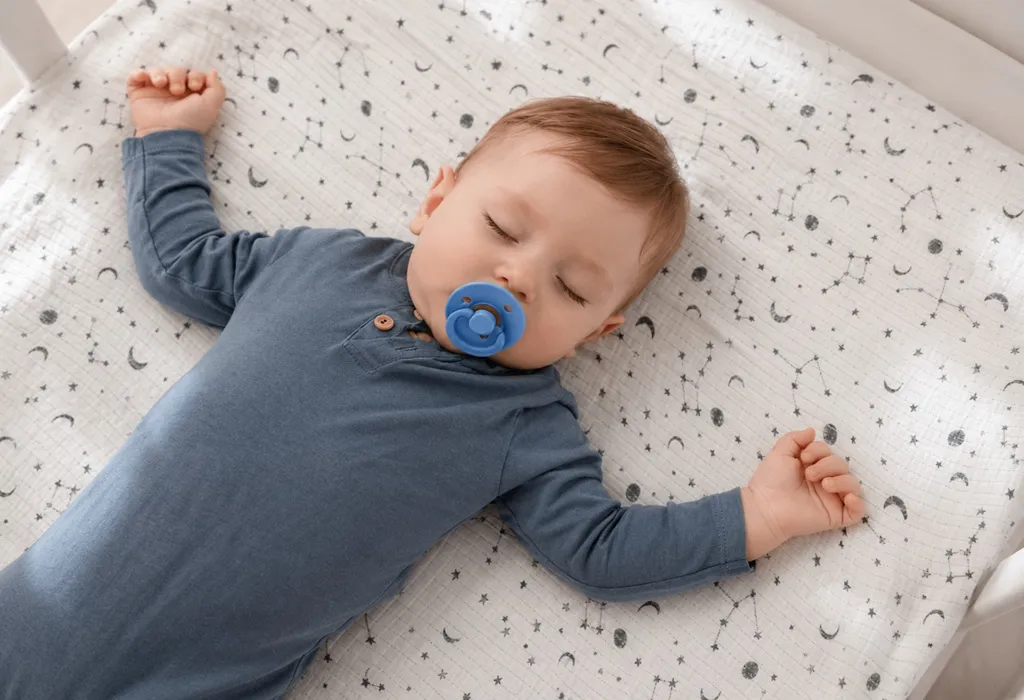
How to Stop Baby Nightmares
While you cannot eliminate night distress in babies entirely, you can try the following ways to prevent or reduce nightmares in babies at night (5).
- Follow a Consistent Bedtime Routine: Ensure a consistent sequence of calming activities, such as a warm bath, a gentle massage, feeding, and quiet play, according to your baby’s age (6). Try to start the routine 30 to 45 minutes before the target sleep time and stick to it as reliably as possible.
- No Overstimulation: The 60 minutes before bedtime for your baby should be as quiet and calm as possible. Turn off any screens, dim the lights, and avoid loud and active play. Make sure the baby is bored so they can sleep better.
- Make sure your baby doesn’t have any physical stress: Check for signs of teething, ear infection, cold, reflux, or general illness to ensure your baby doesn’t wake up crying at night. A baby sleeping in a too-warm or too-cold room will also sleep more poorly. So, make sure their room is slightly cool with proper ventilation.
- White noise: You can create an ideal sleeping environment for your baby using white noise. You can use a white noise sound machine, put the radio on static, or turn on the fan.
- Use a pacifier: Pacifiers are great at calming babies down. Experts suggest that using a pacifier at night reduces the risk of sudden infant death syndrome (SIDS) (7).
When to Worry About Baby Nightmares?
If your child experiences nightmares regularly at night, has recurring nightmares that disrupt their sleep, or appears to have night terrors, contact your doctor.
As nightmares are typical in young children and distinguishing between a nightmare and general sleep difficulties can be challenging, your doctor may provide guidance on how to help your child with their sleep.
FAQs
1. Can a 2-month-old have nightmares?
In a clinical sense, it is not possible for a 2-month-old to experience nightmares as their brain still hasn’t developed cognitively, which is important for dream formation. If your 2-month-old regularly wakes in extreme distress or appears consistently uncomfortable during sleep, it is worth raising with your paediatrician to rule out physical causes such as reflux, colic, or gas.
2. Is it normal for babies to cry out in their sleep?
Yes, it is completely normal for babies, particularly those under 12 months, to cry out, whimper, or make sounds during sleep without fully waking up. This happens mostly during the transition between sleep cycles or during active REM sleep.
3. Why is my baby waking up crying?
Baby may wake up crying due to hunger, teething, or some random loud noise. If your little one wakes up crying, wait a bit for them to settle themselves. If they don’t or scream in a shrieking voice, look for any injury or discomfort that could be stressing your baby.
Also Read:
Baby Sleeps with Open Eyes
Baby Sleep with Open Mouth
Why Do Baby Frequently Waking Up?
Why Do Babies Smile In Their Sleep?
Do Babies Dream – When They Start Dreaming?
Was This Article Helpful?
Parenting is a huge responsibility, for you as a caregiver, but also for us as a parenting content platform. We understand that and take our responsibility of creating credible content seriously. FirstCry Parenting articles are written and published only after extensive research using factually sound references to deliver quality content that is accurate, validated by experts, and completely reliable. To understand how we go about creating content that is credible, read our editorial policy here.
1. Sleep Foundation – Children and Sleep
2. American Academy of Sleep Medicine – Nightmares
3. Kenya Pediatric – 7 Reasons Why Babies Cry Overnight
4. Pathways.org – Why Does Baby Wake Up Crying?
5. Nemours KidsHealth – Baby Sleep: 1- to 3-Month-Olds
- Author






.svg)