

Authoritative vs Permissive Parenting: Key Differences, Pros, and Cons
Authoritative vs. permissive parenting: Understand the key differences, pros, and cons to make informed parenting choices.




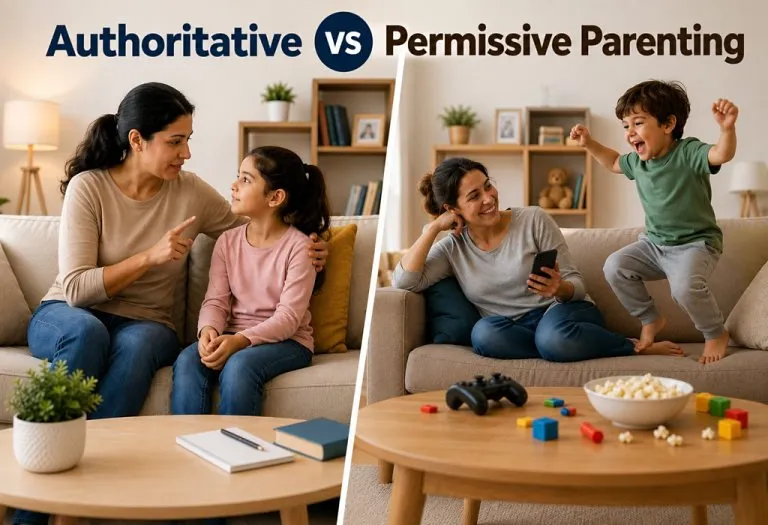
When it comes to raising children, there’s no shortage of advice. From strict rules and structured routines to complete freedom and flexibility, every parent has their own approach. But have you ever wondered how different parenting styles shape a child’s personality, confidence, and future?
Two of the most talked-about parenting styles are authoritative and permissive parenting. While one focuses on balancing warmth with clear boundaries, the other emphasises freedom and emotional support with fewer rules.
So, which parenting style works better? Is it better to be firm yet understanding, or should children be given the freedom to learn on their own? In this article, we’ll compare authoritative vs permissive parenting, explore the strengths and drawbacks of each style, and help you understand how they shape a child’s growth, behaviour, and overall development.
What Is Authoritative Parenting?
Authoritative parenting is a style built on high warmth combined with high expectations. Parents who lead this way set clear, age-appropriate rules and explain the “why” behind them instead of simply demanding obedience (1). This style was first identified by developmental psychologist Diana Baumrind in the 1960s, and it remains the most consistently recommended approach among child psychologists today. The core idea is simple: children thrive when they feel loved and understood, but they also need boundaries that help them feel secure (2).
Example: A five-year-old refuses to put away toys before dinner. An authoritative parent calmly restates the house rule, offers a reason (“so nobody trips on them later”), and follows through with a small, predictable consequence if the child still refuses.
Pros and Cons of Authoritative Parenting
No parenting style is perfect, and authoritative parenting is no exception. While it’s widely recognised for encouraging confident, responsible, and emotionally healthy children, it also has a few challenges that parents should be aware of. Let’s take a look at its pros and cons (2).
Pros
- Children often develop stronger emotional regulation.
- Clear expectations reduce confusion about acceptable behaviour.
- Kids learn to reason through consequences rather than just obey.
- Tends to build mutual respect between parent and child over time.
Cons
- Requires consistent effort and patience, which can be exhausting.
- Explaining every rule can feel time-consuming during busy days.
- Some children may still push back hard during testing phases.
What Is Permissive Parenting?
Permissive parenting, sometimes called indulgent parenting, is also rooted in warmth, but it comes with far fewer rules and inconsistent follow-through on consequences. These parents tend to act more like a friend than an authority figure. They avoid confrontation, often give in after pushback, and prioritise their child’s immediate happiness over long-term structure (3).
This doesn’t mean permissive parents don’t care about discipline. Many simply believe children learn best through freedom and natural exploration rather than imposed rules.
Example: A child wants dessert before finishing dinner. A permissive parent, wanting to avoid a meltdown, allows it, even though the household “rule” says otherwise.
Pros and Cons of Permissive Parenting
While this relaxed approach can strengthen the parent-child bond, it may also come with challenges that affect a child’s behaviour, self-discipline, and decision-making. Here’s a closer look at its pros and cons (4).
Pros
- Strong emotional bond and open communication.
- Children often feel free to express themselves creatively.
- Lower household conflict in the short term.
Cons
- Children may struggle with authority figures outside the home.
- Inconsistent consequences can create confusion about limits.
- Higher risk of difficulty with self-discipline as children grow.
How Each Style Shapes Long-Term Development
The effects of a parenting style rarely show up overnight. They tend to surface gradually, in how a child handles disappointment, negotiates with peers, or responds to authority outside the home.
Children raised in authoritative households often develop what psychologists call internal motivation. Because rules came with reasons, these children tend to understand why certain behaviours matter rather than simply avoiding punishment. Over time, this builds self-discipline that doesn’t rely on someone else watching over them (1).
Children raised in permissive households often develop strong social confidence and a genuine sense of being heard at home. Many grow into adults who are comfortable expressing opinions and challenging outdated norms. The trade-off tends to appear in situations that demand delayed gratification or following externally imposed rules, such as structured classrooms or first jobs, where the flexibility they grew up with isn’t always available (3).
Neither outcome is fixed, and both styles can be adjusted at any point. A child’s temperament, school environment, and wider support network all shape the final picture just as much as the parenting style itself.
Which Style Might Suit Your Family?
Most child development experts lean towards authoritative parenting because it tends to support both emotional wellbeing and independence. That said, few parents fit neatly into one box every single day. A useful approach is to borrow the warmth and flexibility of permissive parenting while keeping the consistency and clear expectations of the authoritative style. If your child seems anxious or unsure of expectations, adding a bit more structure often helps. If your home feels rigid or your child seems fearful of making mistakes, leaning into more warmth and flexibility can rebalance things.
A Quick Self-Check Before You Decide
If you’re unsure which direction to lean, ask yourself these questions:
- Do I explain the reasoning behind my rules, or do I expect immediate compliance without discussion?
- When my child pushes back, do I hold the boundary, or do I usually give in to avoid conflict?
- Does my child seem confused about what’s actually allowed, or do they know the rules clearly?
- Am I comfortable saying no, even when it upsets my child in the moment?
- Do I check in on my child’s feelings as often as I check in on their behaviour?
Answering honestly usually reveals which direction needs more attention, whether that’s adding a bit more structure or softening a rule that no longer serves its purpose.
FAQs
1. Is authoritative parenting always better than permissive parenting?
Not always. Authoritative parenting is linked to stronger self-regulation and confidence, but permissive parenting can support creativity and open communication. The best approach often blends structure with genuine flexibility based on your child’s needs.
2. Can a parent switch from permissive to authoritative parenting?
Yes. Many parents shift gradually by introducing consistent, clearly explained rules while keeping the warmth already present at home. Small, steady changes tend to work better than sudden strict enforcement.
Choosing a parenting style isn’t really about picking a label to follow perfectly. It’s about noticing what your child responds to, staying consistent with the boundaries you do set, and keeping warmth at the centre of it all. Most families land somewhere in between, adjusting as their children grow and their needs change. What matters most isn’t which style you identify with, but whether your child feels both loved and secure enough to know where the limits are.
Also Read:
Uninvolved Parenting Style: Characteristics, Examples, Pros & Cons
Positive Discipline Techniques That Work Well for Children
Positive Parenting – Benefits and Techniques to Follow
Was This Article Helpful?
Parenting is a huge responsibility, for you as a caregiver, but also for us as a parenting content platform. We understand that and take our responsibility of creating credible content seriously. FirstCry Parenting articles are written and published only after extensive research using factually sound references to deliver quality content that is accurate, validated by experts, and completely reliable. To understand how we go about creating content that is credible, read our editorial policy here.
- Author