

Heat Stroke in Kids – Symptoms, Treatment, and Prevention
Learn the signs, causes, and prevention tips for heat stroke in kids to keep your child safe during hot weather conditions.




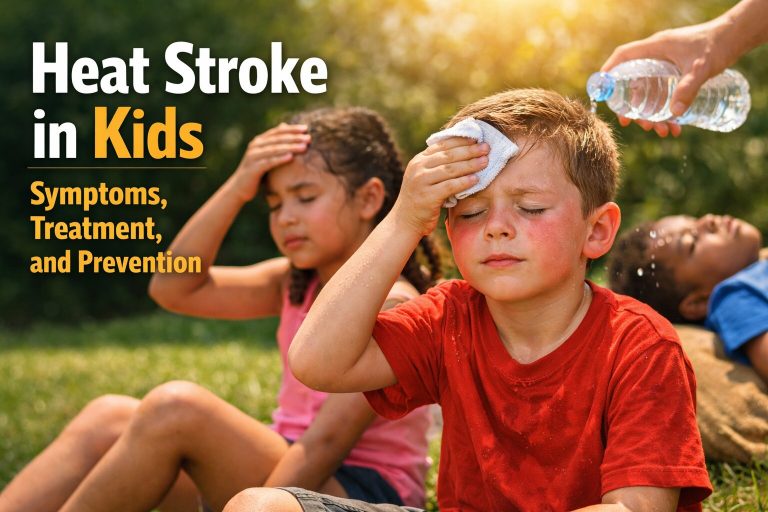
Image Credit : AI Generated Image
Summers can be cruel to the body; they make you sweat, make you lose your appetite, and bring a host of allergies and illnesses. Another problem that comes at the drop of a hat in summer is heat stroke in kids. Keeping kids indoors during the summer is impossible, and letting them stay outside for a long time is another nail-biting worry. As a parent, it is obvious that you will be concerned about your child’s health, especially looking at how hot summers are becoming with every passing year. Before you scratch your head over the issue of heat stroke in children, let us guide you first on what heat stroke is, the signs of heat stroke in kids, how to treat heat stroke in kids, and, yes, prevent it as well.
What Is Heat Stroke?
Heat stroke occurs when prolonged exposure to intense sun—especially during summer afternoons—causes the body’s temperature-regulation system to fail. Normally, the human body can autoregulate its temperature in response to a rise or fall in ambient temperature. This is why we sweat during summer (to cool the body) and eat more food during winter (because food digestion generates heat in the body and helps keep you warm). However, this natural ‘thermostatic’ ability of the body has an upper limit – it cannot maintain this over a very large range of external temperatures. That’s why prolonged exposure to the summer heat can cause the body’s natural thermostat to fail, resulting in heat stroke.
Children, compared to adults, aren’t well build to regulate their body temperature
Heat exhaustion can turn into heat stroke if the child isn’t cooled down in the next 30 minutes (1). As per the Nemours KidsHealth, heat stroke is a life-threatening medical emergency (2).
Preliminary Symptoms Leading to a Heat Stroke
The keyword to note in the above explanation is ‘prolonged’. Heatstroke never occurs suddenly. It is always a result of long hours of exposure to the sun. Hence, it is possible to prevent heatstroke. All you need to do is identify the preliminary signs and symptoms of heatstroke.
Before your child actually suffers from heatstroke, he might show the following symptoms of milder heat problems, including heat exhaustion, heat cramps, or heat syncope. This usually happens after a child has been exposed to the sun for a long time, like playing or exercising in the heat and getting dehydrated from losing fluids and salt from sweating (3).
- Heat exhaustion – dizziness, fainting, weakness, increased sweating and thirst, not being able to concentrate, perceive or understand what’s happening around, irritability, muscle cramps, and cool, clammy skin despite the heat (3).
- Heat syncope – fainting brought on by excessive exposure to heat.
- Heat cramps – cramping of the muscles brought on by excessive loss of water (due to exposure to harsh sun)
Signs of Heat Stroke in Kids
Heat stroke is a serious condition that requires immediate medical attention. However, it is important to recognise when your child is experiencing heatstroke so you can seek help. Here are the hallmark signs of heatstroke (4):
1. Lack of Sweating
We usually sweat when we are in the hot summer sun. A person who is in the midst of a heat stroke will not sweat. This is the first, most conspicuous, and easily identifiable sign of heatstroke.
2. Rapid, Shallow Breathing
This is another sign that is easy to identify. Breathing of a heat stroke victim will be shallow, disrupted, and quickened.
3. Hot, Dry, Flaming Skin
One of the first organs to be affected by a heat stroke would be the skin. It will turn red, hot, and very dry.
4. Disorientation
A child suffering from a heat stroke will look confused, in a state of dizziness; his movements will look staggered, like he is unsure of where he is going and what he is doing. In extreme cases, he may not be able to respond when called or asked simple questions like his name.
5. Seizures
He may face sudden, excessive, jerky, involuntary convulsions that cause the body to go into uncontrolled spasms.
6. Unconsciousness
Finally, a child suffering from a heat stroke might just lose consciousness and faint.
How to Treat Heat Stroke in Children at Home?
It is important to administer correct first aid to a child when he suffers from heat stroke. The very first thing you want to do is call for an ambulance. It is not always required, but it is quite common for people suffering from heat stroke to be hospitalised. While you are waiting for the ambulance to arrive, do the following as explained by the Johns Hopkins Medicine (5):
- Take him away from the sun. Move the child to a shady area (if outdoors) or take him indoors to a cooler room.
- Assist the child to cool off – fan over his body, take his clothes off, and use cold water cloth strips to wipe his body.
- Give him a cold water sponge bath.
- Apply cold water or an ice pack to body parts that are rich in blood vessels – namely, armpits, groin, back, and neck. The fact that these regions are rich in blood vessels allows the body to rapidly cool down.
DO NOT Use Ice – An Important Tip
This might sound confusing – an ice bath might be the fastest way to bring body temperature down. In fact, it is often suggested as first aid in case of heat stroke. However, this method can prove to be quite tricky and dangerous for young children and babies. The reason is that the bodies of young children and babies might not be able to cope with the sudden and extreme drop in temperature. It can prove to be fatal. So whatever you do – DO NOT use ice.
How to Prevent Heat Stroke in Children?
It is important to realise that babies, young children, and elderly people are particularly more prone to heat stroke and other heat-related issues like dehydration, dizziness, etc (6). This is because their bodies are unable to cope with heat as efficiently as adults can. Hence, it is imperative to avoid heatstroke at all costs. So, how to treat heat stroke in kids? Scroll down!
Here are some easy measures you can adopt to keep yourself and your child away from heat stroke:
- Refrain from letting your child step outdoors between 11 am and 4 pm, especially during the summer. The sun is at its peak during these hours. Reschedule activities and plan your day accordingly (7).
- Keep your child hydrated at all times, day and night. Buld a habit of drinking water frequently throughout the day (8).
- When stepping out of the house, always carry a bottle of water, and keep some sweets handy (granola bars, chocolates, dates, etc.).
- Keep your child’s head covered when they step out. Use a scarf or a wide-brimmed hat. (By the way – it looks fancy and fashionable too!)
- Dress your child in comfortable, loose clothes, preferably made of natural fibres, especially cotton. Such clothes will keep their body aerated, allow them to breathe, and prevent heat from getting trapped (9).
- Use a good sun-screen cream or lotion, with a minimum SPF of 30.
- If your child plays sports, make sure they drink electrolytes, not just water. Prefer fruit juices over normal water. The classic nimbu pani might work like an elixir – it provides the body with salt, sugar, and water.
- Never leave our child alone in a car, whether with open windows or closed. It can get dangerously hot in there and cause heatstroke in children (9).
FAQs
1. What is the difference between heat exhaustion and heat stroke in children?
Heat exhaustion is an early stage of overheating and basically involves sweating, fatigue, and dizziness (10). Heat stroke, on the other hand, appears with high body temperature, dry skin, confusion, or unconsciousness. Heat stroke is a medical emergency and requires immediate attention.
2. Can children get heat stroke even if they are drinking water?
Yes, children can. While hydration helps, factors such as direct sun exposure, humidity, and intense physical activity can still lead to heat stroke despite adequate fluid intake.
3. Are certain children at higher risk of heat stroke?
Yes, infants and toddlers, overweight children, children with chronic illnesses, and children playing outdoors for long hours are highly vulnerable to heat stroke. Their bodies either generate more heat or struggle to cool down efficiently.
4. What is the fastest way to cool down a child showing early heat stroke signs?
If a child shows signs of heat stroke, immediately:
- move them to a shaded or air-conditioned area,
- remove excess clothing,
- apply cool (not ice-cold) wet cloths, and
- offer fluids if conscious.
If their symptoms worsen, such as if they experience confusion or fainting, seek emergency medical care immediately.
Summer can be a wonderful season for children, filled with outdoor play, vacations, and long sunny days. But since children are delicate, they are at high risk of issues like dehydration and heat stroke. Understanding how heat and humidity affect the skin helps parents take simple steps to protect it. Try our tips and tricks and keep your little ones cool as a cucumber this summer!
Also Read:
Burns in Children
Heat Stroke in Infants
Causes of Dizziness in Kids
Was This Article Helpful?
Parenting is a huge responsibility, for you as a caregiver, but also for us as a parenting content platform. We understand that and take our responsibility of creating credible content seriously. FirstCry Parenting articles are written and published only after extensive research using factually sound references to deliver quality content that is accurate, validated by experts, and completely reliable. To understand how we go about creating content that is credible, read our editorial policy here.
1. HSE – Heat exhaustion and heatstroke in children
2. Nemours KidsHealth – Heat Illness
3. Children’s Health – Know the signs of heat exhaustion and heat stroke in kids
4. Cleveland Clinic – Heat Stroke
5. Johns Hopkins Medicine – Dehydration and Heat Stroke
6. NHS – Heat exhaustion and heatstroke
7. UNICEF – Why heat exhaustion and heat stroke happen fast for children – and what to do
8. CHOP – How to prevent heat stroke: Common sense guidelines
9. American Academy of Pediatrics – Extreme Heat: Tips to Keep Kids Safe When Temperatures Soar
10. Sydney Children’s Hospitals Network – Heat exhaustion and heatstroke
- Author
 About the Author
Mrunal
Related Articles
-

Cancer In Children
-
Papular Urticaria in Children - Causes, Symptoms, and Treatment
-
10 Harmful Effects of Using Mobile Phones on Children
-
Protein in Child's Urine (Proteinuria) - Reasons, Risks, Treatment and Prevention
-
Cataracts in Children - Causes, Types, Diagnosis ,and Prevention
-
Coronavirus Vaccine for Kids - FAQs That Parents Need to Know






.svg)