
Varicose Veins in Pregnancy – Symptoms & Treatment
Learn why varicose veins appear in pregnancy their symptoms simple relief tips and ways to improve comfort and circulation safely





Medically Reviewed By
Dr. Sabiha Anjum
(Gynecologist/Obstetrician)

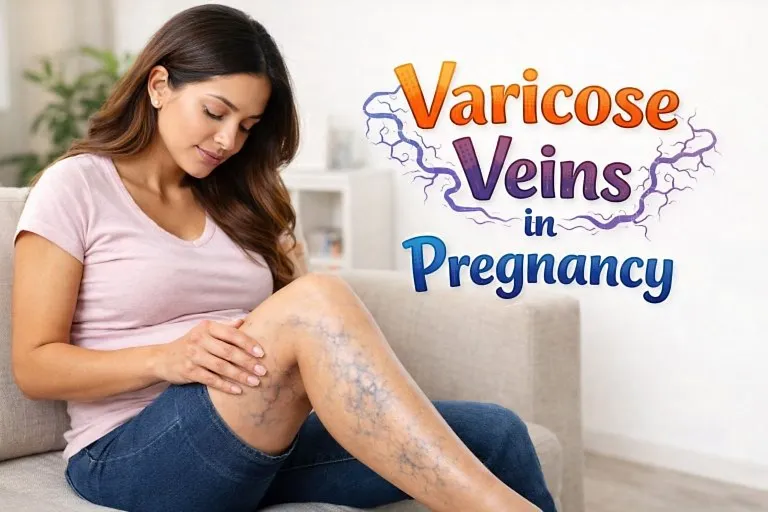
Image Credit : AI generated Image
Pregnancy is a wonderful phase, yet the health issues that you may experience during the nine months could be troublesome. Such issues can range from minor inconveniences to even serious, sometimes fatal, complications. One specific health problem is the development of varicose veins in pregnancy. These swollen, visible veins can be a serious issue or a minor inconvenience, depending on the situation and their severity. If you’re pregnant, read on to learn more about varicose veins, why do they develop during pregnancy, their symptoms and more, and helpful management tips for expectant mothers.
What Are Varicose Veins?
Varicose veins, which are also called varicosities or varicoses, refer to bulged, dilated, blood-filled and painful veins that may appear on the surface of your skin (1). Legs and feet are the most likely body parts to have varicose veins. Many women get varicose veins during pregnancy, but they may also appear due to menopause, old age, standing for extended periods of time, obesity and heredity.

When the varicose veins may appear will depend on how her veins are working. Blood veins have valves that stop blood from flowing backwards. When these valves become weaker, your blood does not get pumped back to the heart properly. It may get collected, especially in the lower parts of your body, farthest from the heart.
Why Do Pregnant Women Develop Varicose Veins?
There are many changes taking place at once in a pregnant woman’s body. The increased levels of the hormone progesterone relax the walls of your veins, causing the valves to weaken. Also, there is an increased amount of blood in your body to be passed on to the baby via the placenta.
The burden of the increased amount of blood, the baby and the placenta bear down on your lower body. It puts excessive pressure on certain parts, such as legs and genitals, where you may get varicose veins. Particularly, the inferior vena cava that runs through the right-hand side of your body is under a lot of pressure. This vein supplies blood from your lower limbs back to your heart (2).
What Are the Symptoms of Varicose Veins in Pregnancy?
Symptoms of varicose veins during pregnancy are just slightly different from varicose veins developed otherwise. Though just the sight of swollen, blood-filled veins may be a sign of varicose veins, other common symptoms are (3):
- Swollen blue and purple veins near the surface of the skin
- Soreness, itchiness, or a burning sensation around affected veins
- Tired and achy legs
- Discomfort and bulge in the vulva, labia, rectum, and perineum
- Swollen feet due to fluid accumulation
- Muscular cramps
- Skin diseases such as eczema and ulcers (might develop in extreme cases)
- Spider vein clusters of tiny blood vessels on the surface of the skin (both spider and varicose veins appear in similar cases, but they signify different problems)
- Superficial blood clots in veins, also known as phlebitis (blood clots associated with varicose veins during pregnancy must be differentiated from deep vein thrombosis or DVT and pulmonary embolism, which are much more dangerous)
What Causes Varicose Veins While Pregnant?
Not every pregnant woman will develop varicose veins; certain factors make pregnant women prone to getting varicose veins. And the reasons for varicose veins may vary from woman to woman.
The main reason why pregnant women get varicose veins is the burden their pelvic region and lower limbs experience due to the weight of their uterus, with vein-relaxing hormones worsening the situation. While these things happen in every pregnant woman’s body, there are particular cases where weak valves or weak vein walls might occur, causing varicose veins.
You are more likely to get varicosity in pregnancy if you have had the same problem during previous pregnancies. Also, carrying multiple babies, being obese or standing for extended periods of time adds to the burden on your lower body, making you more prone to this condition.
A family history of varicosities might also cause them to come up during your pregnancy. Varicosities also tend to get worse with successive pregnancies. Veins become weaker and weaker due to ageing, as well as the pressure exerted on them before (4).
Risk Factors for Pregnancy Varicosities
Several key factors can increase the likelihood of developing varicose veins during pregnancy.
- Genetics: A family history of vein issues significantly raises your risk.
- Multiple Pregnancies: Carrying more than one baby increases abdominal pressure.
- Mother’s Age: Pregnancy at an older age can contribute to weaker vein walls.
- Prolonged Standing: Occupations or activities involving long periods on your feet.
- Excess Weight: Higher pre-pregnancy BMI or excessive gestational weight gain.
- Prior Pregnancies: Each subsequent pregnancy can increase susceptibility.
- Hormonal Changes: Increased progesterone relaxes the vein walls, leading to swelling.
- Lack of Movement: Extended sitting or general physical inactivity impairs circulation.
Diagnosis of Varicose Veins in Pregnancy
Diagnosing varicose veins during pregnancy is typically a straightforward, non-invasive process.
- Physical Examination: A visual and manual inspection of the legs by a healthcare provider to assess the appearance and feel of the veins.
- Symptom Review: A detailed discussion of symptoms like aching, heaviness, swelling, or discomfort.
- Duplex Ultrasound: In some cases, this imaging test may be used to check blood flow and rule out more serious conditions like deep vein thrombosis.
How to Prevent Varicose Veins During Pregnancy?
Taking measures to prevent varicosities can save you a lot of trouble later. The following practices can help with preventing varicose veins while pregnant (5):
1. Sleep on Your Left Side
As mentioned before, the inferior vena cava, which carries blood from your limbs, is situated on the right-hand side of your body. Sleeping on your left can ease the pressure and help balance the blood flow. Also, it is desirable that you change positions throughout the day when sleeping.
2. Exercise
Exercising increases blood flow and prevents the blood from collecting. Moderate exercise during pregnancy is safe and actually recommended by experts. The experts at the American College of Obstetricians and Gynaecologists advise that regular, moderate exercise for 30 minutes or more keeps blood flow healthy. Pelvic floor exercises are most helpful in preventing varicosities, though regular brisk walks are also good.
3. Keeping Your Legs Elevated
Doing this helps weak veins improve blood circulation in your lower body. It is advised that you sit down and rest your legs every three hours and never cross your legs. Even while standing, keep shifting your weight from one leg to the other.
4. Manage the Burden on Your Body
Gaining weight is important to support the foetus. However, weight gain during pregnancy also exerts excessive pressure on your veins. You should check with your doctor to know how much weight is good for both you and your baby. To keep added pressure from fluid retention at bay, also consider decreasing your salt intake.
5. Keep a Check on Constipation
Constipation increases the chances of varicosities and can also cause haemorrhoids. Drinking lots of water, having a low-salt diet and eating high-fibre foods can help keep constipation at bay.
6. Use Compression Stockings
It’s recommended to use special stockings for varicose veins in pregnancy. Graduated compression stockings are tight towards the feet and loose towards the thighs, which helps in maintaining the blood circulation upward. They are helpful in the prevention of varicosities as well as providing relief from them.
It is advisable that you consult your doctor before using special compression stockings, as they may totally restrict blood flow to lower legs, especially if you are obese. It is important to make sure that they make for a comfortable fit and keep your feet snug.
As a prevention measure, one can also use regular but tighter pantyhose. For genital varicoses, tight-fitting biking shorts are helpful. Make sure you avoid tight clothing on the waist, though.
Even in the case of serious varicosities, compression stockings might not provide a complete cure, but they can stop them from worsening further.
Can Varicose Veins Cause Complications for Pregnant Women?
Sore and painful varicose veins might cause a lot of inconvenience for a pregnant woman, but they do not have any serious repercussions. They do not bring complications in childbirth. Even if a woman develops varicose veins up to her vulva (the vaginal passage), it might cause bulging and pain, but it does not impact vaginal birth.
There have also been cases of Deep vein thrombosis (DVT) during pregnancy – a serious condition where a blood clot forms in a vein deep inside your body. However, the likelihood is very low. Please note that DVT is not caused due to varicose veins. If you do have DVT, you need immediate treatment as it can otherwise even be fatal.
Apart from that, some women may not get rid of varicose veins even after childbirth, and they might become a permanent ailment.
Treatment for Varicose Veins in Pregnancy
For relief and minor treatment of varicose veins in pregnancy, all the points mentioned under preventive tips would also work. You can use some compression stockings or resort to exercises that are known to improve blood circulation for treating varicose veins. Developing simple habits like elevating your legs, improving your diet, etc., can also prove to be helpful.
You must not go through any surgery while pregnant, especially if injections or incisions are involved. For more detailed advice and treatment, you can visit a phlebologist or vein specialist.
For the permanent treatment of varicose veins, you should wait till you have decided not to have babies anymore. This is because varicoses might appear again with another pregnancy despite extensive treatment.

For permanent relief, treatments like endovenous therapy, microphlebectomy, and sclerotherapy are used. In such treatments, a small incision is made in the veins, and they are treated with either laser treatment, heat therapy, or chemicals delivered through injections or fibre devices that are inserted through a small opening made in the vein, which is later closed.
Such treatments are very expensive and require expertise. Side effects may vary according to what kind of treatment you use, but generally include allergic reactions, swelling, clotting, etc.
Home Remedies for Pregnancy Varicose Veins
As medical treatments are known to be expensive, you can resort to home remedies to seek relief. Most remedies are effective during as well as after pregnancy. Here are some popular home remedies for varicose veins during pregnancy. Note: The home remedies for Varicose veins given below are not backed by science; hence, you must check with your doctor before trying out any remedy for varicose veins.
1. Apple Cider Vinegar
Apply concentrated apple cider vinegar on the affected area and massage gently. Massage your legs regularly every morning and before going to bed. Massaging with apple cider vinegar helps because it is known for its blood-cleansing properties, and it also improves blood flow. It can help reduce the pain and swelling in your veins by aiding blood flow and circulation. Remember, while pregnant, if you develop varicose veins and want to use apple cider vinegar, it should be used only for massage. Topical application of apple cider vinegar is okay, but it is best used after checking with a doctor.
2. Olive Oil
Massaging with olive oil stimulates blood circulation. Massaging with warm oil is always desirable since it can help in reducing itching. Olive oil is also beneficial in combating pigmentation. Mix equal amounts of Vitamin E oil and olive oil for better results.
4. Garlic
Garlic is known for stimulating blood circulation and relieving inflammation. It can also break up the harmful toxins which get accumulated in your veins and on the surface of your skin due to restricted blood flow. Garlic can be used for massage during pregnancy.
For using garlic to relieve varicose veins, you need:
- Six garlic cloves
- A clean glass jar
- Juice of three oranges
- Two tablespoons of olive oil
Instructions:
- Slice the garlic cloves, put them in the jar, add orange juice and olive oil and let the mixture sit for 12 hours.
- Shake well before massaging it onto your veins.
- Wrap the area with a cotton towel and leave it overnight.
- This must be repeated daily for good results.
5. Parsley
Parsley is rich in vitamin C, which is a powerful antioxidant and increases collagen production. It helps in repairing and forming new cells.
- For using parsley for massaging the affected areas, boil a handful of chopped fresh parsley in one cup of water for five minutes.
- Allow it to cool down and strain out the water.
- Add one drop of rose and marigold essential oil each.
- Refrigerate it and massage after some minutes using a cotton ball.
When to See a Doctor
Understanding varicose veins in pregnancy and when to worry is crucial for your health. While varicose veins are often a normal part of pregnancy, you should consult your doctor or a vein specialist if you experience any of the following:
- The veins cause persistent aching, throbbing, or cramping that interferes with daily life or sleep.
- The skin over or near the vein becomes discolored (red, purple, or brown), thick, hardened, or inflamed.
- Any open wounds, sores, or signs of infection develop on the leg, particularly near the ankle.
- One leg becomes markedly more swollen, painful, or warm than the other, which could signal a blood clot (DVT).
- A vein near the skin’s surface bursts and bleeds, which can be difficult to control.
- Symptoms rapidly progress or cause you significant distress or concern.
- You have a history of blood clots or severe venous insufficiency.
FAQs
1. Will varicose veins affect my newborn baby?
No, varicose veins do not affect a newborn. It might be very inconvenient and painful for you when you get varicose veins, but it would neither cause any complications during childbirth nor harm your baby in any way.
2. Do varicose veins go away after pregnancy?
Varicose veins start disappearing within three to four months of pregnancy, but sometimes, it might even take longer. If you have had severe varicosities, multiple pregnancies or haven’t been careful enough with varicose veins during pregnancy, your veins might not shrink to their pre-pregnancy size. Even if varicoses disappear after pregnancy, they are likely to appear again during subsequent pregnancies. In some rare cases, varicose veins become permanent and persist even after the pregnancy is over.
3. Can I get varicose veins in places other than my legs during pregnancy?
Yes, it is possible to develop varicose veins in the pelvic or vulvar area, known as vulvar varicosities, which can cause a feeling of pressure or discomfort.
Varicose veins are a distressing challenge that many pregnant women confront. It is important for you to be aware of various problems and aspects related to varicose veins for your own safety and your baby’s health.
To navigate your health during this important time, it is essential to understand the connection between varicose veins and pregnancy, including when they are a common discomfort and when they may signal a need for medical attention. There is nothing to worry about if you develop varicosities, but even if you find them troublesome, you now have enough knowledge about them to deal with this problem and make the right decision for yourself and your baby.
Disclaimer: The information given in this article is not intended or implied to be a substitute for professional medical advice, diagnosis, or treatment. We urge readers to seek the advice of a physician before trying any home remedy or preventive tips mentioned in the article.
Also Read:
Swelling in Pregnancy
Spider Veins during Pregnancy
Crossing Legs while Pregnant
Was This Article Helpful?
Parenting is a huge responsibility, for you as a caregiver, but also for us as a parenting content platform. We understand that and take our responsibility of creating credible content seriously. FirstCry Parenting articles are written and published only after extensive research using factually sound references to deliver quality content that is accurate, validated by experts, and completely reliable. To understand how we go about creating content that is credible, read our editorial policy here.
- Author
- Expert Reviewer
 About the Author
Aparna
Related Articles
-

100 Pregnancy Jokes That Are Great Stress Relievers
-
Why Are Heart Attacks on the Rise Among Pregnant Women?
-
Spa in Pregnancy: Safe Treatments and Precautions
-
Can You Bowl While Pregnant? Safety, Do's, and Dont's
-
Estrogen Levels & Role During Pregnancy
-
Best Sleeping Positions in the First Trimester of Pregnancy