
Swaddle vs Sleep Sack: Differences, Benefits, and Safety
Wondering whether to swaddle your baby or use a sleep sack? Learn about their benefits, differences, and essential safety tips for peaceful sleep.




Key Takeaways
- A swaddle must stop at the first sign of rolling, while an arms-free sleep sack can keep being used.
- Swaddles suit newborns who startle awake; sleep sacks suit everyday sleep up to toddlerhood.
- Choose a sleep sack by size, breathable cotton fabric and TOG warmth rating, and check which safety standard it meets.
- Skip weighted swaddles and loose blankets in the cot.
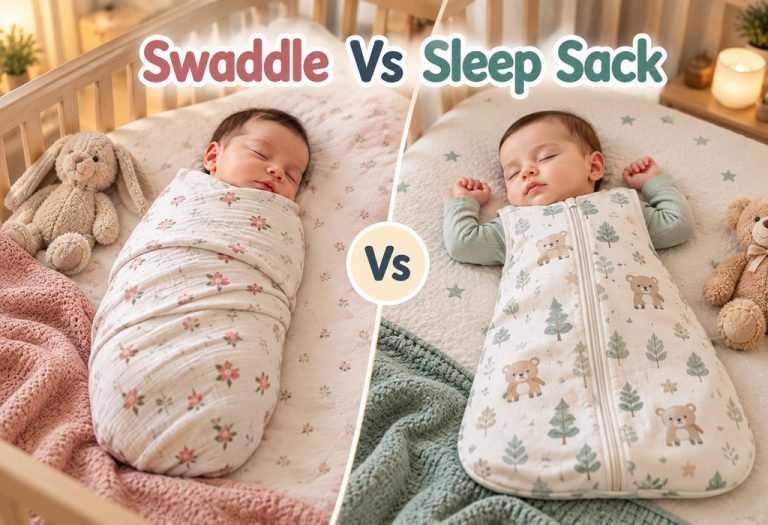
Swaddle vs sleep sack is a choice between containment and free movement: a swaddle holds a baby’s arms snug, while a sleep sack is a wearable blanket that leaves them free. Swaddles suit newborns before they can roll. Arms-free sleep sacks can be used from birth through toddlerhood, including after rolling starts. For parents of 6 to 18 month olds, the sleep sack is the one that stays useful. This article explains swaddle vs sleeping bag, the benefits and limitations of each, and how to choose the right one for your baby.
What is a Swaddle?
A swaddle is a thin blanket, or a wrap with Velcro or zip fastenings, that holds a newborn’s arms snug against the body. The snug fit resembles the womb and helps calm the startle reflex that can jolt newborns awake, which is why many parents compare swaddle vs sleeping bag options in the first weeks. Swaddling should stop as soon as the baby tries to roll, which some babies do as early as 2 months. You can compare designs in the swaddles and wrappers range on FirstCry.
What is a Sleep Sack?
A sleep sack, also called a wearable blanket or baby sleeping bag, is a zip-up bag worn over sleepwear instead of loose bedding. It keeps a baby warm without a blanket that can slip over the face, and its TOG rating tells you how warm it is: the higher the number, the warmer the bag. The sleep bag vs swaddle question usually arrives when rolling begins.
What is the Difference Between a Swaddle and a Sleep Sack?
The difference between swaddle and sleep sack designs comes down to arm position, age range and rolling safety. The table below compares both products across eight features parents check before buying.
|
Feature |
Swaddle |
Sleep Sack |
|
Typical age range |
Birth until the first signs of rolling |
Newborn sizes through toddlerhood |
|
Arm position |
Arms held snug against the body |
Arms free in arms-free designs |
|
Primary purpose |
Calms the startle reflex and helps newborns settle |
Keeps baby warm without loose bedding |
|
Safe after baby starts rolling? |
No. Stop at the first sign of rolling |
Yes, when arms and body can move freely |
|
Warmth control |
Thin fabric, so warmth is adjusted with clothing underneath |
TOG rating; a higher number is warmer |
|
Closure and ease of use |
Wrap folds, or Velcro or zip design |
Zip or button, no wrapping needed |
|
Fit as baby grows |
Short window of use that ends at rolling |
Sized by age band and weight; check the size chart |
|
Best suited for |
Newborns who startle awake and are not yet rolling |
Nightly sleepwear from newborn to toddler, including 6 to 18 months |
What Are the Benefits of Swaddling?
Swaddling helps most in the first weeks, before a baby can roll. Its main advantages are:
- Calms the startle reflex: a snug wrap can stop sudden arm movements from waking a newborn.
- Helps babies settle: correctly done, swaddling can calm infants and promote sleep.
- Easy with ready-made wraps: Velcro and zip swaddles remove the folding.
- Predictable routine: wrapping the same way each night can become a bedtime cue.
What are the Limitations of Swaddling?
Swaddling comes with firm safety limits that every parent should know before buying a wrap:
- Must stop at rolling: a swaddled baby who rolls onto the tummy is at higher risk, so back sleeping every time is essential.
- Overheating: swaddling can raise the chance of a baby getting too hot.
- Hip health: tight, straight leg wrapping can harm hips, so legs should bend up and out.
- Short window of use: it can end as early as 2 months, so buy one or two rather than a stack.
What are the Benefits of a Sleep Sack?
A sleep sack replaces loose blankets and stays useful well past the newborn stage:
- Safe through rolling: an arms-free sack lets the baby move freely, so it can stay in use as long as you like.
- No loose blanket: the AAP says layers of clothing are safer than loose blankets, and a wearable blanket can be used instead if it fits well.
- Quick night changes: a zip needs no wrapping technique, which helps when several caregivers share night duty.
- Longer use: one product can work from newborn to toddler when bought in the right size band.
What are the Limitations of a Sleep Sack?
A sleep sack is not automatically safe, and a few buying points need attention before you choose one:
- Size mistakes: a bag that is too big can let a baby slip down inside, so buy by weight and check the size chart.
- Warmth mismatch: a high TOG over thick clothing can overheat a baby, and one extra layer beyond what an adult would wear is the usual limit.
- Nest-style bags: padded carry-nest products are portable beds, not wearable sacks, and the NHS advises keeping pods and nests out of the cot.
- Vague labels: a bag with no stated size, TOG or standard gives you little to check.
Key Facts
|
Is a Swaddle or Sleep Sack Better for Baby?
Neither is better for every baby, because the right choice depends on age and rolling stage. In the sleep sack vs swaddle for newborn debate, a swaddle can help a startle-prone newborn settle, but only until rolling begins. After that, an arms-free sleep sack is the safer everyday choice, and it is the one most parents of 6 to 18 month olds need.
Three questions settle the sleep sack or swaddle decision. Is the baby showing signs of rolling? If so, choose a sleep sack. Is the room warm? A lower TOG sack suits warm weather. Who handles night changes? In a swaddle blanket vs sleep sack comparison, the zip is quicker for every caregiver than a wrap.
How Do You Choose Between a Swaddle and a Sleep Sack?
Once rolling starts, choose a sleep sack. These four checks help you pick the right one:
1. Size and age band
Check the age band and size chart, because most sacks are fitted by weight. Babies of 6 to 18 months need the 6 to 9, 9 to 12 or 12 to 18 month bands.
2. Arms-free design
For a baby who rolls, read the product description and photos to confirm the arms can move freely.
3. Breathable fabric and TOG
Cotton, muslin or organic cotton suit most rooms. A lower TOG suits warm weather and a higher TOG a cooler room.
4. A named safety standard
Look for EN 16781 in the description, which simply means the bag was tested as a baby sleeping bag. If a listing names none, ask the seller before buying.
A plain cotton zip sack in the right weight band meets these checks. Online stores such as FirstCry let you filter by age band, material and type, and Babyhug’s 100% cotton sleeping bags follow this approach, but most are listed for 0 to 6 months, so check the age band for older babies.
FAQs
1. When should you stop swaddling your baby?
Stop swaddling at the first sign your baby is trying to roll. Some babies start as early as 2 months, so watch for rolling attempts at every sleep.
2. When should you transition from a swaddle to a sleep sack?
Switch as soon as rolling attempts begin, or sooner if the baby fights the wrap. An arms-free sleep sack can then continue for as long as it fits.
3. What TOG rating should you choose for a newborn sleep sack?
Match the TOG to the room, since a higher number is warmer. The NHS recommends a room of about 16 to 20°C, so use a lower TOG in warm rooms.
4. Are weighted sleep sacks or swaddles safe for babies?
No. The American Academy of Pediatrics says not to use weighted swaddles or blankets, because they can press too hard on a baby’s chest and lungs.
5. Is arms-in or arms-out swaddling safer for a baby?
The American Academy of Pediatrics notes there is no evidence on SIDS risk linked to arms swaddled in or out. The same rules apply to both: back sleeping and stopping at the first rolling attempt.
6. Where can I buy swaddles and sleep sacks?
Choose a store that lets you filter by age, size and material and shows full descriptions. Check for a named standard such as EN 16781. FirstCry lists swaddles and wrappers and baby sleeping bags, including Babyhug cotton swaddle wrappers and cotton sleeping bags.
7. How do you transition from a swaddle to a sleep sack?
Try one arm out for a few nights, then both arms, then move to an arms-free sleep sack. Keep the bedtime routine and back sleeping the same.
8. Can you use a swaddle and sleep sack together?
Not for sleep. Layering a swaddle inside a sleep sack adds warmth and can cause overheating. Choose one product per sleep.
9. Can a baby use a sleep sack after learning to roll?
Yes, if the sack leaves the arms free. Sacks that compress the arms or body should stop at the first sign of rolling, so check the armholes before buying.
10. What should a baby wear under a sleep sack?
One light layer, such as a cotton bodysuit, chosen to suit the room. Dress a baby in no more than one extra layer than an adult would wear.
11. Can a baby overheat in a swaddle or sleep sack?
Yes. Sweating, damp hair, flushed cheeks, heat rash or fast breathing signal a baby is too hot. Feel the chest or back of the neck, and remove a layer if the skin is hot.
12. How should a sleep sack fit a baby?
It should fit snugly at the neck and shoulders so the baby cannot slip down inside, and it must never cover the head. Follow the size chart.
13. Which are the best brands for swaddles and sleep sacks?
No single brand suits every baby, so compare features first: arms-free design, cotton fabric, a clear TOG and size chart, and a named safety standard. For example, the Babyhug range lists cotton swaddle wrappers and sleeping bags in several prints.
A swaddle and a sleep sack do different jobs. A swaddle calms a newborn in the first weeks, but it must stop at the first sign of rolling. A sleep sack with free arms takes over from there and can be used well into toddlerhood. When buying, check the size, fabric, TOG rating and safety standard before anything else. If you are unsure about your baby’s rolling stage or room temperature, ask your paediatrician.
Was This Article Helpful?
1. PubMed – Swaddling and the Risk of Sudden Infant Death Syndrome: A Meta-analysis
2. Netherlands Standardization Institute – NEN-EN 16781:2026 en
3. American Academy of Pediatrics – Safe Sleep: 9 Ways to Reduce a Baby’s Risk of SIDS & Suffocation
4. American Academy of Pediatrics – Swaddling: Is it Safe for Your Baby?
- Author


Related Articles
-
Pneumonia During Pregnancy – Causes, Signs, Risks and Treatment
-

Bottle Nipple Sizes & Shapes For Feeding Your Baby
-

Best 40 Birthday Poems for Brother
-

15 Coding Games for Kids to Learn Programming
-

Toddler Growth Spurts & Beyond: How Kids Grow & What to Know
-

Busy Books for Toddlers - Benefits and Types