
Spider Veins during Pregnancy – Causes, Remedies & Prevention
Learn why spider veins appear during pregnancy, what causes them, and simple ways to manage discomfort and improve circulation well




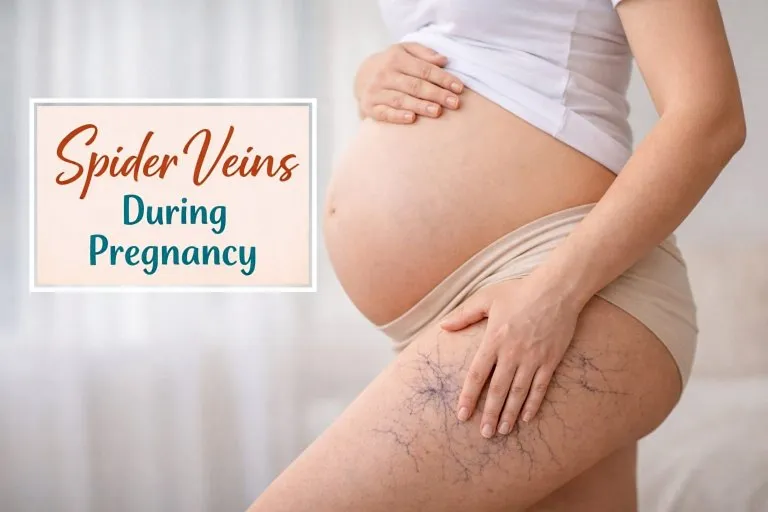
Image Credit : AI Generated Image
During pregnancy, you may notice jagged blood vessels running down your legs, branching out like sunbursts or a spider web. But don’t get anxious on seeing them. These are called spider veins, which can commonly appear on the legs and face during pregnancy. The appearance of spider veins during pregnancy is primarily due to increased blood volume and the pressure of your growing uterus on pelvic veins. Hormonal changes also cause blood vessels to relax and expand. While they might be a cosmetic concern, they are generally harmless and often fade after delivery. Remember, they are a common and temporary part of many pregnancies.
What Are Spider Veins?
Spider veins are purple or blue veins that typically occur during pregnancy on a woman’s legs, ankles, or face (1). They usually don’t cause much pain, but they can make your legs feel heavy. If you have spent a long time on your feet, the skin around these veins can also feel itchy or may even throb.
Are Spider Veins Normal in Pregnant Women?
Yes, spider veins are extremely common during pregnancy, with about 30-40 per cent of women developing spider veins when they are pregnant. Also, it can be a hereditary phenomenon. Around 80-90 per cent of women with a parent who has had spider veins can develop them during pregnancy.
The appearance of delicate spider veins on the belly during pregnancy is a common and harmless result of your skin stretching and blood volume increasing.
How Do They Differ from Varicose Veins?
Pregnancy spider veins can sometimes be mistaken for varicose veins, which are more swollen and larger than spider veins. Spider veins are small and visible through the skin (2).
What Causes Spider Veins in Pregnancy
When you are pregnant, you have a lot more blood running in your veins to supply to your foetus. Also, your levels of hormones oestrogen and progesterone will also change, causing more blood in your veins to pool up. This increase in blood volume and blood circulation in your body causes spider veins to appear on your legs or face (3). Although they might get uncomfortable for you, the good news is that they will not affect your baby in the least.
How Long Do Spider Veins Last?
While you might be irritated with their appearance, just keep in mind that spider veins are a temporary side effect and tend to improve within 3 or 4 months after giving birth. But don’t worry, there are many ways you can reduce their appearance.
How to Reduce the Effects of Spider Veins in Pregnancy?
Below are a few ways that you can try to reduce the appearance of spider veins during early pregnancy.
1. Stock Up on Vitamin C
Vitamin C is an important source to make collagen and elastin, which are two important connective tissues used to maintain and repair veins (4).
2. Include High-fibre Food in Your Diet
Make sure to include high fibre foods in your diet since another common condition during pregnancy is constipation, which can contribute to spider veins. When you exert too much pressure during a bowel movement, the blood in your deeper veins gets constricted. This means that the blood must find another route to flow through, which is most often the superficial veins, leading to those spidery blue veins on your legs. Good sources of fibre include whole grains like bran, fresh fruits, and vegetables.

3. Exercise Your Legs
Timely exercise helps improve circulation, leg strength, and stability in your veins. Exercises that work your legs are most effective, like walking or running. Make sure to watch your weight, as any extra weight places extra pressure on your legs.
4. Keep Your Blood Circulation Going
Sitting restricts blood flow in your legs, so try not to cross your legs while sitting. You can also elevate them while you rest so that the circulation in your legs and feet is eased back to your heart.
5. Wear Loose Clothing
Don’t wear any tight clothing like tight jeans or anything which puts pressure on your waist, groin, or legs.
6. Camouflage It
There are some flesh-toned concealers especially available for hiding spider veins, so you can use them to hide your more visible spider veins.
7. Don’t Stand for Long Periods of Time
If you absolutely have to stand for long periods of time, make sure to shift your weight from one leg to another every two minutes. If you are sitting for long, stand up and take a short walk every half an hour to free your legs.
8. Try Cosmetic Solutions
There are several ways for the treatment of spider veins during pregnancy, which can eliminate or minimize them, like laser treatments and sclerotherapy, a process where veins are injected with a solution which helps them collapse and fade from your skin. But you cannot try it until you deliver your baby.
Treatment for Spider Veins in Pregnancy
Spider veins usually go away post-pregnancy, but if they don’t, then you can opt for laser treatment post-delivery to restore the original look of your skin. A targeted laser is used to penetrate the vein under the skin. The process is known as selective photothermolysis (5). It focuses heat precisely on the problem vein while protecting the surrounding skin from harm. The quick procedure is done right in your doctor’s office. The laser’s energy closes off the damaged blood vessel, causing it to fade. It’s an effective option for treating smaller spider veins that are less than 1 millimeter wide. You can opt for this treatment, but do it only after the delivery.
Another common method is sclerotherapy. For this treatment, a doctor uses a fine needle to inject a special solution directly into the vein. This solution gently irritates the vein’s lining, causing it to collapse and seal itself shut. Over time, the body naturally absorbs the sealed vein, making it disappear (6).
How to Prevent Spider Veins While Pregnant
There are a few procedures to prevent spider veins on the legs while pregnant. You can visit a doctor who will diagnose you first. He can give you a compression hose, which can increase the circulation in your legs.
FAQs
1. Is it true that spider veins can sometimes appear on the abdomen or breasts, not just the legs and face?
Yes, while legs and face are most common, spider veins can develop anywhere due to widespread increased circulation. It’s not unusual to see fine, web-like vessels on the abdomen (especially as the skin stretches) or on the breasts due to engorgement and heightened blood flow.
2. If I develop spider veins in one pregnancy, will they definitely reappear in future pregnancies?
While there is a strong likelihood, it’s not a certainty. Your predisposition increases, but their recurrence and severity can be influenced by factors like the number of pregnancies, age, preventive measures taken (like compression wear), and genetic factors. Some women find they are less pronounced or absent in subsequent pregnancies.
3. Do spider veins go away after pregnancy?
Yes, in many cases, spider veins do fade or disappear on their own in the months following pregnancy and delivery. This is because the primary causes—increased blood volume, hormonal shifts, and pressure from the uterus—gradually resolve after you give birth. However, for some women, especially those with a genetic predisposition or who have had multiple pregnancies, some spider veins may persist and become permanent.
We hope we’ve covered all you need to know about pregnancy and spider veins. Spider veins are extremely common in pregnant women so do not worry about them sticking around forever. You can always follow the above suggestions to prevent them from spreading.
Also Read:
Blood Clots in Pregnancy
Swelling during Pregnancy
Varicose Veins while Pregnant
Skin Changes during Pregnancy
Was This Article Helpful?
Parenting is a huge responsibility, for you as a caregiver, but also for us as a parenting content platform. We understand that and take our responsibility of creating credible content seriously. FirstCry Parenting articles are written and published only after extensive research using factually sound references to deliver quality content that is accurate, validated by experts, and completely reliable. To understand how we go about creating content that is credible, read our editorial policy here.
1. National Library of Medicine – Spider Veins
2. OASH Office on Women’s Health – Varicose veins and spider veins
3. Cleveland Clinic – Spider Veins
4. National Library of Medicine – A Systematic Review on the Role of Vitamin C in Tissue Healing
5. National Library of Medicine – Definitions in Laser Technology
- Author

Related Articles
-

Is It Safe to Drink Coffee During Pregnancy?
-
X-Ray During Pregnancy: Is It Safe, Risks & Precautions to Take
-
Heightened Sense of Smell During Pregnancy - Causes and Tips to Cope With It
-
Social Distancing Baby Shower Ideas & Tips
-
Travelling by Train During Pregnancy - Safe or Risky?
-
Endometriosis and Pregnancy - Risks, Symptoms, & Care