Soy Sauce in Pregnancy – Benefits & Risks
Before you drizzle soy sauce on your food, understand the pregnancy-safe limits, benefits, and possible risks.




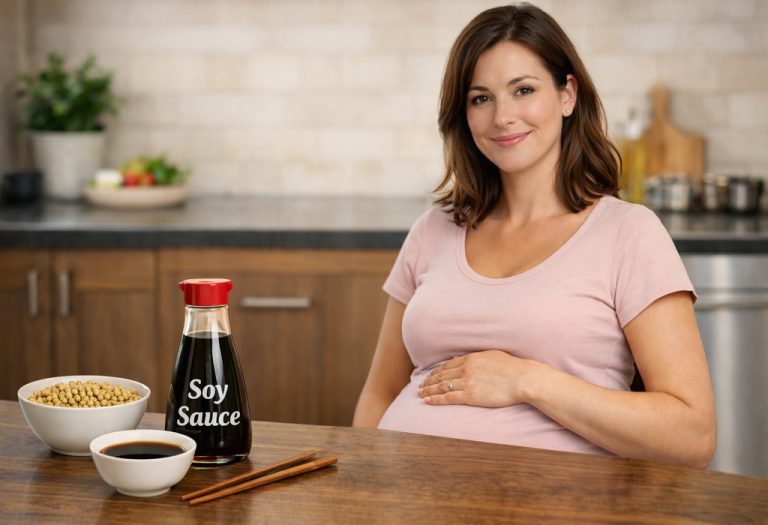
Image Credit : AI Generated Image
The salty, briny flavour you get in Chinese and Indo-Chinese dishes is all thanks to the hero ingredient: soy sauce. Often described as earthy, meaty, or caramel-like, soy sauce is a dark liquid condiment made from fermented soybeans, wheat, water, and salt. Wait…we’re not here to discuss the gastronomical affair of soy sauce but rather something more important—the use and safety of soy sauce in pregnancy. While the umami flavour makes it a favourite among many, it is important to understand whether soy sauce and pregnancy go well together or not. But why the huzz-buzz for this liquid condiment? During pregnancy, hormonal changes can cause variations in taste preferences, increased cravings, or a heightened sense of smell. This might be the reason for pregnant women’s craving for dishes with soy sauce during pregnancy.
Is Soy Sauce Safe During Pregnancy?
If you have also come through the search of “Can you eat soy sauce while pregnant?”, you are not alone. During pregnancy, you are highly delicate, and food choices make up a big contributor to your and your baby’s health. Before we venture to the answer to this question, let’s understand what soy sauce is and what it is made from.
Soy sauce—also called shoyu in Japanese, jiangyou in Chinese, and soy sauce in British English—is a salty condiment made by fermented soybeans, which releases several umami flavours and sugar. The five basic ingredients of soy sauce are: soybeans, wheat/wheat flour, water, salt, and fermenting agents like Aspergillus oryzae/Aspergillus sojae, salt-tolerant yeast and lactic acid bacteria. The mixture created is left undisturbed to ferment for eight months or so. After the fermentation, manufacturers then pasteurise soy sauce before packaging. The production and bottling of soy sauce may vary by country (1).
The soy sauce gets its brown colouration from its umami elements. Another major ingredient for soy sauce production is wheat flour, which brings in the gluten content (2). However, in some cases, the high gluten content of the soy sauce makes it a major health issue for individuals, pregnant or not.
Soy sauce is produced in different ways and may contain various ingredients in addition to soy. It is mainly categorised into three different processes: fermented soy sauce, chemical soy sauce, and semi-chemical soy sauce (3).
- Many times, the fermentation process is catalysed with the addition of organic acids to speed up the fermentation process.
- Another quicker and cheaper way soy sauce is prepared is through acid hydrolysis, where soy proteins are converted into amino acids (hydrolysed), followed by the addition of sugars, colours, and flavouring agents to enhance the taste of soy sauce.
Coming back to the original question: “Is soy sauce for pregnant ladies safe?” Moderate consumption of soy sauce is generally considered safe during pregnancy. However, it should not be treated as a staple ingredient for all food preparations in regular amounts, as it is high in sodium, which can elevate blood pressure and cause fluid retention.
The Royal Women’s Hospital says that all soy products are safe to consume during pregnancy (4).
While soy sauce is safe for occasional consumption, it is best to avoid those with high levels of chemical preservatives and to choose low-sodium soy varieties. Excessive consumption should also be avoided, as it can lead to bloating or other discomfort.
How Much Soy Sauce Can You Consume During Pregnancy?
While there’s no specific limitation, soy sauce must be consumed in moderation during pregnancy as its high sodium content could lead to water retention or high blood pressure, which is not good for pregnant women or their fetuses.
The American Heart Association advises keeping the daily sodium intake below 2,300 mg (5). Thus, make sure to consume low-sodium soy sauce during pregnancy. Considering one tablespoon of soy sauce contains about 878 mg of sodium, it’s best to use it in limited amounts and in moderation.
Nutritional Profile of Soy Sauce
Did you know that one tablespoon of soy sauce contains 8.5 calories and 878 milligrams of sodium, which is 38.2% of the DV? If consumed in excess, it could pose health issues.
Here’s a quick tour of the nutritional value of one tablespoon and 100 grams of soy sauce made from soy and wheat:
| Nutrient | Amount (1 tablespoon/16 grams) | Amount (100 grams) |
| Calories | 8.48 Kcal | 53 Kcal |
| Fat | 0.091 g | 0.57 g |
| Sodium | 878 mg | 5490 mg |
| Carbohydrates | 0.789 g | 4.93 g |
| Fibre | 0.128 g | 0.8 g |
| Added Sugar | 0.064 g | 0,.4 g |
| Protein | 1.3 g | 8.14 g |
| Iron | 0.232 mg | 1.45 mg |
| Magnesium | 11.8 mg | 74 mg |
| Phosphorus | 26.6 mg | 166 mg |
Source: USDA (6)
Soy sauce also contains several organic acids and other compounds and amino acids, such as glutamic acid, which are released through the process of fermentation. Since wheat is a major source of gluten, you will find a high amount of gluten in soy sauce. No fat is present in soy sauce since neither wheat nor soy contains this nutrient.
Reasons Behind Soy Sauce Cravings in Pregnancy
Craving soy sauce is not unusual, nor is it uncommon. If you are craving soy sauce during pregnancy out of the blue, there might be some reasons.
- You might crave soy sauce when you lose excess water from your body, which would have resulted in a loss of sodium content in the body. In such a case, your body will crave sodium-rich foods to compensate for that deficiency, and thus, craving soy sauce, as it is a rich source of sodium.
- Change in palette due to hormonal changes could be another reason for the salty craving of soy sauce. During pregnancy, the cravings or the sense of smell heighten or change. Things that you used to despise might become desirable now. All due to a change in taste buds. So, if you are craving soy sauce suddenly during your pregnancy, don’t worry; it’s normal.
Side Effects of Eating Soy Sauce in Pregnancy
Though a popular seasoning for several dishes like stir-fried noodles, sushi, sashimi, vegetable stews, and different types of fish and meat, there are side effects of soy sauce during pregnancy that should not be ignored.
- Soy sauce boasts a high amount of sodium, which can cause high blood pressure and swelling in the legs, and increase the risk of preeclampsia during pregnancy if overused.
- The chemicals present in chemical soy sauce or semi-chemical soy sauce may affect the health of the baby if not consumed within limits.
- Soy and wheat are allergenic ingredients that may cause soy, wheat, and gluten allergies, respectively (2). According to the Food Allergy Research and Education, those with soy allergy are likely to be sensitive or allergic to other major allergens, such as tree nuts, peanuts, egg, milk, and sesame. (7).
- People with histamine intolerance might be at risk with soy sauce consumption (8).
- Some soy sauces also contain an ingredient called monosodium glutamate or MSG, which is healthy for pregnancy. Thus, when choosing soy sauce, make sure to avoid one containing MSG in the ingredients list.
- Some chemical-based soy sauces might contain undesirable compounds, such as carcinogens (cancer-causing substances). Some of the chemical processing methods of soy sauce produce a chemical called 3-MCPD. Studies have associated 3-MCPD with cancerous tumours, infertility, and kidney harm in animals. More research is required to determine the impact of 3-MCPD on humans (9).
Alternatives to Soy Sauce When Pregnant
When choosing a safer alternative to the traditional soy sauce, look for one that has low sodium and phytic acid content and is gluten-free. If you are allergic to soy sauce or planning to go for a low-sodium option during pregnancy to keep the sodium levels withn safe limit, you can try:
- Low-sodium soy sauce
- Dark soy sauce during pregnancy has relatively less sodium content and less gluten content.
- Coconut aminos, which are both soy and gluten-free options. The flavour is relatively less intense than soy sauce.
- Tamari, which has desired sodium levels, zero gluten, and has a bit different taste than soy sauce.
FAQs
1. Is soy sauce safe for pregnant ladies?
Yes, soy sauce is safe for pregnant ladies only when consumed in moderation. It is best to consume reduced-sodium/low-sodium soy sauce during pregnancy to avoid health issues, such as preeclampsia and high blood pressure.
2. Can soy sauce during pregnancy cause miscarriage?
There is no sufficient scientific evidence to relate soy sauce consumption during pregnancy with miscarriage. However, consumption above moderation may lead to high blood pressure and other pregnancy consequences.
3. Is it safe to consume soy sauce in early pregnancy?
Yes, it is safe to include soy sauce in early pregnancy in dishes, but it should not be treated as a staple as it has high sodium content.
4. Is soy sauce unsafe during pregnancy?
No, soy sauce is not inherently bad for pregnancy. However, its regular and staple use might be unsafe for pregnancy.
As with a popular, fleeting myth that consuming soy sauce makes their baby’s skin darker, here’s the truth: soy sauce does not change the colour of any individual, before or after birth. Genetics determines skin colour. Thus, similar to other foods, balance and moderation should be considered when consuming soy sauce during pregnancy.
Also Read:
Eating Pasta During Pregnancy
Consuming Peanut Butter in Pregnancy
Is It Safe to Consume Butter during Pregnancy?
Eating Mayonnaise During Pregnancy – Is It Safe?
Was This Article Helpful?
Parenting is a huge responsibility, for you as a caregiver, but also for us as a parenting content platform. We understand that and take our responsibility of creating credible content seriously. FirstCry Parenting articles are written and published only after extensive research using factually sound references to deliver quality content that is accurate, validated by experts, and completely reliable. To understand how we go about creating content that is credible, read our editorial policy here.
1. ACS Publications – Chemical and Sensory Characteristics of Soy Sauce: A Review
2. National Library of Medicine – Gluten-Associated Medical Problems
4. The Women’s The Royal Women’s Hospital – Food safety in pregnancy – March 2024
5. American Heart Association – How Much Sodium Should I Eat Per Day?
6. USDA – Soy sauce made from soy and wheat (shoyu)
7. Food Allergy Research & Education – Soy Allergy
8. MDPI – Low-Histamine Diets: Is the Exclusion of Foods Justified by Their Histamine Content?
- Author
 About the Author