
20 Social Skills Activities for Preschoolers to Build Confidence
Help preschoolers grow confident and social with engaging activities that teach sharing, cooperation, communication, empathy, and friendship skills.




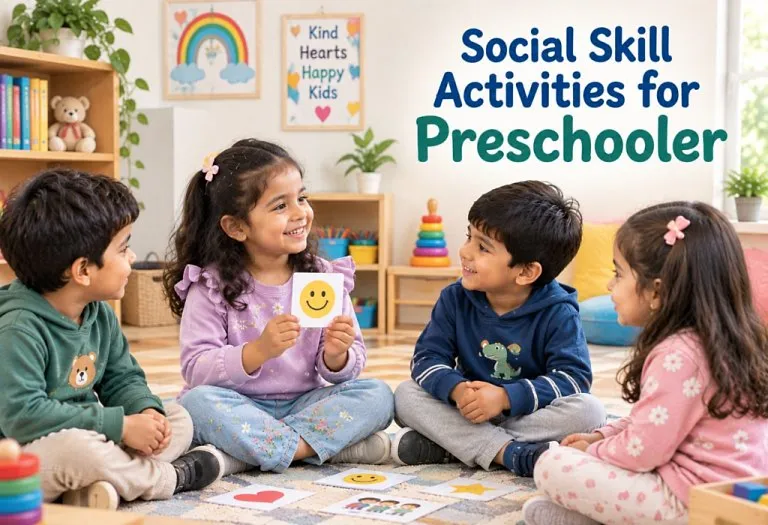
The preschool years are when children first learn how to share, take turns, and understand other people’s feelings. These early lessons shape how confidently a child interacts with friends, teachers, and family for years to come. The good news is that social skills can be nurtured through play. This guide covers simple, engaging social skills activities for preschoolers that build confidence, cooperation, and communication, along with common mistakes parents should avoid along the way.
What Are Social Skills?
Social skills are the everyday behaviours children use to communicate, connect, and get along with others. They include things like listening, sharing, taking turns, reading facial expressions, and expressing feelings in appropriate ways. For preschoolers, these skills are still developing and often need gentle guidance and plenty of practice through play and daily routines.
Rather than something children either have or don’t, social skills are learned gradually, shaped by repeated experiences with parents, siblings, teachers, and friends. A toddler who once grabbed toys without asking can, with consistent modelling and practice, grow into a preschooler who offers to share or take turns without being prompted.
Why Are Social Skills Important for Preschoolers?
Here are a few ways social skills can help children during their preschool day:
- Build friendships: Helps children connect with peers, share, take turns, and play cooperatively.
- Handle conflicts: Teaches children to express their feelings, listen to others, and work through small disagreements.
- Adjust to group settings: Makes it easier to follow classroom routines, join activities, and understand expectations.
- Develop emotional resilience: Gives children ways to cope with frustration, disappointment, and other challenging emotions.
- Strengthen confidence and belonging: Helps children feel comfortable expressing themselves and becoming part of their family, classroom, and community.
- Encourage positive social experiences: Early, low-pressure practice can help children who find group situations difficult feel more comfortable joining in.
- Learn to recover from difficult moments: The goal isn’t to prevent every argument or upset, but to help children work through challenges and return to play.
What Social Skills Should Preschoolers Learn?
Preschoolers are capable of learning several foundational social skills, even if they haven’t mastered them yet. Introducing these skills gradually, through everyday interactions, helps children build a toolkit they’ll rely on well into their school years. Here are the key types worth focusing on.
1. Communication Skills
This includes using words to express needs, listening when others speak, and taking turns in conversation rather than talking over one another.
2. Emotional Regulation
Preschoolers are still learning to name and manage big feelings like frustration, excitement, or disappointment without resorting to tantrums.
3. Cooperation and Teamwork
Working alongside others toward a shared goal, whether it’s building a tower or tidying up toys, teaches patience and compromise.
4. Empathy and Kindness
Recognising when a friend is upset and responding with comfort or kindness helps children build genuine, caring relationships. This skill often develops last, since it requires a child to consider someone else’s perspective rather than just their own, but modelling kind responses at home speeds up the process considerably.
What Are the Best Social Skills Activities for Preschoolers?
Play is the most natural way for preschoolers to practise social behaviours without feeling pressured. The following social activity for preschoolers are simple to set up at home or in a classroom and each one targets a different social skill, from turn-taking to empathy.
1. Simon Says
This classic listening game teaches children to follow instructions and pay attention to others, all while having fun.
2. Musical Chairs
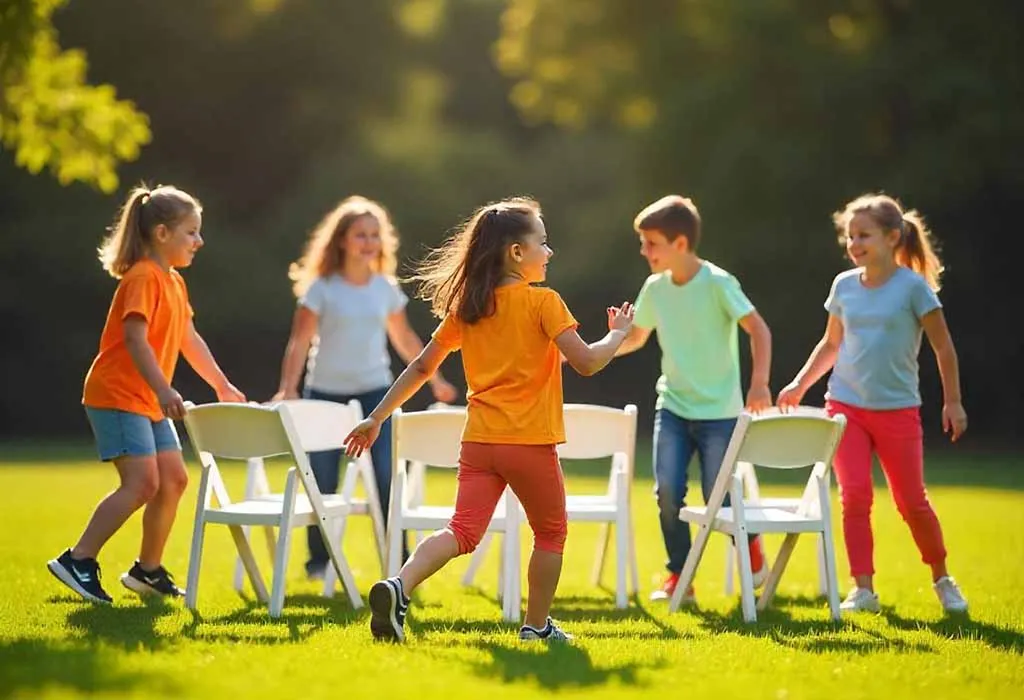
A gentle version of musical chairs (without the elimination) teaches turn-taking and how to handle not always “winning.”
3. Sharing Circle Time
Sitting in a circle and passing an object while each child speaks builds patience and listening skills.
4. Puppet Show Role-Play
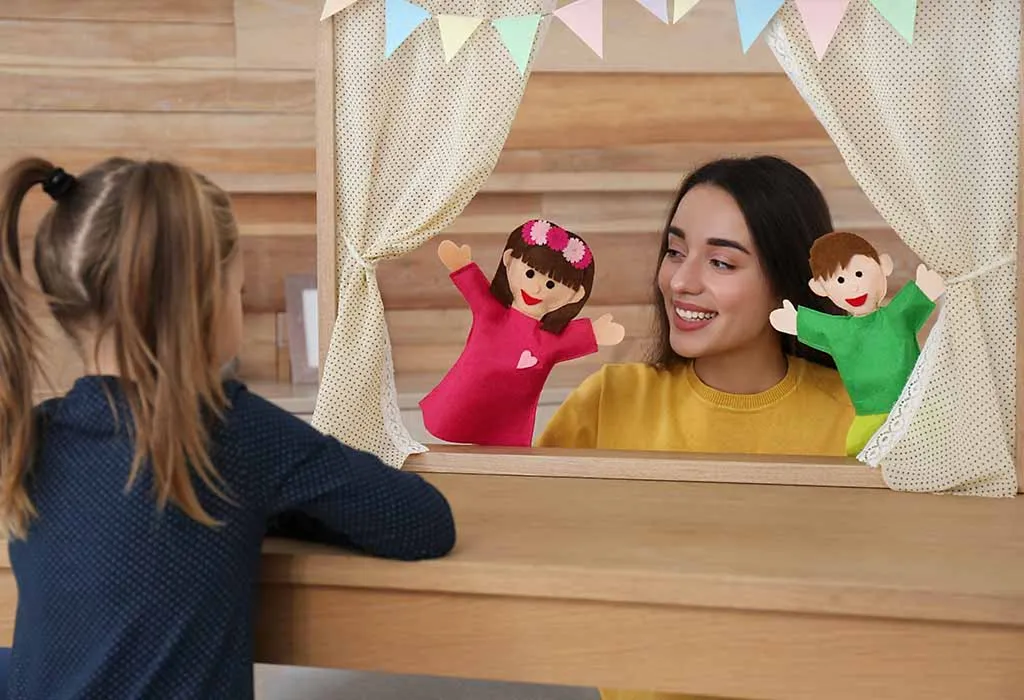
Acting out simple scenarios with puppets helps children practise conversations and problem-solving in a low-pressure way.
5. Cooperative Building Blocks
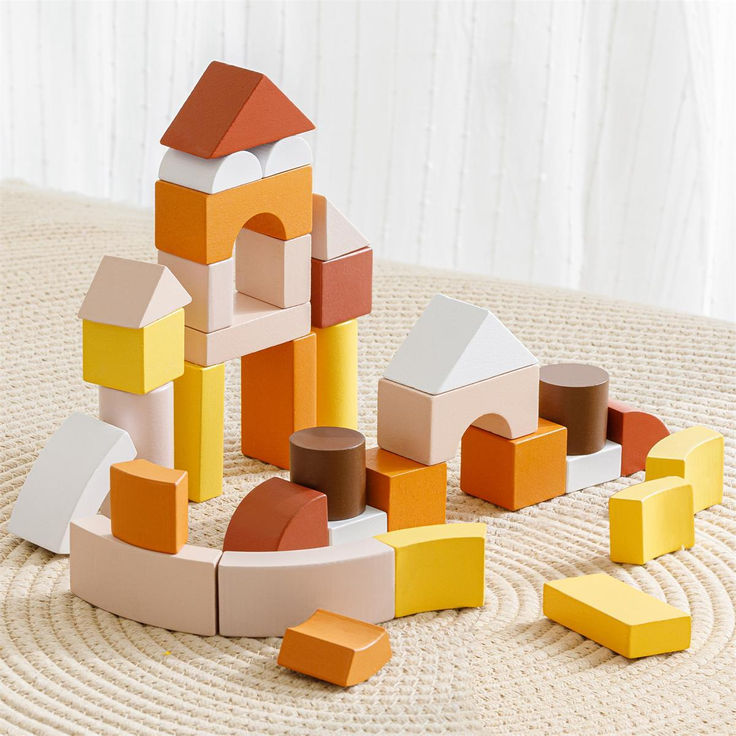
Image Source: Pinterest
Building a structure together, rather than individually, encourages children to negotiate ideas and share materials.
6. Emotion Charades
Acting out feelings like happy, sad, or scared helps preschoolers recognise emotions in themselves and others.
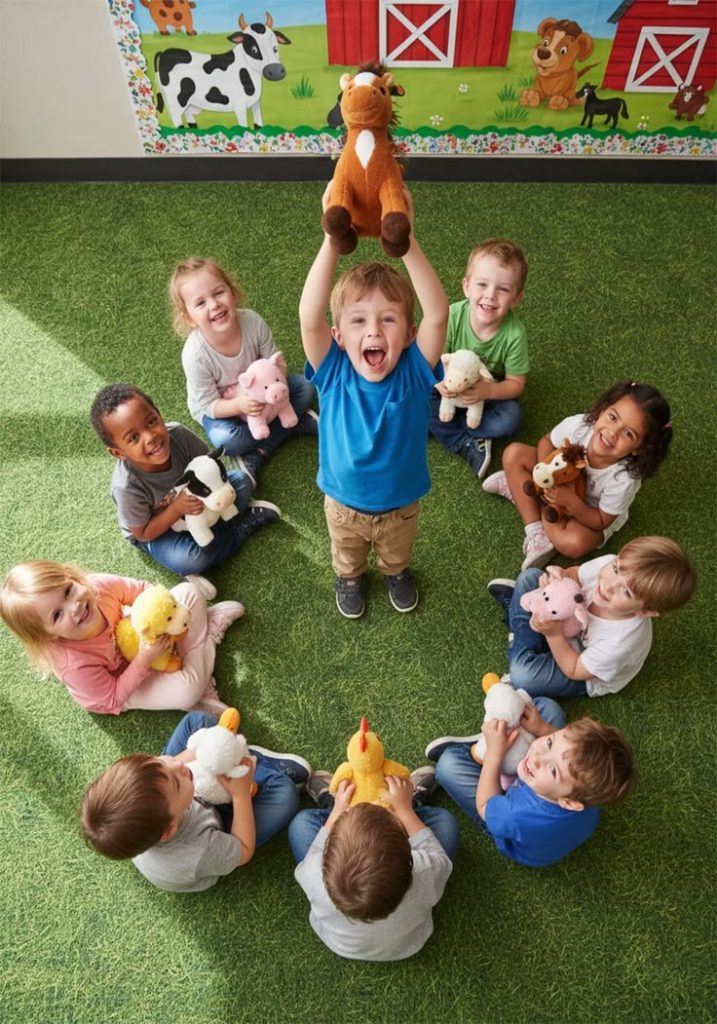
7. Group Storytelling
Source: Pinterest
Taking turns adding a sentence to a story teaches listening, patience, and creative collaboration.
8. Freeze Dance
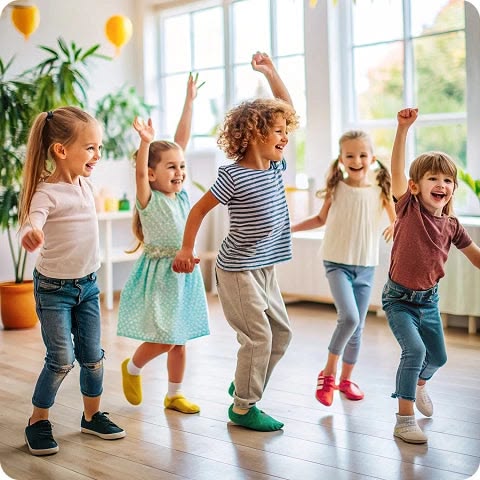
Source: Pinterest
Dancing together and freezing on cue is a fun way to practise following shared rules as a group.
9. Buddy Reading
Pairing children to look at a book together encourages cooperation and shared attention.
10. Obstacle Course Teamwork
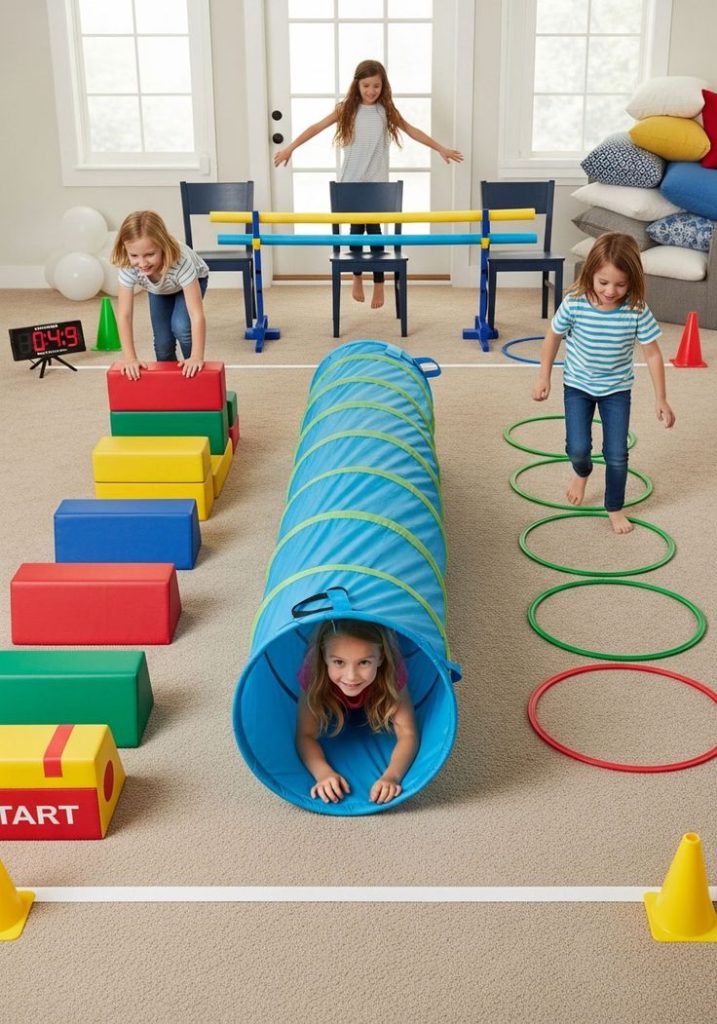
Source: Pinterest
Working through a simple obstacle course as a pair or small team teaches encouragement and patience.
11. Community Helper Role Play
Pretending to be a doctor, shopkeeper, or firefighter helps children practise real-world conversations and cooperation.
12. Feelings Faces Matching Game
Matching pictures of facial expressions to feelings builds emotional vocabulary and empathy.
13. Group Art Mural
Creating one large piece of art together teaches children to share space, materials, and ideas.
14. Passing the Ball Greeting Game
Rolling a ball to a friend while saying their name is a simple way to practise greetings and turn-taking.
15. Show and Tell
Presenting an item to the group and answering questions builds confidence in speaking and listening.
16. Cooking or Baking Together
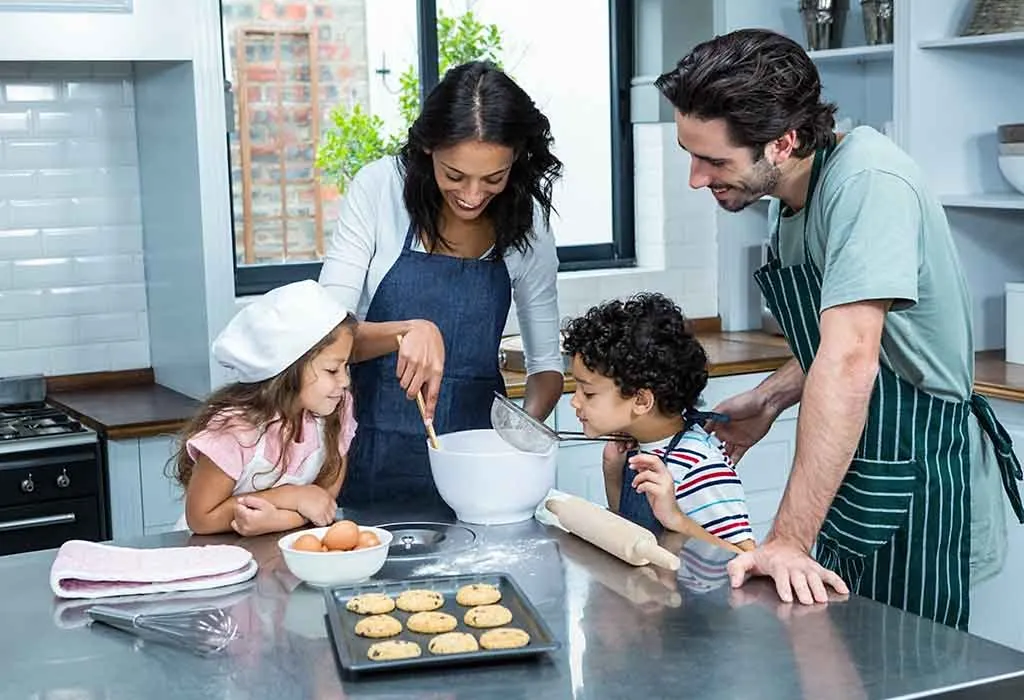
Following simple steps as a team, like stirring or pouring, teaches patience and shared responsibility.
17. Nature Scavenger Hunt in Pairs
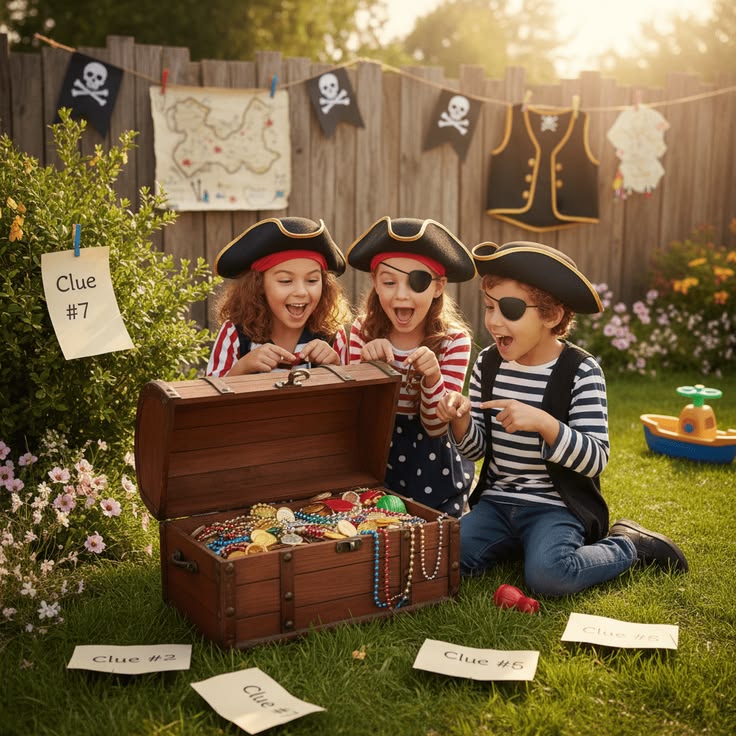
Source: Pinterest
Searching for items outdoors with a partner encourages communication and teamwork toward a common goal.
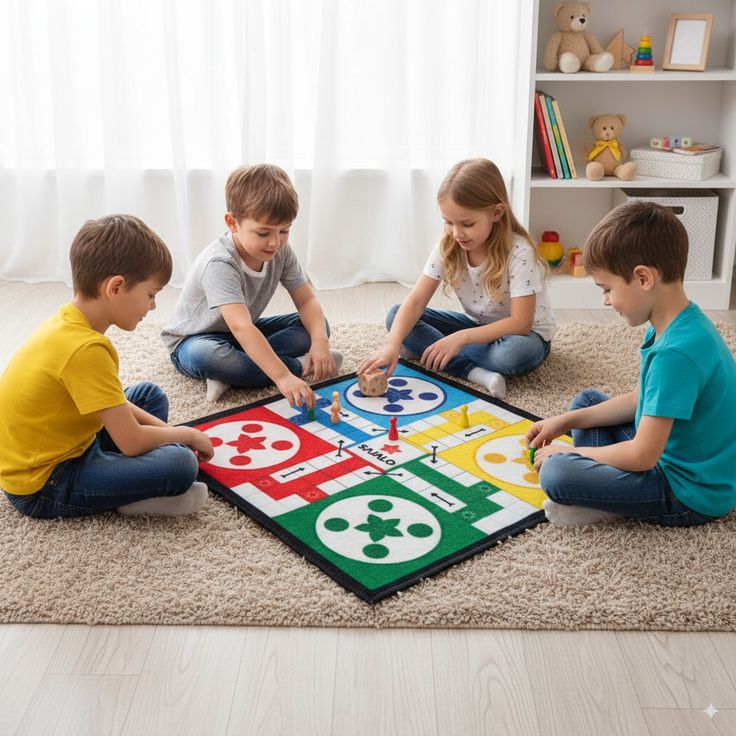
18. Board Games
Source: Pinterest
Simple, age-appropriate board games teach children to wait their turn and accept both winning and losing gracefully.
19. Compliment Circle
Taking turns saying something kind about a friend builds empathy and a positive group atmosphere.
20. Clean-Up Time Teamwork
Tidying toys together after play reinforces shared responsibility and cooperation in everyday routines.
What Social Skills Mistakes Should Parents Avoid?
Even well-meaning parents can unintentionally slow down a child’s social growth. Being aware of these common missteps can help caregivers offer better support during everyday interactions. Here are a few mistakes worth watching for.
- Stepping in Too Quickly During Conflicts: Solving every disagreement for a child removes the chance to practise negotiation and compromise. Guiding instead of intervening helps children build their own conflict-resolution skills over time.
- Over-Scheduling Structured Activities: Filling every hour with adult-led activities can leave little room for the unstructured, prosocial activities that naturally teach sharing and cooperation. Free play with peers is just as valuable as organised social development activities for preschoolers.
- Comparing a Child to Peers or Siblings: Comparisons can knock a child’s confidence and make social situations feel like a competition rather than a chance to connect. Every child develops social skills at their own pace.
- Dismissing Big Emotions: Telling a child to “stop crying” or “calm down” without acknowledging their feelings can make emotional regulation harder to learn. Naming the emotion and offering comfort helps children feel safe enough to try again.
- Rushing the Process: Expecting a preschooler to master sharing or turn-taking overnight sets both parent and child up for frustration. Celebrating small wins, like a single successful turn-taking moment, reinforces progress far more effectively than focusing on setbacks.
FAQs
1. At what age should social skills activities begin?
Most children can start simple, guided social learning activities from around age two, with more structured games becoming appropriate by age three or four.
2. How can I tell if my preschooler needs extra support with social skills?
Signs may include difficulty sharing, frequent meltdowns during group play, or reluctance to interact with other children. A gentle, patient approach and consistent practice through activities to develop social skills among preschoolers usually helps, though a paediatrician or teacher can offer guidance if concerns persist.
3. How much playtime does a preschooler need for social development?
There’s no fixed number, but daily opportunities for both guided and free play with peers give preschoolers the practice they need to build confidence socially.
4. Can shy preschoolers still build strong social skills?
Yes. Shy children often benefit from smaller group settings and gentle encouragement rather than being pushed into large group activities too soon.
5. Should social skills be taught at home, at preschool, or both?
Both settings play a role. Consistent reinforcement at home alongside classroom experiences gives children the most well-rounded opportunities to practise what they learn.
Building social skills in the preschool years takes patience, consistency, and plenty of playful practice. From simple games like Simon Says to more collaborative activities like group art murals, there are countless ways to help children learn to share, listen, and empathise with others. Avoiding common pitfalls, such as over-scheduling or stepping in too soon during conflicts, allows preschoolers the space to grow at their own pace. With regular opportunities to practise, most children steadily gain the confidence they need to navigate friendships and group settings. Small, everyday moments of connection often matter just as much as any structured activity.
Also Read:
Grandparents’ Day Crafts for Children
Heart Coloring Pages – Free Printable Sheets & Images
Spring Songs for Preschoolers and Kids
Was This Article Helpful?
- Author