
Scabies During Pregnancy – Causes and Treatment





Medically Reviewed By
Dr. Deepinder Kaur
(Gynaecologist)

This health content has been medically reviewed by qualified experts and follows the FirstCry Parenting editorial policy to ensure accuracy and reliability.
Key Takeaways
- Scabies during pregnancy is caused by tiny mites and commonly causes intense nighttime itching and a bumpy rash.
- It usually does not directly harm the unborn baby, but proper treatment is important.
- Permethrin 5% cream is commonly recommended during pregnancy under medical guidance.
- Home remedies may soothe itching but cannot reliably eliminate scabies mite
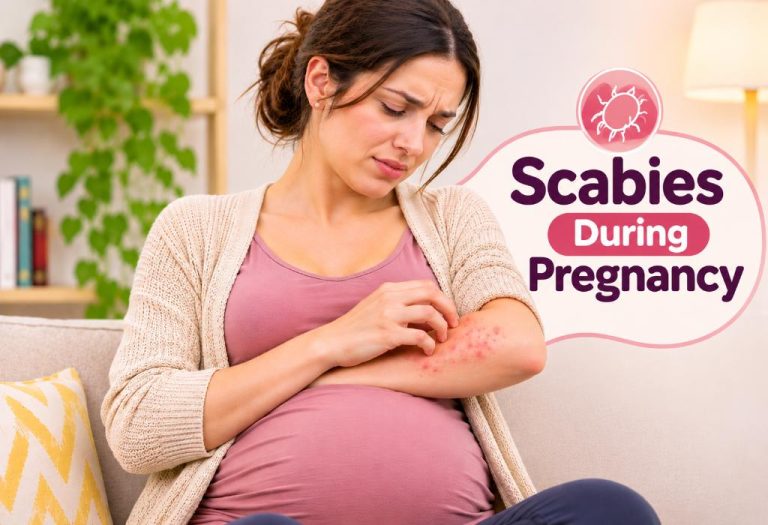
Scabies during pregnancy is a treatable skin condition caused by tiny mites that burrow into the skin, leading to intense itching, small bumps, and irritation that often worsens at night. Although it can cause discomfort and concern for expecting mothers, the right treatment under medical supervision can help relieve symptoms safely while accounting for pregnancy-related precautions.
In this article, we’ll discuss the causes and symptoms of scabies for pregnant women, how it spreads, and which treatment options may be suitable for expecting mothers. You’ll also learn how to manage itching, prevent reinfection, and protect your family from further spread.
What Is Scabies?
Scabies are caused by creatures known as mites that burrow and dig tunnels under the skin’s surface. You will get scabies when the female mite digs under your skin’s surface and lays eggs. They die after a month, but the eggs will hatch, and new mites will grow, which will then reproduce. Their life cycle is only about 2-3 weeks. Different types of scabies can develop based on the mode of transmission – contact with the skin of an infected person, through sexual intercourse, or in rare cases, contact with towels or linen of someone who has scabies (1).
What Causes Scabies?
Mites are common in crowded places like camps, classrooms, college dorms, and childcare centres, where they move from skin to skin. The most common way to get scabies is from someone who already has them (2). Exposure to scabies during pregnancy does not harm the foetus in any way, but it still has to be treated quickly so that the mother can rest at ease.
What Are the Signs and Symptoms of Scabies?
After initial exposure to scabies, the following symptoms can take up to 6 weeks to appear (3).
- Intense itching and a rash that gets worse at night.
- The rash will resemble pimples or blisters – raised bumps filled with fluid.
- Grey lines on your skin, along with red bumps.
- Red, scaly patches on your skin.
- Itching on the skin surrounding your hands and feet.
Can Scabies Affect a Pregnant Woman and Her Baby?
Many pregnant women may wonder if scabies can be harmful during pregnancy or if it can harm the baby. The good news is that scabies in pregnancy will not affect the foetus in any way (4). The link between scabies and pregnancy risk is small, but the options for scabies treatment may be limited as the medications a woman can take while she is pregnant are limited. However, there are natural ways to treat scabies if you want to avoid medical treatment.
How Is Scabies Diagnosed?
The doctor will first look for signs of scabies on your skin. Then, he will perform tests, such as taking skin scrapings from the rash and examining them to look for mites. He can also perform a skin biopsy to check for the presence of mites.
Medical Treatment for Scabies During Pregnancy
Pregnancy and scabies can be a challenging combination, as the treatment options need to be chosen carefully to ensure they are safe for both the mother and the unborn baby. There are ways to get scabies treatment while pregnant by using certain medications (5).
- Medicated creams like permethrin 5% or benzyl benzoate are prescribed to treat scabies infections.
- The creams should be applied all over the body. Since scabies are a contact infection, the whole family and the infected person’s partner should also be treated. Creams may be used one time or repeated after a week.
- Some doctors can also prescribe oral medication to kill the mites in severe cases.
Natural Remedies for Scabies During Pregnancy
If you are pregnant and want to avoid resorting to medical treatment for scabies, you can opt for the many home remedies for scabies that are safe during pregnancy. Some of them are (6):
1. Neem Oil
Just mix some neem oil with turmeric powder and make a paste. Apply the paste and continue until the symptoms of the scabies fade away.

2. Tea Tree Oil
Coconut oil mixed with tea tree oil can be applied to the affected area and is an effective and safe way to treat scabies infection.
3. Mustard Oil
Apply mustard oil all over your body before going for a shower. This will kill the mites that cause scabies on your body.
4. Aloe Vera Gel
Aloe vera gel may help soothe irritated skin and provide temporary relief from itching. Choose a fragrance-free product and test it on a small patch of skin first. However, aloe vera does not kill scabies mites, so it should only be considered for comfort and not as a replacement for prescribed treatment during pregnancy.
5. Cool Compresses
Applying a clean, cool, damp cloth to itchy areas for a few minutes may help reduce discomfort and calm skin irritation. Avoid applying ice directly to the skin or rubbing affected areas, as this can worsen irritation.
6. Fragrance-Free Moisturiser
A gentle, fragrance-free moisturiser can help soothe dry skin and support the skin barrier, particularly when repeated scratching causes irritation. Choose products designed for sensitive skin and avoid ingredients that sting or worsen the rash.
7. Other Natural Ways
Another effective way is applying undiluted white vinegar, apricot leaf juice, drumstick juice, calamine lotion and sesame oil mixture followed by a cold compress to treat rashes as well as kill the scabies mites.
Can You Prevent Scabies in Pregnancy?
Scabies are hard to prevent as they spread through contact. However, you can wash your towels, underwear, and sleepwear in hot water and vacuum your carpets and upholstered furniture to minimise the chances of scabies infection (7).
When to Consult a Doctor?
If you suspect scabies during pregnancy, consult your doctor for a proper diagnosis and safe treatment, especially if you notice any of the following signs:
- Severe or persistent itching, especially at night.
- A spreading rash or new skin bumps.
- Redness, swelling, pus, or signs of skin infection.
- Symptoms that worsen or persist despite treatment.
- Scabies symptoms returning after treatment.
FAQs
1. How can I identify if my itching is due to scabies and not something else during pregnancy?
Scabies itching is typically more intense at night and is accompanied by a rash with pimple-like bumps and possibly burrow tracks on the skin. If you’re experiencing these symptoms, especially in areas like the wrists, elbows, and between fingers, it’s your right to consult a doctor for an accurate diagnosis (8).
2. How long does it take for scabies to heal with treatment during pregnancy?
With appropriate scabies treatment during pregnancy, the mites are usually killed within a few days. However, the itching and rash can persist for several weeks after treatment as the skin heals. It’s essential to complete the full course of treatment as prescribed and follow up with your doctor if symptoms persist.
3. Can scabies return after treatment during pregnancy?
Yes, scabies can return if treatment is incomplete, close contacts remain untreated, or reinfestation occurs. Treating household members and other close contacts simultaneously, as advised by a healthcare professional, can help prevent the infection from recurring.
4. How soon do scabies symptoms appear after exposure?
In a first-time infestation, symptoms may take four to eight weeks to appear. If a person has had scabies before, itching may develop within a few days after reinfestation.
Many scabies cases can be cured with no long-term complications. A severe case with lots of crusting or scaling may indicate HIV symptoms. So, if you develop any skin condition or rash during pregnancy, contact your doctor and address the situation immediately. Maintaining hygiene and cleanliness during pregnancy is critical in avoiding many illnesses. It is also vital for you to take care of your physical and mental well-being during the prenatal and antenatal phases, as your body is going through many changes during this time.
Also Read:
Eczema in Pregnancy
PUPPP Rash while Pregnant
Skin Changes during Pregnancy
Hives (Urticaria) during Pregnancy
Was This Article Helpful?
Parenting is a huge responsibility, for you as a caregiver, but also for us as a parenting content platform. We understand that and take our responsibility of creating credible content seriously. FirstCry Parenting articles are written and published only after extensive research using factually sound references to deliver quality content that is accurate, validated by experts, and completely reliable. To understand how we go about creating content that is credible, read our editorial policy here.
1. World Health Organization – Scabies
2. National Library of Medicine – Scabies
4. National Library of Medicine – Lice and Scabies
5. PubMed Central – Scabies-infested pregnant women: A critical therapeutic challenge
6. PubMed Central – Essential Oils against Sarcoptes scabiei
8. American Academy of Dermatology Association – SCABIES: SIGNS AND SYMPTOMS
- Author
- Expert Reviewer

Related Articles
-
White Vaginal Discharge During Third Trimester of Pregnancy
-

Typhoid in Pregnancy – Reasons, Symptoms, and Treatment
-

Hard (Tightening) Stomach During Pregnancy - Causes & Treatment
-

Beautiful Rainbow Themed Baby Shower Ideas
-

Masturbating While Pregnant - Is It Safe?
-

Sepsis When Pregnant - Causes, Symptoms, and Prevention