
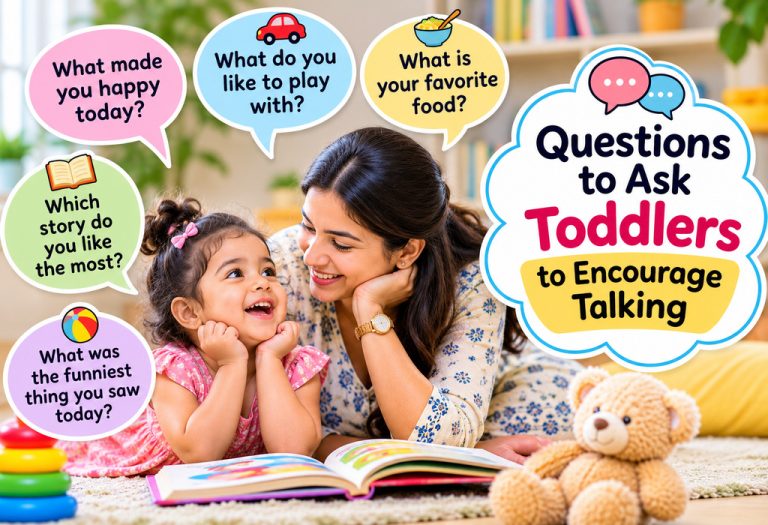
40 Questions to Ask Toddlers to Encourage Talking
Encourage your toddler to talk with simple, fun questions that build vocabulary, improve communication, and spark meaningful conversations.




Key Takeaways
- Asking simple, open questions helps toddlers build vocabulary and sentence skills.
- Start with easy questions about objects and body parts, then move to feelings and stories.
- Silly what if questions make talking fun and spark imagination.
- Wait a few seconds after each question, because toddlers need time to think and reply.
- A few minutes of daily chat at meals, playtime and bedtime works best.
Toddlers are curious little learners, and the right questions turn everyday moments into talking practice. This list of questions to ask toddlers gives you 40 easy ideas that fit into mealtimes, car rides, playtime and bedtime. Whether you want questions to ask 2 & 3 year olds about their day or just a few giggles, you will find something here. Pick a few, keep the tone light and enjoy the answers, however short or surprising they may be.
Why Should You Ask Your Toddler Questions?
Questions invite your child into a conversation instead of just listening to one. When you ask your toddler something, they practice finding words, forming short sentences and taking turns. It also tells them that their thoughts matter, which builds confidence. Regular questions help you spot what your little one knows, enjoys or finds tricky. Most of all, it turns ordinary routines into warm, connected time together.
Simple Questions to Ask Your Toddler
Start with easy questions that need only a word, a point or a choice. These questions to ask your toddler build early vocabulary and give them quick wins.
- Where is your nose?
- What does a cow say?
- Can you point to your shoes?
- What colour is this ball?
- Do you want an apple or a banana?
- Which one is the dog?
- Can you show me your hands?
- What is this called?
- Do you want the red cup or the blue cup?
- Where is the moon?
Questions to Ask Toddlers About Their Day and Friends
Once your child can say a few words together, try gentle what, who and why questions about daycare or preschool, friends and play. These work well as questions to ask 3 year olds who love sharing little stories.
- What did you play today?
- Who did you sit next to at lunch?
- What was the best part of your day?
- Who is your best friend at school?
- What toy did you share today?
- Why do you like playing with that friend?
- What songs did you sing today?
- Who made you laugh today?
- What did your teacher read to you?
- What game do you want to play with your friend tomorrow?
Funny Questions to Ask Toddlers
Silly, imaginary scenarios get toddlers giggling and stretch their creativity. Expect wild answers, and enjoy every one of them.
- What would happen if your teddy bear could talk?
- What if a dinosaur came to your birthday party?
- What would you do if you had wings like a bird?
- What if the dog wore your hat?
- What would a monkey eat for breakfast?
- What if your shoes could dance?
- What would you say to a talking banana?
- What if it rained ice cream today?
- What sound would a silly robot make?
- What if you could be as tiny as an ant?
Questions to Ask Toddlers About Feelings and Bedtime
These calm prompts about emotions, kindness and gratitude wind the day down gently. They are also good questions to ask 2 year olds who are just learning to name how they feel.
- How do you feel right now?
- What made you happy today?
- Did anything make you feel sad?
- What is something kind you did today?
- Who gave you a hug today?
- What are you thankful for?
- What helps you feel calm?
- Who do you love the most?
- What was your favourite thing today?
- What do you want to dream about tonight?
How to Ask Questions to Toddlers to Get Them Talking
How you ask matters as much as what you ask. Keep these simple tips and common mistakes in mind.
- Get down to your toddler’s eye level and use a warm, relaxed voice.
- Ask one question at a time and keep the words short.
- Wait five to ten seconds before repeating or rephrasing.
- Repeat their answer back and add a word to model longer sentences.
- Avoid too many questions in a row, which can feel like a quiz.
- Never correct their speech harshly, because praise keeps them talking.
FAQs
1. When do toddlers start answering questions?
Many toddlers respond to simple questions with gestures or single words around 18 months. By age two or three, most can answer short what and where questions.
2. What if my toddler does not answer?
Stay patient and give them time. You can offer two choices, point to objects or answer first yourself so they hear a model. If speech seems delayed, talk to your paediatrician.
3. How many questions should I ask in a day?
There is no fixed number. A few relaxed questions during meals, play and bedtime work better than a long list at once.
Asking questions is one of the easiest ways to help your little one find their voice. This list of questions to ask toddlers covers simple choices, daily stories, giggles and gentle bedtime thoughts. Try a few each day and let your child lead the conversation. Remember that short, silly or even unusual answers are all signs of growing language. Keep it fun, stay patient and enjoy these tiny chats while they last.
Also Read:
Tips To Teach Your Toddler New Words
How To Communicate With Toddlers
Simple And Fun Things To Do With A Toddler
Was This Article Helpful?
- Author