
Can I Take Probiotics and Prebiotics While Pregnant?
Pregnant and considering probiotics or prebiotics? Learn their benefits, safety, and when to consult your healthcare provider.





Medically Reviewed By
Archana Shah
(Diabetologist/Nutritionist/Dietitian)

This health content has been medically reviewed by qualified experts and follows the FirstCry Parenting editorial policy to ensure accuracy and reliability.
Pregnancy comes with a long list of “dos and don’ts” — and when it comes to gut health, many moms-to-be wonder whether prebiotics and probiotics for pregnant women are actually safe or just another wellness trend. The good news? These tiny gut-friendly helpers may do much more than support digestion. From easing common pregnancy discomforts like bloating and constipation to potentially supporting immunity and overall maternal health, probiotics and prebiotics are gaining attention for all the right reasons.
But what exactly are they, and how are they different? More importantly, which foods are the safest and most beneficial during pregnancy?
In this article, we’ll break down everything you need to know about prebiotics and probiotics during pregnancy — including their safety, science-backed benefits, and the best natural food sources to include in your diet.
What Are Probiotics and Prebiotics?
Probiotics or good bacteria are micro-organisms that are present in our intestines. These organisms break down the food we eat and help in the process of digestion (1). On the other hand, prebiotics are stimulants for the good bacteria to grow. These foods are not digested by our body, but they remain in our colon, triggering the growth of the good bacteria (2).
Is It Safe to Take Probiotics and Prebiotics During Pregnancy?
So, can you take probiotics when pregnant? According to research done by the National Library of Medicine and the National Institute of Health, probiotics do not cause any complications during birth or infection during pregnancy. There are many health benefits that come with consuming probiotics (3).
Dr William Sears, a famous paediatrician from the Children’s Hospital in Boston, writes in his blog, “It’s quite safe to take probiotics during pregnancy. Probiotics are very popular in most of the countries, especially in Europe, and their health benefits are gradually being more valued.”
During pregnancy, the composition of bacteria plays a pivotal role in maintaining a healthy metabolism. There are several research papers connecting a healthy digestive system to improve maternal health. Moreover, recent studies show that the consumption of probiotics reduces the harmful bacteria in the body, thus lowering the potential of certain infections (4).
How Common Is the Consumption of Probiotics During Pregnancy?
While pregnant women commonly face health issues like indigestion, heartburn, and constipation, consuming specific probiotics helps in easy relief. Taking particular probiotic bacteria, such as Bifidobacteriumlongum reduces abdominal pain, and improves bowel movement (5). Several nutritionists and doctors advise mothers to consume probiotics every day. There are many benefits of taking probiotics.
Benefits of Taking Probiotics or Prebiotics During Pregnancy
During pregnancy, the consumption of probiotics and prebiotics can help the pregnant woman in many ways. Some of them are (6) (7) (8) (9) (10):
- Helps in improving digestion.
- Augments good bacteria and counters the growth of harmful bacteria in the body.
- Breaks down food to be entirely utilised by the body.
- Essential for healing infertility.
- Helps in reducing inflammation of the colon’s lining, and treats inflammatory bowel disease.
- Strengthens the immune system of the mother and the baby.
- Maintains a healthy urinary system.
- Balances the cholesterol level.
- Prevents vaginal infection like bacterial vaginosis.
Foods Containing Prebiotics
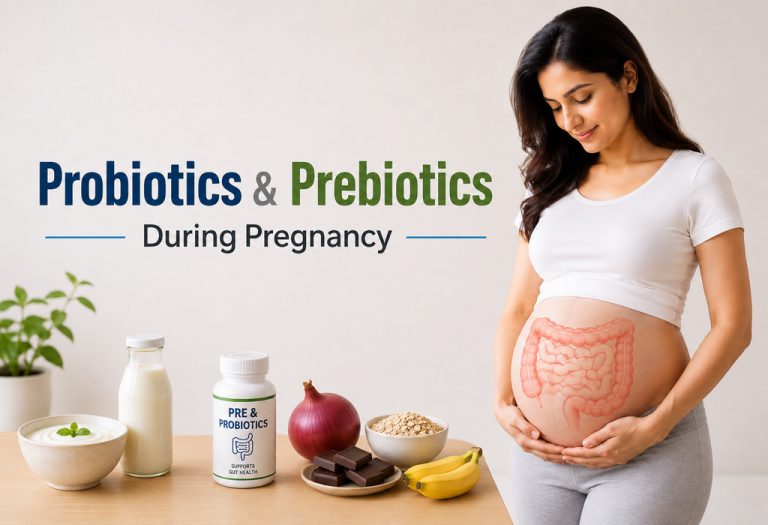
For expecting mothers, getting prebiotics in natural form through their daily meal is a good option. Some food items that are rich in prebiotics are (10):
- Yoghurt
- Kefir
- Dark Chocolate
- Pickles

- Kombucha Tea
- Milk
- Onions
- Barley

- Garlic
- Soya beans
- Oats
Foods Containing Probiotics
One can get probiotic naturally from these foods (9):
- Lassi
- Dhokla
- Dosa

- Miso
- Kimchi
- Cheddar
- Buttermilk
These are fairly common foods that are consumed on a regular basis. So if you’re pregnant, there’s no need to reduce the frequency of eating these.
FAQs
1. When is the best time to take probiotics during pregnancy?
Many experts recommend taking probiotics with or after meals to help the beneficial bacteria survive stomach acid more effectively. Consistency matters more than timing, so taking them regularly as part of a healthy routine is key.
2. Is yogurt enough to get probiotics during pregnancy?
Yogurt with live and active cultures can be a great source of probiotics, especially when eaten regularly. However, including a variety of fermented foods and prebiotic-rich foods can provide broader gut health benefits.
Many experts believe that probiotics and pregnancy go hand in hand when it comes to supporting healthy digestion, immunity, and overall maternal wellness. Take time to chart food recipes that integrate probiotics and prebiotics in your daily diet. During pregnancy, cravings can get the better of you but do not miss out on prebiotic-rich food.
You can choose to get your probiotics from supplement capsules, but it is always good to seek advice from your doctor before taking any pills. In case of any allergy, call the doctor immediately. Relying on a healthy lifestyle is the best way to get through pregnancy and will facilitate the healthy development of the baby.
Also Read:
Eating Ghee while Pregnant
Eating Cheese in Pregnancy
Increased Hunger during Pregnancy
Loss of Appetite During Pregnancy
Effects of Not Eating Enough while Pregnant
Consuming Yoghurt During Pregnancy – Is It Safe?
Was This Article Helpful?
Parenting is a huge responsibility, for you as a caregiver, but also for us as a parenting content platform. We understand that and take our responsibility of creating credible content seriously. FirstCry Parenting articles are written and published only after extensive research using factually sound references to deliver quality content that is accurate, validated by experts, and completely reliable. To understand how we go about creating content that is credible, read our editorial policy here.
1. Cleveland Clinic – Probiotics
2. Cleveland Clinic – What Are Prebiotics and What Do They Do?
6. The Ohio State University – Ohio State study shows benefits of taking probiotics during pregnancy
8. PubMed Central – Are probiotics safe for use during pregnancy and lactation?
9. Harvard Health Publishing – The benefits of probiotic bacteria
10. PubMed Central – Prebiotics: Definition, Types, Sources, Mechanisms, and Clinical Applications
- Author
- Expert Reviewer


Related Articles
-

20 Easter Pregnancy Announcement to Start a New Life
-
Amazing Sports Themed Baby Shower Ideas
-
Zika Virus in Pregnancy - Signs, Risks, and Prevention
-
Lump in Armpit during Pregnancy - Is It Dangerous?
-
Bed Rest in Pregnancy: Reasons, Types, and What to Expect
-
Mouth Ulcers During Pregnancy - Causes, Symptoms & Treatment