
Gestational Diabetes Mellitus




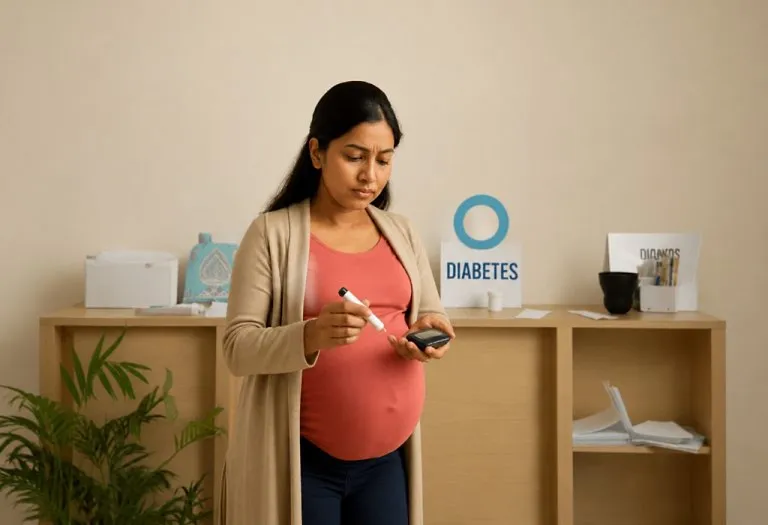
Pregnancy has a way of filling your days with both excitement and quiet questions. One moment, you may be thinking about baby names or tiny clothes. The next, you are trying to understand a medical term your doctor has just mentioned.
Gestational diabetes mellitus (GDM) is one of those terms that can feel unfamiliar and a little unsettling at first. Let’s find out what it means and what you can expect.
What Is Gestational Diabetes?
Gestational diabetes is a form of diabetes that develops during pregnancy. It affects how the body processes sugar, leading to higher-than-normal blood glucose levels. It is quite common, especially in countries like India, where about 10–14.3% of pregnant women are affected (1). However, unlike other types of diabetes, it is usually temporary and often resolves after the baby is born.
Even so, it requires careful attention to support the health of both the mother and the baby.
Does It Have Symptoms?
Gestational diabetes often does not cause noticeable symptoms. Some women may experience:
- Increased thirst
- Frequent urination
- Unusual fatigue
These signs can also occur in a normal pregnancy, which makes them easy to miss.
Why Does It Happen?
During pregnancy, the body produces hormones that support the baby’s growth. Some of these hormones can interfere with insulin, the hormone that helps move sugar from the bloodstream into the cells for energy.
As a result, the body becomes more resistant to insulin. This is a natural process that ensures enough glucose remains available for the baby.
In some cases, the body cannot produce enough insulin to compensate for this resistance. When this happens, blood sugar levels rise, leading to gestational diabetes.
Who Is at a Higher Risk?
Gestational diabetes can affect any pregnant woman, but certain factors increase the risk:
- Family history of diabetes.
- Being overweight before pregnancy.
- Previous gestational diabetes.
- A history of delivering a larger-than-average baby.
- Age over 25.
It is important to note that many women with no clear risk factors still develop it. This is why routine screening is part of standard prenatal care.
How Is It Diagnosed?
Gestational diabetes is usually identified between 24 and 28 weeks of pregnancy (2). Screening is recommended for all pregnant women, regardless of risk factors, and may also be done earlier in pregnancy if needed.
You will be asked to drink a 75 g glucose solution, and your blood sugar will be checked after 2 hours (1) (2) (3). If the result is higher than expected, additional testing confirms the diagnosis.
Effects of Gestational Diabetes on the Mother and Baby
With proper care, most women with gestational diabetes have healthy pregnancies and deliver healthy babies.
If it is not well managed, there can be complications (1) (2):
For the Mother:
- High blood pressure (pre-eclampsia)
- Excess amniotic fluid (polyhydramnios)
- Prolonged or difficult labour
- Obstructed labour
- Higher chance of cesarean (C-section) delivery
- Heavy bleeding after delivery (postpartum haemorrhage)
- Infections
- Worsening of eye problems (retinopathy)
For the Baby:
- Miscarriage (spontaneous abortion)
- Death in the womb (intrauterine death or stillbirth)
- Congenital (birth) defects
- Large body size, leading to difficult delivery
- Shoulder dystocia (baby’s shoulder getting stuck during birth)
- Birth injuries
- Low blood sugar after birth (neonatal hypoglycaemia)
- Breathing problems (respiratory distress syndrome)
How to Manage Gestational Diabetes
Here are a few ways to manage gestational diabetes effectively and maintain healthy blood sugar levels throughout pregnancy (1).
1. Balanced Diet
Eat smaller, frequent meals (3 meals + 2-3 snacks daily). Aim for regular, balanced meals that include whole grains, protein, healthy fats, and vegetables. Avoid large spikes in sugar intake and try to space meals evenly through the day (3).
2. Stay Active
Light physical activity, such as walking, helps the body use insulin more effectively. Even a short walk after meals can help. Aim for 20-30 minutes daily (3).
3. Monitoring Blood Sugar
Regular checks help track how the body is responding and guide treatment decisions.
4. Medication (if needed)
Some women may need insulin or other medication if lifestyle changes are not enough.
Does Gestational Diabetes Go Away?
In most cases, gestational diabetes resolves after delivery. Once the placenta is delivered, hormone levels return to normal, and insulin function improves.
However, follow-up care remains important.
Women who have had gestational diabetes have a higher risk of developing type 2 diabetes later in life (1). Regular checkups and a healthy lifestyle can help reduce this risk.
Gestational diabetes may feel unexpected, but it is manageable. With proper care, awareness, and small daily adjustments, most women can maintain a healthy pregnancy and a healthy baby.
Also Read:
Gestational Diabetes and Labour Induction
Diet Plan for Gestational Diabetes
How Does Having Gestational Diabetes Affect Your Delivery
Was This Article Helpful?
Parenting is a huge responsibility, for you as a caregiver, but also for us as a parenting content platform. We understand that and take our responsibility of creating credible content seriously. FirstCry Parenting articles are written and published only after extensive research using factually sound references to deliver quality content that is accurate, validated by experts, and completely reliable. To understand how we go about creating content that is credible, read our editorial policy here.
- Author


Related Articles
-

Pregnant With an IUD - Signs, Symptoms, and FAQ's
-
12+ Factors That Cause Miscarriage
-
When Can You Get an Abortion
-
Positive Pregnancy Test After a Miscarriage – Is It Normal & What Does It Mean?
-
Home Remedies UTI During Pregnancy - Natural Relief Tips
-
10 Common Pregnancy Problems in the Third Trimester