

Pasta for Babies: When to Introduce, Benefits and Recipes
When to introduce pasta, how to prepare it safely, and healthy ways to serve it to babies.





Medically Reviewed By
Megha Gupta
((Paediatric Nutritionist))

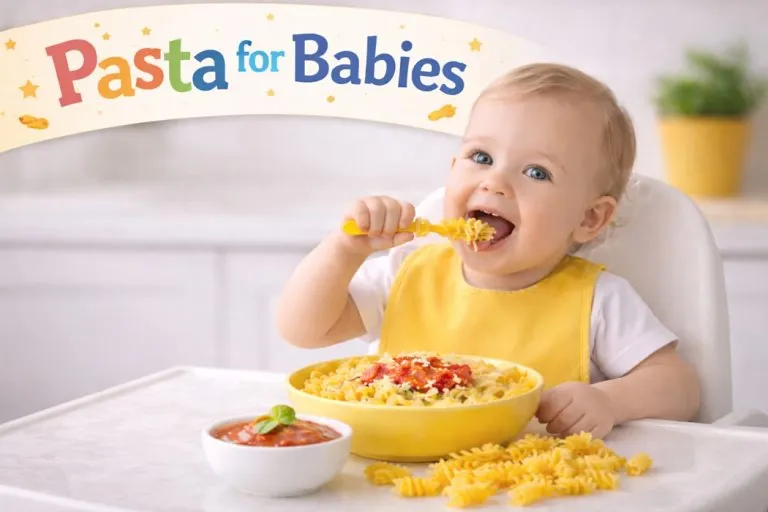
Image Credit : AI Generated Image
In this Article
- Can Babies Eat Pasta?
- When and How to Introduce Pasta to Babies?
- Nutritional Contents in Pasta
- What Are the Benefits of Pasta for Babies?
- Which Types of Pasta and Pasta Shapes Are Safe for Babies?
- Types of Pasta
- Shapes of Pasta
- How to Select and Store Pasta
- Easy Pasta Recipes for Babies
- A Few Things to Remember
- FAQs
View More
It comes as a surprise that pasta for babies makes for a great solid food when introducing it to them. Yes, pasta for a baby made from whole grain has plenty of health benefits. But some parents might worry about introducing carbs too soon into their baby’s diet. While there is no need to worry because babies need carbs for their growth and development, parents also need to understand that pasta, when fed in limited quantities and with other nutritious foods, can be a healthy meal option for their little ones. You will, therefore, find this article very helpful, as here, we will talk about when and how you can feed pasta to your little one and much more. Let’s get started!
Can Babies Eat Pasta?
Yes, babies can have pasta only after they start solids, which is usually around 6 months of age. At this stage, babies start refining their swallowing skills without pushing them out of their mouths. However, it is essential that babies are introduced to solids that are soft and mushy. For pasta, it must be well-cooked, cut into small, manageable pieces that do not cause choking. Pasta can eventually be given with vegetables or a mild sauce to introduce them to new tastes and textures. Always cook pasta until very soft and avoid adding salt or intense spices for babies. Whole-grain pasta is a great start for babies, and pasta or noodles made from refined flour/all-purpose flour should be avoided.
When and How to Introduce Pasta to Babies?
Pasta is best introduced during the solid food period, that is, after the initial introduction of purees, after your baby turns 7 months old (1). Pasta, which is usually eaten al dente, is NOT how it is introduced to babies. When cooking pasta for babies, remember that it should be fully cooked and preferably in a sauce so that it can be mashed if required to prevent choking (2).
You can get creative by choosing different kinds of pasta, such as stars, bows, or elbow-shaped, and make mealtime fun for the baby.
So, what is it that your baby gains by eating pasta? Read below to know the nutritional value of pasta.

Nutritional Contents in Pasta
Here is the nutritional composition of 1 cup (124 g) of cooked, enriched, and salt-free pasta (3):
| Nutrients | Quantity (per 124 g) |
| Calories | 196 |
| Fat (total lipid) | 1.2 g |
| Saturated fat | 0.2 g |
| Carbohydrates | 38 g |
| Dietary Fibre | 2.2 g |
| Sugar | 0.7 g |
| Protein | 7.2 g |
| Sodium | 1.2 mg |
| Iron | 1.6 mg |
| Potassium | 55 mg |
| Calcium | 8.7 mg |
| Vitamin D | 0 mcg |
| Niacin | 2.094 mg |
| Thiamin | 0.340 mg |
| Riboflavin | 0.169 mg |
The best pasta to feed your little one is homemade pasta. However, some mothers may not have time to make it at home and would prefer store-bought pasta instead. They may then select the safest kind and cook it at home with some nutritious ingredients that have already been introduced to their little ones. We will talk about selecting and storing pasta below.
What Are the Benefits of Pasta for Babies?
Pasta can be a great addition to your kiddo’s meal time for both nourishing them and helping them develop oral motor skills. Let’s learn a bit more about the benefits of pasta for babies:
- Pasta provides energy through complex carbohydrates.
- It is easy to chew when cooked to a soft consistency, which helps them develop chewing skills.
- The mild taste of pasta suits babies’ sensitive palates. It also introduces them to new textures and tastes.
- When served with vegetables, it is a powerhouse of nutrients and minerals.
- The carbs support weight gain when balanced
- Serving pasta encourages self-feeding skills in children: how to hold a spoon and how to self-feed are very important.
- It helps develop pincer grasp and palmar grasp in children when they try to self-eat using their hands and a spoon.
Which Types of Pasta and Pasta Shapes Are Safe for Babies?
Soft-cooked, small pasta shapes made from whole grains or rice are safest. Pasta should be well-cooked until mushy, cut into bite-sized pieces, and served plain or lightly mixed with vegetables to reduce choking risk.
Types of Pasta
There are several different types of pasta that can be introduced to babies:
- Whole wheat pasta: high in fibre, selenium, and manganese; contains gluten
- Rice pasta: gluten-free; low in fibre, iron, and protein
- Multigrain pasta: gluten-free, high in fibre, protein, manganese, and iron
- Lentil pasta: gluten-free; high in protein, fibre, and iron
- Black bean pasta: gluten-free; high in protein, fibre, and iron
- Egg noodles: high in manganese, iron, and B-vitamins; contain gluten; low fibre
- Semolina pasta: low glycemic index, contains gluten; provides B vitamins, fibre, minerals, and protein
Shapes of Pasta
Here’s a thumb rule for choosing the shape or size of pasta for babies: the younger the baby, the bigger the pasta. This will help minimise the chances of choking and help them refine their grasping skills. Let’s take a look at the quick dissection of pasta shapes based on age. This will help you choose the best pasta for babies.
- 6+ months: spaghetti, lasagna noodle strips, fettuccine, penne, rigatoni, capellini, conchiglioni, farfalle,, ziti, or linguine
- 9+ months: macaroni, cut ravioli, conchigliette, including noodles offered at 6 months
- 12+ months: spaghetti, rice noodles, linguine, fettuccine, including noodles offered at 6 and 9 months
How to Select and Store Pasta
It is essential to know your pasta, especially if it is not a staple food in your region. Here’s what you need to bear in mind when selecting pasta for your little one:
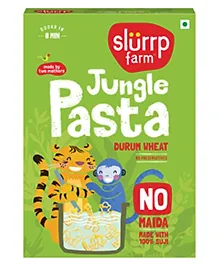
- Make sure the pasta you pick is not instant, processed, or made with all-purpose flour (maida). All-purpose flour lacks nutrients and spikes the glycemic index in the body.
- The kinds of pasta given to babies should be made from whole-wheat, durum-wheat, or rice flour.
- It is better to avoid packaged pasta as much as possible and make it at home.
- Always check the expiry date on the pasta packet before buying. Discard any expired product.
- Make sure the homemade or organic pasta you purchase for your kiddo is free from weevils or grain beetles.
- Ensure there are no additives or artificial flavouring, as they could affect your baby’s health.
- Store the package according to the instructions on the package, or empty the contents into an airtight container and store it in a cool, dry place, preferably in your pantry.
As mentioned earlier, pasta needs to be cooked in a particular way to make it easy for the babies to digest it. The recipes given below will help you make different pasta dishes that your little one will never resist.
Easy Pasta Recipes for Babies
Below are some recipes on how to cook pasta for babies of different age groups. Remember, the recipes given below are for children above 1 year.
1. Pasta and Avocado (for 9 to 10-month-old children)
The recipe is dense with vitamins and minerals. The taste is fresh and savoury. Remember that the pasta needs to be cooked well and not al dente so that your little one can digest it easily.

Ingredients:
- Whole wheat pasta – 1 cup
- Avocado – 1 cup
- Garlic Cloves – 2 large
- Lemon Juice – 2 tsp
- Oil – 2 tsp
- Salt (optional)
Method:
- Sauté the garlic in a tsp of oil.
- Add the avocado and stir.
- Add the lemon juice and stir for a minute.
- Turn off the flame and let the sautéed avocado cool a bit.
- Then, grind it to a paste.
- Now, strain the excess water from the cooked pasta and toss it in the pan with a tsp of oil. Stir it for a minute.
- Add the avocado paste and mix it thoroughly.
- Once everything is mixed, blend or mash the cooked pasta dish into a smooth consistency with soft lumps.
2. Tomato Pasta Stars With Mozzarella and Basil (for 8 to 10-month-old children)
Build baby bones with Mozzarella! And the stars are just the beginning of the fun. You may choose to puree all the vegetables depending on your baby’s age and preference.

Ingredients:
- Pasta – 1 cup
- Mozzarella – 0.5 cup, grated
- Carrot – 1 chopped, steamed
- Potato -1 chopped, boiled
- Tomatoes Puree – 3 to 4 tbsp
- Garlic – 1 clove
- Oil – 1 tsp
- Basil – a pinch, dried
- Water
Method:
- Cook the pasta till it’s soft and mashable.
- Drain the pasta and set it aside.
- In a pan, heat a tsp of oil and sauté the carrot, potato, and garlic for a minute.
- Add the tomato puree, basil, and water if required. Let it come to a boil.
- Add the pasta and give it a good mix.
- Then add the grated cheese and stir it till all the flavours mix completely.
- Mash the dish before feeding it to your baby at room temperature.
3. Cheesy Carrot Pasta (for 9 to 10-month-old children)
A carrot a day keeps bad vision away! This has vitamins, calcium and carbs.

Ingredients:
- Pasta- 1 cup, cooked
- Carrots – 0.5 cup, pureed
- Grated cheese – 0.5 cup
Method:
- Heat the carrot puree in a pan.
- Add the cooked pasta and stir it well.
- Add the grated cheese and cook till it melts.
- Serve the dish to your little one at room temperature.
4. Pasta Chicken Stew (for 7 to 10-month-old children)
This is the quickest chicken and pasta dish with enough flavour for your baby to relish.

Ingredients:
- Chicken broth (homemade) – 2 cups
- Pasta – 0.5 cups
- Chicken breast – 0.5 cups, cubed
- Peas – 0.25 cup
- Cheese – 2 to 3 tbsp
Method:
- Boil chicken broth in a pan.
- Add the pasta, chicken, and peas.
- Simmer on a low flame until the chicken is cooked and all the flavours come together.
- Mash the food and garnish it with cheese.
5. Macaroni and Cheesy Pasta (10 months+ children)
This is a simple and classic way of serving pasta to your little one.

Ingredients:
- Whole wheat macaroni – 1 cup
- Unsalted butter – 1 tsp
- Cheese – 0.5 cup
- Tomato Puree – 4 to 5 tbsp
- Mixed herbs – as needed (optional)
- Garlic powder – a pinch (optional)
- Salt (optional)
Method:
- Cook the macaroni, drain it, and set it aside.
- Heat some butter in a pan and add the tomato puree.
- Then, add the garlic powder and the herbs.
- Once the tomatoes are cooked, add the macaroni and mix well.
- Add the cheese and turn off the flame once it melts.
- Feed your baby this dish at room temperature.
We hope you like these recipes. They are easy to make and are sure to become your kid’s favourite. Having said that, you must remember to check for a few things before you introduce pasta to your little one.
A Few Things to Remember
- Check for wheat and egg allergy in your baby before you feed pasta, as egg and wheat are common food allergens (4) (5).
- Always seek advice from a doctor before introducing this as a new food.
- Pasta has a different flavour, and your child may not like it immediately. Therefore, make sure you repeat the same recipe a few times on schedule for the baby to be familiar with the taste.
- Check the package for the main ingredients before you buy.
- If you are giving pasta to your baby as a finger food, supervise them all the time till they finish eating to ensure there is no choking. Make sure to cut the well-cooked pasta into small pieces.
- If your child does not like the texture or taste of pasta at first, do not force-feed. Stop giving it to them for a few days, then try again.
- Feed pasta to your baby in moderation and not regularly. At this stage, your baby needs to explore several different nutritious foods, textures, and tastes. Thus, their feeds should be nutritionally balanced.
FAQs
1. Can pasta cause a choking hazard in babies?
When cooked very soft and cut properly, it is generally safe for babies. However, undercooked pasta, pasta cooked al dente, or pasta served in large pieces can be a choking hazard. Nonetheless, anyone can choke on any food in certain circumstances; thus, it is highly important to supervise your baby when they are eating.
2. Can babies have macaroni?
Yes, babies can have macaroni once they start solids, provided it is cooked thoroughly and cut into small, manageable pieces. It is advised that babies over 9 months old be given macaroni once their chewing and swallowing skills are more developed. Parents can make a wise decision by consulting a paediatrician first about introducing pasta and macaroni for their baby.
3. Can pasta cause an allergy?
Many pasta varieties contain common allergens like wheat and eggs, so always check the ingredient list if your child is sensitive to either. The upside is that there are many pasta options available that exclude these ingredients, so you’re likely to find one suitable for your baby. As with any new food, begin with a small serving and monitor for any signs of an allergic reaction after introducing it. If you think your child may have food allergies, consult your paediatrician about the best approach for introducing allergens.
4. Can pasta cause constipation in babies?
Too much pasta made from refined grains can be constipating for babies. On the contrary, pasta made from whole-grain or beans can help relieve constipation as the ingredients are high in fibre.
5. Can I give pasta to my baby daily?
While pasta can be a wholesome meal for babies, it should not be given daily. For starters, excess starch or fibre may cause constipation, for which a baby’s tummy is not well developed. Thus, it should be given in rotation with other nutrient-rich foods.
Pasta, like any other whole-grain product, is good for health if cooked with caution and served in moderation. Try these recipes and add some of your creativity to make the dishes more nutritious for your little one. If you are doubtful of any ingredient or pasta type, contact your paediatrician for personalised guidance.
Also Read:
Meatballs for Babies
Potatoes for Babies
Protein for Babies & Toddlers
Healthy Weight Gain Foods for Babies & Kids
Was This Article Helpful?
Parenting is a huge responsibility, for you as a caregiver, but also for us as a parenting content platform. We understand that and take our responsibility of creating credible content seriously. FirstCry Parenting articles are written and published only after extensive research using factually sound references to deliver quality content that is accurate, validated by experts, and completely reliable. To understand how we go about creating content that is credible, read our editorial policy here.
- Author
- Expert Reviewer
 About the Author
Mrunal
Related Articles
-
Banana Puree for Baby: How to Make and Tips
-
Blueberries for Babies - Benefits, Risks, and Recipes
-

Pomegranate for Babies : Health Benefits and Precautions
-
Birth to 4 Months Old Baby Food Ideas & Feeding Tips
-
Coconut Milk for Babies: Health Benefits & Recipe
-
Stage 3 Foods For Babies - What Are They & When to Introduce


.svg)