

Molar Pregnancy (Hydatidiform Mole): Signs & Treatment
Learn the signs of a molar pregnancy, why it happens, available treatments, and the importance of early diagnosis for better care.





Medically Reviewed By
Dr. Rima Sonpal
(Gynecologist/Obstetrician)


In this Article
- What Is a Molar Pregnancy?
- Types of Molar Pregnancy
- What Are the Causes of Molar Pregnancy?
- Signs of Molar Pregnancy
- Who Are More Likely to Have Molar Pregnancy?
- How Common Are Molar Pregnancies?
- How Is the Diagnosis Made?
- Risks and Complications of Molar Pregnancy
- Molar Pregnancy Treatment
- Monitoring After the Treatment
- Further Treatment After Molar Pregnancy
- Prevention of Molar Pregnancy
- Chances of Molar Pregnancy in Future
- When Can You Try to Get Pregnant?
- How to Cope With Fear and Loss?
- When to Consult a Doctor?
- FAQs
View More
This content has been reviewed by a qualified expert and follows the FirstCry Parenting editorial policy to ensure accuracy and reliability.
A molar pregnancy is a rare pregnancy complication in which abnormal tissue grows inside the uterus instead of a healthy embryo and placenta. It affects approximately 1 in every 1,000 pregnancies, making it uncommon but medically significant (1). It can occur in different forms, including a partial, complete or full molar pregnancy. In even rarer situations, a molar pregnancy twins case can occur, where a normal fetus develops alongside abnormal molar tissue.
If you’ve recently received a diagnosis following a 9 week molar pregnancy scan or are looking to understand this condition better, this article explains its causes, types, symptoms, diagnosis, treatment options, possible complications, recovery, and future pregnancy outlook.
What Is a Molar Pregnancy?
A molar pregnancy meaning is, after fertilisation, the embryo is abnormally developed and appears like a bunch of grapes, called a hydatidiform mole. It is a rare developmental disease of the cells that form the placenta, and is usually detected in the early trimesters and in most cases, results in wasted pregnancy (2).
Types of Molar Pregnancy

Based on the genetic and chromosomal pattern, molar pregnancies are divided into complete and partial molar pregnancy (3).
1. Complete Molar Pregnancy
During fertilisation, 23 chromosomes each are received from the mother and the father, and the fertilised egg hence contains 46 chromosomes altogether. In a complete molar pregnancy, the 23 maternal chromosomes are missing, and the embryo consists of only 23 chromosomes that are paternal in origin (4). This leads to the absence of foetal growth and formation of abnormal cysts, which appear like grapes.
2. Partial Molar Pregnancy
In a partial molar pregnancy, the embryo consists of 23 maternal chromosomes, but these chromosomes are fertilised by double the number of paternal chromosomes, 46 instead of 23. This leads to a total constitution of 69 chromosomes (4). The resultant embryo may grow and develop into an immature foetus, which may not survive beyond the few initial months of intrauterine growth due to the unfavourable genetic makeup.
What Are the Causes of Molar Pregnancy?
The reasons of molar pregnancy is largely unknown. However, the following factors have been associated with an increased risk for molar pregnancy (5):
- Extremes of Age: It is more common in teen pregnancies and those after the age of 40.
- Ethnic Origin: It is twice more common in women of Asian origin.
- Past History: Women with a history of molar pregnancy in the past, are at an increased and proportionate risk. One such pregnancy in the past, predisposes to a risk of 1-1.5%, while two or more such past pregnancies increase the risk to 15-20% chances of having a molar pregnancy again.
Signs of Molar Pregnancy
A molar pregnancy may be asymptomatic or present with the usual symptoms of a normal pregnancy in the early few days. With advancing gestational age, it may present with the following symptoms (4):
- Abnormal vaginal bleeding: first or early second trimester.
- Disproportionately large uterus: large cysts may be present.
- Metabolic and gastric symptoms: nausea and vomiting.
- Autonomic instability: hypertension, sweating, palpitations, diarrhoea, etc.
- Discomfort: dull pain in the lower pelvis.
- Small cysts: Clusters of grape-like substance from the vagina usually suggest molar pregnancy. This symptom is specific for molar pregnancy.
However, these symptoms are highly non-specific (except the last one) as they may also occur in normal pregnancy or the case of a miscarriage.
Who Are More Likely to Have Molar Pregnancy?
A molar pregnancy can affect any woman of reproductive age, but certain factors are known to increase the risk. While having one or more of these risk factors does not guarantee that a molar pregnancy will occur, being aware of them can help with early monitoring and diagnosis (2) (5).
- Women younger than 20 and those older than 35, especially over 40, are at a higher risk of experiencing a molar pregnancy.
- Having a previous molar pregnancy significantly increases the chances of developing another molar pregnancy in the future.
- A history of multiple miscarriages may be associated with a slightly increased risk of abnormal pregnancy development.
- Nutritional deficiencies, particularly low levels of vitamin A (carotene), have been linked to a higher risk in some studies.
- Women from certain geographic regions, including parts of Asia, tend to have higher rates of molar pregnancy than those in North America and Europe.
- Rare inherited genetic abnormalities that affect fertilisation can increase the likelihood of recurrent molar pregnancies.
How Common Are Molar Pregnancies?
Worldwide, the condition is more common in women from the Asian subcontinent where it occurs at a frequency of 1 in every 1500 pregnancies. It is also more common in women who had a molar pregnancy in the past.
How Is the Diagnosis Made?
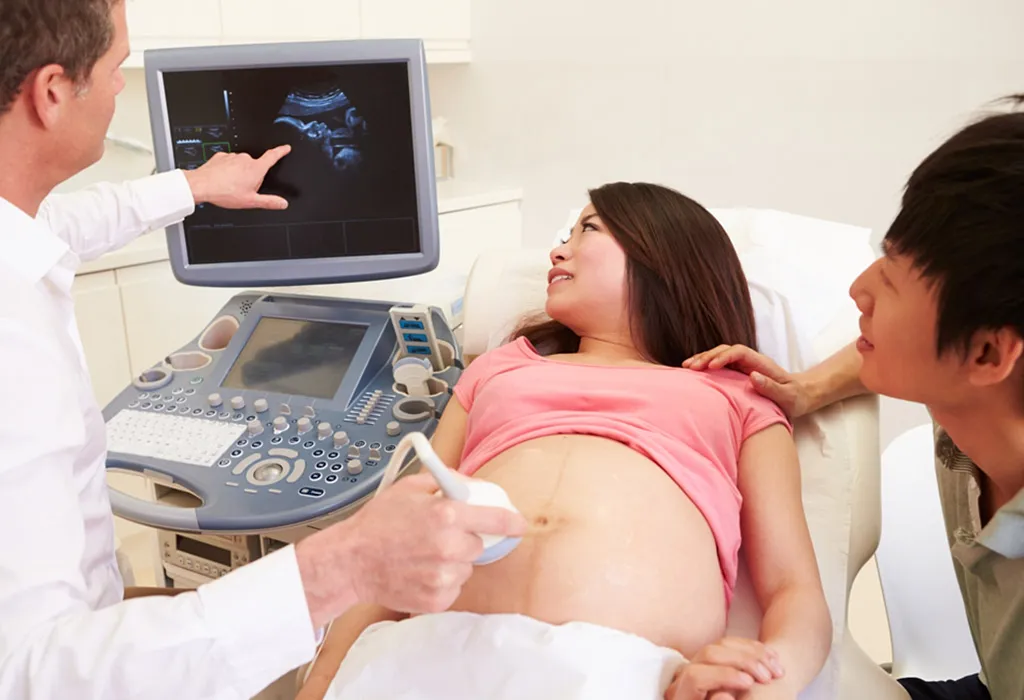
Diagnosis of molar pregnancy can be based on laboratory studies and imaging studies.
- Beta HCG (human chorionic gonadotropin) levels: It is a hormone secreted by the placenta soon after fertilisation of the ovum during pregnancy. It can be measured in the blood as well as the urine. In a normal pregnancy, the levels range between hundreds (IU/ml) and proportionately increase with increasing gestational age (6). In molar pregnancies, the levels of B-HCG are enormously raised, exceeding 100000 IU/ml in few cases.
- Molar pregnancy ultrasound: It is the investigation of choice for the diagnosis and confirmation of a molar pregnancy (7). An ultrasound shows a ‘snowstorm pattern’ with multiple cysts like growths in the uterine cavity and an absence of foetal activities. It is the safest, quickest and most reliable diagnostic tool for a molar pregnancy. It also confirms the diagnosis made by abnormally high beta HCG levels.
Risks and Complications of Molar Pregnancy
Molar pregnancies can be associated with the following risks and complications:
- Invasive mole or choriocarcinoma: Complete molar pregnancies can progress to invasive mole or choriocarcinoma (8).
- GTN or Gestational Trophoblastic Neoplasia: Molar pregnancies are associated with a risk of conversion to trophoblastic malignancy in the future. These are localized malignant conditions with a fairly good prognosis (9).
- Recurrence: Women with a previous molar pregnancy have higher chances of a molar pregnancy recurrence compared to those with no prior history of the condition.
- Foetal loss: Complete moles usually result in foetal loss. Women with molar pregnancies are at a high risk of miscarriages and other pregnancy-related complications as the genetic makeup of the foetus results in its premature death.
Molar Pregnancy Treatment
Treatment for a molar pregnancy focuses on removing the abnormal tissue from the uterus and preventing potential complications. The following treatment options may be used in the management of molar pregnancy:
- Suction Removal or Dilation and Curettage(D&C): When a molar pregnancy is suspected by symptoms, hCG levels or ultrasound, a Dilation & Curettage is usually undertaken. It simply involves dilation of the cervical canal and suctioning the entire contents or spooning or curetting of the uterine contents to histopathologically confirm the diagnosis and therapeutically remove all the trophoblastic tissues (10).
- HCG Monitoring: In a few cases after treatment, some residual tissues are left behind in the uterine cavity after a D&C. This is correlated with serial monitoring of beta HCG levels, which ideally should start falling after treatment. In majority cases, the residual tissues are successfully treated with However a fraction of cases progress to gestational trophoblastic neoplasia.
- Medication: Medical treatment of molar pregnancy includes (5):
- Symptomatic therapy: correction of anaemias, anti-thyroid drugs.
- Antineoplastic drugs: drugs like methotrexate are useful in gestational trophoblastic neoplasia.
- Folic acid: supplements with high amounts of folic acid.
- Hysterectomy: For women with advanced age, or completed family or recurrent severe disease despite optimum medical therapy, hysterectomy is the best-suggested treatment option (11).
Monitoring After the Treatment
To avoid any residual disease, monitoring after treatment is essential. Regular follow-ups with your clinician after treatment, for serial physical examinations and history, are vital.
Beta hCG levels are the best means of monitoring after treatment with the help of serial monthly blood and urine tests (12). Normally, the very high molar pregnancy hCG levels should fall significantly after treatment. If it persistently remains high, residual or recurrent disease should be suspected. Screening ultrasound can be performed to rule out any possibility of trophoblastic disease after treatment.
Further Treatment After Molar Pregnancy
Despite curative treatment available for molar pregnancy, a few cases (1% partial and about 15% complete) may have a residual tissue, and this is known as a persistent trophoblastic disease (PTD). It may have malignant behaviour with spread to other body tissues, commonly involving the lungs. Treatment involves chemotherapy with methotrexate cycles along with folic acid supplementation.
Prevention of Molar Pregnancy

Since the pathophysiology is largely genetic, no definite preventive measures are available. However, following steps can be considered:
- Balanced diet include adequate carotene and other green vegetables in your daily diet.
- Avoid cigarette smoking and alcohol consumption.
- Avoid conceiving for at least a year after previous molar pregnancy.
- Consult a genetic counsellor and consider gene studies and chromosomal mapping.
Chances of Molar Pregnancy in Future
Molar pregnancies have a 1.5-2% risk of recurrence. No serious long-term health hazards are reported. One may have a normal pregnancy after a molar event. However, a gap of six months following surgery and about a year after chemotherapy is advisable before conceiving to avoid recurrence.
When Can You Try to Get Pregnant?
Fortunately, molar pregnancy or its treatment does not affect the fertility. Also, it has a low (1.5-2%) risk of recurrence. Clinicians worldwide advice a waiting period of 1 year before conceiving. This gives time for the beta hCG to return to the physiological levels. Once pre-pathological levels are recorded, you may now plan a safe pregnancy.
How to Cope With Fear and Loss?
A molar pregnancy can be a traumatising experience, and a grave loss of your child like in miscarriages. Strong will power and your partner’s support is vital. Undue anxiety and over treatments to avoid recurrence can be dangerous. Consulting a counsellor and considering adoption are advisable.
When to Consult a Doctor?
Early medical attention is essential if you experience symptoms that could indicate a molar pregnancy or another pregnancy-related complication. While some signs may seem similar to those of a normal pregnancy, unusual symptoms should never be ignored, especially during the first trimester.
Consult a doctor if you experience (2):
- Vaginal bleeding during pregnancy, especially dark brown or bright red bleeding.
- Severe nausea and vomiting that interferes with eating or drinking.
- Rapid enlargement of the uterus or a belly that seems larger than expected for the stage of pregnancy.
- Severe pelvic pain, pressure, or abdominal discomfort.
- Passing grape-like cysts or tissue from the vagina.
- Symptoms of high blood pressure before 20 weeks of pregnancy, such as severe headaches, blurred vision, or swelling.
FAQs
1. Is a molar pregnancy considered a miscarriage?
A molar pregnancy is not a typical miscarriage, although it cannot result in a viable baby. It is classified as a type of gestational trophoblastic disease and requires specific treatment to remove the abnormal tissue (2).
2. Is molar pregnancy bleeding always heavy?
Not necessarily. Molar pregnancy bleeding can range from light spotting to heavy vaginal bleeding. It often occurs during the first trimester and may appear dark brown or bright red in colour.
3. Can a molar pregnancy become cancerous?
In a small number of cases, molar tissue can persist after treatment and develop into gestational trophoblastic neoplasia (GTN). Regular follow-up monitoring helps detect and treat this condition early (7).
Molar pregnancy is a rare pathological condition that involves loss of pregnancy. With a good understanding of molar pregnancy meaning, timely evaluation, and complete treatment, this condition can be managed, and its recurrence prevented.
Also Read:
False Pregnancy
Ectopic Pregnancy
Chemical Pregnancy
Viable or Nonviable Pregnancy
Was This Article Helpful?
1. Johns Hopkins Medicine – Gestational Trophoblastic Disease
2. Cleveland Clinic – Molar Pregnancy
3. Apollo Hospitals – Molar Pregnancy : Types, Causes, Symptoms, Treatment, Diagnosis, Risks
4. Northwestern Medicine – About Gestational Trophoblastic Disease
5. Max Healthcare – Molar Pregnancy Treatment in Delhi, India
7. Miscarriage UK – Molar pregnancy
8. Cleveland Clinic – Choriocarcinoma
9. University of Texas MD Anderson Cancer Center – Gestational Trophoblastic Disease
10. National Library of Medicine – Dilation and Curettage
- Author
- Expert Reviewer


Related Articles
-

Risk of Miscarriage Week by Week
-

Meet The Real Life Miracle Baby Born to a Mom With No Muscles!
-

This Mother Wishes Her Child Dies At Birth. The Reason Will Shock and Sadden You...
-

What to Say to Someone Who Has Had a Miscarriage
-
Anteverted Uterus & Pregnancy - Is It Normal?
-
Choriocarcinoma: Causes, Signs & Remedies