
Gestational Sac in Pregnancy – What It Indicates?





Medically Reviewed By
Dr. Rima Sonpal
(Gynecologist/Obstetrician)

This health content has been medically reviewed by qualified experts and follows the FirstCry Parenting editorial policy to ensure accuracy and reliability.
The gestational sac in pregnancy is the first visible sign on an ultrasound and is usually seen between 4.5 and 5 weeks of pregnancy. The World Health Organization (WHO) recommends that every pregnant woman have at least one ultrasound scan before 24 weeks of pregnancy to check the baby’s growth, estimate the due date, detect multiple pregnancies, and identify any early concerns (1). During this scan, the gestational sac is one of the first things healthcare providers look for, as it helps them assess how the pregnancy is progressing.
In this article, we’ll explain what a gestational sac is, what it indicates, when it becomes visible, and what different ultrasound findings may mean.
What Is a Gestational Sac?
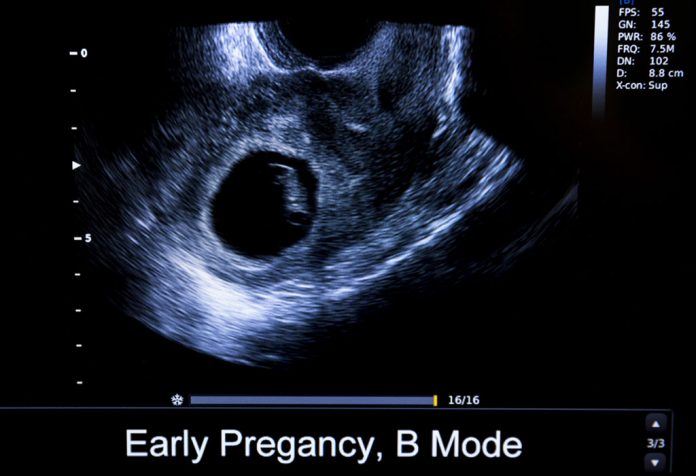
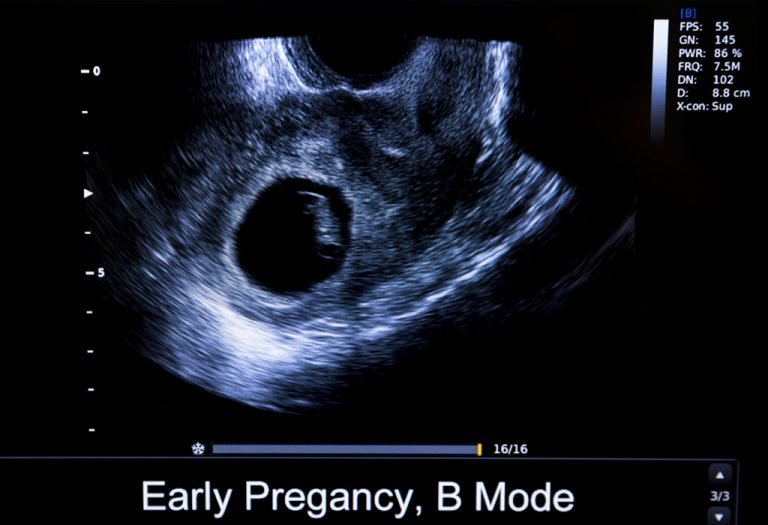
The gestational sac meaning refers to the fluid-filled cavity that contains the yolk sac and surrounds the developing embryo during early pregnancy. It is usually present inside the uterus and appears as a dark space with a white rim on an obstetric ultrasound (2).
It is normally noticeable by three to five weeks of gestation when the MSD (Mean Sac Diameter) measures about two to three mm in diameter by obstetric ultrasonography or when the HCG levels are around 1500 to 2000 mIU/mL (3).
What Is Gestational Sac Measurement?
Starting as early as 4.5 weeks into pregnancy, medical professionals can estimate the gestational age by measuring the diameter of the gestational sac. This measurement is known as the mean sac diameter (MSD) and is recorded in millimetres (mm). It’s a reliable method that can be employed between 5/6 and 11 weeks of gestation. However, it is only used until the fetal pole or embryo becomes visible, which is usually around the 6-week mark.
It’s important to note that the rate of sac growth can vary from one woman to another, but on average, it increases by approximately 1.13 mm per day. In a 1987 study, the gestational sac growth of less than or equal to 0.6 mm/day was concluded as abnormal gestational sac development.
Here’s a breakdown of what the size of the gestational sac should be at various gestational weeks (3):
- Although it is unclear about the size of the gestational sac at 4 weeks, we know that at 4.5 gestational weeks, the gestational sac size is expected to measure roughly 2-3 mm.
- The gestational sac at 5 weeks should have grown to approximately 5-6 mm.
- Similarly, the gestational sac size at 6 weeks typically reaches around 14 mm.
- Moving on to the 7th gestational week, the sac should measure about 27 mm.
What Does a Normal Gestational Sac Look Like?
The gestational sac acts like a protective bubble that envelops the developing embryo and is filled with a special fluid called amniotic fluid. When observed on an ultrasound, a normal gestational sac exhibits the following characteristics (4):
- It appears as a dark sphere encircled by a delicate, white ring.
- Its shape is typically round or elliptical.
- The gestational sac is situated in the upper region of the uterus, known as the fundus.
- An important sign called the “intradecidual sign” becomes visible before the completion of 5 weeks.
- Shortly after reaching the 5-week mark, a phenomenon known as the “double decidual sac sign” can be observed, where two small “bubbles” become apparent.
- Around the 5 to 6-week stage, the yolk sac, which is the initial structure to emerge, confirms the pregnancy’s location in the uterus, where it should be growing safely.
Why Is Only a Gestational Sac Seen on an Ultrasound?
Seeing only a gestational sac on an ultrasound can happen for several reasons, including:
1. Early Pregnancy
In the first few weeks of pregnancy, only the gestational sac may be visible. The yolk sac and embryo usually appear a little later as the pregnancy progresses.
2. Late Ovulation or Implantation
If ovulation or implantation occurred later than estimated, the pregnancy may be less advanced than expected, making it too early to see the embryo.
3. Possible Early Pregnancy Concern
In some cases, seeing only a gestational sac beyond the expected stage of pregnancy may be linked to an early pregnancy concern, such as an anembryonic pregnancy or a possible pregnancy loss (5). Your healthcare provider may recommend a follow-up ultrasound and blood tests to confirm the diagnosis.
What Is Seen After the Gestational Sac on an Ultrasound?
As the pregnancy progresses, additional structures become visible on an ultrasound. Here’s what doctors typically look for after the gestational sac:
1. Yolk Sac
The yolk sac is usually the next structure seen on an ultrasound. It provides nutrients to the developing embryo during the early weeks of pregnancy (6).
2. Embryo (Fetal Pole)
The embryo, also called the fetal pole, typically becomes visible after the yolk sac. It is one of the earliest signs of fetal development (7).
3. Fetal Heartbeat
A fetal heartbeat is usually detected after the embryo becomes visible, indicating that the pregnancy is progressing normally.
If a Gestational Sac Is Seen on Your Ultrasound, Is It a Guarantee of a Normal Pregnancy?
The discovery of a gestational sac during an ultrasound is surely a positive pregnancy sign. However, the presence of a gestational sac alone may not guarantee a normal pregnancy. Apart from the gestational sac, it is important that a yolk sac, which forms within it, also gets developed. The yolk sac is vital, as the developing embryo draws its nutrition from it till the placenta doesn’t take over. The yolk sac normally becomes apparent by 5 to 6 weeks of gestation on a transvaginal ultrasound (6). Sometimes, a yolk sac is not found, even though a gestational sac may be visible on ultrasound.
Reasons for Absence of a Gestational Sac
The absence of a gestational sac in ultrasound may be due to the following reasons:
- The most common reason can be a miscalculation of gestation. You may have to go for another follow-up ultrasound test. Comparing your hCG levels with the results of your ultrasound test can prove helpful here. If your hCG levels are less than 1500, then it may be too early to look for a gestational sac.
- A miscarriage has taken place or is likely to happen. Dropping hCG levels may be an indication of a miscarriage.
- If a gestational sac is not visible and the hCG levels are around 1500 to 2000, it may be a sign of an ectopic pregnancy. Ectopic pregnancy or extra-uterine pregnancy means the embryo gets implanted outside the uterus (8). Such an occurrence is a medical emergency and may require further testing for proper diagnosis and treatment. Serial monitoring of BhCG levels is suggested in this case.

What Does an Empty Gestational Sac Indicate?
It is possible to detect an embryo in the gestational sac at six weeks of gestation. However, sometimes, an anembryonic pregnancy or gestational sac miscarriage may occur. In such an instance, the early gestational sac is empty and does not hold an embryo. It simply means that an embryo was unable to develop. The reasons can range from abnormal cell division to poor-quality eggs or sperm. Such pregnancy loss normally happens during the initial days of pregnancy and often without a woman even realizing that she is pregnant.
In many cases, a woman undergoes natural miscarriage without intervention due to chromosomal irregularities, while in some cases, a woman may have to opt for a D&C (Dilation and Curettage) procedure.
What Your Doctor Will Do if He Sees an Empty Gestational Sac?
An empty gestational sac can be because of reasons like early intrauterine pregnancy, anembryonic pregnancy or blighted ovum. In case your doctor notices an empty gestational sac, he may test your hCG levels and suggest another ultrasound, as sometimes it can be difficult to calculate the gestational age that early in pregnancy, and the follow-up ultrasound tests may reveal an embryo later on.
However, if the results are unfavourable, he may prepare you for a miscarriage, as the pregnancy is not advancing normally and is not likely to result in the birth of a child. The doctor may also declare a pregnancy non-viable (failed pregnancy) if he observes an irregular gestational sac, which simply means that the gestational sac does not possess the well-defined, consistent structure of a normal gestational sac.
FAQs
1. Can twins share the same gestational sac?
Yes, in rare cases. Let us explain. Ideally, identical twins each have their own amniotic sac, however, monoamniotic twins are those 1 per cant cases of identical twin pregnancies that share the same amniotic sac as well as the same placenta. In case of monoamniotic twins, they are at danger of pregnancy complications than other twin pregnancies as they are under the risk of compression or umbilical cord entanglement.
2. Does consuming water help with the increase in amniotic fluid?
Yes, staying hydrated can help with the increase in the amniotic fluid during pregnancy. As per several studies conducted with maternal women, including one in 1993 and another in 2000, it was revealed that simple maternal oral hydration helped increase the amniotic fluid volume. It may also be beneficial in managing oligohydramnios and prevention of oligohydramnios during labour. However, further studies are required to assess the possible risks and benefits of maternal hydration.
Different women can have varied pregnancy experiences. It is important to remain stress-free and enjoy your pregnancy as much as possible. You can always seek emotional and physical support from family and friends. It is sensible to consult your doctor for the necessary guidance and treatment in case of any complications.
Also Read:
Yolk Sac in Pregnancy
Foetal Pole on Ultrasound
Viable or Nonviable Pregnancy
Was This Article Helpful?
Parenting is a huge responsibility, for you as a caregiver, but also for us as a parenting content platform. We understand that and take our responsibility of creating credible content seriously. FirstCry Parenting articles are written and published only after extensive research using factually sound references to deliver quality content that is accurate, validated by experts, and completely reliable. To understand how we go about creating content that is credible, read our editorial policy here.
2. ScienceDirect – Gestational Sac
3. Swiss Stem Cells Biotech – Gestational sac: what it is, what it is for, and when to worry
4. National Library of Medicine – Gestational Sac Evaluation
5. National Library of Medicine – Anembryonic Pregnancy
6. Cleveland Clinic – Yolk Sac
- Author
- Expert Reviewer


Related Articles
-

Alfalfa in Pregnancy and During Breastfeeding
-
11 Simple Pregnancy Beauty Tips
-
Why You Should be Sleeping on the Left Side During Pregnancy
-
How to Increase Haemoglobin (HB) during Pregnancy?
-
Kegel Exercises in Pregnancy: Benefits & How To Do Them
-
Vaginal Swelling During Pregnancy - Causes & Treatment