
Public Speaking for Kids: Benefits & Tips
Help kids build confidence and communication skills with public speaking simple tips benefits and easy ways to speak clearly and fearlessly.




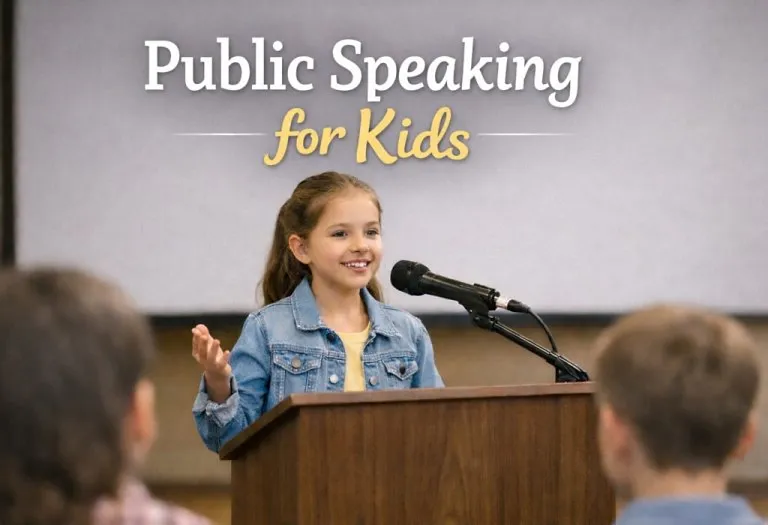
Image Source: AI-Generated Image
If you have ever watched a child confidently share a story, answer a question in class, or speak on stage, you know how powerful those moments can be. Many parents quietly wonder how to help their child reach that level of confidence. The truth is, communication is not just a talent some children are born with. It is a skill that can be nurtured with the right guidance, patience, and practice.
Public speaking for kids is not about turning every child into a performer. It is about helping them express ideas clearly, feel heard, and build self-belief that carries into every part of life. Whether your child is naturally talkative or a little shy, learning to speak in front of others can shape their personality in the most positive way. And the best part is, it can begin in simple, everyday moments at home.
What Is Public Speaking?
Public speaking is simply the ability to share thoughts, ideas, or stories with others in a clear and confident way. For children, it often begins in small everyday moments like answering a question in class or telling a story at home. It is not about sounding perfect or using big words, but about expressing what they feel and think. When children understand this early, they feel less pressure and more freedom to speak naturally.
Key Components of Public Speaking
- Clarity of Thought: Children need to understand what they want to say before they speak. When their thoughts are clear, their words follow more easily and confidently.
- Confidence: Confidence does not mean being fearless. It means speaking even when feeling a little nervous and trusting that their voice matters.
- Body Language: Simple things like standing straight, making eye contact and using natural gestures help children connect better with their audience.
- Voice and Expression: The way something is said matters as much as what is said. Tone, pace and emotion make their speech more engaging and easier to understand.
- Listening Skills: Good speakers are also good listeners. When children learn to listen, they respond better and communicate more thoughtfully.
Benefits of Public Speaking for Children
When children learn to speak with confidence, it slowly changes how they see themselves. They begin to feel heard and valued, which builds a strong sense of self. These skills do not just stay on stage or in the classroom; they show up in everyday life. Over time, even small improvements can create a big difference in how a child grows and connects with the world.
1. Builds Confidence
When a child speaks and feels listened to, it boosts their belief in themselves. Even simple moments like sharing an answer can make them feel proud and capable.
2. Improves Communication Skills
Children learn how to express their thoughts clearly. This helps them in conversations with friends, teachers and even family members.
3. Encourages Critical Thinking
Before speaking, children start thinking about what they want to say. This habit helps them organise ideas and make better decisions.
4. Reduces Fear and Anxiety
Standing up and speaking may feel scary at first. But with practice, children learn that fear is manageable and does not have to stop them.
5. Strengthens Social Skills
Confident speakers often find it easier to make friends and join group activities. They learn how to interact and connect with others in a natural way.
6. Prepares for Future Opportunities
Whether it is school presentations, interviews, or leadership roles, this skill stays useful for life. Children who speak well often feel more ready to take on new challenges.
Ways Parents Can Improve Kids’ Public Speaking Skills
Helping a child become a confident speaker does not require special training or pressure. Here are a few ways parents can help improve their children’s public speaking skills.
- Encourage Everyday Conversations: Talk to your child regularly and really listen to what they say. When they feel heard, they become more willing to share their thoughts openly.
- Give Them Small Opportunities to Speak: Ask them to share stories at family gatherings or explain something they learned at school. These small moments help build comfort step by step.
- Avoid Correcting Too Much: It is tempting to fix every mistake, but constant correction can make children hesitant. Focus more on their effort than perfection.
- Be a Positive Role Model: Children learn by watching. When they see you speaking clearly and confidently, they naturally try to do the same.
- Practice Through Play: Simple activities like storytelling, pretend play, or even role-playing can make speaking feel fun instead of stressful.
- Celebrate Their Efforts: Appreciate when they try, even if it is not perfect. A little encouragement can go a long way in building their confidence.
Simple Public Speaking Tips for Kids
Children do not need complicated rules to become better speakers. What they need is gentle guidance and simple steps they can actually follow. The goal is to help them feel comfortable, not perfect. These public speaking tips for kids focus on building confidence in a way that feels natural and encouraging.
1. Start With What You Know
Children feel more confident when they talk about something familiar. It could be a favourite story, a hobby or a fun experience.
2. Practice Out Loud
Speaking in their mind is very different from saying words out loud. Encourage them to practice at home in a relaxed setting.
3. Take Small Pauses
It is okay to pause while speaking. It gives them time to think and makes their speech easier to understand.
4. Make Eye Contact
Looking at the listener helps build a connection. It also makes the child feel more engaged in the moment.
5. Use Simple Words
There is no need for complicated language. Clear and simple words make their message stronger and easier to follow.
6. Use Natural Expressions
Smiling and using small hand movements can make speaking feel more lively. It also helps reduce nervousness.
7. Do Not Fear Mistakes
Every child makes mistakes while learning. What matters is continuing to speak and not giving up.
8. Practice Regularly
Confidence grows with repetition. The more they practice, the more comfortable they become over time.
Engaging Public Speaking Topics for Children
Choosing the right topic can make a big difference in how a child feels about speaking. When children connect with what they are talking about, they feel more relaxed and expressive. It helps them focus less on fear and more on sharing something meaningful. A good topic for children’s public speaking is one that feels familiar, interesting, and easy to talk about.
- My favourite cartoon and why I love it.
- A fun day I will never forget.
- My best friend is what makes them special.
- If I could be a superhero.
- My favourite teacher and why they inspire me.
- A hobby I enjoy in my free time.
- My favourite festival and how we celebrate it.
- A place I would love to visit.
- My favourite food and why I like it.
- A lesson I learned from my parents.
- My favourite game to play with friends.
- What do I want to be when I grow up?
- A story about kindness.
- My favourite animal and why it is special.
- A time when I felt proud of myself.
- Why is helping others important?
- My favourite book or story.
- What makes my family special?
- A small change I want to make in the world.
- Why honesty matters?
Public Speaking Activities for Kids
Children learn best when they are relaxed and enjoying the process. Activities make speaking feel less like a task and more like play. Here are some exciting public speaking activities for kids.
- Show and Tell: Ask your child to pick a favourite toy or object and talk about it. This feels natural and helps them start speaking without pressure.
- Storytelling Time: Encourage them to tell a story in their own words. It can be real or imaginary and helps improve both creativity and expression.
- Role Play Games: Let them act like a teacher, a shopkeeper or even a superhero. Pretend play makes speaking fun and helps them use different tones and expressions.
- Mirror Practice: Ask your child to speak in front of a mirror. It helps them notice their expressions and slowly become more comfortable with themselves.
- Family Audience Time: Create a small audience at home with family members. Clapping and smiling faces make children feel supported and confident.
- Picture Description: Show them a picture and ask them to describe what they see. This helps them think quickly and speak clearly.
- Question and Answer Game: Ask simple questions and let them answer in full sentences. It builds their ability to think and respond on the spot.
- Read Aloud Practice: Reading a short paragraph out loud improves pronunciation and clarity. It also helps them get used to speaking in front of others.
- Record and Listen: Record your child while they speak and play it back. Hearing themselves helps them understand their voice and improve gradually.
- Group Discussions: Encourage small discussions with friends or siblings. It teaches them how to share ideas and listen to others at the same time.
Helping a child become a confident speaker is a gradual and gentle journey. Over time, this confidence stays with them, shaping how they learn, connect and face new experiences in life.
Also Read :
Alphabet Games for Kids to Learn Letters Easily
Speech on Environment for Students & Children
Essay on Computer in English for Students & Children
Was This Article Helpful?
Parenting is a huge responsibility, for you as a caregiver, but also for us as a parenting content platform. We understand that and take our responsibility of creating credible content seriously. FirstCry Parenting articles are written and published only after extensive research using factually sound references to deliver quality content that is accurate, validated by experts, and completely reliable. To understand how we go about creating content that is credible, read our editorial policy here.
- Author
 About the Author







.svg)