
15 Interesting Facts About Airplane for Kids
Fun and easy airplane facts for kids that spark curiosity teach how planes fly and make learning about aviation exciting.




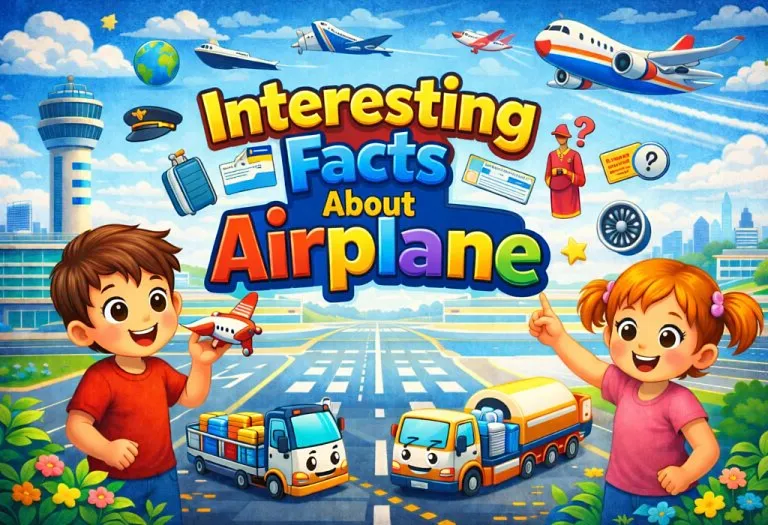
Image Source: AI-Generated Image
Airplanes are one of the coolest inventions ever especially for kids who love staring up at the sky and wondering how something so huge can fly! From the exciting moment of takeoff to peeking through tiny windows at the fluffy clouds below, flying feels like a big adventure. The idea of zooming across the world in just a few hours sparks tons of curiosity in young minds.
This article shares fun and simple facts about airplanes in a way that’s easy for kids to understand. They’ll learn how pilots fly planes, why wings are shaped the way they are, and other answers to the questions kids love to ask. These airplane facts for preschoolers and kids turn tricky ideas into exciting discoveries. If you’re looking for clear, trustworthy airplane information that keeps children curious and engaged, you’re in the right place!
What Is an Airplane?
An airplane is a flying machine that carries people and goods through the sky. It is designed to move fast and stay steady while travelling high above the ground (1). Airplanes help us reach faraway places in a much shorter time than cars or trains. For many children, an airplane feels magical because it turns the dream of flying into something real and possible.
History of Airplanes
People have dreamed of flying for hundreds of years by watching birds in the sky. The first successful airplane was built by the Wright Brothers in the early 1900s after many careful experiments (2). Their simple wooden plane showed the world that human flight was possible. Over time airplanes became safer, faster and more comfortable, changing the way families travel forever.
Different Types of Airplanes
Not all airplanes are the same, and each one has a special job to do. Let’s take a look at a few of the different types of airplanes and what makes each one special!
1. Passenger Airplanes
These are the planes that carry people from one city or country to another. Families hop on them for vacations, to visit loved ones, and to go on exciting adventures. They’re made to be comfy and super safe, so even long journeys feel easier and more fun.
2. Private Airplanes
Private airplanes are smaller and usually carry only a few people. They are often used by business travellers or pilots who love flying. These planes feel more personal and quiet.
3. Cargo Airplanes
Cargo planes carry important things like food, toys, clothes, and packages. They help deliver items quickly across long distances. You might not see them very often, but they work day and night to keep the world moving!
4. Military Airplanes
Military airplanes are used by the armed forces. They help protect countries, support rescue missions, and keep people safe. These planes are built to be strong, fast, and ready for tough jobs.
5. Rescue and Medical Airplanes
These amazing airplanes help save lives during emergencies. They carry doctors, patients, or important supplies to places that are hard to reach. They’re a flying symbol of care, hope, and help when it’s needed most.
6. Training Airplanes
Training airplanes are used to teach new pilots how to fly. They are smaller and easier to control. Every pilot starts their journey in one of these planes.
Main Parts of an Airplane
An airplane might look complicated at first, but it’s actually made up of just a few main parts that work together like a team. Here are a few of the main parts of an airplane and what they do (3)!
1. Wings
Wings help the airplane lift off the ground and stay in the air. Their wide shape pushes air downward, which lifts the plane upward. Without wings, an airplane cannot fly.
2. Fuselage
The fuselage is the main body of the airplane. It holds passengers, pilots, luggage and important equipment. This is the part where people sit during a flight.
3. Tail
The tail helps keep the airplane balanced while flying. It allows the plane to turn and stay steady in the sky. A strong tail makes flying smooth and controlled.
How Do Airplanes Fly?
Airplanes fly because air moves around their wings in a special way. When a plane moves forward fast, air pushes harder under the wings than above them. This lift helps the airplane rise gently into the sky. Once flying engines keep the plane moving, while the wings help it stay up (4).
What to Do and What Not to Do on an Airplane?
Flying on an airplane can be exciting and a little new for children. Knowing simple rules helps everyone feel calm and safe during the journey. Many families also enjoy sharing fun facts on airplanes to make the trip more enjoyable. Good habits on a plane show care for others and make flying a happy experience.
What to Do
Listen to the crew and follow their instructions—they’re there to help keep everyone safe. Stay seated when asked and keep your seat belt fastened. Use a quiet, polite voice and be kind to the people around you so everyone can enjoy the flight.
What Not to Do
Don’t run in the aisle or play with the safety equipment—it’s there to keep everyone safe. Try not to kick seats or shout, even when you’re excited. These small, kind actions help keep the airplane calm, comfortable, and safe for everyone on board.
Amazing Airplane Facts for Kids
Airplanes are full of surprises that make flying exciting and fun to learn about. These facts are shared in a simple way so children can enjoy and remember them easily. Learning amazing facts about airplanes often turns curiosity into confidence. Some of these cool facts may even surprise adults, too.
- Airplanes can fly very high in the sky. They usually fly above the clouds. This helps avoid storms and bumps.
- Airplane wings are curved, not flat. This shape helps lift the plane upward. It makes flying possible.
- There are usually two pilots flying a plane. They work together during the journey. Teamwork keeps flights safe.
- Airplanes are checked before every flight. Engineers inspect them carefully. Safety is always the top priority.
- Airplane windows are very strong. They are made of many thick layers. This protects passengers inside.
- A plane can still fly with one engine. Pilots are trained for such situations. The plane can land safely.
- Some airplanes can fly faster than the speed of sound. These planes are very powerful. They are not used for regular travel.
- Food tastes different during a flight. High altitude affects taste buds. This is normal and harmless.
- Airplanes use special fuel to fly. This fuel works well at high heights. It helps engines stay strong.
- White lines behind planes are common. They are made from water vapour. They are called contrails.
- Airplanes are lighter than they look. They are made with special materials. Lightweight helps them fly better.
- Birds inspired the first airplanes. Inventors watched how birds fly. Nature helped humans learn to fly.
- Some airplanes can land on water. These are called seaplanes. They are useful near lakes and oceans.
- Pilots plan flights before taking off. They check the weather and fuel. Planning makes travel smooth.
- Many children love watching airplanes. Flying feels magical and exciting. It sparks curiosity and dreams.
Airplanes help kids see the world as a place full of movement and wonder. Learning how planes work builds curiosity and confidence in young minds. Fun facts can turn a simple flight into an exciting learning adventure! Airplanes also show how big human ideas can turn into amazing inventions—and every flight can spark big dreams and brand-new questions.
Also Read:
Egg Facts That Kids Should Know About
Facts About Vegetable for Kids
Black Hole Facts for Kids
Was This Article Helpful?
Parenting is a huge responsibility, for you as a caregiver, but also for us as a parenting content platform. We understand that and take our responsibility of creating credible content seriously. FirstCry Parenting articles are written and published only after extensive research using factually sound references to deliver quality content that is accurate, validated by experts, and completely reliable. To understand how we go about creating content that is credible, read our editorial policy here.
- Author
 About the Author






.svg)