
15 Interesting Dragon Facts for Kids
Fun and fascinating dragon facts for kids filled with legends, fire breathing tales, and magical creatures to spark curiosity.




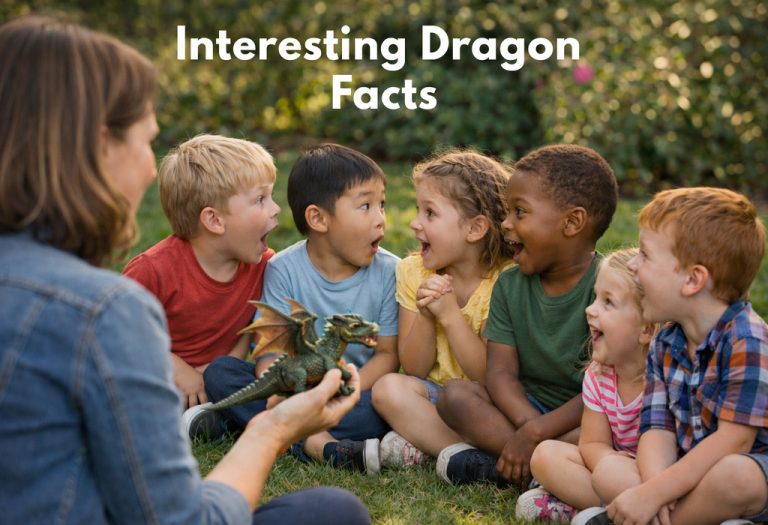
Image Source: AI-Generated Image
Dragons have long fascinated children’s minds. From bedtime stories to cartoons, these powerful and flying beings appear to be larger than life. But what is it about dragons that fascinates children? Is it the fire they breathe, the scales they have, or their mysteriousness? In this guide, we will reveal the most exciting facts of dragons in a magical way. These dragon facts for kids are great for inquisitive minds that love myths, legends, and adventure.
Dragons are powerful, intelligent, and brave in different cultures. So, let’s embark on a journey where imagination meets history and uncover the secrets that make dragons unforgettable.
Are Dragons Real or Mythical?
Dragons are legends, which means they are from tales and not from science or history. There is no fossil evidence or actual proof that dragons ever existed on Earth, although they exist in legends from different cultures. A long, long time ago, when people found dinosaur bones or saw powerful creatures like crocodiles and large snakes, they might have made up stories about dragons to make sense of what they did not understand. Kids are curious about this because dragons seem so real in stories and films that they almost seem to exist. Although they are not real creatures, dragons are very real in people’s imaginations, and that is why they have existed for so many generations.
History of Dragons
Dragons have been a part of human folklore for thousands of years, and their history is linked with myths, legends, and ancient art. Before books, people had been telling dragon tales around campfires, passing them down through the ages. In ancient China, dragons were revered as wise and strong, associated with rain, rivers, and the emperor, while in European folklore, they were feared as fire-breathing monsters who protected hoards of gold or threatened villages. Some historians think that the discovery of large dinosaur fossils may have sparked these myths, since people in ancient times could not scientifically explain these giant bones. Eventually, dragons became symbols of the hopes, fears, and beliefs of each culture.
Different Types of Dragons
Dragons may not be real animals, but they come in many forms in stories around the world. Each culture imagined them in a way that reflected nature, beliefs, and daily life. When children learn about the different kinds, it often sparks even bigger curiosity. Sharing these dragon facts and information helps them see how creative and diverse legends can be.
1. Chinese Dragon
The Chinese dragon has a long, flowing body like a serpent and does not usually have wings. It is seen as wise, kind, and powerful rather than scary. Many people believe it brings rain, good harvests, and good luck.
2. European Dragon
The European dragon is large with strong wings, sharp claws, and thick scales. It is often shown breathing fire and guarding treasure inside caves. In many old stories, brave knights had to defeat it to protect their kingdoms.
3. Japanese Dragon
Japanese dragons are closely connected to water, rivers, and the sea. They are often described as protectors rather than villains. Many temples and artworks in Japan show dragons as symbols of strength and balance.
4. Wyvern
A wyvern has two legs and two wings instead of four legs. It looks slimmer and more bird-like than other dragons. This type often appears on flags, shields, and family symbols in Europe.
5. Hydra
The Hydra comes from Greek mythology and is known for having many heads. If one head was cut off, two more would grow in its place. This made it very difficult for the heroes to defeat.
6. Sea Dragon
Sea dragons are said to live deep in oceans and lakes. Sailors long ago told stories of spotting giant shapes moving under the water. These legends likely grew from fear of the unknown sea.
7. Fire Dragon
Fire dragons are famous for breathing flames from their mouths. They are often shown living near volcanoes or mountains. Their fiery nature makes them powerful and dangerous in stories.
8. Ice Dragon
Ice dragons are imagined living in snowy mountains and frozen lands. Instead of fire, they may breathe icy wind or frost. They are often calm but very strong and hard to defeat.
9. Earth Dragon
Earth dragons are linked to forests, caves, and mountains. Some stories describe them as guardians of nature and hidden treasures. They are strong creatures that blend into the land around them.
10. Celestial Dragon
Celestial dragons are believed to live in the sky or heavens. In some Asian legends, they control the stars and clouds. They are often seen as sacred and full of wisdom.
11. Feathered Serpent
The feathered serpent looks like a dragon with bright feathers instead of scales. It appears in ancient American cultures and is linked to creation and knowledge. This creature was respected as a powerful god-like being.
12. Lung Dragon
The Lung dragon is a traditional Chinese dragon symbol. It represents strength, good fortune, and protection. Many festivals and celebrations include dragon dances inspired by this creature.
13. Basilisk
The basilisk is a smaller dragon-like creature found in European tales. It was believed to have a deadly stare that could turn others to stone. Because of this, it was feared but also deeply fascinating.
14. Amphiptere
An amphiptere is a winged serpent with no legs. It is often shown flying gracefully through the sky. This type appears in old European legends and artwork.
15. Drakon
The drakon comes from ancient Greek myths. It is usually described as a giant serpent guarding sacred places or treasures. Heroes often had to outsmart it rather than fight with strength alone.
16. Western Dragon
Western dragons are large winged creatures with powerful bodies. They often breathe fire and guard piles of gold. In fairy tales, they are usually the main challenge for the hero.
17. Eastern Dragon
Eastern dragons are long, elegant, and snake-like in shape. They are connected with wisdom, power, and protection. Unlike Western dragons, they are mostly seen as kind and helpful beings.
How Do Dragons Breathe Fire?
The thought of fire breathing is an exciting and powerful concept. In tales, dragons are known to have a special organ in their body that produces heat or sparks, which then mix with gases and erupt into flames when they open their mouths. Some tales involve two chemicals that are kept in separate containers, mixing together like a natural flamethrower. Others are simply a manifestation of their magical powers and include fire as part of their makeup. Of course, there is no scientific evidence to support the idea that any animal could actually breathe fire in such a manner, but speculating about how it might be possible is a great way for kids to imagine with scientific inquiry.
What Do Dragons Symbolize?
Dragons are different things in different places around the world. In some Asian cultures, dragons are wise, powerful protectors who bring good luck, and people consider them a blessing. In some Western tales, dragons are dangerous, greedy, or a major task that a hero has to accomplish, which teaches one to be courageous and brave. Children see dragons as powerful, which helps them overcome a fear or do the right thing. Although dragons are not real, the concepts they symbolize are very real, and that is why their stories are still important.
Life Cycle of a Dragon
Kids ask if dragons grow like other animals. It is a good question because all living things have a life cycle. In stories, dragons change as they get older and stronger. Learning about a dragon’s life cycle helps kids imagine the way things work in nature.
Many legends share random facts about how dragons hatch, grow, and become powerful beings. While these stages are part of myth, they are often described in ways that feel surprisingly real and relatable.
- Dragon Egg: Dragons usually begin life inside large, hard-shelled eggs. These eggs are often hidden in caves, mountains, or deep forests to keep them safe. Stories say the eggs glow or feel warm because of the fire growing inside.
- Hatchling: When the egg cracks open, a small dragon hatchling appears. At this stage, it is curious, playful, and still learning to use its wings or fire. Just like baby animals, it depends on protection until it grows stronger.
- Young Dragon: As the dragon grows, its wings become stronger and its scales harder. It begins to explore beyond its home and test its abilities. Some legends say this is when it first learns to breathe small sparks of fire.
- Adult Dragon: An adult dragon is powerful and fully grown. It can fly long distances, guard treasures, or protect lands, depending on the story. This stage shows confidence, strength, and independence.
- Ancient Dragon: The oldest dragons are often described as wise and calm. They are said to hold deep knowledge about the world and nature. In many tales, they become guardians, teachers, or symbols of great power.
Other Amazing Facts About Dragons
There is always something new to learn about dragons, and that is part of their charm. Even after reading many legends, children still find details that surprise them. Sharing small discoveries often makes their imagination grow even bigger. These facts on dragons come from myths, art, and storytelling traditions passed down for generations.
Along the way, you will also find a few fun facts that make dragon stories even more exciting to explore.
- Dragons appear in legends from Asia, Europe, the Middle East, and the Americas.
- In Chinese tradition, dragons are linked to the emperor and seen as symbols of power and good fortune.
- Many European dragons are said to guard gold jewels or magical objects inside caves.
- Some legends say dragons can live for hundreds or even thousands of years.
- Dragons are often described as highly intelligent creatures, not just wild beasts.
- In some stories, dragons can speak human languages and share ancient wisdom.
- Dragon scales are believed to be nearly impossible to break, which makes them very strong.
- Some tales describe dragons as shape shifters who can take human form.
- Dragon blood is sometimes said to have magical healing powers in folklore.
- Festivals in several Asian countries include dragon dances to bring luck and happiness.
- A group of dragons is sometimes called a flight or a weyr in fantasy stories.
- Many modern books and movies show dragons as loyal friends instead of enemies.
- In Norse myths, dragons often guard sacred treasures and ancient runes.
- Some dragon stories say their eyes glow in the dark, which makes them easier to imagine at night.
- Dragons are sometimes connected with the elements, such as fire, water, earth, or air, depending on the legend.
Dragons have been a part of human storytelling for thousands of years because they make one wonder and be curious. They are real in the way that they impact our imagination and culture. Each country has its own way of imagining dragons, and this shows the human mind’s creativity. Some dragons are fierce and fiery, while others are wise and nurturing. These stories teach lessons about being brave, being strong, and overcoming fears. Children love hearing about dragons and making their own versions. Ultimately, dragons may not roam the earth, but they will always roar in our stories and hearts.
Also read:
Fox Facts and Information for Children
Facts About Horses for Kids
Facts About Cheetahs For Kids
Was This Article Helpful?
- Author
 About the Author
Ruchelle Fernandes
Related Articles
-

Letter I Tracing Worksheets - Free Printables To Learn
-
Teaching Your Toddler to Draw a Straight Line
-
30 Easy to Do Science Experiments for Kids
-
Teaching Days of the Week to Children - Simple and Easy Ways
-
Fun and Interesting Facts About Lions for Kids
-
14 Interesting Cow Facts That You Should Know About






.svg)