
20+ Best Brain Development Toys for Babies and Toddlers
Boost your child’s growth with brain development toys that enhance learning, motor skills, and creativity from an early age.




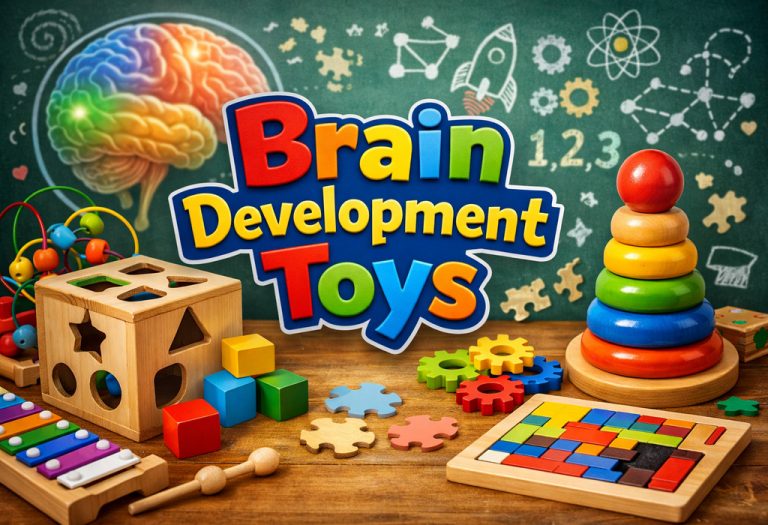
Image Source: AI-Generated Image
Witnessing your baby discover something new for the first time is a magical feeling. Something as simple as a rattle, a soft block, or a colourful puzzle can make them curious and confident and lay the foundation for future learning. This is why selecting the right baby brain development toys is very critical. These early experiences influence how their child will think, reason, and interact with their world.
If you have ever seen a toddler stack blocks with intense focus or laugh while figuring out how a toy works, you already understand how powerful play can be. The right toys for brain development 1-2 years are not just about entertainment. They support memory, motor skills, language growth, and emotional development in ways that feel natural and fun.
This topic goes beyond just picking toys from a shelf. It is about understanding what truly helps your child grow and making choices that support their development in simple, meaningful ways.
Different Types of Brain Development Toys and Their Advantages
Every child learns at their own pace and in their own way, and toys are one of the ways in which this learning takes place. Some toys encourage physical activity, while others encourage mental or imaginative activity. Bear in mind that the toy’s ability to promote your child’s natural curiosity is more important than its aesthetics.
1. Sensory Toys
Sensory toys engage a baby’s senses through touch, sound, and sight. Think of soft fabrics, textured balls, or crinkly toys that babies love to explore. These toys help build early brain connections and improve awareness of the world around them.
2. Stacking and Building Toys
Stacking rings, cups, or blocks are simple, but they teach important skills. Children learn balance, size, coordination and patience. They learn as they watch a tower fall and try to build it again.
3. Shape Sorters and Puzzles
These toys gently challenge children to think and solve problems. Matching shapes or fitting pieces together improves memory and reasoning skills. Over time, you can see children become more confident in figuring things out on their own.
4. Musical Toys
Musical toys playfully introduce rhythm, sound, and patterns. A simple drum or xylophone can keep a child engaged for a long time. They also support listening skills and early creativity.
5. Pretend Play Toys
Pretend play toys like kitchen sets, dolls, or toy tools help children express themselves. They copy what they see around them and begin to understand emotions and social roles. This builds strong communication skills.
6. Push and Pull Toys
These toys encourage movement, especially for toddlers learning to walk. As children push or pull, they develop balance and coordination. It also gives them a sense of independence as they explore their surroundings.
7. Interactive Books
Books with textures, flaps, or sounds make reading more engaging for young children. They help build language skills and improve focus in a gentle way. Sitting together with a child and exploring a book often becomes a bonding experience as well.
Brain Development Toys for Babies
In the early months, babies learn by touch, sound, and observation of everything around them. Even the smallest interaction with their toys can make them curious, creating new connections in the brain. The right toys should be simple and appropriate for what your child is learning at the time. Simple and thoughtful mind development toys can create meaningful moments with your child.
1. Soft Sensory Cloth Toys
These toys come with different textures and gentle sounds that babies love to explore. They are safe, easy to hold, and perfect for tiny hands learning to grasp.
2. Baby Rattles
Rattles are often a baby’s first favourite toy. The sound and movement help babies understand cause and effect while improving hand coordination.
3. Teething Toys
Teethers are for soothing gums and helping babies learn to grip and explore. They come in different shapes to keep babies engaged.
4. High Contrast Flash Cards
Black and white cards help babies focus better, especially in the early months. They support visual development in a simple but effective way.
5. Activity Play Gym
A play gym encourages babies to reach, kick, and move. Hanging toys and mirrors makes it more engaging and supports physical development.
6. Crinkle Books
These soft books make a gentle crinkling sound when touched. Babies enjoy the sound and texture while slowly getting introduced to books.
7. Musical Soft Toys
Toys that play soft music or lullabies can calm babies while also stimulating their hearing. They often become comforting companions.
8. Baby Mirrors
Unbreakable mirrors help babies discover their own reflection. It may seem simple, but it builds awareness and curiosity.
9. Stacking Rings for Infants
Large soft stacking rings are easy for babies to handle. They help develop coordination even before babies fully understand stacking.
10. Tummy Time Toys
Toys designed for tummy time encourage babies to lift their heads and look around. This strengthens muscles and supports early movement skills.
Toys for Brain Development for Toddlers
Toddlers are naturally curious and want to explore everything around them. Children learn best by moving, touching, and solving problems at this age. The right toys for brain development for 1-2 years can make them confident while learning how things work. What’s surprising is that children learn so much through small play experiences.
1. Stacking Rings
Stacking rings helps toddlers understand size order and balance. They also build hand control and patience as children try again and again.
2. Shape Sorter Toys
These toys encourage toddlers to match shapes with the right spaces. It gently builds problem-solving skills and helps them think more clearly.
3. Building Blocks
Blocks give toddlers the freedom to create and explore. They learn balance, coordination, and even early planning while stacking and knocking them down.
4. Push and Pull Toys
These toys support walking and movement. Toddlers feel a sense of independence as they move around with something they can control.
5. Musical Instruments
Simple instruments like drums or xylophones introduce rhythm and sound. They joyfully help toddlers express themselves.
6. Peg Boards
Placing pegs into holes improves fine motor skills and focus. It may look simple, but it requires attention and coordination.
7. Nesting Cups
Nesting cups teach size comparison and sequencing. Toddlers enjoy stacking and fitting them together in different ways.
8. Interactive Board Books
Books with flaps, textures or sounds keep toddlers engaged. They slowly build language skills and improve their attention span.
9. Pretend Play Sets
Toy kitchens, dolls, or toy sets allow toddlers to copy everyday actions. This helps them understand emotions and social roles.
10. Puzzles
Simple puzzles help toddlers recognise shapes and patterns. Completing even a small puzzle gives them a sense of achievement.
11. Ride On Toys
Ride-on toys improve balance and coordination. They also give toddlers a fun way to stay active.
12. Sorting Games
Sorting colours or objects helps toddlers notice differences and similarities. It builds early thinking and memory skills.
13. Ball Drop Toys
Dropping balls and watching them roll teaches cause and effect. Toddlers love repeating this action and learning from it.
14. Lacing Toys
Lacing beads or shapes helps improve hand control and focus. It also prepares them for skills they will need later, like writing.
15. Activity Cubes
Activity cubes combine different small games in one toy. They keep toddlers engaged while supporting multiple areas of development.
Tips for Choosing Brain Development Toys
Choosing the right toy for your child can sometimes feel confusing with so many options around. As parents, you want something that is fun but also truly helpful for growth. The best toys for cognitive development are often simple, thoughtful, and suited to your child’s stage. It is less about having more toys and more about choosing the ones that really support learning through play.
- Choose toys that match your child’s age and ability, so they feel confident and not frustrated.
- Look for toys that can be used in different ways, as they keep children engaged for longer.
- Prefer toys that encourage hands-on play instead of passive watching.
- Focus on safety and quality since babies and toddlers explore everything closely.
- Pick toys that allow interaction so you can play and bond together.
- Avoid toys that are too noisy or distracting, as they can reduce focus.
- Notice what your child enjoys and choose toys that build on their natural interests.
FAQs
1. How many toys does a baby or toddler really need?
Children do not need many toys to learn well. A few meaningful toys that they can use in different ways are often enough.
2. Are expensive toys better for brain development?
Not always. Simple, well-designed toys often support learning better than expensive ones, as they allow more creativity and exploration.
Choosing the right kind of toys for your baby or toddler is about understanding their learning and development process. Simple toys promote curiosity and learning through play. Learning through play is an important aspect of development, and the best part is that as your child grows, the learning opportunities through play continue to evolve. The most important thing in the entire process is to provide your child with the opportunity to learn and play on his or her own. Being present during playtime makes the learning process an emotional one, and in the end, it’s the learning experience that you create around the toys.
Also Read:
Horse Jokes for Kids That Will Make Everyone Laugh
Science Trivia for Kids (Questions and Answers)
Fish Jokes for Kids That Will Make Them Giggle
Was This Article Helpful?
Parenting is a huge responsibility, for you as a caregiver, but also for us as a parenting content platform. We understand that and take our responsibility of creating credible content seriously. FirstCry Parenting articles are written and published only after extensive research using factually sound references to deliver quality content that is accurate, validated by experts, and completely reliable. To understand how we go about creating content that is credible, read our editorial policy here.
- Author
 About the Author





.svg)