
Can You Eat Pepperoni When Pregnant?
Learn if pepperoni is safe during pregnancy, possible risks, and how to enjoy it safely with proper cooking guidelines.





Image Credit : AI Generated Image
During the gestation period, pregnant women have cravings for many things. Pepperoni is a popular food item that most pregnant women crave for its spicy taste. Though they crave it, they wonder how safe it is to eat pepperoni during their pregnancy. While pregnant, women need to be extra careful of their health and nutrition to care for the new life they are creating. If you are also eager to know how well pepperoni and pregnancy go together, then this is your chance to inform yourself. Let us give you a hint: pepperoni in pregnancy is often feared for its high salt content and processed nature. Read the article to know how safe pepperoni is during pregnancy, its benefits and side effects.
What Is Pepperoni?
Pepperoni is a spicy variant of salami or dry sausage. This Italian-American variant uses two types of meat – pork and beef for its preparation. The mixture of cured pork with cured beef in a unique spicy blend gives pepperoni its distinct taste. Conventional curing is done by using nitrates or nitrites. The general spices used to spice up pepperoni are cayenne pepper, white pepper, bell pepper, salt, aniseed and allspice. The prepared pepperoni salami looks slightly smoky with bright red colour and is extremely soft. Pepperoni is used in many dishes such as pizzas, pasta, sandwiches and wraps, giving them a distinct taste.
Nutritional Value of Pepperoni
Pepperoni may taste out of this world on pizzas and scrambled eggs, but isn’t a healthy option to have when pregnant. Here’s the general nutritional value of 100 grams of pepperoni.
Note: Different brands of pepperoni may contain different ingredients in varying ratios. Thus, please compare the nutritional values of pepperonis before purchasing.
| Nutrients | Value |
| Calories | 504 Kcal |
| Protein | 19.2 g |
| Fat | 46.3 g |
| Saturated Fat | 17.7 g |
| Sodium | 1580 mg |
| Cholesterol | 97 mg |
Source: USDA (1)
You may debate that pepperoni has proteins and fats. However, it is always best to choose lean meats and healthy fats when you are pregnant for the sake of your child and your health.
So, is pepperoni safe for pregnancy? Let’s find an answer to this in detail below.
Can You Have Pepperoni When Pregnant?
Many women have questions about pepperoni and pregnancy, such as ‘Is it safe to eat pepperoni during pregnancy?’
Well, there are two things: safety and recommendation.
Safety: It is safe to eat pepperoni in pregnancy in limited amounts only when it is cooked thoroughly. For instance, pepperoni on pizza can be safely eaten during pregnancy, as it is a baked good in which the cured meat is cooked.
Uncooked or cold pepperoni slices are NOT safe as they harbour plenty of bacteria and parasites like Listeria and Toxoplasma.
Recommendation: Eating pepperoni is not advisable during pregnancy because it contains high levels of fat, added sugar, spices, and salt. The main reason to avoid pepperoni sticks while pregnant is the nitrates and nitrites used to preserve and cure pepperoni. These preservatives react with meat and can produce carcinogenic agents. Craving pepperoni while pregnant, due to its spicy, distinct taste, is normal; however, it should be consumed occasionally, following the doctor’s advice. So, if any expectant mom asks you, ‘Is pepperoni safe during pregnancy?’, you know what to answer them.
The same goes for your pepperoni pizza as well. It isn’t exactly loaded up with lettuce and other healthy vegetables.
Pepperoni is not among the healthy food choices for pregnant women. It is high in fats, salts, and spices. But if you have a strong craving for it, consuming thoroughly cooked pepperoni in moderation is wise during pregnancy.
It’s also crucial to be aware of the potential risks associated with consuming cured meat during pregnancy.
When Is It Not Safe to Eat Pepperoni While Pregnant?
While it is a little okay with occasional eating of pepperoni when you are pregnant, you must always avoid consuming cold pepperoni slices.
Why? Because the pepperoni we get on supermarket shelves is processed and not cooked, it is technically raw. Uncooked or raw meats contain harmful bacteria and parasites, including Toxoplasma and Listeria, respectively. Unlike a normal person, when a pregnant woman consumes cold-processed or contaminated foods, she is more likely to get sick with food poisoning, toxoplasmosis, or listeriosis, caused by those infamous pathogens we talked about. Food poisoning, toxoplasmosis, etc., can be highly dangerous for the baby and the mother. A woman’s immune system is weakened during pregnancy, which can make it easier for pathogens to attack. If reached to the baby, toxoplasmosis can cause hearing loss, intellectual disability, and blindness in the fetus (2). Listeria, on the other hand, could cause miscarriage, stillbirth, or preterm labour (3).
Another reason is the nitrates and nitrites content in pepperoni, which is also not advisable for a pregnant woman. Hence, it is best avoided by most pregnant women.
If you still crave a slice or two, you can pop the pepperoni pizza into the microwave and let the heat cook the pepperoni for you to savour.
Are There Any Benefits of Having Pepperoni During Pregnancy?
Pepperoni is a good source of essential minerals, proteins and vitamins. Some of the benefits of having pepperoni during pregnancy are:
- Pepperoni has a high-fat content. So in cases where the pregnant woman is too thin or lean, the doctor can advise eating pepperoni for its high-fat content to gain weight.
- Pepperoni has selenium, an important mineral known for its antioxidant properties. Selenium strengthens the immune system by fighting free radicals.
- Pepperoni contains the right amount of vitamin B12, Riboflavin, Thiamin, Vitamin B6, Vitamin D, Vitamin K and Niacin. So, foods containing vitamins and minerals are good for the health of pregnant women.
- Pepperoni has a high content of zinc and manganese. Zinc boosts cell formation and strengthens the immune system. Manganese protects the body cells from damage and improves metabolic activity.
Side Effects of Pepperoni During Pregnancy
Pepperoni may cause certain side effects when consumed during pregnancy. The side effects of pepperoni are:
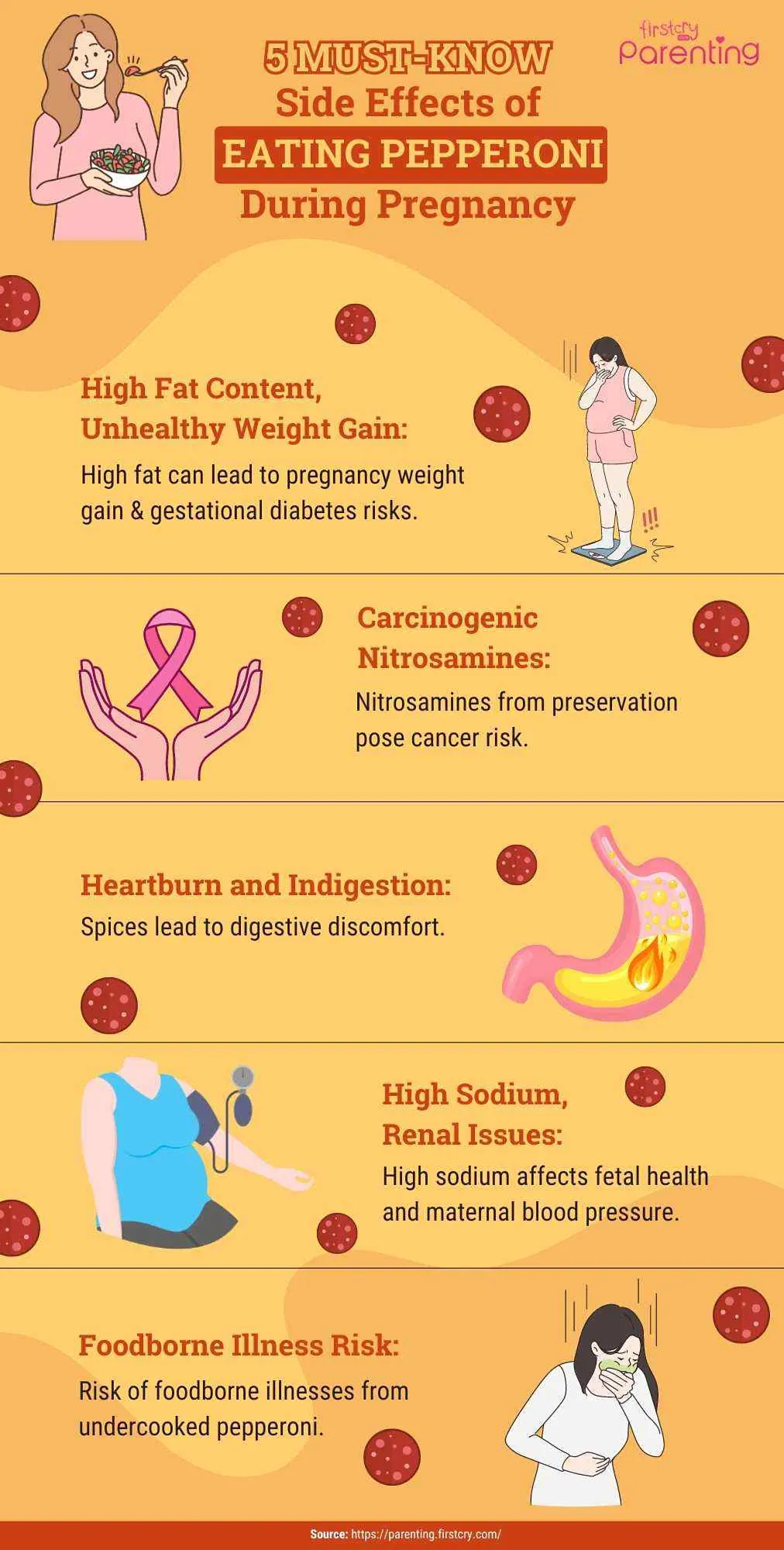
1. Pepperoni, due to its high-fat content, can cause unhealthy weight gain in pregnant women along with other issues such as gestational diabetes, preeclampsia and heart disease.
2. The nitrates and nitrites used in its preservation can react with meat to produce nitrosamines, which are carcinogenic (4).
3. The high spice content used to make pepperoni can cause heartburn and indigestion.
4. Pepperoni has high sodium content, almost 442 mg in one ounce. High sodium may have an adverse effect on foetal renal function (5). Also, the sodium can pose the risk of fluctuating blood pressure in the pregnant woman.
Alternatives to Pepperoni That Are Safer
There are pepperoni alternatives which are safer to consume during pregnancy. The safer pepperoni alternatives are:
- Pepperoni made from turkey has lower fat and saturated fat content.
- Buy pepperoni which has no nitrate or nitrite in it. Read the packet label before buying.
- Substitute pepperoni with lean ground turkey or grilled chicken breast in foods such as pizza. Also, make the pizza from a whole-grain tortilla or pita.
Ways to Eat Pepperoni During Pregnancy
Pepperoni is the popular topping of pizzas; however, there are many other ways in which pepperoni can be eaten. Some of the ways to eat pepperoni during pregnancy are:
- Use the tasty salami in a sandwich. Toast the sandwich and then top it with pepperoni.
- Mix pepperoni with black olives and cheese as a snack or salad.
- Make a soup of pepperoni by cutting it into small pieces and then adding it to any soup or stew.
- Making bread from pepperoni is also a good option. Pepperoni bread can be eaten as a sandwich.
- Use it as a pasta topping, cut into small pieces.
Pepperoni Pizza While Pregnant – Warnings and Recipe
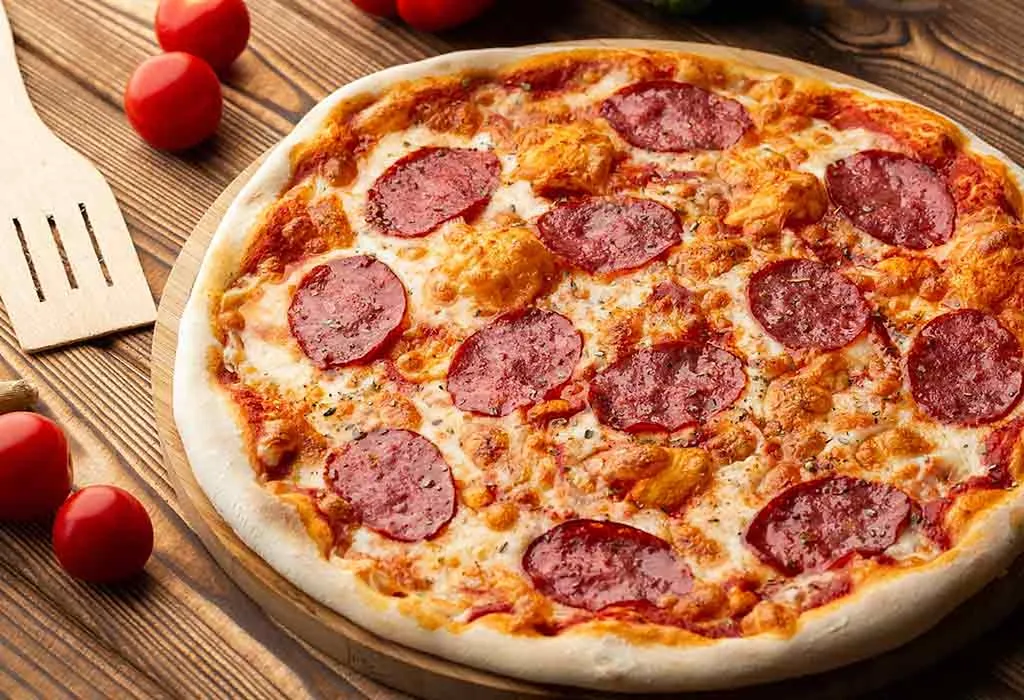
Pepperoni pizza is one of the most craved pepperoni food items during pregnancy. However, eating pepperoni is not advised during pregnancy due to its high fat, sugar, spice and nitrate/nitrite content. So when a craving for pepperoni pizza arises in pregnant women, it’s best to make it at home with healthy ingredients. This will prevent the question of ‘can pregnant women eat pepperoni pizza.’ This will also ensure the health content, and pregnant women pepperoni craving will also be satisfied.
How to Make Pepperoni Pizza?
Pepperoni pizza can be easily made at home with a few ingredients. However, remember to purchase pepperoni which has no nitrates or nitrite content to avoid pepperoni nitrates pregnancy side effects.
Ingredients
- Pizza dough/ base- 1 qty
- Pepperoni loaves- 3 qty
- Cheese- 1 cup
- Tomato- 1 qty (sliced)
- Chilli flakes
- Pepper
- Salt
- Onion- 1 qty (sliced)
- Capsicum -1 qty (sliced)
Instructions
- Keep the pizza dough in a preheated oven for 15 minutes at a 300-degree temperature.
- Cut the pepperoni loaves into small pieces or into a circular shape.
- Take out the pizza base and add cheese on top of it. Let the cheese melt on the hot pizza to get absorbed.
- Top the cheese on the pizza with sliced pepperoni, onions, capsicum and tomatoes.
- Let the pizza base cool for some time.
- Keep the pizza base in the oven for 20 minutes.
- Take it out and sprinkle chilli flakes, salt and pepper as per taste and enjoy the pepperoni pizza.
FAQs
The common FAQs asked about eating pepperoni during pregnancy are:
1. Can pregnant women consume raw pepperoni?
Eating raw pepperoni for pregnant women is not recommended. Raw pepperoni may have bacteria, and the nitrates present in it can cause toxoplasmosis. Toxoplasmosis can cause congenital disability in the baby and increase the risk of miscarriage or stillbirth for the pregnant woman.
2. Can I eat cold pepperoni while pregnant?
Women can eat cooked and cold, packaged pepperoni slices while pregnant if the package label states they are ready to eat. In cold or frozen pepperoni, the risk of bacteria is reduced, but there is still the risk of toxoplasmosis or listeriosis since it is not cooked (6). It’s advisable to eat hot, properly cooked pepperoni when pregnant.
3. Does pepperoni contain Listeria bacteria?
Yes, raw or cold pepperoni has good chances of carrying Listeria monocytogenes, a bacterium that causes serious infection, particularly in pregnant women, the elderly, and people with weak immune systems.
4. Is it okay to eat uncured pepperoni during pregnancy?
Pepperoni is cured to preserve it and stop it from getting spoiled. So, if pepperoni is not cured, then it may carry bacteria, hence unsafe to eat.
5. Is Turkey pepperoni safe during pregnancy?
Turkey pepperoni is typically considered safe to eat during pregnancy, as long as it is cooked to an internal temperature of 165°F/74°C, such as when used on a pizza. It is advisable to avoid raw or cold turkey pepperoni because of the potential for Listeria and Toxoplasma, which can lead to serious infections, particularly during the first trimester.
6. Can I eat Hormel pepperoni during pregnancy?
It is best to avoid Hormel pepperoni during pregnancy. It contains a high amount of added sugar, sodium, and saturated fats, and is made with nitrite preservatives.
7. What deli meats are safe to eat during pregnancy?
Deli meats, including pepperoni, are not cooked but cured with preservatives to increase their shelf life. Thus, it is best to avoid deli meats, cold cuts, and luncheon meats during pregnancy.
Pepperoni is advised to be eaten occasionally and in small quantities during pregnancy, as overeating pepperoni can lead to health issues. Pepperoni has certain health benefits; however, due to its spices and preservative content, it’s best to avoid it during pregnancy. If there is a strong craving for pepperoni, have it cooked properly, hot, and in limited quantities, in consultation with the doctor.
Infographic: Side Effects of Eating Pepperoni When Pregnant
Also Read:
Eating Egg during Pregnancy
Consuming Tuna while Pregnant
Is It Safe to Eat Bacon in Pregnancy?
Was This Article Helpful?
Parenting is a huge responsibility, for you as a caregiver, but also for us as a parenting content platform. We understand that and take our responsibility of creating credible content seriously. FirstCry Parenting articles are written and published only after extensive research using factually sound references to deliver quality content that is accurate, validated by experts, and completely reliable. To understand how we go about creating content that is credible, read our editorial policy here.
- Author
 About the Author
Gauri Ratnam
Related Articles
-

18 Healthy Pregnancy Soups With Recipes
-
Taking Vitamin B3 (Niacin) During Pregnancy - Importance, Food Sources and Dosage
-
Cranberries or Cranberry Juice During Pregnancy - Is it Safe?
-
Caffeine and Fertility
-
Eating Curry Leaves (Kadi Patta) During Pregnancy - Benefits & Precautions
-
Is It Safe to Eat Rhubarb When Pregnant?