Eggs In Pregnancy: Benefits, Risks and Daily Intake
Are eggs in pregnancy safe? This gynecologist reviewed guide covers their benefits, risks, and the safe amount to eat.





Medically Reviewed By
Dr. Sabiha Anjum
(Gynecologist/Obstetrician)

This health content has been medically reviewed by qualified experts and follows the FirstCry Parenting editorial policy to ensure accuracy and reliability.
Eggs in pregnancy are a safe and highly nutritious food when they are fully cooked, providing essential nutrients that support both maternal health and fetal development. According to the World Health Organization (WHO), a healthy diet during pregnancy should include a variety of nutrient-rich foods to support the increased nutritional needs of both mother and baby (1). Eggs and pregnancy are often discussed together because eggs are an excellent source of high-quality protein, choline, vitamin D, and other essential nutrients that contribute to healthy fetal brain development (2).
This article explains the benefits of eating eggs while pregnant, potential risks, safe cooking practices, and the recommended daily intake for expectant mothers.
Can Pregnant Women Eat Eggs?
“Is it okay to eat eggs during pregnancy?”, a lot of moms-to-be may wonder. While the answer to this question is yes, there are certain precautions which need to be taken before consuming eggs. Eggs are filled with minerals, vitamins, and good fat. Eating eggs in pregnancy will supply all these essential nutrients to the mother and the baby (2).
Instead of eating raw or unboiled eggs, it is advised to eat boiled eggs during pregnancy, as this will eliminate any harmful bacteria that is present in the egg. Certain precautions when buying eggs, such as ensuring its freshness by checking the packaging date and buying them only from clean places will reduce the chances of contamination.
Benefits of Eggs for Pregnant Women
Eggs are power-packed food items and a rich source of essential nutrients. The points listed below highlight the importance of eating eggs during pregnancy:
1. High Protein Content
Proteins are building blocks of the cell and assist in the development of the baby. Eating an appropriate amount of eggs will provide the baby with the necessary amount of protein to augment healthy growth (3).
2. Brain Development
Eggs contain choline, which is important for the growth and overall development of the brain. It prevents the baby from developing diseases like spina bifida and anencephaly (4).
3. Good Calorie Intake
Each egg contains about 70 calories and helps fulfil a part of the daily calorie requirement necessary for the baby and the mother to have good growth.
4. Helps to Regulate Cholesterol
Consumption of eggs will help to balance cholesterol deposits in the body. However, women should stick to egg whites and avoid eating egg yolks during pregnancy if they already have cholesterol issues (5).
5. Rich in Vitamins A, D, E, K
Eggs contain these four fat-soluble vitamins, especially vitamin A. Vitamin A is an essential nutrient. It helps in normal growth and development during pregnancy, including the developing lungs, kidneys, heart, eyes, and other organs of the fetus (6).
6. Other Nutrients
Eggs are rich in antioxidants like lutein and zeaxanthin, which are important for eye and vision development. In addition, eggs also provide essential vitamins like Vitamin D, Vitamin B12, and Vitamin B2 (7).
Risks of Eating Eggs During Pregnancy
While the egg is a rich source of nutrients to the pregnant women, it also has risks associated with it especially if not consumed correctly
1. Salmonella Poisoning
Raw, uncooked eggs can be host to a disease-causing bacteria called salmonella. This bacteria can cause food poisoning, which will lead to vomiting, diarrhoea, high fever, headache, abdominal pain, and dehydration. In some cases, these symptoms can be serious enough to cause preterm labour or even miscarriage (8). This condition is known as salmonella poisoning.
2. Other Risks
Consumption of egg yolk can also lead to difficulties in case the pregnant woman already has high cholesterol levels. Consumption of eggs can also cause allergies such as skin rashes, nasal congestion, hives and other problems.
How Many Eggs Can a Pregnant Woman Eat?
The number of eggs you can eat during pregnancy may vary slightly across each trimester as your baby’s nutritional needs and your body’s requirements change. Here’s the recommended egg intake during the first, second, and third trimesters.
First Trimester
During the first trimester, your baby’s brain, spinal cord, and major organs begin to develop. Eggs provide protein, choline, and folate, which support healthy growth and early brain development.
Recommended intake: 1 fully cooked egg per day.
Second Trimester
In the second trimester, your baby’s growth speeds up, increasing your need for protein and other nutrients. Eggs are a nutritious addition to a balanced diet and can be paired with vegetables, dal, or whole grains.
Recommended intake: 1-2 fully cooked eggs per day.
Third Trimester
During the third trimester, your baby continues to gain weight and the brain develops rapidly. Eggs help meet your increased protein needs while providing essential vitamins and minerals. Always eat eggs that are thoroughly cooked.
Recommended intake: 1-2 fully cooked eggs per day, unless your doctor advises otherwise.
How to Cook Eggs?
Cooking eggs during pregnancy is pretty much the same as when one is not pregnant. The idea here is to ensure that the salmonella bacteria are killed in the cooking process:
In order to cook an egg, take an egg and boil it for about for five to seven minutes. You can also fry the egg on both sides until the white is no longer translucent. The yolk should become completely solid. This process takes approximately five minutes (9). One should take special precaution while eating food that contains eggs and is not cooked at home.
Safety Tips for Eating Eggs During Pregnancy
To enjoy the benefits of eggs during pregnancy, follow these simple safety tips before including them in your diet.
- Always eat fully cooked eggs: Avoid raw or runny eggs, as they may contain Salmonella bacteria (10).
- Store eggs properly: Keep eggs refrigerated and check the expiry date before use.
- Maintain good kitchen hygiene: Wash your hands and utensils thoroughly after handling raw eggs to prevent cross-contamination.
How to Include Eggs in Your Pregnancy Diet?
Try these easy and wholesome ways to include fully cooked eggs in your pregnancy diet.
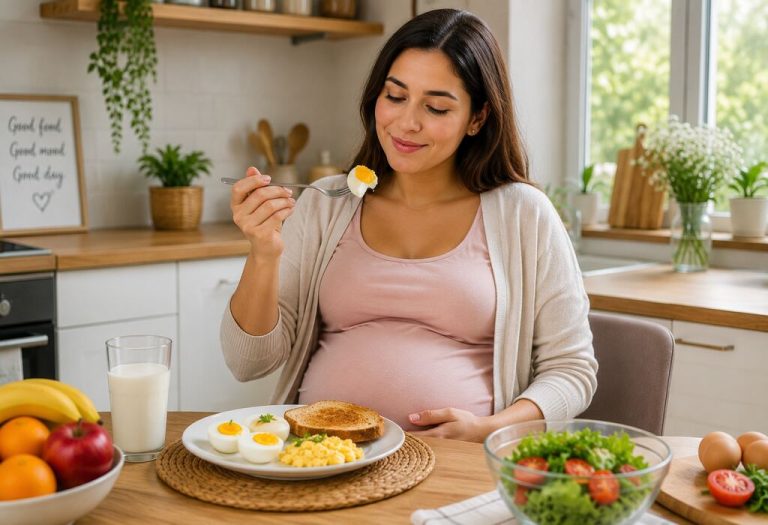
- Boiled eggs: Enjoy hard-boiled eggs as a quick, protein-rich snack or breakfast.
- Vegetable omelette: Cook eggs with spinach, tomatoes, onions, or other vegetables for added nutrients.
- Egg bhurji: Pair well-cooked egg bhurji with whole wheat roti or multigrain toast.
- Egg salad: Combine boiled eggs with fresh vegetables and a light yogurt dressing for a wholesome meal.
FAQs
1. Can I eat eggs every day while pregnant?
Yes, most healthy women can eat eggs daily if they are included as part of a balanced diet. However, if you have high cholesterol or certain medical conditions, consult your doctor about the appropriate intake.
2. Which type of egg is best during pregnancy?
Hen eggs are the most commonly consumed and provide excellent nutrition during pregnancy. Whether you choose white, brown, or omega-3 enriched eggs, ensure they are fresh, properly stored, and fully cooked before eating.
3. When should pregnant women avoid eating eggs?
Avoid eggs if you have an egg allergy or if they are raw, undercooked, cracked, or spoiled. If your healthcare provider has advised limiting dietary cholesterol due to a medical condition, follow their recommendations regarding egg consumption.
We hope this article has helped answer your question, “are eggs good for pregnancy?” As you’ve learned, eggs are an easily available, nutrient-rich food that can be a valuable addition to a healthy pregnancy diet. Include them in your meals while following the recommended intake and safety tips to enjoy their nutritional benefits.
Also Read:
Chicken in Pregnancy
Meat during Pregnancy
Is it Safe to Eat Turkey while Pregnant?
Was This Article Helpful?
Parenting is a huge responsibility, for you as a caregiver, but also for us as a parenting content platform. We understand that and take our responsibility of creating credible content seriously. FirstCry Parenting articles are written and published only after extensive research using factually sound references to deliver quality content that is accurate, validated by experts, and completely reliable. To understand how we go about creating content that is credible, read our editorial policy here.
1. World Health Organization – Healthy diet
2. PubMed Central – The potential of a simple egg to improve maternal and child nutrition
4. National Institutes of Health – Choline
6. National Institutes of Health – Vitamin A and Carotenoids
7. Mayo Clinic Health System – Is it healthy to eat eggs every day? Crack open the facts
8. Cleveland Clinic – Salmonella
9. U.S. Food and Drug Administration – Dairy and Eggs (Food Safety for Moms-to-Be)
10. March of Dimes – Foods to avoid or limit during pregnancy
- Author
- Expert Reviewer


Related Articles
-

Can You Eat Prawns When Pregnant? Risks & Safety Tips
-
Eating Ghee During Pregnancy - Benefits, Risks & Myths
-
Pomelo During Pregnancy - Health Benefits and Risks
-
Peanut Butter During Pregnancy - Safety, Benefits & Risks
-
Mustard in Pregnancy - Types, Benefits, and Side-effects
-
Is Eating Biscuits During Pregnancy Safe?