
Mussels During Pregnancy – Safety, Benefits, and Risks




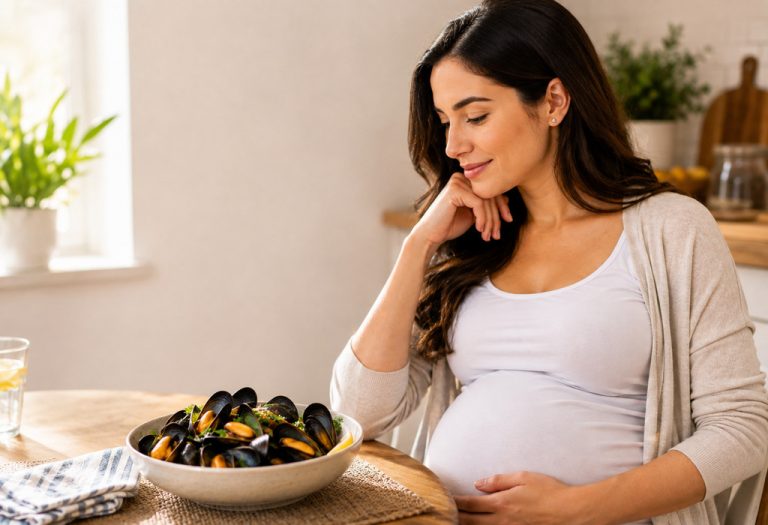
When women think of eating mussels while pregnant, they often wonder whether it is safe during this crucial time or not or if it has any side effects. The good news is that mussels during pregnancy can be a safe and healthy option as long as they are thoroughly cooked and handled properly. Times when you have to be extra careful about raw or undercooked seafood because they can carry harmful bacteria and viruses, learning that thoroughly cooked mussels are naturally low in mercury is a great relief. In fact, mussels provide important nutrients, such as protein, iron, zinc, vitamin B12, and omega-3 fatty acids. In this article, we provide answers to some important questions related to mussels and pregnancy, like how to choose fresh mussels, cook them safely, and some amazing recipes.
What Are Mussels?
Mussels belong to a class of marine invertebrates called Bivalve mollusks that include other species such as oysters, clams, and scallops. These shellfish are called filter feeders, meaning they survive by filtering out and feeding on nutrients that flow through the water where they live. Since they have to filter through a large quantity of water to accumulate enough nutrients, they also end up collecting a larger amount of microorganisms in their tissues. Mollusks have been consumed for centuries by humans, and it is advisable to clean them thoroughly with hot water and soap to get rid of the bacteria and parasitic organisms that live in them.
Nutritional Facts of Mussels
Mussels are highly nutritious as they contain a significant amount of micronutrients. The following table gives the nutrient profile of 100g of mussels.
| Nutrient | Amount | Nutrient | Amount |
| Calories | 172 kcal | Vitamin B12 | 24 mcg |
| Carbohydrate | 7.39 g | Riboflavin (B2) | 0.42 mg |
| Fiber | 0 g | Thiamin (B1) | 0.30 mg |
| Sugars | 0 g | Folate | 76 mcg |
| Fat | 4.48 g | Niacin (B3) | 3.0 mg |
| Saturated | 0.85 g | Pantothenic acid (B5) | 0.95 mg |
| Monounsaturated | 1.01 g | Vitamin C | 13.6 mg |
| Polyunsaturated | 1.21 g | Choline | 65 mg |
| Omega-3 | 0.94 g | Vitamin A | 91 mcg |
| Omega-6 | 0.18 g | Vitamin E | 1.10 mg |
| Protein | 23.80 g | Vitamin B6 | 0.10 mg |
Source: https://www.nutritionadvance.com/mussels-nutrition-benefits/
Can Pregnant Women Eat Mussels?
One of the commonly asked questions is, “Are mussels safe during pregnancy?” The answer is yes, as long as it is cleaned and cooked thoroughly. Since mussels are filter feeders, they accumulate large numbers of microbes, including the Echinococcus and Toxoplasma gondii species. The risk persists in both farmed mussels and those caught in the wild.
The concern is primarily around the transmission and subsequent outbreak of protozoans such as Cryptosporidium, which can be harmful to others, along with pregnant women. There is also a higher risk of accumulation of Toxoplasma gondii oocysts in the mussels, which can cause a toxoplasmosis infection with serious outcomes for the fetus.
Safe cleaning and cooking practices need to be followed while preparing dishes out of mussels. They need to be washed with hot, soapy water and cooked until the shells burst open. Open shells after cooking are a good sign of thoroughly cooked mussels. Pregnant women should never consume raw or undercooked mussels as there is a high risk of infection from organisms such as Vibrio vulnificus and the microbes mentioned above. Before you plan on including mussels in the diet, it is ideal to consult your doctor about the risks and benefits.
When to Consume Mussels in Pregnancy?
Mussels can be consumed at any point during the pregnancy. Most women are still experiencing nausea and vomiting during the first trimester. Therefore, if the smell of seafood triggers nausea, it is best avoided. Regardless of when the mussels are consumed during pregnancy, it is essential to clean and cook them thoroughly. Caution must be used when consuming mussels in a restaurant.
How Many Mussels Can Pregnant Women Eat?
The cause for concern when it comes to seafood is the presence of mercury. While shellfish have very low mercury content, it is ideal to limit consumption during pregnancy. The recommended intake is about two or three servings per week, which is about 6 ounces of mussels. If you have other seafood and fish as part of your weekly diet, include mussels in the total seafood quota for the week.
Health Benefits of Consuming Mussels While Pregnant
Mussels are loaded with plenty of micronutrients that are essential for the body and there are plenty of mussels benefits in pregnancy. Once you have the go-ahead from your doctor, you can include them in the diet. Here are some of the health benefits of eating mussels:
- Mussels are a great source of lean protein that can meet a portion of the daily recommended requirement to help the development of the fetus. Protein is needed to build the body’s structures, such as the muscles, cells, and tissues (1).
- Mussels are high in iron, which is needed for the body in greater quantities during pregnancy. The haem iron found in the meat is more readily absorbable and hence a high-quality source of the mineral. Iron is required to make red blood cells as the blood volume in pregnant women increases throughout pregnancy (2).
- Mussels are also a good source of micronutrients such as selenium, zinc, calcium, potassium, and omega-3 fatty acids, which are critical for developing the fetus (3).
- Mussels are delicious, so pregnant women who have seafood cravings can enjoy a tasty and nutritious meal.
Potential Side Effects of Eating Mussels When Pregnant
Along with benefits, there are some noteworthy side effects of mussels for pregnant women. Keeping these in mind will be helpful:
- The biggest concern with mussels has to do with foodborne pathogens. Since these organisms are filter feeders, they accumulate various different microbes and parasitic organisms that can infect humans. Toxoplasmosis is one of the high risks associated with mussels. This parasitic infection can cause serious complications in the developing fetus. Infection caused by the Vibrio Vulnificus bacterium is also of concern, as they are commonly found in mussels. Eating raw mussels can cause food poisoning and diarrhoea, which can be harmful during pregnancy.
- Diarrhetic shellfish poisoning (DSP) is a rarer risk that can cause illness when people consume shellfish contaminated with toxins. The symptoms can begin soon after consumption and include nausea, vomiting, diarrhoea, and abdominal pain. Complete recovery can take up to 3 days.
- Raw or undercooked mussels can also harbour Hepatitis A. Jaundice caused by the organism can be transmitted from the mother to the baby, making it a risk.
- Mussels are exposed to heavy metal contaminants in the ocean. While mercury, which is the substance pregnant women should be most wary of, is very low in mussels, it can still accumulate in the body with excess consumption.
Ways to Safely Cook Mussels During Pregnancy
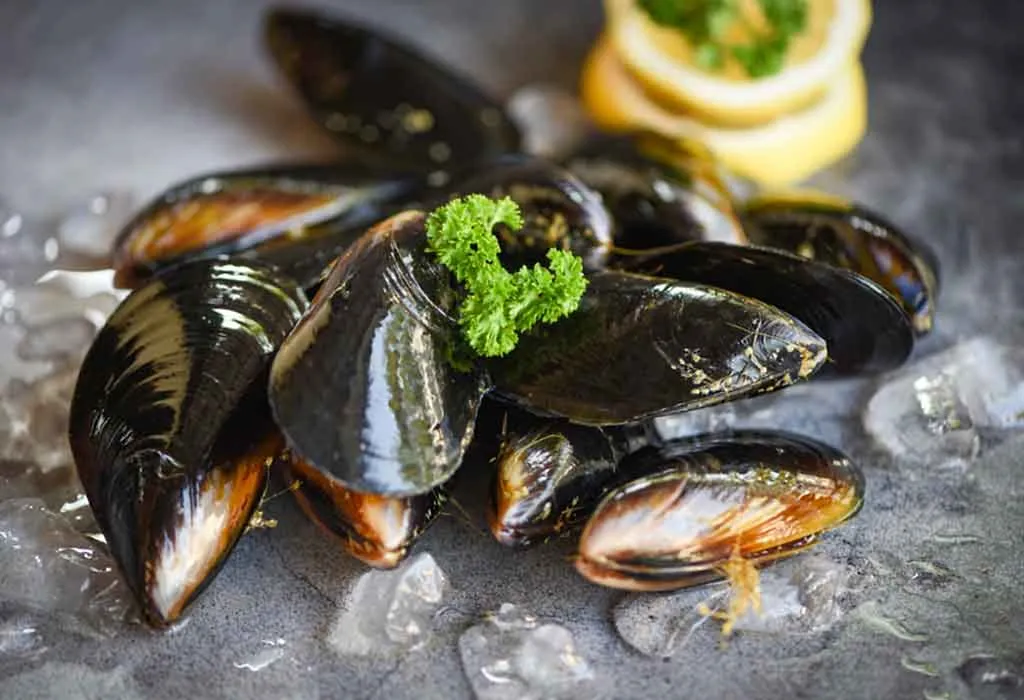
There are different ways to eat mussels when pregnant. Consider these tips before you add mussels to your diet:
- Always buy fresh mussels from reputed stores or outlets than going for unknown vendors or harvesting them yourself. You are more likely to be aware of the conditions in which the mussels were farmed if they are bought from a reputed store. Mussels that smell bad or fishy must be avoided.
- Avoid purchasing imported mussels as there is no way to tell for sure about the conditions in which they were farmed or the place where they were harvested. Locally farmed mussels are the safest choice as it is possible to check their standards.
- Mussels that are safe for consumption will be closed. Even if the shells are open, they should close with a gentle tap. Avoid buying open mussels or ones with their shells broken.
- Wear gloves to handle the shells and clean them thoroughly with hot soapy water before preparing them. Ensure that the containers containing the raw and washed mussels are kept far enough apart to avoid cross-contamination.
- The mussels must be cooked thoroughly to kill microbes or parasites for at least 5- 10 minutes using boiling water or steam. Steaming will only be considered appropriate if the mussels become fully cooked and reach 145°F internally. The cooked shells must open after the thorough cooking process. Any unopened shells need to be discarded.
- Mussels that are steamed in white wine are also safer for pregnant women. The dish should also contain milk or cream that is pasteurised.
- Deep-fried mussels are also safe as the high temperature of deep frying would kill the most harmful microbes. Large mussels need to be opened and checked for thorough cooking before being served.
- Mussels baked without the shell are safer as they are more thoroughly cooked during the baking process. They also tend to be cleaner compared to their shelled counterparts.
- Tinned or canned mussels are the safest as they are thoroughly sterilised as part of the canning process. They are also cooked in the tin, reducing the chances of contamination. Pickled mussels are also safer as they are cooked before being marinated.
Mussels vs. Other Shellfish
Shellfish come in two types: crustaceans and mollusks. Both kinds are safe for pregnancy as long as they are caught fresh and cooked thoroughly.
| Shellfish | |
| Crustaceans | Mollusks |
| Crab | Mussels |
| Shrimp | Clams |
| Lobster | Oysters |
| Crawfish | Scallops |
During pregnancy, the main concern is not simply whether a shellfish is a mussel or another variety, but how it is sourced, handled, stored, and cooked.
Thorough cooking: Any seafood, including shellfish, mussels, and fish, should be included in a pregnancy diet when they are fresh, properly handled, and thoroughly cooked. FoodSafety.gov recommends cooking seafood to an internal temperature of 145°F (63°C) (8). For mussels specifically, the shells should open during cooking; any mussels that remain closed should be discarded. The NHS notes that raw or inadequately cooked mussels, clams, and oysters can contain harmful bacteria and viruses, while thorough cooking generally kills these microorganisms (9).
Mercury Levels: The mercury levels differ among seafood. Larger, longer-lived predatory fish usually have more methylmercury than many shellfish. Mussels, on the other hand, are low in mercury. But it should not be assumed that all shellfish have identical mercury levels, and you should follow local seafood advisories when relevant.
Source: Avoid raw or undercooked mussels, shellfish from questionable sources, and seafood that has been improperly refrigerated or has an unusual smell.
Mussels Recipes to Try During Pregnancy
There are dozens of recipes to cook delicious mussels. Here are our top picks:
1. Garlic Butter Mussels
Simple to make and delicious mussel dish.
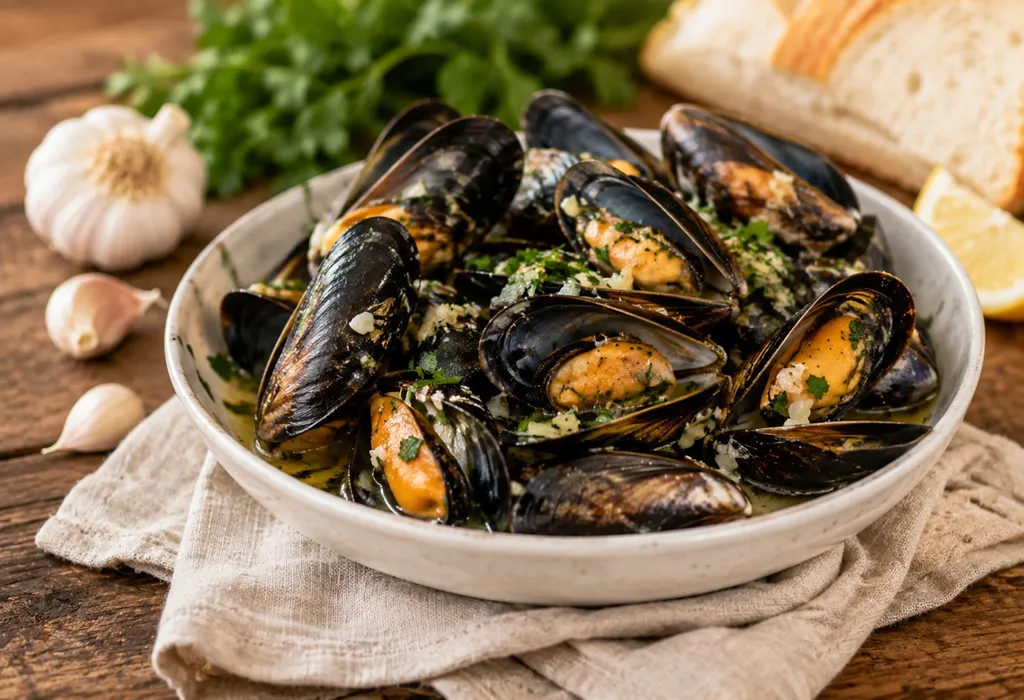
Ingredients:
- Fresh mussels, scrubbed and de-bearded- 3 pounds
- Garlic butter- 10 tablespoons
- Finely chopped shallots 3/4th cup
- 6 garlic cloves- minced
- Fresh chopped parsley – 4 tablespoons
- Fresh lemon juice – 2 tablespoons
- Freshly grated lemon peel – 1 tablespoon
- Water
Total Cooking Time: 45 minutes
Servings: 2 servings
Method:
- Put the mussels into a heavy-bottomed Dutch pot that has a lid. Add enough water to completely submerge the mussels and place the oven on high heat until it starts boiling. Boil continuously on high heat for 5 to 10 minutes until the shells pop open while occasionally stirring the contents. Wait until most shells have opened and discard those that don’t
- Strain the mussels and store them in a bowl covered in tin foil. Do not discard the water the mussels were boiled in; save it for later use.
- Use the same boiling Dutch oven to heat the butter over a medium flame. Add the shallots into the molten butter and then the garlic, and sauté the mixture for three to five minutes until it becomes tender.
- Next, add three teaspoons of parsley, lemon peel, and lemon juice. Pour the water in which the mussels were boiled back into the Dutch oven along with the mussels.
- Continue to boil the mixture on medium heat for ten to fifteen minutes until the taste is satisfactory. Add some of the freshly ground pepper and season with a tablespoon of parsley before serving.
2. Steamed Mussels in Tomato Broth
This simple yet delicious mussels dish has a tangy twist of tomatoes.
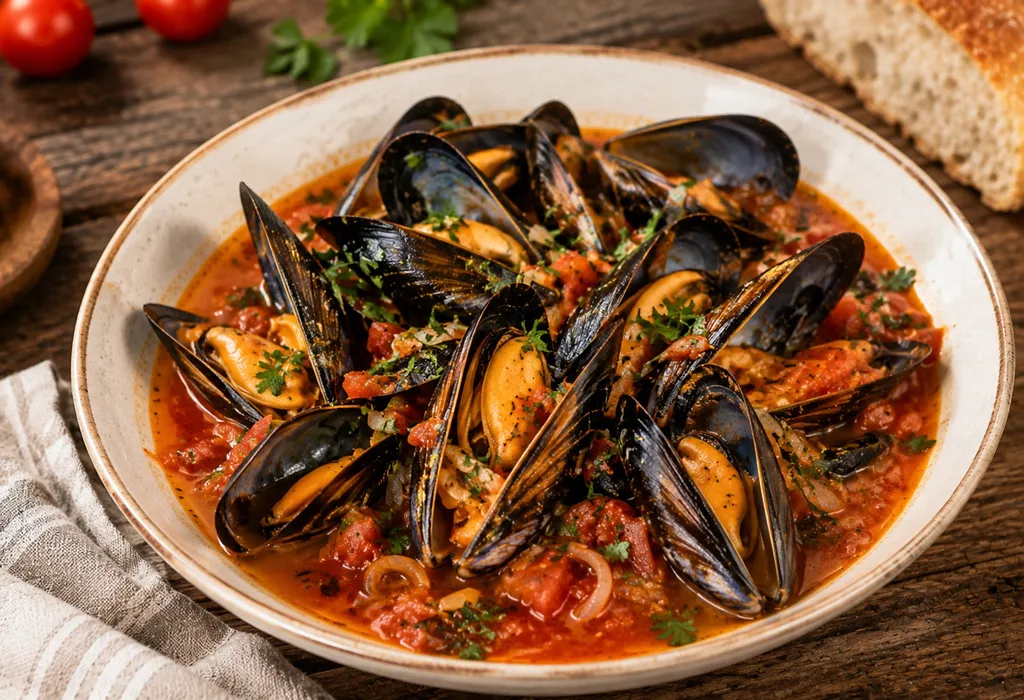
Ingredients:
- Extra virgin olive oil – 1 teaspoon
- 4 cloves of garlic- finely chopped
- 6 ripe plum tomatoes- coarsely chopped
- Water
- Scrubbed and de-bearded mussels – 3 pounds
- Freshly chopped parsley- 2 teaspoons
Total Cooking Time: 45 minutes
Servings: 2 servings
Method:
- Heat some oil in a pot. Add garlic to the oil and cook for about 3 minutes until it turns golden brown.
- Add the chopped tomatoes to the pot and turn up the heat to cook them for a while. Stir the tomato mix every minute or so to ensure even cooking. Add a little water and continue to boil.
- Add the freshly cleaned mussels to the tomato broth and cover the lid tightly. Allow the mussels to boil and steam in the tomato broth for 15 minutes or more, until the shells open up. Stir at regular intervals to mix uniformly and spread the heat all around. Stop cooking once most, if not all, of the shells have opened. Discard the unopened mussels.
- Serve the mussels with the tomato broth with parsley sprinkled on top.
3. Coconut Curry Mussels
A flavorful dish with a creamy coconut curry sauce.
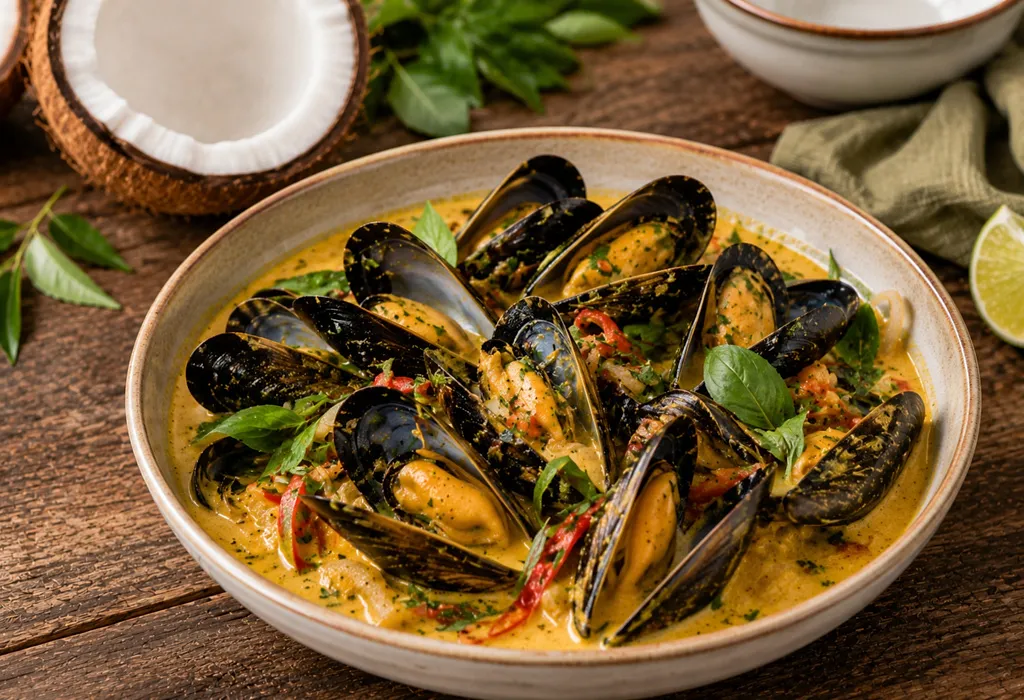
Ingredients:
- Fresh mussels, scrubbed and de-bearded – 3 pounds
- Coconut milk – 1 can (14 ounces)
- Red curry paste – 2 tablespoons
- Fresh ginger, grated – 1 tablespoon
- Garlic cloves, minced – 4
- Lime juice – 2 tablespoons
- Fresh cilantro, chopped – 1/4 cup
- Water
Total Cooking Time: 30 minutes
Servings: 2 servings
Method:
- In a large pot, combine the coconut milk, red curry paste, ginger, and garlic. Bring to a simmer over medium heat.
- Add the mussels and cover the pot. Cook for about 5 to 7 minutes until the mussels open. Discard any unopened shells.
- Stir in the lime juice and half of the cilantro.
- Serve the mussels in bowls with the coconut curry sauce, garnished with the remaining cilantro.
4. Mussels in Saffron Cream Sauce
A luxurious and aromatic dish with a rich saffron cream sauce.
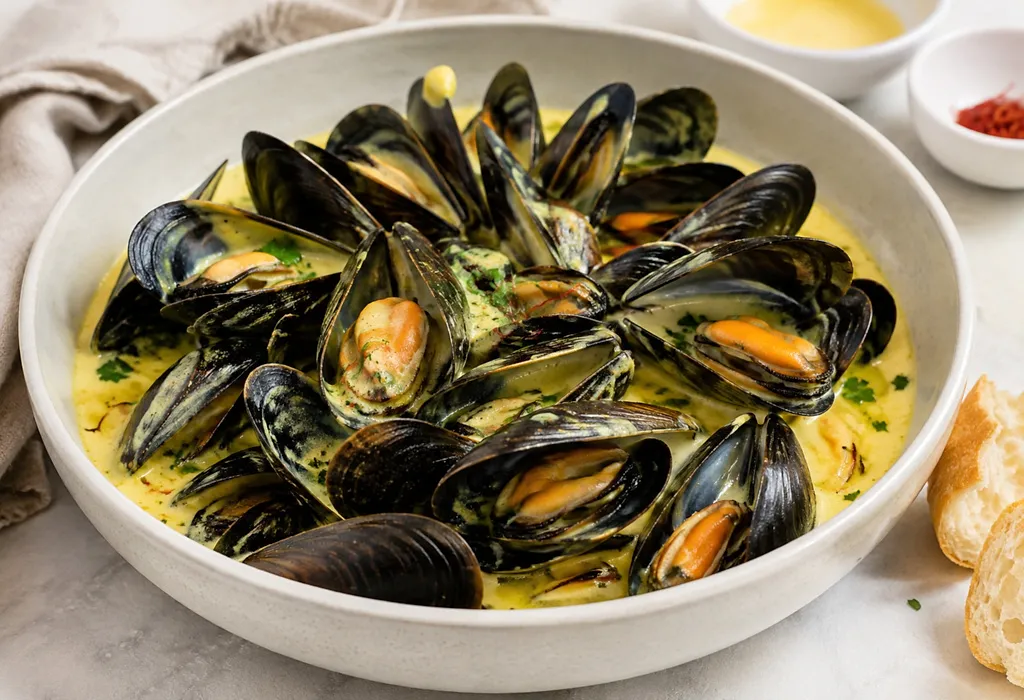
Ingredients:
- Fresh mussels, scrubbed and debarred – 3 pounds
- Unsalted butter – 2 tablespoons
- Shallots, finely chopped – 2
- Garlic cloves, minced – 4
- Heavy cream – 1 cup
- Saffron threads – 1/4 teaspoon
- Fresh thyme leaves – 1 teaspoon
- Fresh parsley, chopped – 1/4 cup
- Salt and pepper to taste
- Lemon wedges for serving
Total Cooking Time: 35 minutes
Servings: 2 servings
Method:
- Melt the butter in a large pot over medium heat. Add the shallots and garlic, and sauté until softened, about 3 to 4 minutes.
- Pour in the white wine and bring to a boil. Add the mussels, cover, and cook until the mussels open, about 5 to 7 minutes. Discard any unopened shells.
- Remove the mussels with a slotted spoon and set aside, keeping them warm.
- Add the heavy cream, saffron threads, and thyme to the pot. Simmer for about 5 minutes until the sauce thickens slightly.
- Return the mussels to the pot and stir to coat them in the saffron cream sauce. Season with salt and pepper to taste.
- Serve the mussels in bowls with the saffron cream sauce, garnished with fresh parsley and lemon wedges on the side.
When to Consult a Doctor?
It is advised to consult a doctor promptly if you develop any of the following symptoms after eating mussels:
- persistent vomiting
- significant diarrhoea lasting more than three days
- bloody stools
- severe abdominal pain
- fever above 102°F (38.9°C)
- signs of dehydration
You should also seek urgent medical care if you experience numbness or tingling, confusion, severe weakness, difficulty breathing, or other unusual neurological symptoms after eating shellfish. Contaminated mussels and other shellfish can sometimes contain naturally occurring toxins, and symptoms may develop rapidly after consumption.
FAQs
1. Can mussels help with pregnancy-related nutritional deficiencies?
Yes, mussels are an excellent source of iron, zinc, and vitamin B12, which can help address common pregnancy-related nutritional deficiencies. These nutrients support the mother’s increased blood volume and the baby’s development.
2. Is it safe to eat canned or preserved mussels during pregnancy?
Canned or preserved mussels can be safe during pregnancy if they are from a reputable source and have been processed correctly. Always check the expiration date and ensure the product is stored properly. However, fresh, cooked mussels are usually preferred for their nutritional benefits and lower sodium content.
3. Are farmed mussels safer to eat than wild-caught mussels during pregnancy?
Farmed mussels are generally considered safer than wild-caught mussels because they are raised in controlled environments, which reduces the risk of contamination. However, both farmed and wild-caught mussels should be thoroughly cooked and sourced from reputable suppliers to ensure safety during pregnancy.
4. How often can I eat mussels during pregnancy?
While mussels are highly flavourful and nutritious, eating them in moderation is suggested. Anything eaten in excess could harm.
5. How to know if the mussels are fresh and safe to eat?
Fresh mussels have a pleasant smell. If the mussels you bought smell overly fishy or weird, they might not be fresh. Another important thing to check when buying mussels is that they should be tightly closed or close when tapped.
This was all about eating mussels when pregnant. Mussels are delicious seafood items that you can include in your weekly quota of seafood. They are an excellent source of lean protein and are loaded with plenty of essential nutrients. It is important to thoroughly clean the mussels and cook them well to ensure they are safe to consume.
Also Read:
Eating Crab while Pregnant
Eating Shrimp in Pregnancy
Sardines while Pregnant?
Is It Safe To Eat Sea Bass when Pregnant
Is It Safe to Eat Prawns during Pregnancy?
Was This Article Helpful?
Parenting is a huge responsibility, for you as a caregiver, but also for us as a parenting content platform. We understand that and take our responsibility of creating credible content seriously. FirstCry Parenting articles are written and published only after extensive research using factually sound references to deliver quality content that is accurate, validated by experts, and completely reliable. To understand how we go about creating content that is credible, read our editorial policy here.
3. National Institutes of Health – Selenium
4. ScienceDirect – Mercury in raw and cooked shrimp and mussels and dietary Brazilian exposure
5. National Library of Medicine – DHA Effects in Brain Development and Function
6. NHS – Foods to avoid in pregnancy
- Author


Related Articles
-

Decaf Coffee in Pregnancy - Risks and Safety
-

Iced Tea During Pregnancy - Health Benefits and Risks
-
Yoghurt in Pregnancy - Benefits, Side Effects, and Precautions
-

Pista (Pistachios) During Pregnancy: Benefits, Safety, and Risks
-

Spicy Food During Pregnancy - Is It Safe?
-
Cabbage in Pregnancy - Benefits, Risks, and Safety