
Cleaning During Pregnancy- Safety, Do’s and Don’ts
Is cleaning safe during pregnancy? This gynecologist reviewed guide covers safe products, precautions, and dos and don'ts.





Medically Reviewed By
Dr. Sanjana Sainani
(Gynecologist/Obstetrician)

This content has been reviewed by a qualified expert and follows the FirstCry Parenting editorial policy to ensure accuracy and reliability.
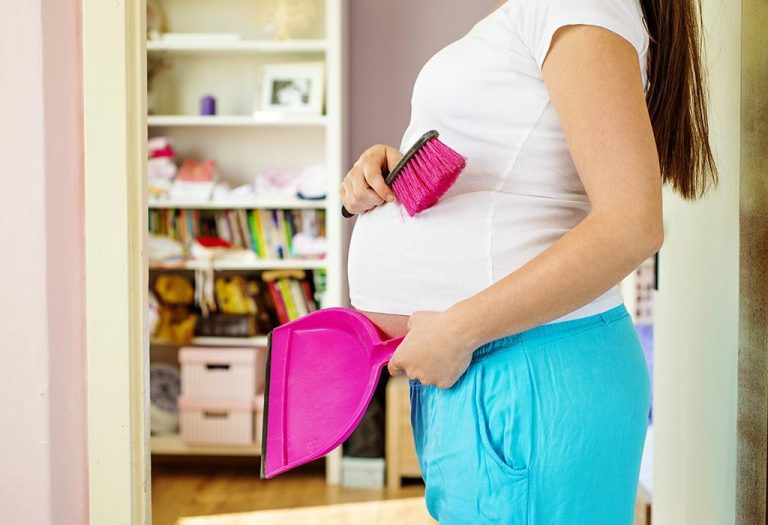
When you prefer doing major cleaning work by yourself, the news of pregnancy might make you rethink and plan your activities. Sure, cleaning and pregnancy raise questions about how much housework is safe and whether everyday cleaning products could affect the mother or developing baby. While pregnancy is a time to be cautious about strenuous tasks and unnecessary exposure to chemicals, it is also essential to maintain a clean and hygienic environment. If a task involves strong cleaning solutions and chemicals, prolonged exposure, heavy lifting, or strenuous physical effort, is cleaning during pregnancy safe for pregnant women or should it be handled by someone else?
Is Cleaning When Pregnant Safe?
Many doctors or even caretakers would not find the need to discuss the effects of cleaning on pregnancy. It is fine to indulge in cleaning activities around the house during pregnancy, as long as the basic precautions are adhered to, safe chemicals are used, and over-exertion is strictly avoided.
Dos and Don’ts of Cleaning in Pregnancy
Certain activities undertaken while looking after the hygiene of your home might end up in scenarios of inhaling cleaning products while pregnant, or having them come in contact with your skin. While it might be confusing to know whether this is safe or not, there are a bunch of dos and don’ts you can stick to, and err on the side of caution.
Dos
Here are a few tips you ought to bear in mind every time you are about to start cleaning your home in any way possible.
1. Let Your Pregnancy Be the Priority
Pregnancy in itself is quite a hectic endeavour, and the delivery of the baby will inevitably be followed by a time period that will have you completely involved with him. While that might still be many months away, the onset of pregnancy will surely lower your energy levels and leave you tired. Delegate the activity if you truly can.
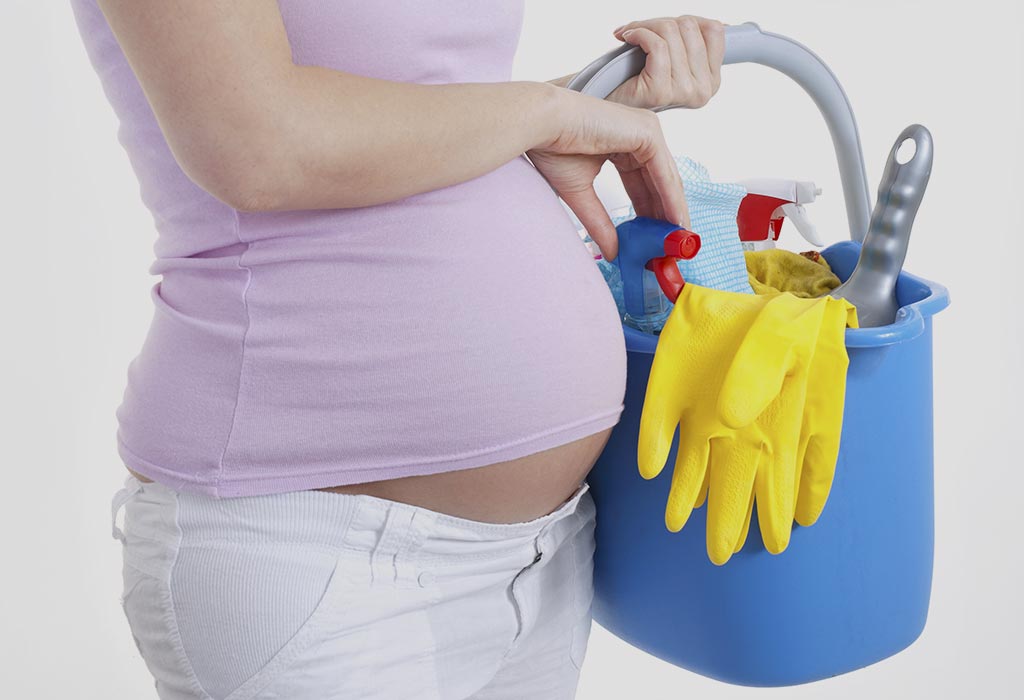
2. Ensure You Wear Gloves All the Time
Your skin is also affected by the altered biochemistry of your body, leading it to be a lot more sensitive than it usually is. This could cause reactions and rashes to arise from the slightest contact with chemical products during pregnancy, which you might not have been allergic to earlier. Keep your hands and arms safe by wearing long-sleeved clothes and proper gloves to protect your skin (1).
3. Have Some Ventilation While Cleaning
Whether the cleaning solution has a flowery fragrance or has been created with organic ingredients, it is necessary to keep a free flow of air throughout the room while you are cleaning and even after you are done. Any kind of gases or substances that might arise as a result of the cleaning will find their way outside easily.
4. Opt for Homemade Cleaning Products
It is definitely easier to go to the supermarket and grab a bunch of cleaning supplies during pregnancy. However, using homemade cleaning products will not only be cheaper on your wallet but also safer, with the added benefit of customizing its recipe to suit your home.
5. Read the Cleaning Product Descriptions Carefully
While you may continue to use the cleaning products procured from the market, it is necessary to know what constituents are used in them before you open the bottle. Most solutions do declare that they are toxic or poisonous on the label itself. Your immune system is already in a vulnerable state when you are pregnant, and the inhalation of any toxic substances could spell complications for you.
Don’ts
Cleaning around the house is a collection of various activities. Make sure you avoid making yourself a part of the following scenarios.
1. Don’t Move Furniture By Yourself
You might have been a superwoman who could shift the entire sofa with a simple push and quickly clean up the floor below it. While pregnancy may not exactly be kryptonite, indulging in such antics while you clean your home is not exactly safe for the baby inside you.
2. Don’t Use Shoes Inside Your Home
There are many homes that prefer wearing the same footwear everywhere they go. This is easily an open invitation to a lot of dust, dirt, bacteria, and numerous impurities and toxins to enter your home and wreak havoc on your pregnancy. Keep a shoe rack outside your door and let everyone clean their feet when they enter inside.
3. Stay Away from Cleaning Any Mouldy Surfaces
When you start cleaning mould, their reaction with cleaning substances can emit certain vapours or chemicals that can be harmful to the pregnant woman and even end up causing defects in the unborn child. It is best to involve a professional cleaner and staying away when the cleaning is in progress.
4. Don’t Make it a Marathon
It is important to take breaks when you clean your home as well as indulge in cleaning only one section at a time when you are pregnant. Your body will not be at the same level of fitness that it was earlier, and going ahead with cleaning all the rooms on the same day can leave you utterly exhausted and even nauseous.
5. Avoid Using Air Fresheners
The name might be ‘air fresheners’, but they don’t freshen up the air in reality. These aerosols emit artificial aromas and substances into the air, making it smell better and fresher. These chemicals may or may not be safe for your baby once you inhale them, and it is best not to put yourself to the test. Ventilating your house naturally is a much better choice.
Safe and Unsafe Cleaning Products
You might be beginning to wonder which cleaning products are safe during pregnancy for you and which ones are not. In that regard, we have put down a simple list for your quick reference.
Safe Cleaning Products for Pregnant Women
Certain products that are manufactured in a specific manner or carry specific descriptions are generally safe for pregnant women, as described below.
1. Products With a Good Environment Rating
Many products come with a rating or an accreditation from a renowned organisation that describes how harmful it is to the environment around us. The safer a product is in the surroundings, the safer it would be to be used by a pregnant woman.
2. Organic Cleaners
Cleaning products that contain organic constituents are a much safer choice for a pregnant woman. These might be pricey, but they are worth that cost for a safe pregnancy.
3. Natural Cleaning Products
While organic products are great, making use of natural substances to clean the surfaces can not only be easy to clean, but also bring benefits to the skin of the pregnant woman.
4. Homemade Products
There’s nothing major that some baking soda, vinegar, and soap solutions cannot clean around your home. These are available easily and are substantially safer than any artificial chemicals (2).
5. Good Old Soap and Water
Most cleaning solutions are strong just to help reduce the effort of scrubbing the surface. Instead, opt for your usual soap and water, and use different tools to clean the surface effectively.
Unsafe Cleaning Products for Pregnant Women
The products that contain the following chemicals are usually unsafe for use around pregnant women, according to the American Pregnancy Association (3).
1. Triclosan
Cleaning products that contain anti-bacterial properties usually contain this chemical, which can even be present in soaps and household products, too. Triclosan is a well-known endocrine disruptor and can directly impact the physical growth of the baby.
2. Phthalates
Numerous cleaning detergents and sprays contain phthalates which are primarily used to make them smell better. These chemicals interact with the hormones in the body and can cause extreme birth defects in an unborn child, specifically affecting the genitalia.
3. Parabens
These are found in nearly all cleaning products but usually, are termed to be low-risk chemicals. Their presence in the body can cause them to mimic an estrogen-like behaviour, which is why it is best to keep their usage to a minimum.
4. Glycol Ethers
Most glass cleaning solutions and oven cleaners contain glycol ether, due to its immense strength. Accidental intake of these substances can not only affect fertility in humans but also reduces the cognitive development of the child while in the womb.
5. Aerosols
Aerosol-based cleaning products leave a lot more chemicals in the air than on the actual cleaning surface. These can float around the home and reach you even if you are present in a different room, causing harm by their presence.
Alternative Home-Made Cleaning Solutions
Knowing the various cleaning products to avoid during pregnancy, if you are left clueless about what you can safely use, you can opt for a homemade alternative that is quite an effective cleaning solution by itself.
White vinegar and water can clean most surfaces. Harder areas can use a tinge of baking soda as well (2). Rubbing a little olive oil on furniture can give them a polished look. And to make your homes smell better, using borax is quite a safe alternative in that regard.
Toxoplasmosis and Cleaning: Why Litter Box Duty Should Be Avoided
If you have a cat or are a cat lover, cleaning the cat limit is suggested to be off-limits during pregnancy. The main culprit behind this is not your cat, but a pesky parasite, Toxoplasma gondii, which causes a parasitic infection called Toxoplasmosis.
If your cat lives purely indoors, then there’s no issue, but if your cat goes out and interacts with other cats or enjoys its kills like mice, rodents, raw meat, and birds, it could get exposed to the parasite Toxoplasma gondii. According to Tommy’s, this parasite is transmitted via cat faeces and can reach the fetus through the placenta of the infected mother (8). Pregnant women exposed to this parasitic infection may or may not show any symptoms, but the fetus can get sick. Mayo Clinic informs that Toxoplasmosis can also cause miscarriage or birth defects (4). In worst case scenarios, chronic Toxoplasmosis infection is also associated with mental illness in mothers.
So does that mean pregnant women need to stay away from cats as well? Well, no. Love your cat like you always do, and remember to move the cat litter to somewhere you are less likely to be interacting with it and the particles.
So, what can be done?
- Women should take great caution in cleaning litter boxes to avoid accidental exposure, or take help from the family to clean the litter box instead (9).
- If you have an exclusively indoor cat and you must do this, make sure to wear gloves and wash your hands thoroughly afterwards.
When to Consult a Doctor?
If you experience any of the following symptoms after using a cleaning product, visit a doctor without any delay:
- Dizziness
- Confusion
- Breathing difficulty
- Persistent coughing
- Severe headache
- Vomiting
- Eye irritation
- Skin burns
If you accidentally swallow the cleaning product, inhale fumes, or get any concentrated product in your eyes or on your broken skin, visit a doctor without waiting for symptoms to appear.
FAQs
1. What household cleaning activities should be avoided during pregnancy?
Bathroom cleaning, vacuuming, cleaning cat litter box (highly toxic to pregnant women as it contains a parasite called Toxoplasma gondii), mopping, window cleaning, carpet cleaning, and cleaning ceilings or objects at higher ground should be strictly avoided during pregnancy (4) (5).
2. What are some important tips for clearing while pregnant?
If you are cleaning while pregnant, here are some quick tips to remember (1):
- Read labels at the back of the cleaning products carefully and stay away from anything labelled ‘not to use in pregnancy’ or ‘toxic.’
- Do not mix bleach and ammonia, as the toxic fumes generated from the mixture can be quite harmful for you and the baby.
- Always wear rubber gloves and masks.
- Clean in ventilation.
- Take help; don’t take up everything on your own.
3. Which trimester is not suitable for cleaning?
Well, cleaning while pregnant in the first, second, and third trimester is debatable. During the first trimester, it is advised to stay away from anything toxic. It is best to avoid chemical exposure, especially in the first 13 weeks of pregnancy, as it could pose a risk for the unborn baby (6). During the second trimester, back pain and a growing belly can be stressful for the body. During the last trimester, fatigue, a heavy belly, and constant fatigue make cleaning impossible and it is not ideal to go anywhere near chemicals. the risk of falling while cleaning is also there. Therefore, it is recommended to take help for the months you are pregnant and take of your own body.
4. What are some unsafe household cleaning products?
Solvent-based paints, herbicides (weed killers), pesticides (bug killers), Paint containing lead, arsenic-treated timber, and nail polishes containing dibutyl phthalate, toluene, and formaldehyde are some top household chemicals to avoid during pregnancy (7).
Indulging in cleaning while pregnant in the first trimester should generally be refrained from, especially if the activities are too strenuous. Pregnancy is a time to get as much help and support as you can, so don’t fret about asking your friends and family to help you out with these activities, too.
Also Read:
Hygiene in Pregnancy
Taking Bath when Pregnant
Household Work during Pregnancy
Cleaning Cat Litter Box while Pregnant
Was This Article Helpful?
Parenting is a huge responsibility, for you as a caregiver, but also for us as a parenting content platform. We understand that and take our responsibility of creating credible content seriously. FirstCry Parenting articles are written and published only after extensive research using factually sound references to deliver quality content that is accurate, validated by experts, and completely reliable. To understand how we go about creating content that is credible, read our editorial policy here.
1. Nemours KidsHealth – Using Household Chemicals During Pregnancy
2. Tommy’s – Chemicals and air pollution in pregnancy
3. American Association of Pregnancy – Cleaning and Pregnancy
4. Mayo Clinic – Toxoplasmosis
6. HSE – Lifestyle and what to avoid during pregnancy
7. Pregnancy Birth & Baby – Toxic household products to avoid during pregnancy
8. Tommy’s – Toxoplasmosis in pregnancy
9. National Library of Medicine – Toxoplasmosis Infection during Pregnancy
- Author
- Expert Reviewer


Related Articles
-

Stomach Flu During Pregnancy - Causes, Symptoms & Treatment
-
Ketones in the Urine During Pregnancy - Causes, Treatment, and Prevention
-
Acrylic Nails During Pregnancy – Is It Safe?
-
White Vaginal Discharge During Third Trimester of Pregnancy
-
50 Unique Baby Sprinkle Gift Ideas
-
Using Artificial Sweeteners During Pregnancy - Is It Safe?