


Sleeping Positions in Pregnancy: What’s Safe and What to Avoid
Find the best pregnancy sleeping positions to ease back pain, improve circulation, and support you through every trimester.





Medically Reviewed By
Dr. Deepinder Kaur
(Gynaecologist)

In this Article
- Why Are Sleeping Positions Important During Pregnancy?
- Why Are Normal Sleeping Positions Uncomfortable During Pregnancy?
- What Are the Correct Sleeping Positions in Pregnancy?
- Which Sleeping Position Should Be Avoided During Pregnancy?
- Benefits of Good Sleeping Position While Pregnant
- Tips to Be Comfortable While Sleeping
- When to Consult a Doctor
- FAQs
View More
During pregnancy, getting a comfortable night’s sleep gets harder than ever due to anxiety, hormonal fluctuations, and, most importantly, the physical changes. The size of your growing belly, aching back, swelling in the legs, and the urge to empty your increasingly sensitive bladder make it inconvenient to sleep comfortably in your regular sleeping position, like sleeping on your back. As pregnancy progresses to the second trimester, you may find it harder to find a comfortable sleeping position. In this situation, it is natural to get worried and have questions like how to sleep during pregnancy to get sound sleep and whether sleeping on your back while you’re pregnant is safe. Let’s put to rest all your questions related to sleeping positions for pregnant women in this article.
Why Are Sleeping Positions Important During Pregnancy?
A sound sleep is what all pregnant women crave, but it is often difficult to get. Sleep disturbances are fairly common during pregnancy, and almost all pregnant women face these sleep issues, especially as the pregnancy advances past the first trimester. But why is it so important, especially during pregnancy?
Sleep is the time when the body can reset and repair itself. All day, the brain is under constant pressure to calculate and organise what you see, touch, hear, and feel. During sleep, the brain consolidates and strengthens memories, helping it better handle the common pregnancy phenomenon: pregnancy brain or forgetfulness. This is how the brain then works to restore the blood vessels, as they are under constant pressure from the extra blood flow required to support the baby in the placenta.
Rest is essential for maintaining cardiovascular health and keeping the immune system healthy, which is compromised during pregnancy. Additionally, sleep regulates your body’s response to insulin; insufficient sleep can lead to elevated blood sugar levels, increasing the likelihood of gestational diabetes.
Why Are Normal Sleeping Positions Uncomfortable During Pregnancy?
The usual sleeping positions, like sleeping on your belly or back, will become more difficult as your pregnancy progresses into the second and third trimesters. This is because of discomfort from an increasing abdomen, back pain, shortness of breath, and heartburn (1).
What Are the Correct Sleeping Positions in Pregnancy?
A good night’s sleep is essential for pregnant women. The safe sleeping positions while pregnant are on the sides, but that also depends on the phase of pregnancy you are in. In the early pregnancy, sleeping on your stomach is fine, but over time, with an increase in belly size, this position becomes uncomfortable, prompting pregnant women to switch sides (2).
Sleeping on your side also enhances kidney function, aiding the elimination of waste products and reducing swelling in your feet, ankles, and hands.
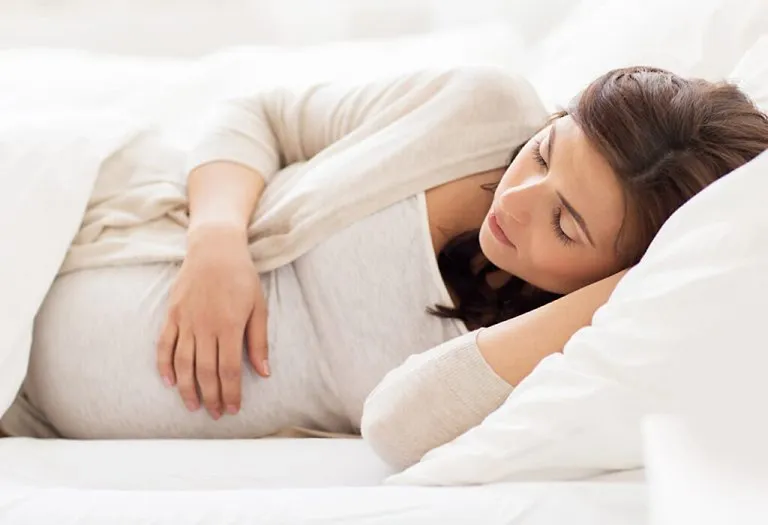
According to experts, during pregnancy, the best sleeping position is on your left side, which is ideal for you and your baby-to-be. This position allows maximum blood flow and increases the nutrient absorption to your placenta and your baby. The largest vein supplying blood to the heart is located on the right side, so sleeping on your left side is recommended.
The ideal and correct position to sleep is to lie on your left side with your knees bent and pillows between your legs (2).
That said, in an NIH-funded study, researchers found that the sleeping position in the early and middle stages of pregnancy does not seem to influence the likelihood of complications. They also noted that these results may provide comfort to expectant mothers, especially those who struggle to rest on their left side and those who find it hard to manage their sleeping position (3).
It is best advised to consult your doctor regarding sleep matters without any delay.

Experts advise keeping a pillow behind your back and under your belly to achieve optimal sleep with less strain. It is recommended to wear loose and comfortable clothing in a breathable fabric like cotton while sleeping.
Which Sleeping Position Should Be Avoided During Pregnancy?
Let’s move on to learn about the wrong sleeping position during pregnancy: Sleeping on your back and sleeping on your stomach. Both should be avoided during pregnancy as they can lead to many health issues, as explained below (4):
- While sleeping on your back during pregnancy, your growing uterus presses onto your spine, the muscles of your back, your intestines, and also your blood vessels, especially the inferior vena cava (this is the vein which brings blood back from your lower body up to your heart). This can reduce blood flow to your heart and the foetus, hindering the supply of oxygen and nutrients to the baby. This interference with circulation can also lead to hypotension (low blood pressure) and swelling.
- In addition to circulation problems, back sleeping can aggravate backaches and contribute to the development of haemorrhoids, varicose veins, and shortness of breath. It can also make digestion less efficient.
- As the pregnancy progresses, the increasing size of the abdomen and tenderness in the breasts make it almost impossible to sleep on your stomach.
Benefits of Good Sleeping Position While Pregnant
Comfort in pregnancy and sleep position during that time are proportional to each other. Maintaining the right sleeping posture during pregnancy can make a big difference in overall comfort and health. Here are some benefits of a good posture for sleeping during pregnancy that we can’t ignore:
- Improves blood circulation for both mother and baby, especially when lying on the left side, which prevents pressure on major blood vessels.
- Reduces back pain by easing strain on the spine and supporting the growing belly.
- Prevents heartburn and indigestion by keeping the upper body slightly elevated or avoiding lying flat after meals.
- Minimises swelling in the legs and feet by promoting better fluid movement and reducing pressure on veins.
- Supports better oxygen flow to the baby, helping maintain healthy fetal development.
- Lowers the risk of dizziness or shortness of breath by avoiding sleeping on the back in later trimesters.
- Encourages deeper and more restful sleep, which is essential for energy, mood balance, and overall pregnancy health.
Tips to Be Comfortable While Sleeping
Listed below are a few additional positioning tips for a safe, comfortable sleep during pregnancy. (4)
- Keeping your legs and knees bent, with a pillow between your legs and another behind your back, will provide more support for your belly and back.
- If you experience heartburn, lying on your back, almost in a half-seated position, with some soft, fluffy pillows propped up behind you, is very helpful.

- For relief from back pain, sleeping on your side with a pillow under your abdomen will help.
- In case you are experiencing shortness of breath in the later stages of pregnancy, try lying on your side and put a pillow under your side to raise your chest.
Staying in one position throughout the night is uncomfortable, so shifting from side to side while favouring the left side is the best way to get a cosy sleep. If you wake up on your back or your tummy in the middle of the night, do not panic. Just turn onto either side and go back to sleep.
When to Consult a Doctor
As pregnancy progresses, sleep naturally becomes trickier, but if you’re consistently uncomfortable or can’t find a position that feels safe, it’s worth checking in with your doctor. You should especially seek medical advice if you often wake up flat on your back during the second or third trimester and notice dizziness, nausea, or shortness of breath.
It’s equally important to speak with your healthcare provider if you’re dealing with persistent back or hip pain, swelling, poor-quality sleep, or symptoms that hint at a possible sleep disorder. Some sleep-related issues can increase the chances of pregnancy complications, so early guidance is helpful.
Your doctor can offer position tips, lifestyle changes, or supportive pillows and products that make rest easier while safeguarding your health and your baby’s growth. They can also diagnose and treat sleep conditions that show up during pregnancy, such as obstructive sleep apnea, heartburn, or restless legs syndrome.
FAQs
1. Can you sleep on your back while pregnant?
Sleeping on your back is generally fine during the first trimester. However, after about 20 weeks, this position can compress major blood vessels, particularly the inferior vena cava, which may reduce blood flow to you and your baby (2). This increases the risk of stillbirth. For this reason, most experts suggest switching to side sleeping during the second and third trimesters (5).
2. When should you stop sleeping on your back?
Sleeping on your back increases pressure on major nerves that return blood from the lower body to the heart. It also puts pressure on the back and intestines, causing discomfort (6). Most healthcare providers recommend shifting to side sleeping around 28 weeks, or whenever your bump starts making back-sleeping uncomfortable. If you wake up on your back, don’t panic. Simply roll onto your side again to sleep (7).
3. Can you sleep on your stomach while pregnant?
Stomach sleeping is usually safe at the beginning of pregnancy, but as your bump grows, you’ll likely find it too uncomfortable to continue. There’s no harm in it during the first trimester, but most people naturally shift to side sleeping as pregnancy progresses (6).
4. Why can’t I sleep on my right side while pregnant?
You generally can sleep on your right side. From around 28 weeks onward, sleeping on either side is considered safe, though many experts slightly favour the left for circulation.
5. What’s the best sleeping position for hip pain during pregnancy?
Resting on your side with a pillow between your knees can ease hip pressure and keep your spine aligned. A full-body or pregnancy pillow that supports your belly and back can also make a big difference in relieving hip discomfort.
Pregnant women are required to take several precautions and make necessary lifestyle changes for a smooth pregnancy. Trying these new sleeping positions is just one aspect of those changes. It is normal to feel uncomfortable for a few nights or even a few weeks as the body is used to random sleeping positions. Rest assured that this will become easier as the pregnancy progresses. Give your mind and body some time, and you will soon be able to adjust to the new positions.
Also Read:
Too Much Sleep in Pregnancy
Sleeping on Stomach in Pregnancy
Ways to Sleep Better while Pregnant
Can you Sleep on Floor during Pregnancy
Was This Article Helpful?
- Author
- Expert Reviewer
 About the Author
Romita P
Related Articles
-

Is it Safe to Practise Yoga Inversions During Pregnancy?
-
Gestational Diabetes in Pregnancy
-

Varicose Veins in Pregnancy - Symptoms & Treatment
-

The Journey of Pregnancy Is Hard As Well As Incredible!
-
10 Warning Signs in Pregnancy You Should Be Aware Of
-
Is it Safe to Eat Sweets Excessively During Pregnancy?