

Is Apple Cider Vinegar Safe for Babies and Kids?
Understand how apple cider vinegar may support babies and kids, including benefits, safe use, and key precautions.





Medically Reviewed By
Dr. Gunjan Baweja
(Paediatrician)

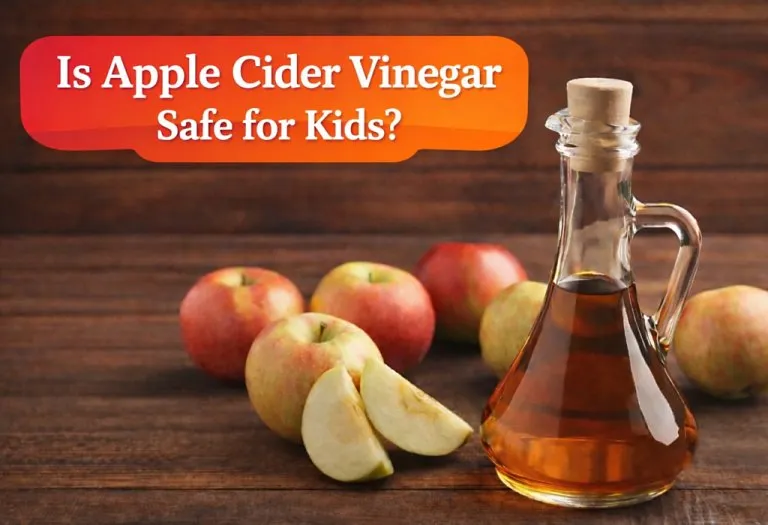
Image Credit : AI Generated Image
In this Article
- What Is Apple Cider Vinegar?
- Is Apple Cider Vinegar Safe for Infants?
- When Can Babies Have Apple Cider Vinegar?
- Benefits of Apple Cider Vinegar for Children
- Are There Any Health Concerns Associated with the Consumption of Apple Cider Vinegar?
- Side Effects of Apple Cider Vinegar on Babies
- Tips for Using Apple Cider Vinegar for Your Child
- Apple Cider Vinegar Recipe for Kids
- FAQs
View More
A woman’s life changes when she has a baby. Once you have a baby, your life centres around him. For the first years of his birth, you will watch his every sigh and every movement. You will read up on numerous things about babies, what to feed a baby, how to improve their motor skills, how to help them talk, etc.
It is normal for parents to question every single thing around them and consider whether they are good for the child. Nowadays, apple cider vinegar is widely consumed, and if you like it, you will also think if it is safe for babies. Apple cider vinegar has many benefits, but whether it is safe for babies and kids is not known. So, clear your doubts by reading this article. Find out what are the benefits of apple cider on the health of a baby.
What Is Apple Cider Vinegar?
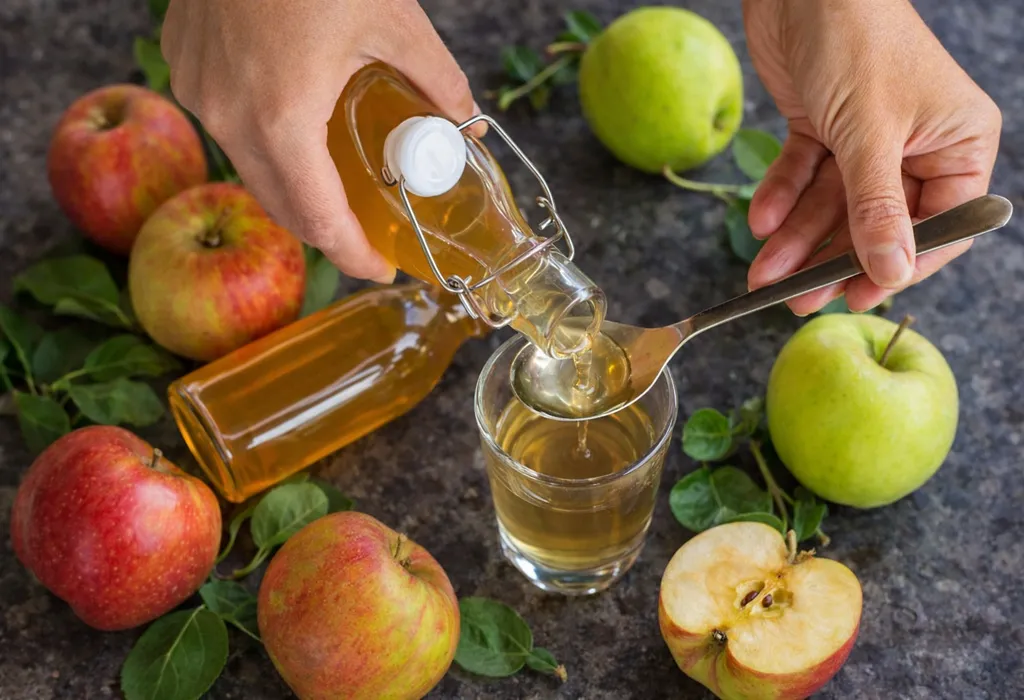
Apple cider vinegar, sometimes known as a ‘wonder drug’ is known to treat various problems. The liquid substance is produced by fermenting apples and is known to be a natural remedy for a host of ailments, for babies more than 1 year and toddlers. There are many benefits of giving apple cider to your child, and some of them have been explained here.
Is Apple Cider Vinegar Safe for Infants?
Let’s answer the most important question for the day: “Can babies have apple cider vinegar?”
Apple cider vinegar is safe for infants in the following cases:




- Apple cider is generally safe for babies since it can be of great use to combat infections, get the baby relaxed, and also improve their immune system as they grow up.
- Asthma symptoms can also be reduced, and symptoms like wheezing can be kept to a minimum in the case of children.
- However, contact your doctor and check whether you can use it for the benefit of your child without any issues cropping up.
When Can Babies Have Apple Cider Vinegar?
Babies can have apple cider vinegar once they are at least six months old.
Since apple cider vinegar is acidic in nature and is not something that is used on a regular basis as a standard food item, it is best recommended to consult your paediatrician first if you are planning to give it to your little one. Look for signs of intolerance or allergy if you’re introducing your baby to ACV for the first time. The not-so-good signs would be fever, vomiting, or skin rashes.
Benefits of Apple Cider Vinegar for Children
Here is how apple cider vinegar can benefit the health of your baby and toddler:
1. Offers Relief from Acid Reflux
Acid reflux is common when the baby is growing up, and apple cider can help alleviate the problem. If apple cider is consumed in a diluted form, it can help reduce the symptoms of heartburn. However, this benefit is not heavily documented in babies. Thus, it is recommended to consult your doctor first before you introduce AVC to your baby (1).
2. Treats Yeast Infections
As the baby grows, he might be susceptible to some infections as his immune system is still not completely developed. Yeast infections are common, but they can be taken care of using a diluted form of apple cider vinegar.
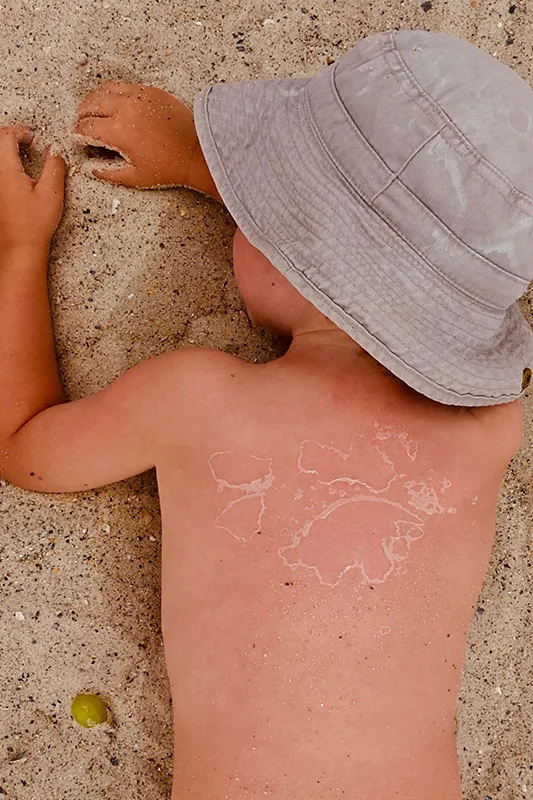
3. Cures Sunburn
Insect bites and sunburns affecting a baby can be taken care of by the application of apple cider (in diluted form) on the affected areas.
4. Fights Dandruff
You can mix the apple cider with an equal quantity of water and spray it onto the scalp to get rid of the pesky dandruff problem affecting your child (2).
5. Provides Nutrition
Apple cider contains a host of nutrients, like Vitamin A, C, B6 and a lot of essential minerals. The lack of these minerals can result in impairing the development of your child. Giving your child diluted apple cider vinegar can provide him with these nutrients and also fight off a host of infections he may be susceptible to.
6. Treats Cold and Cough
A cold and cough in a baby is a huge problem, and it may affect your child frequently. However, you could give your baby two teaspoons of vinegar when he exhibits the symptoms of a cold to prevent the condition from exacerbating into something more serious.
7. Good for Thrush
Thrush is a common problem in little ones. To treat this, mix ACV in water in a 1:2 ratio, i.e. take half a cup of ACV in a cup of water and help your child gargle with it. You can also reduce the quantity of ACV, as it may cause a problem, and never increase its amount.

8. Cures Ringworm
Ringworm is another common condition in children since they have an underdeveloped immune system at a young age. Apple cider vinegar solution will have to be mixed with water and applied since it has amazing anti-microbial properties.
9. Boosts Immunity
The immune system of babies and kids is not fully developed, so they will be susceptible to a lot of infections at a young age. Apple cider vinegar contains carotenoids and beta-carotene, which are amazing antioxidants. The antioxidants neutralise free radicals in the body, making the children get stronger immune responses.
10. Mood
If your child has been grumpy the whole day, an apple cider bath might be just the thing that he requires. Pour half a cup of vinegar into his bathwater every day, and it will help him relax a lot more during bath time. Also, apple cider will cleanse and detoxify the body of the baby (3).
11. Eczema
The application of apple cider in the affected areas has been proven to be a great remedy for treating eczema in babies, and consuming it regularly also helps strengthen the immune system so that such conditions stay away.

Are There Any Health Concerns Associated with the Consumption of Apple Cider Vinegar?
Unpasteurized apple cider vinegar has been found to cause food poisoning in children, so use only pasteurised apple cider for your baby. Also, tooth erosion may result from the chronic use of apple cider as a supplement; therefore, using it as food may be a better choice to prevent your child’s teeth.
Side Effects of Apple Cider Vinegar on Babies
Here are some possible side effects of apple cider vinegar on babies and young toddlers (4):
- Mouth and Throat Burn: Oral consumption of AVC by babies and young children may cause mouth and throat burn due to its acidic nature.
- Tooth Decay: If babies drink undiluted apple cider vinegar, there might be incidences of damage to the tooth enamel and overall damage to the teeth.
- Acid Reflux: Too much consumption of diluted ACV can also cause an upset stomach or acid reflux in babies. This may make babies cry or get cranky.
- Skin Burn: Pure or undiluted apple cider vinegar should not be applied to the skin as it could cause skin burns. Babies have the gentlest of skin, and they should stay away from any topical remedy concerning apple cider vinegar.
- Reaction with the Medication: ACV may interact with certain medicines, such as diuretics, laxatives, and medicines for heart disease and diabetes. If your little one is on any medication, make sure to first consult with your doctor about the use and safety of apple cider vinegar for your baby.
- Allergic Reaction: Although rare, an allergy to apple cider vinegar is possible, especially if you use unpasteurised apple cider vinegar (ACV). Using pasteurised apple cider vinegar is highly recommended for babies and pregnant women. If your baby has an apple allergy, oral allergy syndrome or pollen food syndrome may occur (5). There is also a possibility of cross-reactivity if your baby is allergic to birch pollen, strawberries, peaches, plums, or cherries (6).
Note: Most side effects resulting from the use of apple cider vinegar are associated with the use of unpasteurised apple cider vinegar or the undiluted form. Keeping this is mind can help parents safely introduce AVC to babies and reap the benefits. Nonetheless, if you notice any unusual symptoms in your baby following the use of apple cider vinegar, contact your paediatrician.
Tips for Using Apple Cider Vinegar for Your Child
Here are some tips for using apple cider vinegar for your kid.
- Vinegar can be used for any salad you are making at home as a base or as a flavour in the meals for your child.
- Sweet and sour fruit salads are also a good choice since it makes it easier for children to consume apple cider.
- Apple cider vinegar for toddlers can also be used as a great marinade to make meat or veggie kebabs.
- Do not ever use undiluted apple cider vinegar for your baby. Always dilute it first when using it for your little one.
- Instead of giving apple cider vinegar to your baby in a diluted form, it’s best to give it to them by adding it to their food or drink.
- For therapeutic purposes, use not more than one to two tablespoons of apple cider vinegar per day.
Apple Cider Vinegar Recipe for Kids
While the topical application is fine, apple cider vinegar is not recommended to be ingested by babies. But older kids can take in diluted apple cider vinegar as part of their daily diet. Here are a couple of recipes to incorporate apple cider vinegar into the meals of your toddlers and older kids.
1. Salads With Apple Cider Vinegar Dressing
What better way to get the benefits of vegetables and apple cider vinegar all in one bite?
What You Need:
One small shallot cut in quarters, 1/3 cup olive oil, 1/4 cup apple cider vinegar, two tsp Dijon mustard, two tsp honey, 1/2 tsp salt, 1/4 tsp ground pepper, choice of vegetables (avocado, tomatoes, bell peppers, etc.).
How to Make:
Chop up the vegetables you want in your salad and keep them aside in a bowl. Puree the rest of the ingredients in a blender for 30 seconds. Use the dressing as required on the salad.

2. Grapefruit Juice With ACV
This is a great drink to add before a meal as it is known to keep cholesterol in control.
What You Need:
1.5 cups of grapefruit juice, 1 or 2 tbsp of apple cider vinegar, and 2 tbsp raw honey.
How To Make:
Stir all of these ingredients together in a glass, and you’re good to go.

3. Mild Apple ACV Drink (Ages 5+)
Apple cider vinegar is often used as a remedy for tummy troubles. We suggest consulting your paediatrician before trying this remedy for your baby.
What You Need:
1 cup warm water, ½ teaspoon apple cider vinegar, 1 teaspoon honey (only for children over 1 year)
How to Make:
Mix water, vinegar, and honey in the required ratio well. Serve once or twice a week only.
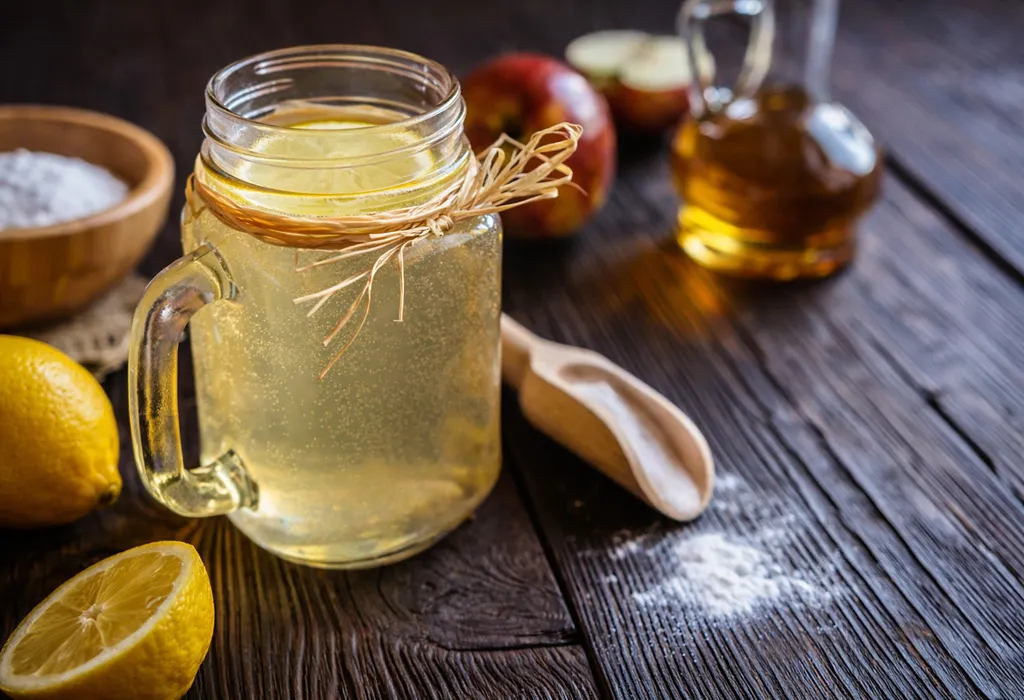
4. ACV Fruit Rinse (External Use)
Apple cider vinegar is a known rinse formula for vegetables and fruits.
What You Need:
1 cup of water and 1 teaspoon of apple cider vinegar
How to Make:
Used to rinse fruits or as a gentle mouth rinse (not swallowed) for older kids.
FAQs
1. Are there any alternatives to apple cider vinegar for babies?
Yes. According to pediatric nutrition guidance, safer alternatives include lemon juice (diluted), probiotic foods like curd, and warm water with honey (only after age one). These options support digestion without the acidity risks linked to ACV.
2. Can I give apple cider vinegar gummies to my kid?
Most experts advise avoiding ACV gummies for children. They often contain added sugars and concentrated acids that may harm teeth and the digestive system. Whole-food alternatives are generally safer.
3. How much apple cider vinegar is safe for kids, and is it helpful for children with allergies?
If used, ACV must be heavily diluted and given occasionally, not regularly. There is limited evidence supporting its role in treating allergies in children. Always consult a paediatrician before introducing it.
4. Can apple cider vinegar help reduce diaper rash in babies?
Apple cider vinegar can be used to provide relief from diaper rash in babies by rubbing the diluted form. To use apple cider vinegar for diaper rash, mix one tablespoon of ACV with half a glass of clean water. However, it is best to consult a doctor or your little one’s paediatrician first before applying diluted ACV to your baby’s tender skin.
5. What would happen if my toddler drinks apple cider vinegar too much?
If a young child drinks significant amounts of apple cider vinegar, they might have nausea or vomiting. Contact your doctor if your little one drinks too much of apple cider vinegar (7).
So, can children drink apple cider vinegar? The answer is a resounding yes. However, make sure you consult with the doctor beforehand if you have any doubts whatsoever about its suitability for your child.
Also Read:
Is Cleanse or Detox for Kids Safe?
Are Antihistamines Safe for Kids?
Is Using Fluoride Toothpaste Safe for Babies & Kids?
Was This Article Helpful?
Parenting is a huge responsibility, for you as a caregiver, but also for us as a parenting content platform. We understand that and take our responsibility of creating credible content seriously. FirstCry Parenting articles are written and published only after extensive research using factually sound references to deliver quality content that is accurate, validated by experts, and completely reliable. To understand how we go about creating content that is credible, read our editorial policy here.
- Author
- Expert Reviewer
 About the Author





.svg)