
16 Week Old Baby – Milestones, Development & Care
A complete guide to your 16 week old baby including developmental milestones, growth, sleep routines and feeding tips.





Image Credit : AI Generated Image
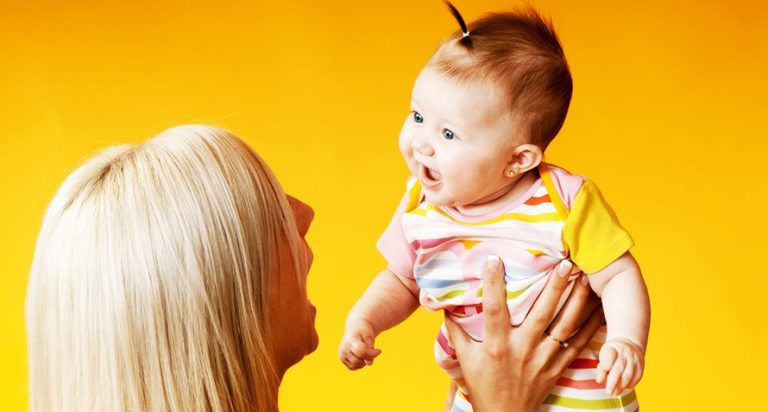
Happy four months! Your little munchkin is 16 weeks old already and is probably making the best sound you have ever heard. Initially, taking care of your little one and even holding him in your arms must have seemed quite a task for you, but we know you must have done a great job, mommy! From now on, your little one will start meeting various milestones. His physical and mental growth will be rapid at this stage, and his communication (we mean cooing and gurgling) will be the strongest among other things. It’s time you celebrate his little victories and track other important developments and milestones, such as talking, growth, etc.
Your 16-week-old Baby’s Development
The signs of your 16-week-old baby’s growth spurt will be more evident than before as he shows signs of rapid development, both physical and mental. One of the major 16-week infant milestones you will notice in your baby is an increase in his movement abilities and limb control. Reaching out to things by bending his body ahead and holding toys with both hands, or even moving them around, are some of the signs of development you may notice (1). By this age, your little one should understand how to use their hands.
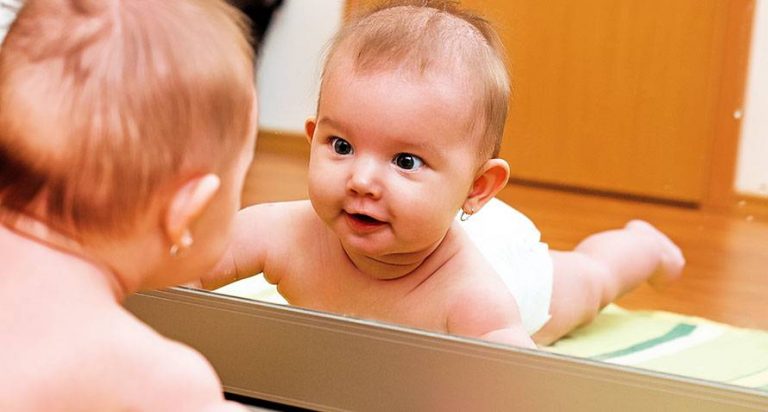
All your fears concerning your baby wobbling his head back and forth will subside as your baby will now be able to hold his head properly. While enjoying the tummy time under your supervision, he will try to lift his head and look right ahead (2). This can also give him a spur of energy and motivation to push his arms and legs to try and move ahead and take the very first steps of attempting to crawl.
Some babies start teething rather early. If your baby is one of those, you might notice slight signs of his very first tooth slowly rising to the surface. At this age, your little one may also want to put everything in his mouth.
Hours of sleepless nights while feeding your baby may come to an end as your baby may start sleeping peacefully for nearly 8-12 hours of the night with two naps during the day, giving you enough time to rest and face the day fully energised (3).

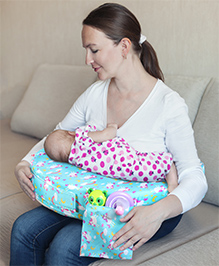
Your baby will also start understanding when it is time to feed when he sees the feeding bottle or looks at you at a particular time of the day. He may start asserting his independence by wanting to hold the bottle in his hands or holding your breast in a particular way for his own comfort.
Communication and perception also increase significantly by this age. Following the objects through his eyes as they move will become a tad easier for him (4). Your baby will also be clever enough to know which cries will get you to him quickly and to understand how to get what he wants. So he may constantly cry to call you for something and then instantly start smiling or laughing while interacting with someone else.
Rolling over will become a new discovery for him – an activity that he will now understand and will have the strength to do (5). This will warrant keeping a watch on your kid whenever he is on the bed or on any raised surface. The best is to spread out a large mat with a soft cloth and let your baby keep rolling around on the ground.
[Also Read: 4 Months Old Baby Development]
Size of 16 Week Old Baby
This week, you passed another landmark; your 16-week-old child is now four months old.
It’s time to recognise what she has accomplished in such a brief amount of time. She is a joyful, laughing infant who can purposefully move her arms and produce the first sounds that will eventually help her learn to speak.
Normally, an infant at 16 weeks old may weigh between 14 and 15 pounds at 16 weeks (6.4-7 kilos). Due to their rapid growth, you could observe the development of a very cute double chin and gorgeous, big thighs. See a qualified physician if you have concerns about your child’s size.
Your Sixteen-Week-Old Baby’s Milestones
The 16-week infant milestones are a testament that your baby is doing amazingly well. Here are some of the 16 weeks developmental milestones to look out for in your baby (6):
- By this age, your little one should be able to sit upright and hold their head properly as well. This should last about 8-10 minutes on its own.
- The giggles and smiles will be further complemented by loud, gurgle-filled laughter as he rejoices in the emotion.
- As you walk around the house, he will begin to follow your movements.
- The “coo”-ing and “aah-gooh” sounds will start from now on (7).
- Most of all, your baby should be able to sleep for a long time at night, giving you the much-needed and desired nighttime sleep.
- Lateral movement tracking will be enhanced, as will understanding limb coordination, as he begins to splash water around during baths.
- Having been fed via bottles or nipples, he may start accepting spoon-feeds, too.
- When you bend his legs and help him do the cycling exercise, he will discover how his legs bend at the knees and keep himself occupied with this new discovery.
- His eyes and ears will be a lot sharper and more responsive when you move around in the garden or the park. The baby now has better vision with the ability to see a bit longer distances (8).
- Your little one will now make use of his fists to hold things firmly or even use both hands to hold them together and squeeze objects.
[Also Read: 4 Months Old Baby Milestones]
Feeding a Sixteen-Week-Old Baby
New moms can return to work if they were on maternity leave. If you were working, you could start going to work again. You will have to ensure enough supply of milk or formula to feed the baby. Most women at this age are generally advised to start introducing solids to their babies. However, research has conclusively proven that breast milk is the most nutritious and important food that a baby should have for at least 1 year of their life. Having said that, you can still start trying out feeding your baby some milk or formula with a spoon. This will help exercise his mouth muscles and get him used to a different feeding style. He might get impatient since he would be used to drinking copious amounts of milk from your breast or the bottle. In certain cases, doctors might recommend giving solid foods, too. But it is completely your call if you’d like to do so; you can. Even if you have begun, stopping the introduction of solid foods will not adversely affect the baby.
[Also Read: 4 Months Old Baby Food]
Sleeping With a 16-Week-Old

Your 16-week-old baby’s sleep schedule should start falling in sync with your schedule, and you may find your baby sleeping through the night, which would be quite a relief for you. This may not always be the case since the cerebral and physical development at this stage is at an all-time high, and most of the growth happens in deep sleep only. If your baby has not been fed properly during the day, there are higher chances of him waking up at night for a quick feed. For most other babies, they do tend to wake up at night, but that isn’t because of hunger. That is a natural rhythm they settle into. In such situations, having your baby sleep next to you is advantageous. At times, your baby might wake up, make simple sounds, and go back to sleep all by himself. At other times, if the sounds continue, you can quickly give him your breast. He will suckle on it for a while until he is lulled back to sleep.
[Also Read: 4 Months Old Baby Sleep]
Separation Anxiety in a 16-Week-Old Baby
At 16 weeks, babies still develop their understanding of the world and their relationships with caregivers. Separation anxiety may become more noticeable at this age, but it varies from baby to baby. Here’s some information about separation anxiety in a 16-week-old baby:
What Is Separation Anxiety?
Separation anxiety is a normal developmental phase where a baby becomes more aware of their primary caregiver and may experience distress when separated (9). This is a sign that the baby is forming healthy attachments, which is important.
- Signs of separation anxiety: At 16 weeks, signs of separation anxiety may include crying or fussing when a caregiver leaves the room or becoming more clingy and demanding attention. Some babies may also become more irritable, have trouble sleeping, or lose interest in play when separated from their caregiver.
- Coping with separation anxiety: There are several things caregivers can do to help their 16-week-old baby cope with separation anxiety, such as gradually increasing the amount of time they spend away from the baby, comforting the baby with a favourite toy or blanket, and establishing predictable routines. It’s also important to respond to the baby’s distress with patience and empathy, reassuring them that you will return and offering plenty of physical affection when reunited.
Overall, separation anxiety is a normal part of a 16-week-old baby’s development, and with patience and understanding, caregivers can help their baby navigate this phase with confidence and security.
Introducing Solids to a 16 Week Baby
Most paediatricians and health organisations do not recommend introducing solids to a 16-week-old baby. Medical science recommends that infants should be exclusively breastfed or formula-fed for the first six months of life, and solid foods should not be introduced until around six months of age.
There are several reasons why it’s important to wait until around six months to introduce solid foods to a baby:
- Digestive system: At 16 weeks, a baby’s digestive system is still developing and may not be ready to handle solid foods. Introducing solids too early can increase the risk of digestive issues, such as constipation, diarrhoea, and upset stomach.
- Choking hazard: Babies at this age may not have developed the ability to swallow solid foods safely and could choke or gag.
- Nutritional needs: Breast milk or formula provides all the nutrition a baby needs for the first six months of life. Introducing solid foods too early may displace the nutrients in breast milk or formula, which can lead to nutritional deficiencies.
If you’re considering introducing solid foods to your 16-week-old baby, it’s important to discuss this with your paediatrician first. They can help you determine if your baby is ready for solid foods and provide guidance on the best way to introduce them safely and gradually.
Must-Have Items for a 16-Week-Old Baby
At about 16 weeks of age, babies get more active, become better at observing their surroundings, and become more interactive. They develop strong motor and sensory skills as well. Here are some products for your 16-week-old infant that will help you keep your parenting journey smoother
- Diaper Cream: Diaper rashes are not a good experience for the babies, and even for parents who have to take care of a very troubled child with inflamed bottoms. Diaper rash cream comes off as a blessing in disguise when your child is uncomfortable because of diaper rashes. Whether you are dealing with one or trying to avoid one, this cream is something that will help you sail through your parenting period.
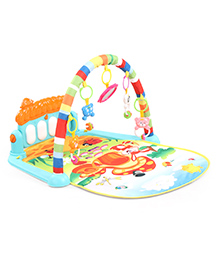
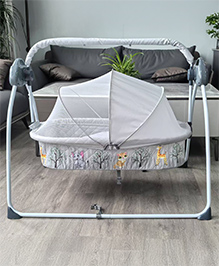
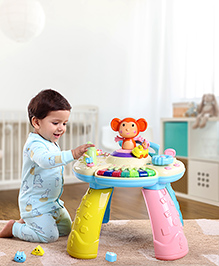
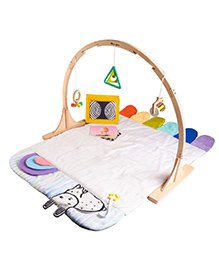
- Activity Gym or Play Mat: Your little one is getting bigger and more active, and they need some tummy time. Pat mat or activity gym is a great place to start for babies.
- Soft Teething Toys: Some babies begin showing early teething signs. If yours is, then soft, baby-safe teething toys can get on your shopping checklist.
- Infant Seat or Bouncer: If you haven’t bought an infant seat, then this is the golden time. It offers supervised upright support.
- Baby Carrier: If there’s one time that parents recommend to other parents, it’s a baby carrier. It supports easy mobility and bonding as well.
Tips to Take Care of Your 16-week-old Baby
Here are some tips you should follow while caring for your 16-week-old baby.
- Most mothers opt to introduce solids at this age. You can too if you want, but don’t stop breastfeeding him. Breast milk is and will be a very nutritious food for the baby, at least for one year of their life, so keep breastfeeding your baby. Babies are not ready for other foods, water or other drinks for about the first 6 months of life (10).
- At times, the baby’s teething may cause him some pain, and he may want to chew on something constantly. Keep a sterile chewy toy next to him for that.
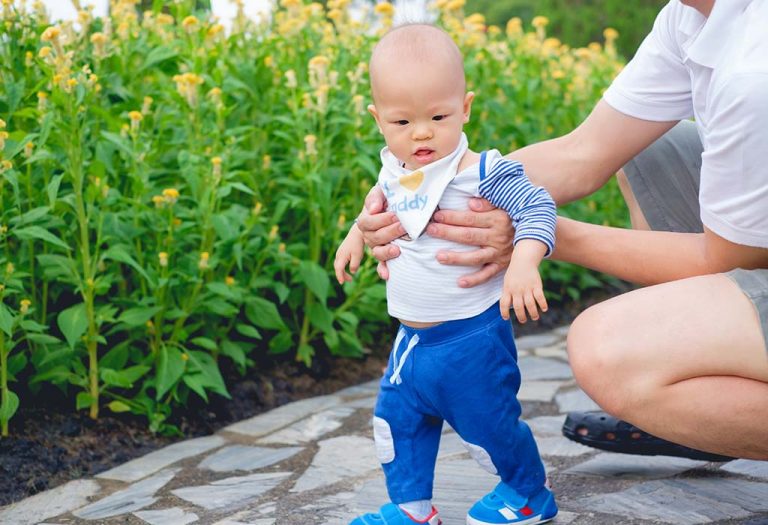
- Let your child start sitting for extended periods regularly. This will further build the strength in his back and spine.
- Talk and sing to your baby as much as you can and bond with them. This will help them buid their voacbulary.
- Feed
[Also Read: 4 Months Old Baby Care]
Tests and Vaccinations
A large number of vaccines are usually administered in the weeks prior to this week. If all of them have been done as per the schedule, no additional vaccination is scheduled for this week.
At 16 weeks, babies generally have a few routine checkups, tests, and vaccinations. Here are some of the typical ones:
- Checkup: The baby will have a checkup with their paediatrician to monitor their growth and development, and to address any concerns or questions that parents may have.
- Vaccinations: At 16 weeks, babies typically receive several vaccinations to protect them from serious illnesses. These may include (11):
- DTaP (diphtheria, tetanus, and pertussis)
- IPV (polio)
- Hib (Haemophilus influenzae type b)
- PCV13 (pneumococcal conjugate)
- Rotavirus
Your paediatrician may also recommend additional vaccines based on your baby’s individual needs and health history.
- Blood tests: Some doctors may recommend blood tests to screen for certain genetic or metabolic disorders, such as sickle cell anaemia or cystic fibrosis.
- Hearing screening: Some hospitals or clinics may offer a hearing screening test at this age to check for any hearing problems.
It’s important to keep track of your baby’s health record and follow up with your paediatrician regarding any recommended tests, checkups, or vaccinations.
Side Effects of Vaccines
Vaccines are critical in preventing major infections in children and infants, and they are often well-tolerated and safe. Vaccines, however, can negatively affect some children, just like any medical procedure. The following are some typical adverse reactions that could happen to a 16-week-old infant following vaccination:
- Pain or swelling at the injection site: Pain, redness, or swelling at the injection site is typical in infants. Within a few days, this normally goes away.
- Fever: One typical adverse effect of several vaccines is a low-grade fever. This can be controlled with the right fever-reducing drugs, including acetaminophen.
- Fussiness or irritability: Some infants may exhibit increased fussiness or irritability after vaccination. Within a few days, this normally goes away.
- Appetite loss: Some infants may experience a loss of appetite or difficulty eating after receiving a vaccine, but this is usually brief and goes away in a day or two.
Although serious vaccination side effects are uncommon, they can include severe allergic responses, convulsions, or high fever. After your baby’s vaccinations, you must call your paediatrician immediately if you have any odd or serious symptoms. The advantages of vaccinations generally outweigh the risks of adverse reactions, and they are essential to safeguarding your child against deadly diseases.
Simple Ways to Keep Your Baby Calm During Their Vaccinations
Parents can employ several easy techniques to keep their baby quiet and comfortable both before and after vaccinations, which may be a stressful and difficult experience for infants. Here are a few pieces of advice:
- Touching your baby: Giving them lots of hugs and physical comfort will make them feel more at ease and soothed both during and after the vaccine.
- Breastfeed or bottle-feed your baby: Breastfeeding or bottle-feeding your baby can assist in diverting their attention and offer a source of comfort during or right after the vaccine.
- Employ a pacifier: Giving your infant a pacifier during the vaccination can be a source of comfort and can help to divert their attention from the pain of the injection.
- Distract your baby: Bringing toys, books, or other distractions might keep your child engaged and offer comfort while receiving the shot.
- Vaccination: In order to make your baby feel more at ease during the vaccination, it’s important to remain calm and relaxed. Babies can sense their parents’ stress and anxiety.
- Employ painkillers: To help ease any pain or discomfort your infant may feel following the vaccine, your paediatrician may advise using acetaminophen or similar drugs.
After vaccination, it’s common for babies to feel uncomfortable or irritable, so be sure to comfort and support them as much as you can. Please contact your paediatrician if you have any worries about how your infant may respond to the immunisation.
Games and Activities to Keep Your Baby Engaged
As your baby will be able to sit upright for longer and support his own head, you can involve him in a number of games. As he can also look around quite a bit, you can start by making soap bubbles for him. This can be played in the hall but also in the bathroom since there will be soap and water quite a bit. Make sure your little one is seated firmly in a seat or on the bed secured properly on all sides. Then start blowing bubbles and let them float all around. The mere sight of floating bubbles will get him all excited. Pop the bubbles with your fingers or let them settle on your hand. This will let him know that it is fine to touch these bubbles. Once that happens, there’s no stopping him from trying to grab them all.
Your baby will also enjoy listening to music and songs. By this age, he may also remember certain sounds. So try making up a song of your own, where you start pointing at yourself and say ‘mama’, point at the father and say ‘dada’ and so on. These simple words will help him associate different people accordingly.
[Also Read: 4 Months Old Baby Games and Activities]
When to Consult a Doctor
Most babies gain substantial weight around this week which is within the expected norms. If your baby does not gain enough weight as per his age, it is suggested that you have your baby’s paediatrician look into the matter.
Apart from that, if your 16-week old baby’s fussiness keeps increasing and he does not sleep as much as needed, he does not eat properly or respond to sounds, you should refer a doctor a the earliest.
Once your baby turns four months of age, he will start taking his own measures at exploring the world and learning new things even more passionately. As much joy as that would bring, it is important you be on guard so that he doesn’t end up hurting himself. Start babyproofing certain places around the home and keep the environment safe and secure to ensure he grows properly and remains unhurt.
Previous Week: 15 Weeks Old Baby
Next Week: 17 Weeks Old Baby
Was This Article Helpful?
Parenting is a huge responsibility, for you as a caregiver, but also for us as a parenting content platform. We understand that and take our responsibility of creating credible content seriously. FirstCry Parenting articles are written and published only after extensive research using factually sound references to deliver quality content that is accurate, validated by experts, and completely reliable. To understand how we go about creating content that is credible, read our editorial policy here.
1. Cleveland Clinic – Baby Developmental Milestones (Infant Milestones)
2. Mayo Clinic – Infant development: Milestones from 4 to 6 months
3. MedlinePlus – Developmental milestones record – 4 months
4. UNICEF – Your baby’s developmental milestones at 4 months
5. American Academy of Pediatrics – Movement Milestones: Babies 4 to 7 Months
6. NHS – 4 month developmental milestones
7. HSE – Your child’s developmental milestones from 0 to 6 months
8. CHOC – Baby Development at 4-6 Months
9. Nemours KidsHealth – Separation Anxiety
10. CDC – Milestones by 4 Months
- Author
 About the Author
Aliya Khan
Related Articles
-

Teach Yourself Parentese To Communicate With Your Baby
-
Can Your Baby Understand the Tone of Your Voice?
-
Your 51 Week Old Baby - Development, Milestones & Care
-
28 Week Old Baby: Development, Milestones & Care Tips
-
Developing Your Baby's Self Concept
-
Your 26-Week-Old Baby - Development, Milestones & Care





.svg)