
14 Week Old Baby – Development, Milestones & Care
Your complete guide to 14 week old baby milestones, growth progress, sleep, and daily care.





Medically Reviewed By
Dr. Mahesh Patil
(Paediatrician)


It’s been nearly three months since you gave birth to your baby, and those weeks have likely flown by in a blur of feeds, naps, and late nights. Even now, you may still be settling into your routine, and that’s completely okay. Every day with a baby brings something new, and just when you think you’ve figured things out, your little one changes again.
Around this time, as your baby reaches 14 weeks, you may start noticing these changes more clearly. Your 14-week-old infant might show excitement over a favourite toy, react happily to a certain song, or eagerly anticipate playtime. These small but meaningful moments are part of your baby’s 14-week-old milestones. In this article, we’ll walk you through what these changes mean, what development to expect, and how you can support your baby during this wonderful stage; so keep reading to learn more.
Your 14-Week-Old Baby’s Development
Around completion of three and a half months, your baby will begin to manifest as a person who likes to interact with other people or prefers to spend time with himself. These signs cannot tell whether he will grow up to be an introverted person or extroverted. Some babies prefer a quiet environment – they like to be by themselves or with only a bunch of people while others like to be surrounded by people. Your 14-week-old baby will learn a lot from his surroundings and his brain will process to make sense of it. Certain other aspects of the house will now begin to interest him a lot more and he will be eager to explore the entire space of the house (1).
[Also Read: 3 Months Old Baby Development]
Weight of 14-Week-Old Baby
At 14 weeks, a baby boy might weigh around 14-15 pounds (6.7 kg) and measure 24-25 inches (61 cm), while your little girl might weigh around 12-13 pounds (5.8 kg) and measure around 23-24 inches (60 cm).

Your 14-Week-Old Baby’s Milestones
The milestones your baby will achieve in the coming months will not just surprise your baby but everyone around them. As parents, it is important to be aware of the baby’s 14 week milestones to keep track of their appropriate development. Below are a few 14-week-old baby milestones you can watch out for in your baby (1) (2) (3) (4) (5):
- With an increased awareness of the limbs, your baby might like a particular hand or finger and keep exploring it. Usually, babies are enthralled by their own feet. Since they are unable to see them, they are curious when they lift their feet up high. When your little one lifts up his feet high, he might want to play around with them or put in his mouth.
- The energy level of a baby is high during this time. Your baby will rarely stay still while lying down. He will constantly kick, play with his hands, or blow raspberries.
- Your baby’s back will gain quite some strength by this time.
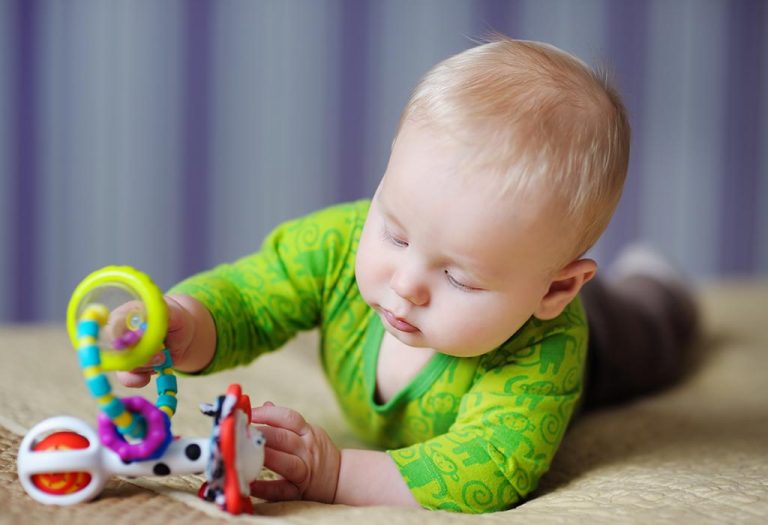
- By 14 weeks, baby gains complete control of the head, also develops bi-dextrous grasp with which he can reach out to objects or dangling toys, attempt to hold them and play with it. Toys like rattle which make sound could be handled to desired effect.
- When you bring your face closer to him, he might reach out and touch your face and feel it.
- Your little one’s communication skills will develop too. He will begin to coo and gurgle by this time. Cooing and gurgling are sure to make you smile a lot.
- By 14 weeks, your baby will start recognising your face and his father’s face. His eyes might search for you when hungry, tired or frightened.
- By 14 weeks, your baby will be quite anxious to discover new things. He shall take interest in new faces or new toys and try to analyse them on his own. At this age, babies don’t have stranger anxiety so your little one will be fine with visitors as with family members. However, he may throw a fit if he is hungry, sleepy, or uncomfortable.
[Also Read: 3 Months Old Baby Milestones]
Feeding to 14-Week-Old Baby
Your baby is growing as he should, and his schedule must finally be falling into place. But making strict schedules is not recommended if you have a baby (6). Your 14-week-old baby may want to be fed in the evening, too, when most of us tend to snack on something or the other. You will have to balance your own needs and the needs of other family members, along with that of your baby, who may suddenly want to latch onto your breast for a quick snack. In such cases, you could keep breast milk stored separately and engage either your husband or someone in the family to bottle-feed your baby while you take care of the household chores. By this age, your baby may even want to play around or be engaged, especially during this time. You can take your baby for a quick walk around the park, as it will soothe him and keep him occupied.
[Also Read: 3 Months Old Baby Food]

14-Week-Old Baby Sleep
By 14 weeks, your baby’s sleeping pattern may not fall into a predictable schedule. He will wake up at night if and when he feels hungry (6). As your baby is growing and is trying different activities, he will need more energy, hence he will feed often. Hearing about other babies already sleeping through the night or having predictable sleep times can make you wonder if you are doing something wrong. But you must understand that each and every child has different physiology and different needs. One could want to sleep through the day and wake up at night while the other may remain awake during the day time and sleep through the night. In either case, there should be a period of time when the baby sleeps for a longer duration, which should not be interrupted since maximum growth occurs then (3).
[Also Read: 3 Months Old Baby Sleep]
Formula Feeding to 14-Week-Old Baby
Many times, parents wonder whether formula-fed babies be given flexibility in feeding, similar to breastfed babies since every baby is different and has different needs. You can make the formula feeding experience worthwhile by inducing bottle nursing. This technique is helpful in babies having better control of their intake, whether they are having expressed breast milk or infant formula.
Teething at 14 Weeks
Teething is rare but possible at 14 weeks. If your little one falls early in the stage of typical age for tooth eruption, you may see early signs of teething or even the appearance of your baby’s first tooth (6).
Though the concept of natal teeth (baby teeth present at birth) does not apply to every baby, it is still possible and a rare occurrence. So, whether your baby is experiencing early signs of teething or tooth eruption, it is best recommended to visit the baby’s doctor to rule out any doubts or concerns.
Tips to Take Care of Your 14-Week-Old Baby
Here are some tips that you should follow to take care of your 14-week-old baby (4).
- Your baby might take some more time to be able to do all the things that other babies do. Do not worry about it and let him progress at his own pace.
- Certain babies might seem to depict a change in the colour of their irises. As long as this does not accompany redness in the eye and irritation in the child, it isn’t an infection and is just a normal sign.
- Keep formula milk and breast milk at hand so that it can be quickly mixed in the bottle and given to your child if you are too busy with something else.
[Also Read: 3 Months Old Baby Care]
Tests and Vaccinations
Following the previous week of vaccines, in the 14th week, there are another bunch of vaccines that need to be administered to a baby. Get your child administered all the necessary vaccines and on time, as these will keep him healthy and protect him from illnesses while boosting his immunity. The triple vaccine that takes care of diphtheria and polio will be administered too. This is the DPT/IPV/HIB vaccine (7).
Another vaccine that necessitates its presence is the PCV vaccine, which is at its 3rd time of administering to your child (8). Yet another one at its 3rd dosage is the rotavirus vaccine, which may be given orally this time around, too.
Another vaccine administered at this age is the second dose of the MenB vaccine. The vaccination protects against the life-threatening meningococcal infection, which is a bacterial infection caused by meningococcal group B bacteria (9). The severe complications of this disease can range from brain damage to even death.
All these vaccines might result in a slight fever in your child which is absolutely normal.
Products Need at 14 Weeks
By the time your baby reaches 14 weeks, you’ll likely notice more smiles, sounds, and curiosity about the world around them. Here are a few essential products that can help keep your 14-week-old baby comfortable, happy, and well cared for.
1. Play and Development Toys
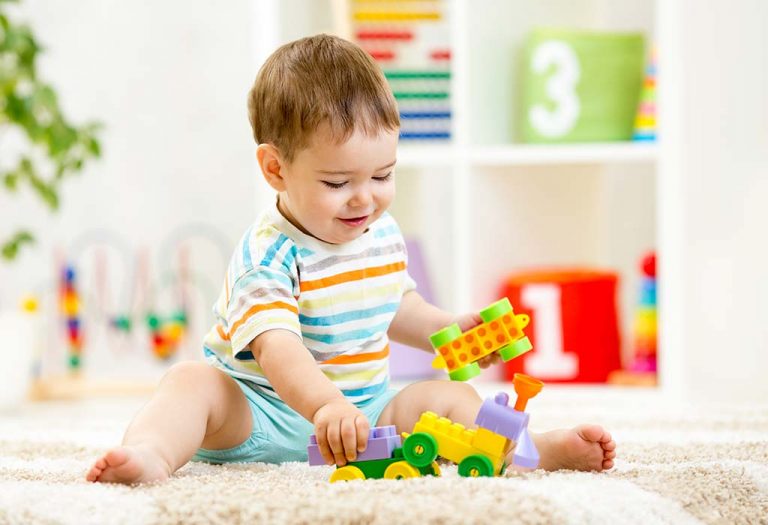
At this age, babies begin to explore sounds, colours, and textures. Soft toys, rattles, play mats, and activity gyms encourage sensory development and help strengthen motor skills.
2. Health and Safety Items
Basic health and safety products include a digital thermometer, nail clippers, nasal aspirator, baby monitor, and first-aid essentials to ensure the baby’s well-being at all times.
Games and Activities
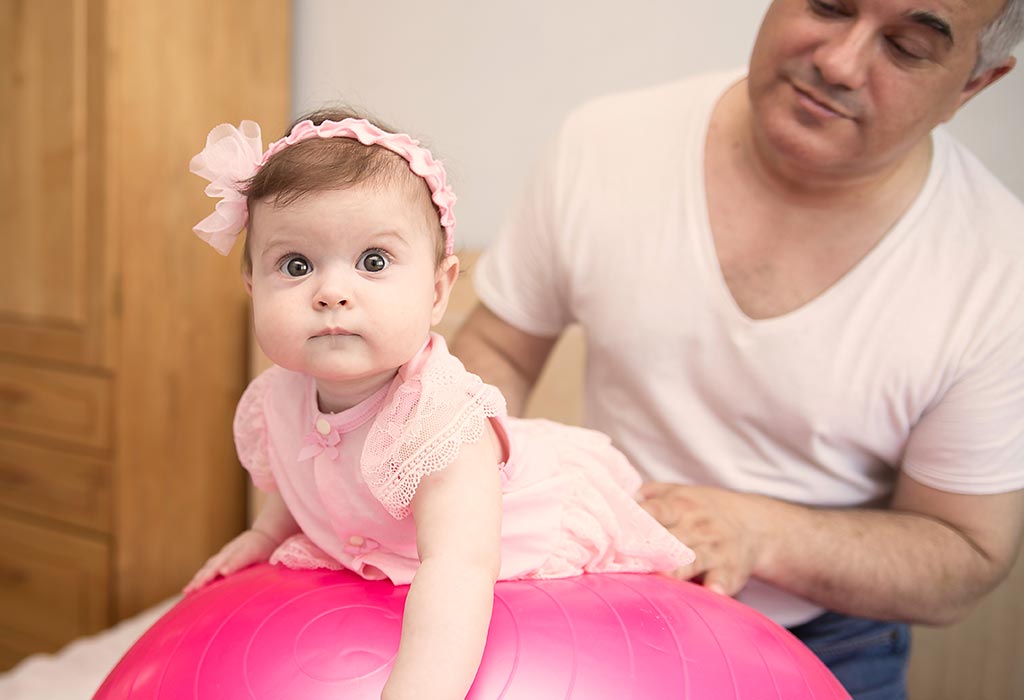
Your baby’s upper body strength will be developed quite a bit, and his neck muscles will be strong too. He may be able to keep his neck upright and look around for a longer time with ease. Hold your baby on the shoulder and fly him around the house while making whoosh and airy sounds. By holding it in such a way that he faces backwards, the experience of going in a reverse direction could cause quite a riot and leave him laughing and giggling. If you are a fitness enthusiast and have a gym ball or a large inflatable ball, you can hold your baby and place him on it. Then gently roll the ball in various directions and let your little one sway and move slightly on each side.
Peek-a-boo is always successful with all babies no matter their age. And now that your baby can look around a bit, it is time to take the game to the next level. Keep your baby upright, supported with some pillows, and securely placed so that he won’t rollover. Let him face the hall or the room. You can then use all methods to hide and make sounds, only to pop out from a different corner and surprise him. Bending under the bed or hiding behind the sofa, and then emerging from the door or the other end of the sofa, will seem quite magical to your baby and make his day.
[Also Read: 3 Months Old Baby Games and Activities]
When to Consult a Doctor
As your child will be different vaccines around this time, chances are that he will have a slight fever. Fever is a side effect of vaccines and there is nothing to worry about. However, if the fever lasts long and is more than 100.5 degrees or so, you should consult a doctor. Furthermore, if your child is vomiting, you should consult a doctor immediately.
Also, if your baby has trouble holding things firmly or doesn’t seem to have any coordination in understanding how to hold a small toy or so, get a paediatrician to examine him for any developmental disorder or condition.
FAQs
1. How much tummy time does a 14-week-old baby need?
A 14-week-old baby benefits from several short tummy time sessions throughout the day, totalling about 20-30 minutes. This helps strengthen neck, shoulder, and upper body muscles.
2. Can a 14-week-old baby recognise parents?
Yes, babies at this age often recognise their parents’ faces and voices. They may respond with smiles, excitement, or calmness when held by familiar caregivers (1).
From this time onwards, your child will grow physically, emotionally, and socially. His personality will start forming too. Make sure you constantly encourage your child to try out new things. Keep a positive atmosphere at home and your child will be happy!
Previous Week: 13 Weeks Old Baby
Next Week: 15 Weeks Old Baby
Was This Article Helpful?
Parenting is a huge responsibility, for you as a caregiver, but also for us as a parenting content platform. We understand that and take our responsibility of creating credible content seriously. FirstCry Parenting articles are written and published only after extensive research using factually sound references to deliver quality content that is accurate, validated by experts, and completely reliable. To understand how we go about creating content that is credible, read our editorial policy here.
1. UNICEF parenting – Your baby’s developmental milestones at 4 months
2. Cleveland Clinic – Baby Developmental Milestones (Infant Milestones)
3. Rady Children’s Health – Baby Development at 4-6 Months
4. Centers for Disease Control and Prevention – Milestones by 4 Months
5. NHS – Your baby’s development from 2 to 12 months
6. Regents of The University of California – Your Baby at 4 Months
7. UNICEF – Know your child’s immunization schedule
8. Nemours KidsHealth – Vaccine Schedule: Vaccines for Children by Age
- Author
- Expert Reviewer
 About the Author
Mahak Arora
Related Articles
-

24 Week Old Baby: Development, Milestones & Care Tips
-
The Importance Of Social Development Activities For Your Baby
-
Your 26-Week-Old Baby - Development, Milestones & Care
-
How Does a Baby Show Her Love? - Signs to Look For
-
When Do Babies Start To Play With Toys
-
9 Week Old Baby - Development, Milestones & Care




.svg)