

Pregnancy Yoga in Third Trimester – Safe Poses & Precautions




In this Article
- Is It Safe to Perform Yoga Poses During the Third Trimester of Pregnancy?
- Benefits of Doing Yoga in Pregnancy Third Trimester
- How Often Should You Practice Yoga in the Third Trimester?
- Best Yoga Poses/Asanas to Try in Pregnancy 3rd Trimester
- Yoga Poses to Avoid in Third Trimester
- Precautions to Take While Practicing Prenatal Yoga in the Third Trimester
- When to Consult a Doctor?
- FAQs
View More
Prenatal yoga in third trimester can be safe and beneficial when you choose gentle, pregnancy-appropriate poses and follow your doctor’s advice. Regular physical activity during pregnancy can support overall health, and the WHO recommends at least 150 minutes of moderate-intensity aerobic activity each week for healthy pregnant women. As your belly grows, however, balance, mobility, and comfort can change, so your yoga practice may need modifications. This article explains which poses are generally suitable during the third trimester, which movements to avoid, and the key precautions to keep in mind. You’ll also learn when to stop exercising and seek medical guidance.
Is It Safe to Perform Yoga Poses During the Third Trimester of Pregnancy?
Absolutely. After taking your doctor’s recommendation and understanding your health and the baby’s development, yoga exercises can continue uninterrupted. The previous poses might not be the best and you will have to stay away from any exercises that are stressful for the body (1).
Benefits of Doing Yoga in Pregnancy Third Trimester
Here are some of the benefits of yoga during the third trimester.
- By undertaking yoga exercises in different postures, the muscles get the exercises they need and bring about an increase in their flexibility and elastic nature. This, consequently, helps in the process of labour and recovery after delivery (2).
- Yoga includes a variety of breathing and relaxation exercises, too. These not only help in stabilising the mood but also increase the intake of oxygen which reaches your child and keeps the development moving forward successfully (3).
- Many yoga practitioners emphasise the benefits of chanting as a relaxation method. The vibrations of certain words and tones can bring peace to the mind and can also reach the child, too.
- If you’re starting with prenatal yoga for the first time at this stage, it is best to talk to your doctor about it first. Get a report from your doctor to show the yoga trainer, who can then recommend the right exercises for you. All of these exercises should be done patiently and without any haste.
- At times, certain exercises might deem it necessary to take support for maintaining your balance. You can use a chair or lean on a wall for that. Once you’ve completed 8 months of pregnancy, it is best to avoid exercises that require you to raise your knees to a high level.
How Often Should You Practice Yoga in the Third Trimester?
You can practice prenatal yoga 2-4 times a week during the third trimester if your doctor or midwife says it’s safe. Keep sessions gentle, around 15-30 minutes, and take breaks whenever you feel tired or uncomfortable. Listen to your body and avoid pushing yourself.
Best Yoga Poses/Asanas to Try in Pregnancy 3rd Trimester
These are a bunch of pregnancy yoga poses for third trimester that are easy to do and bring quite a few benefits to your health and well-being.
1. Rotation of Shoulders
It is best to start it lightly before taking it up a notch.
How to Do
Start with your right arm by placing the fingertips on the shoulder. Now, rotate the joint as if drawing a circular shape using your elbow. Rotate it clockwise for five times and then reverse the direction, continuing to rotate for another set. Repeat the same with the other arm. Breathe in when the arms are behind and breathe out when they are in front of you.
Benefits
The movement stimulates the muscles present in the shoulder and the upper back, improving blood circulation. The flexibility of shoulder muscles increases as well, which reduces stiffness in the neck. The double arm exercise also helps stimulate the mammary glands of the mother.
2. Cranking the Ankle
Bringing a degree of strength and flexibility to the foot allowing it to support your body better.
How to Do
Start with the right leg. Bend it and place it on the left knee, such that the foot is hanging on the other side. Hold the toes with your left hand and the base of the ankle with your right hand. Now, gently turn the ankle around in as many degrees of rotation as possible, while holding the toes. Rotate it clockwise for ten times and reverse the direction, rotating it for another ten. Repeat the same for the other foot, too.
Benefits
It increases blood circulation in the feet as well as brings relief to women suffering from edema or cramping, too.
3. Abdominal Stretch while Sleeping
In yoga, this pose is called as ‘supta udarkarshanasana’ which works on the entire body, while focusing on the core.
How to Do
Lie down and interlock fingers of both hands behind your head, allowing it to rest on them. Bend your knees so that the soles are flat on the ground. Now, turn your head to the left side and bend the legs from your hip to the right. This will cause your spine to stretch. Stay in this position for a few seconds and then return back. Switch by turning your head to the right and the legs to the left.
Benefits
Any complaints of constipation and indigestion can start getting alleviated by it. The spinal column gets a good exercise allowing you to sit for longer.
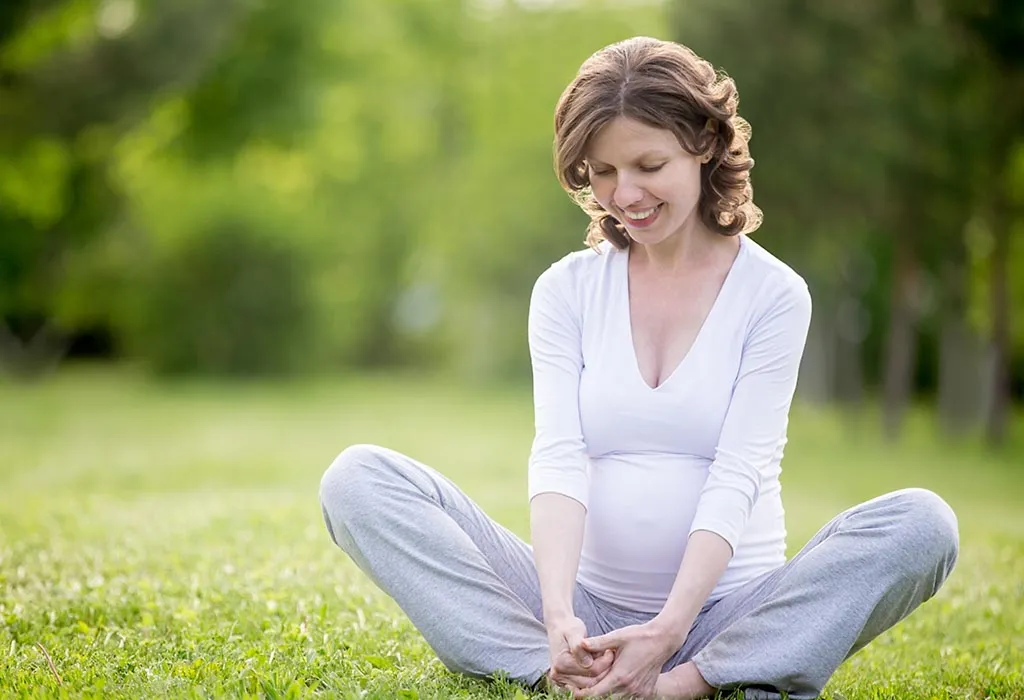
4. The Butterfly Pose
Called as ‘poorna titli asana’, this isn’t as difficult as it sounds like and helps in restoring vigour.
How to Do
This is a great yoga pose for the third trimester. While sitting with legs spread out, bend them in such a way that the soles touch each other close to the body. Now, relax the thighs, hold your feet with both hands and move your knees up and down as if to simulate the movement of a butterfly’s wings. You can make use of your elbows to ensure your knees touch the ground, but do not apply a strong force. Do this 30 times, and then take a break.
Benefits
It takes care of soreness as well as relieves any tension present in the thighs. The weakness that you feel in your legs is gradually replaced with strength and energy (4).
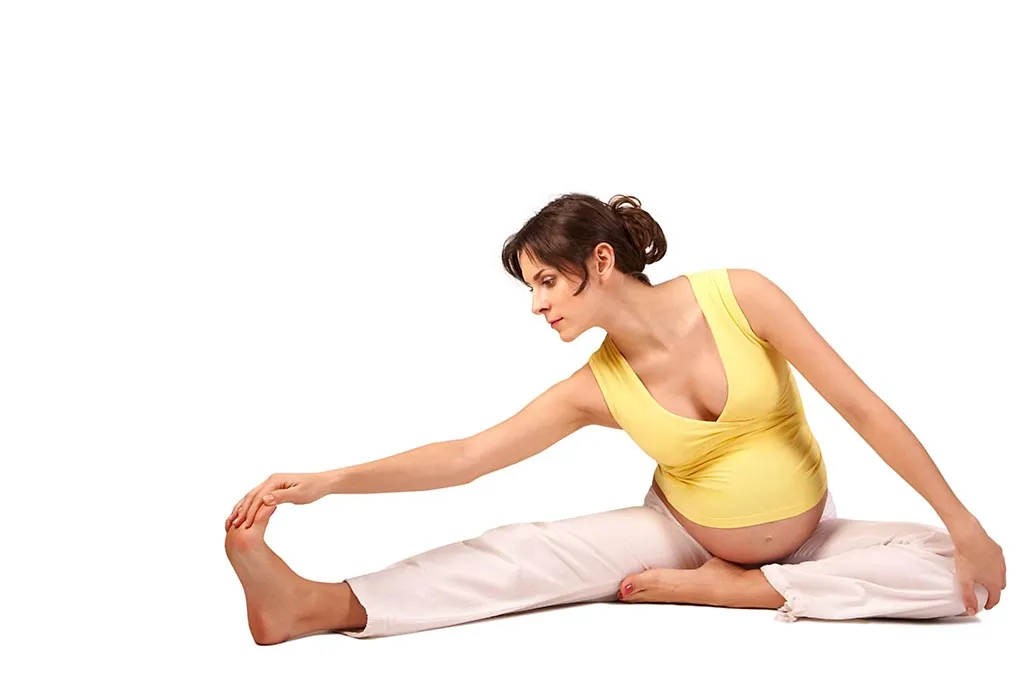
5. The Half Butterfly Pose
Slightly similar to the previous one, the ‘ardha titli asana’ instead focuses more on the hip.
How to Do
Sit just as before but bend only the right knee to bring the foot close to the body, keeping the other leg outstretched. Holding the toes with the left hand and resting the right hand on the knee, raise the knee upwards as you breathe in simultaneously. Hold for a second and bring it down as you exhale. Make sure your torso does not move and the knee touches the ground. Repeat the same for the other leg after repeating ten times.
Benefits
This not only stimulates the legs but also affects the joints in the hip and the knee, which directly affect the ease of delivery, speeding up the process of labour.
6. Lying Down on One Side
A variation of the popular ‘savasana’, this pose might require using a pillow for support.

How to Do
Lie down on the mat on your left side, with your arm stretched upwards acting as a pillow. Place a pillow between your legs and rest your right knee and shin on it while bending it. Let your right arm rest on your tummy for support. Relax in this position for at least 5-8 minutes.
Benefits
Helps in relaxing the body, stabilizing the mood, as well as orienting the baby’s position inside.
7. Sleeping Like a Child
This is called ‘balasana’ since it very vividly resembles the typical way babies tend to sleep.
How to Do
Kneel on your knees and hands. Then, spread your knees outwards but let your toes be touching down. Now, take a deep breath and gently descend your hip onto your heels as you breathe out slowly. Then, bend slightly to rest your forehead on a fat pillow before you, while keeping your arms outstretched ahead. The final pose is similar to how a baby would sleep on its stomach while snuggling something.
Benefits
Helps build strength in the knees, hips, as well as the back (5).
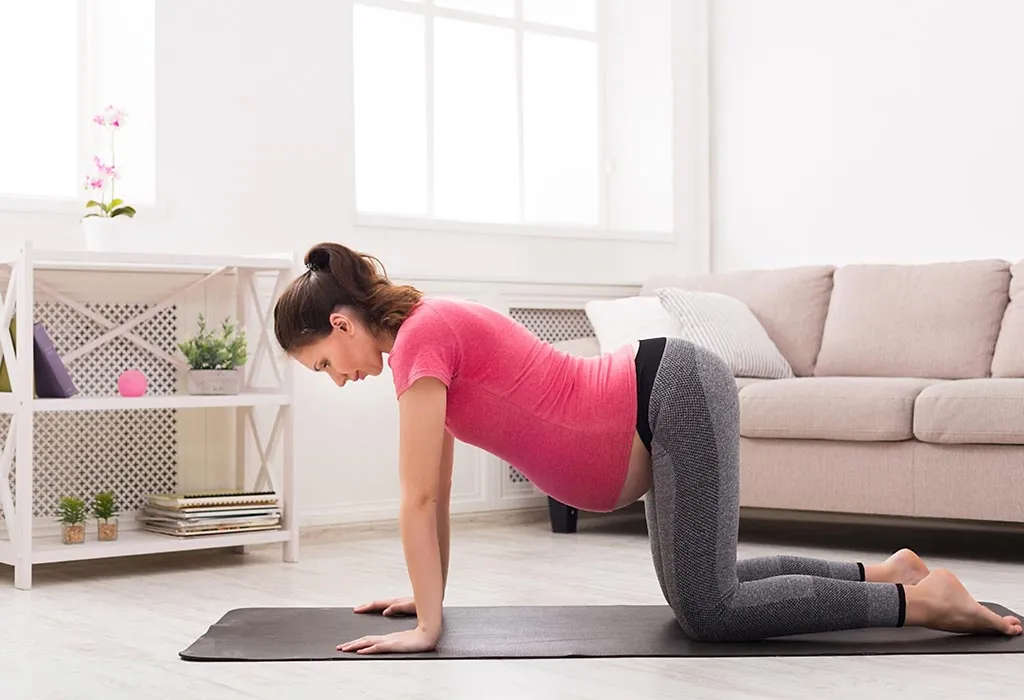
8. The Cat Pose
The ‘marjaaryasana’ is also termed as a cow pose and can be made funnier by adding a wagging tail, too.
How to Do
Kneel on your knees and hands. Inhale while arching your back and bending your chin towards your tummy. Exhale by arching your back outwards as you lift your head and tilt it back as much as possible. Repeat as many times as needed. You can shake your hips gently as if you were wagging your tail.
Benefits
Relieves stress from the spinal cord as well as the neck and stimulates the hips, too (6).
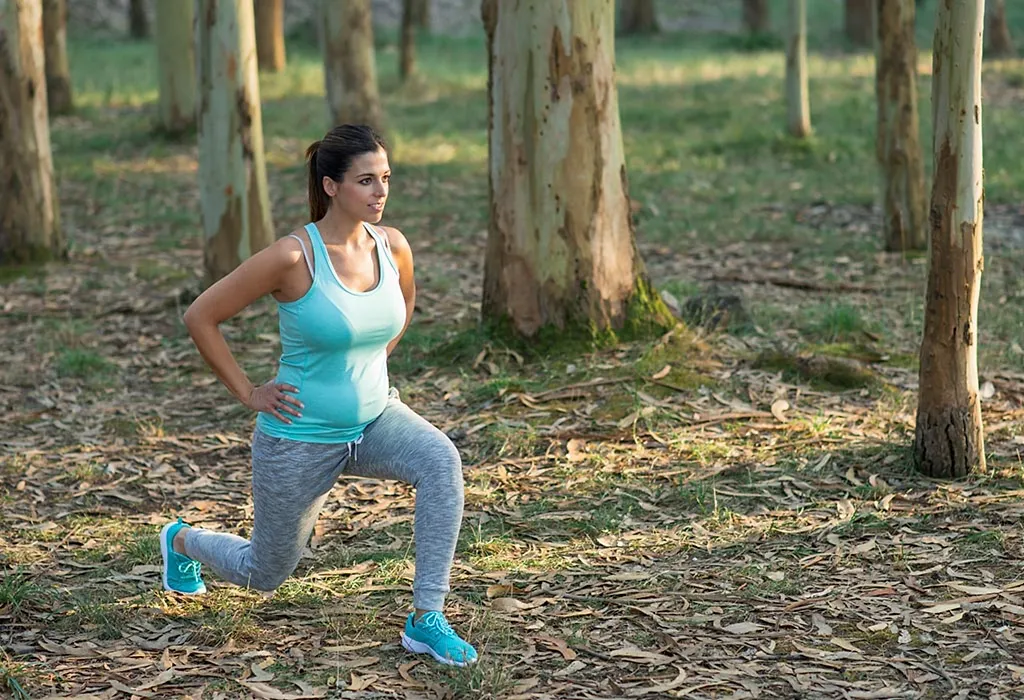
9. Low Lunge
Slightly difficult than the other poses, you might need some assistance in getting the right pose for this.
How to Do
Rest on your palms and gradually bring your right foot forward step by step while keeping the left leg where it is. Once that is stretched, place your hands on a slightly raised stool if needed and thrust your chest forward while inhaling. Repeat for a few breaths, and then switch the legs.
Benefits
The stretching helps increase the flexibility of the muscles, easing the delivery process and helping with recovery.
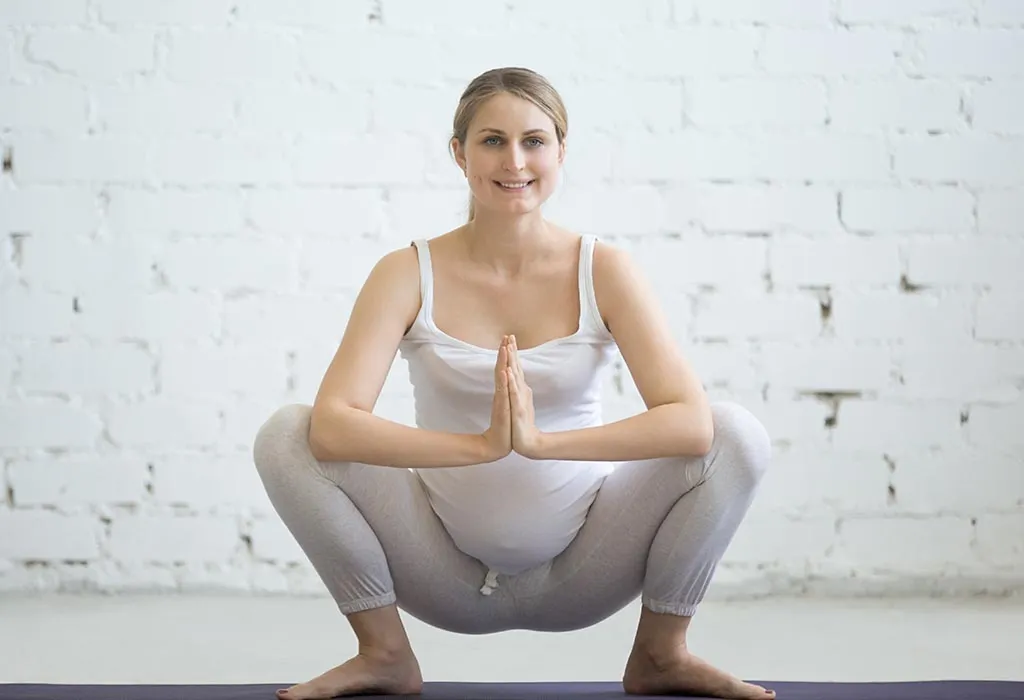
10. The Garland Pose
Known as ‘malasana’, this pose has known to be quite helpful for pregnant mothers and build up the strength for delivery.
How to Do
Stand with your toes pointing outwards slightly and knees open. Now gently crouch down, maintaining the posture and shifting your feet to support it. Once crouched, join your hands in front of your chest, keeping your torso straight, and take deep breaths. If this gets uncomfortable, use a pillow to rest your butt on gently.
Benefits
The pose in itself helps relieve the stiffness in thighs and knees, adding flexibility to the hips, and increasing the strength of the back.
11. Supported Squat
A supported squat can gently strengthen the legs and open the hips while providing extra stability.
How to Do
Stand behind a sturdy chair or near a wall for support. Keep your feet slightly wider than hip-width apart and slowly bend your knees, lowering into a comfortable squat. Keep your back straight and hold the support as needed. Rise slowly and repeat a few times.
Benefits
Strengthens the legs, encourages hip flexibility, and may help prepare the body for labour (1).
12. Standing Side Stretch
This gentle stretch helps create more space around the ribs and can ease upper-body tension.
How to Do
Stand comfortably with your feet slightly apart. Raise your right arm overhead and gently lean to the left without twisting your body. Hold for a few breaths, return to the centre, and repeat on the other side. Keep the movement slow and comfortable.
Benefits
Stretches the sides of the body, improves flexibility, and may help relieve tension around the ribs and shoulders.
Yoga Poses to Avoid in Third Trimester
During the third trimester, your growing belly and changing balance make some yoga poses uncomfortable or unsafe. Here are some poses you should avoid during this stage of pregnancy (7).
1. Full Wheel Pose
This deep backbend can put pressure on the abdomen and may be difficult to perform safely as the belly grows. Choose gentle standing stretches instead.
2. Headstand
Headstands can affect balance and increase the risk of falling, especially during late pregnancy. They are best avoided in the third trimester.
3. Deep Twists
Deep twisting poses can compress the abdomen and become uncomfortable as the baby grows. Use gentle, open twists only if your healthcare provider approves them.
4. Lying Flat on the Back
Avoid staying flat on your back for extended periods, particularly later in pregnancy. The position can cause discomfort and may affect blood flow.
5. Belly-Down Poses
Poses that require lying on the stomach can put pressure on the growing belly and should be avoided during the third trimester.
6. Hot Yoga
Hot yoga can raise your body temperature and increase the risk of dehydration or overheating. Opt for gentle prenatal yoga in a comfortably cool environment instead.
Precautions to Take While Practicing Prenatal Yoga in the Third Trimester
Keep the following precautions in mind while practising yoga in third trimester.
- Let your doctor know about your medical history and existing conditions before beginning with prenatal yoga.
- Get your exercises recommended by the doctor as well.
- If you’ve been practising yoga for a long time, it is still necessary to get a medical affirmation on the same or undertake any restrictions if needed.
When to Consult a Doctor?
Talk to your doctor or stop yoga immediately if you experience vaginal bleeding, dizziness, chest pain, severe shortness of breath, painful contractions, fluid leakage, or reduced baby movement. It is also a good idea to consult your doctor before starting or changing your yoga routine, especially if you have a high-risk pregnancy or any pregnancy-related complications.
FAQs
1. Is it safe to practise yoga inversions during the third trimester of pregnancy?
Practising inversions, like headstands or shoulder stands, is generally not recommended in the third trimester as they can pose risks due to changes in balance and centre of gravity. However, some modified poses with support might be safe if approved by your healthcare provider and guided by a certified prenatal yoga instructor.
2. Can third trimester yoga help with swelling in the legs and feet?
Yes, certain gentle 3rd trimester yoga poses can help improve circulation, which may reduce swelling in the legs and feet, a common issue during the third trimester. Poses that elevate the legs, like the modified “Legs-Up-the-Wall” pose, can assist with fluid retention, but it’s important to avoid poses that put too much pressure on the belly or compromise balance.
3. Can I do yoga if I have never practiced before?
Yes, you can start with gentle prenatal yoga in the third trimester if your doctor gives you the go-ahead. Begin with simple poses and consider guidance from a qualified prenatal yoga instructor.
4. Is breathing exercise safe during the third trimester?
Yes, gentle breathing exercises can help you relax and manage stress. Avoid forceful or prolonged breath-holding techniques unless they are specifically recommended by a qualified prenatal yoga instructor.
Yoga exercises bring tons of benefits physically as well as a stability and peace to the mind. Mothers undertaking yoga for 9th month pregnancy only need to take the right precautions and measures to continue getting the benefits of them. All of these are going to be beneficial when the labour sets in and make the process of delivery easier and faster.
Also Read:
Safe Third Trimester Exercises
Yoga Asanas for Normal Delivery
Pregnancy Exercises for Normal Delivery
What to do & not to do in your Third Trimester of Pregnancy?
Was This Article Helpful?
Parenting is a huge responsibility, for you as a caregiver, but also for us as a parenting content platform. We understand that and take our responsibility of creating credible content seriously. FirstCry Parenting articles are written and published only after extensive research using factually sound references to deliver quality content that is accurate, validated by experts, and completely reliable. To understand how we go about creating content that is credible, read our editorial policy here.
1. Rainbow Children’s Medicare – Antenatal Yoga: Safe Poses for Each Trimester and Precautions
2. PubMed – Benefits of yoga in pregnancy: a randomised controlled clinical trial
3. Tommy’s – Yoga in pregnancy
4. Art of Living – Butterfly Pose (Badhakonasana)
5. Art of Living – Child Pose (Shishuasana)
6. Art of Living – Cat Stretch (Marjariasana)
7. Rishikesh Yogkulam – Yoga Poses to Avoid During Pregnancy: A Teacher’s Guide
- Author


Related Articles
-

Reverse Due Date Calculator - How Does It Work?
-

Using Massage Chair While Pregnant: Is It Safe?
-

Pets and Pregnancy - Tips to Stay Safe
-

Eating Rice During Pregnancy: Benefits, Types, and Safety Tips
-

20 Easter Pregnancy Announcement to Start a New Life
-

Skin Care During Pregnancy: What Products to use & Beauty Tips