
15 Self Awareness Activities for Kids to Boost Confidence
Build children's confidence and emotional understanding with fun self-awareness activities that help them recognise their strengths and feelings.




In this Article
- What Are Self Awareness Activities?
- Why Are Self Awareness Activities Important for Kids?
- Self Awareness Activities for Kids to Develop Emotional Skills
- FAQs
View More
Key Takeaways
- Self awareness helps children recognise their feelings, strengths, and needs, which builds confidence and emotional balance.
- Simple, playful routines like mirror time, feelings charts, and journaling work well from the preschool years onward.
- Short daily practice of 5 to 10 minutes is more effective than occasional long sessions.
- Parents can support growth by naming emotions, listening without judging, and modeling reflection themselves.
Children who understand their own feelings, strengths, and limits tend to feel more secure and make better choices. Self awareness is not something kids simply pick up; it grows through gentle, repeated practice. The good news is that you do not need special tools or training. This article shares 15 easy self awareness activities for kids that fit into everyday life, from preschool play to school age reflection, so your child can build confidence one small step at a time.
What Are Self Awareness Activities?
Self awareness activities are simple games, conversations, and creative tasks that help children notice and understand their thoughts, emotions, behaviours, and personal qualities. They invite kids to pause and ask questions such as “How do I feel right now?” or “What am I good at?” These activities can involve drawing, storytelling, movement, or quiet reflection. When practiced regularly, they give children the words and habits they need to express themselves clearly, manage big emotions, and understand how their actions affect others.
Why Are Self Awareness Activities Important for Kids?
Building self awareness early gives children a strong base for emotional health and healthy relationships. Here are some key benefits:
- Stronger confidence: Kids who know their strengths feel more capable of trying new things.
- Better emotional control: Naming a feeling makes it easier to handle calmly.
- Improved communication: Children learn to explain what they need and feel.
- Healthier friendships: Understanding themselves helps kids understand and respect others.
- Smarter decision making: Reflecting on past choices guides better future ones.
- Resilience: Children who accept their mistakes and limits bounce back more easily.
Self Awareness Activities for Kids to Develop Emotional Skills
These activities are designed to be flexible, so you can adjust them for different ages and settings. Many work as preschool self awareness activities, while others suit older children who can write and reflect. Pick a few that match your child’s interests and repeat them often.
1. Feelings Faces Chart
Source: Pinterest
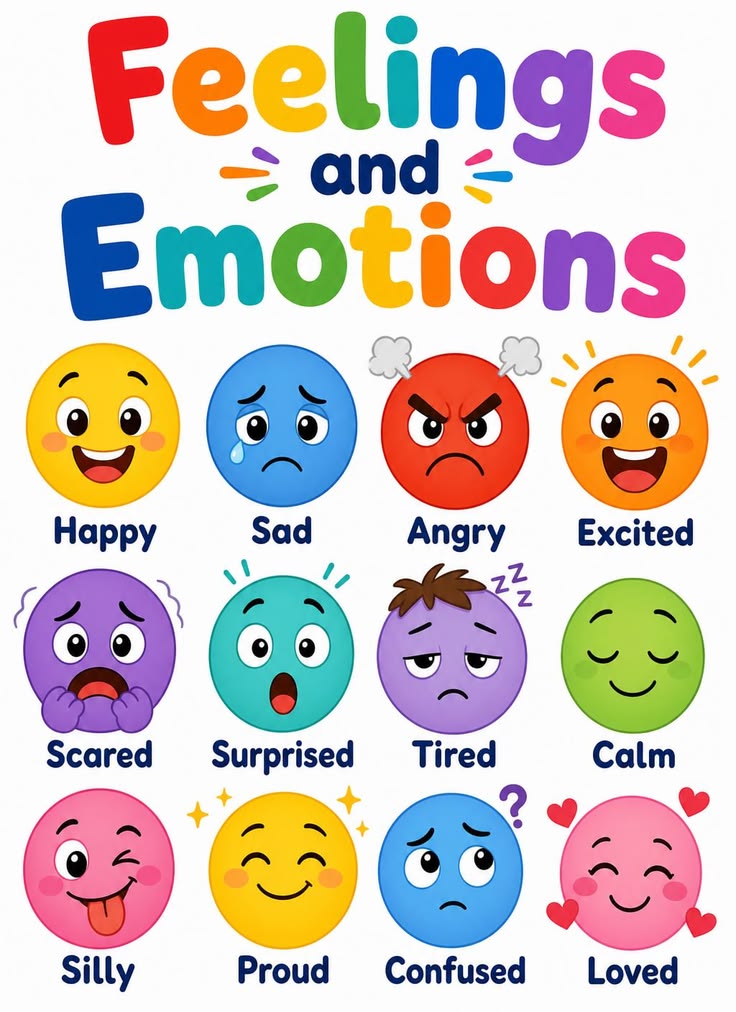
Draw or print a chart showing faces for happy, sad, angry, scared, surprised, and calm. Ask your child to point to the face that matches their mood each day. This is one of the easiest preschool self awareness activities because it needs no reading. Over time, add new emotion words like “frustrated” or “proud” to grow their vocabulary.
Tip: Keep the chart on the fridge so your child can point to it anytime, even before they can explain how they feel.
2. Mirror Time
Source: Pinterest
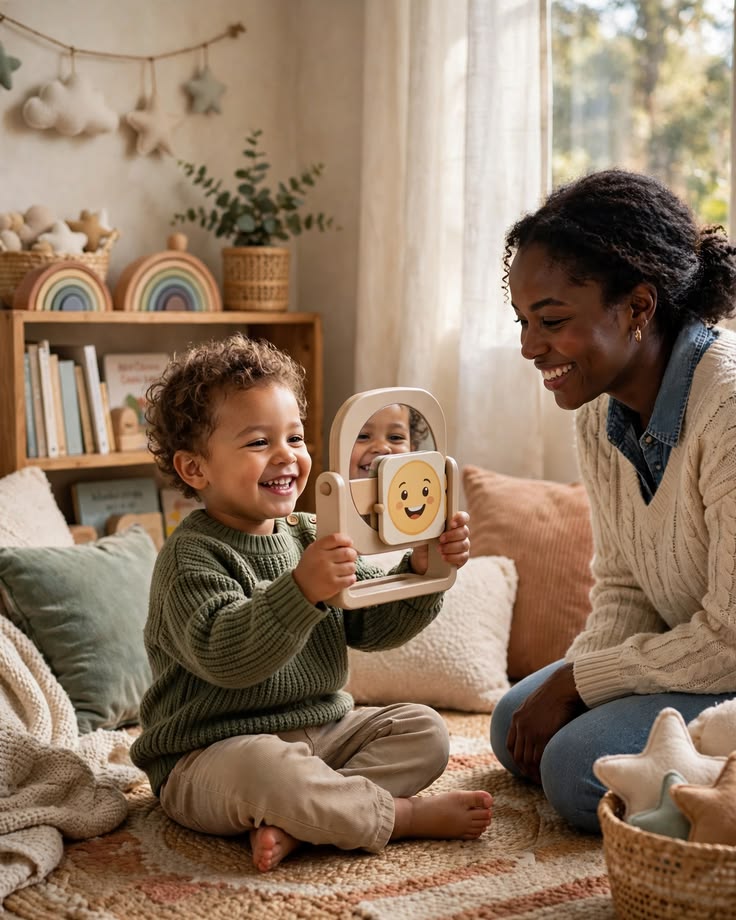
Stand with your child in front of a mirror and make different faces together. Say, “This is my happy face. Can you show me yours?” This works beautifully as one of the self awareness activities for 3 year olds, since toddlers love seeing themselves. Talk about what each expression feels like inside the body.
Tip: Add a simple question like “What makes you smile?” so the activity grows with your child’s language skills.
3. All About Me Poster
Source: Pinterest
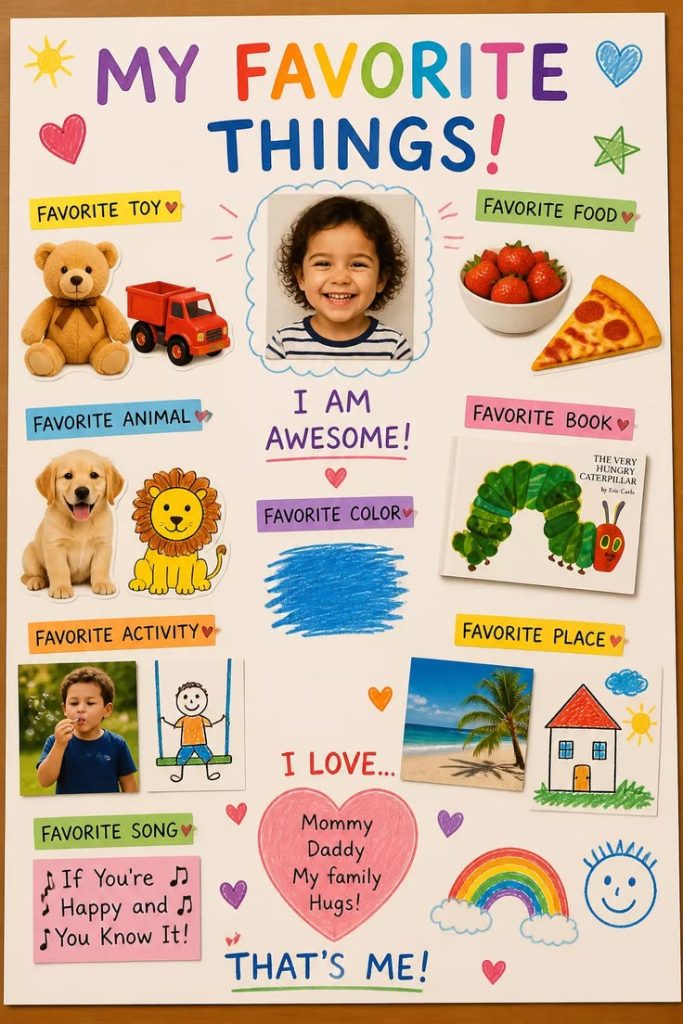
Give your child a large sheet of paper and ask them to draw their family, favourite foods, hobbies, and things they love. Write short labels beside each drawing. This is a great option among self awareness activities for kindergarten, since it celebrates identity. Display the poster in their room as a daily reminder of who they are.
Tip: Let your child choose the colours and pictures themselves, since ownership makes the poster feel more meaningful.
4. Emotion Charades
Write emotions on small slips of paper. Take turns acting them out without speaking while others guess. Afterwards, discuss a time when you felt that emotion. This game teaches children to read body language and link feelings to real events, all while laughing together.
Tip: Start with easy emotions like happy and sad, then move on to harder ones like embarrassed or jealous.
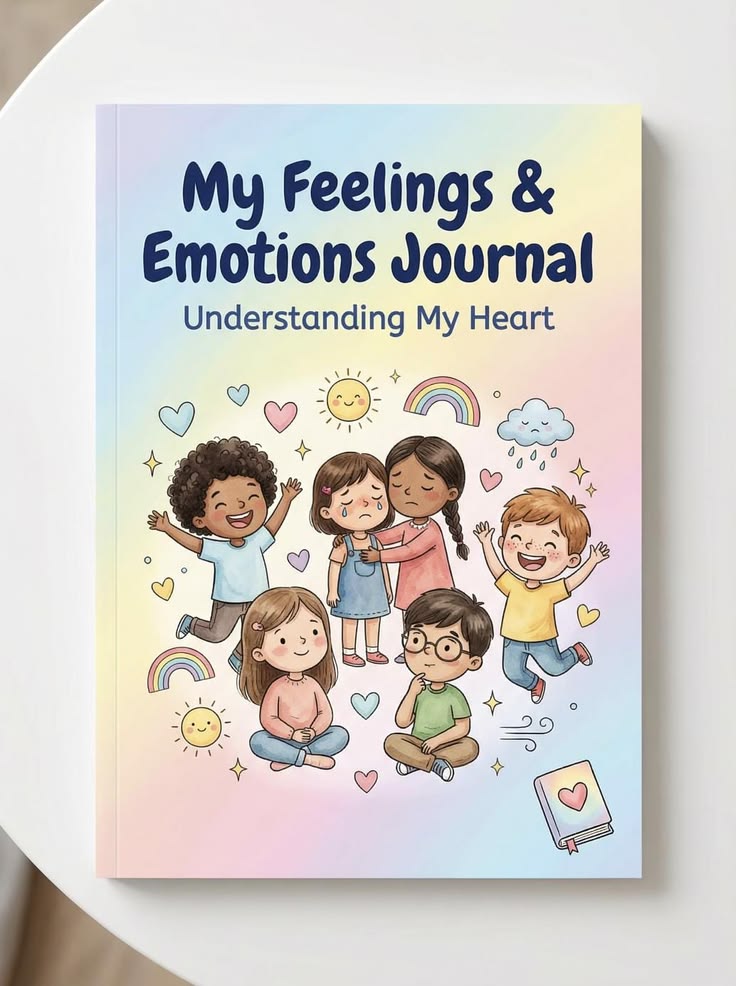
5. Feelings Journal
Source: Pinterest
Provide a notebook where your child can draw or write about their day. Younger kids can sketch a picture and dictate a sentence to you. Older kids can write a few lines about what made them happy or upset. Journaling builds the habit of reflecting without any pressure to be perfect.
Tip: Offer stickers or coloured pencils to make journaling feel like a treat instead of homework.
6. Body Check In
Ask your child to close their eyes and notice their body. Questions like “Is your tummy tight or relaxed?” and “Are your shoulders tense?” help them connect physical sensations to emotions. Practice this for two minutes before bedtime or after a stressful moment. It teaches kids that feelings show up in the body.
Tip: Use a soft, slow voice and keep it short, so the exercise feels relaxing for younger children.
7. Strengths Tree
Draw a tree trunk on paper and cut out paper leaves. Each time your child shows a strength, such as kindness, patience, or creativity, write it on a leaf and stick it to the tree. Watching the tree fill up gives children visible proof of their good qualities, which boosts confidence naturally.
Tip: Add leaves for effort too, such as “tried again after falling,” so kids learn that persistence is a strength.
8. Calm Down Jar

Source: Pinterest
Fill a clear jar with water, glitter glue, and a little glitter. When your child feels upset, they shake it and watch the glitter settle while breathing slowly. Explain that their thoughts settle just like the glitter. This tool helps kids notice rising emotions and choose a calming response.
Tip: Let your child help make the jar so it feels like their own special tool, not a punishment.
9. Weather Check In
Ask your child, “What is your inner weather today?” They can answer sunny, cloudy, stormy, or rainy. This playful metaphor lets shy children share feelings without direct questions. Use it at breakfast or in the classroom as a quick and friendly morning routine.
Tip: Ask a gentle follow up like “What could help the storm pass?” to build simple coping ideas.
10. Story Time Discussions
After reading a picture book, pause and ask questions such as “How do you think the character felt?” and “What would you do?” Linking story emotions to personal experience helps children see themselves in others. Choose books about feelings, friendship, and challenges for the best conversations.
Tip: Let your child pick the book now and then, because their choices reveal what matters to them.
11. Proud Moments Jar

Source: Pinterest
Keep a jar and some paper strips nearby. Whenever your child does something they feel proud of, they write or draw it and drop it inside. On tough days, open the jar and read the notes together. This activity strengthens self worth and teaches kids to notice their own progress.
Tip: Read a few notes together at the end of each month to celebrate how much your child has grown.
12. Likes and Dislikes Sorting
Prepare cards with pictures of foods, games, animals, and activities. Ask your child to sort them into “I like” and “I do not like” piles. Discuss why they chose each. This simple game helps children understand their preferences and learn that it is fine for people to like different things.
Tip: Revisit the cards every few months, since interests change and kids enjoy noticing how they have grown.
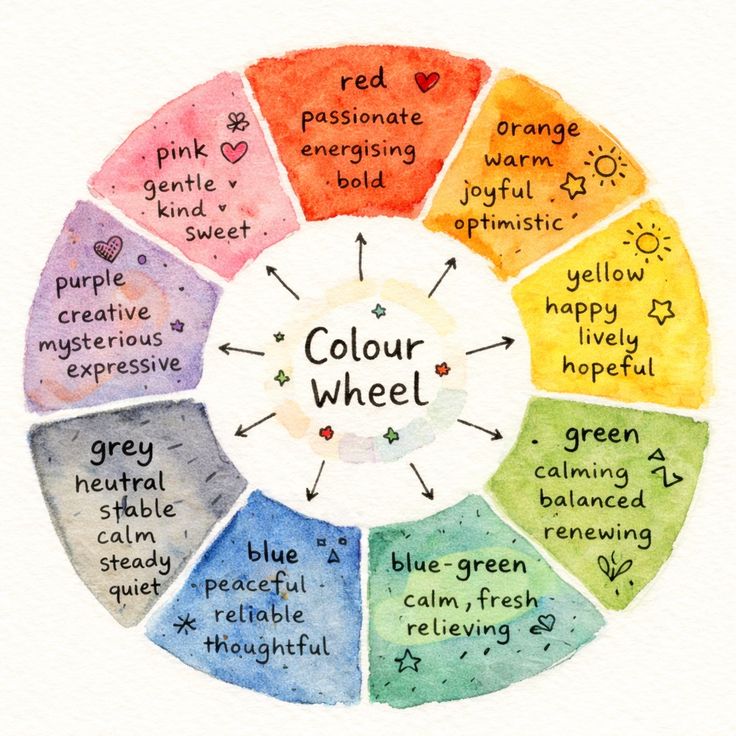
13. Emotion Colour Wheel
Source: Pinterest
Assign a colour to each feeling, like yellow for happy and blue for sad. Let your child colour a wheel and then point to the colour that matches their mood. Many kids find colours easier than words, so this is a gentle way to open up conversations about tricky emotions.
Tip: Display the wheel at eye level so even young children can reach it and use it independently.
14. Gratitude Circle
Sit together as a family and take turns sharing one thing you are thankful for. Encourage children to include something about themselves, like “I am thankful I am a good helper.” Gratitude shifts attention toward positives and helps kids appreciate their own qualities and the people around them.
Tip: Keep the circle short and relaxed, and avoid correcting answers so every child feels safe to share.
15. Bedtime Reflection Questions
At the end of the day, ask three simple questions: “What made you smile today?”, “What was hard?”, and “What would you try differently?” Keep the tone warm and curious, never critical. This calm routine teaches children to review their day honestly and learn from it.
Tip: Share your own answers too, which shows children that adults also reflect, learn, and sometimes find days hard.
FAQs
1. At what age can I start self awareness activities with my child?
You can begin as early as age 2 or 3 with simple games like mirror play and naming feelings. Toddlers and preschoolers learn best through short, playful moments. As your child grows, you can add journaling, discussions, and reflection questions.
2. How often should kids practice these activities?
Aim for a few minutes every day. Short and regular practice builds lasting habits better than one long weekly session. Try linking an activity to an existing routine, such as breakfast or bedtime.
3. What if my child does not want to talk about feelings?
Never force a conversation. Offer indirect options like drawing, colour wheels, or weather check ins. Share your own feelings openly so your child sees that it is safe to express emotions at their own pace.
4. Can these activities help with shyness or low confidence?
Yes. Activities like the strengths tree and proud moments jar give children clear evidence of what they do well. Over time, this awareness helps shy kids feel more comfortable speaking up and trying new things.
Self awareness is one of the most valuable gifts you can give your child. These 15 activities show that growth can happen through play, art, stories, and quiet moments at home or in class. Choose a few that fit your child’s age and personality, and repeat them with patience and warmth. Celebrate effort rather than perfection, and be a model of honest reflection yourself. With steady practice, your child will gain the confidence to understand their feelings and express who they truly are.
Also Read:
Self Awareness in Child’s Development
Memory Games to Play with Your Toddler
Positive Self-talk & Its Benefits for Kids
Was This Article Helpful?
- Author