
Seizures in Children – Causes, Types and Treatment
Understand childhood seizures, their warning signs, possible causes and when parents should seek medical help.




Our editorial process ensures that the information we provide is well-researched and reliable. Learn more about our approach in the FirstCry Parenting editorial policy.
Key Takeaways
- Seizures in children occur due to sudden, abnormal electrical activity in the brain.
- Common causes include fever, infections, head injuries, and certain neurological or metabolic conditions.
- Seizures may involve staring, muscle stiffening, jerking, or changes in awareness.
- During a seizure, protect the child from injury, place them on their side when possible, and never put anything in their mouth.
- Call emergency services if a seizure lasts five minutes or longer.
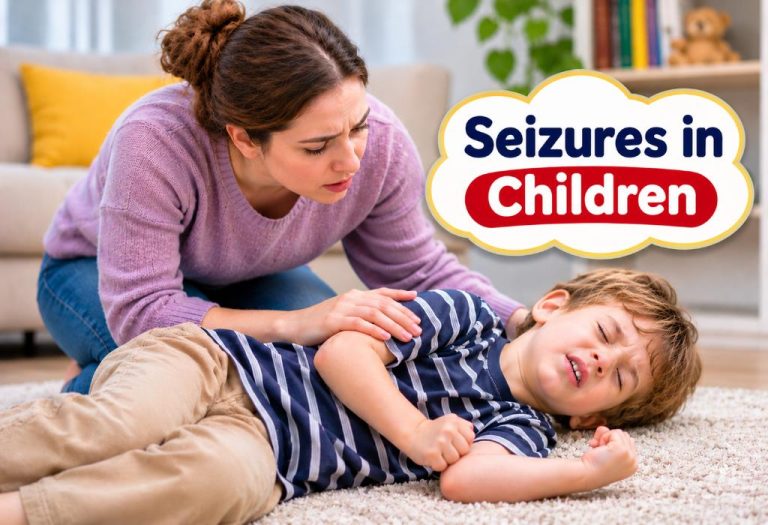
Seizures in children occur when there is a sudden burst of abnormal electrical activity in the brain, causing changes in movement, awareness, or behaviour. While witnessing seizures in kids can be frightening for parents, understanding their causes and treatment options can help them respond calmly and seek timely medical care.
From high fever and infections to underlying neurological conditions, seizures can have several causes. This article covers the common causes, warning signs, first aid, and treatment options to help parents understand the condition and protect their child’s health.
What Are Seizures?
A seizure is a sudden, temporary disturbance in the brain’s normal electrical activity. The brain uses electrical signals to control how the body functions, processes information, and responds to the surroundings. When these signals become unusually intense or disorganised, normal brain activity is disrupted, resulting in a seizure (1).
Types of Seizures in Children
Seizures in children are classified into different types based on how they begin and affect brain activity. The main types include:
- Focal Onset Seizures: These seizures begin in one part of the brain and may affect movement, sensations, emotions, or awareness. They can occur with or without impaired awareness (2).
- Generalised Onset Seizures: These seizures involve networks on both sides of the brain from the beginning and may affect awareness, muscle control, or both (3).
- Absence Seizures: These cause brief episodes of impaired awareness, during which a child may suddenly stop what they are doing and stare blankly for a few seconds (4).
- Tonic-Clonic Seizures: These involve muscle stiffening followed by rhythmic jerking movements and usually cause a loss of consciousness (5).
- Myoclonic Seizures: These cause sudden, brief muscle jerks that may affect one or several parts of the body (6).
- Atonic Seizures: These involve a sudden loss of muscle tone, which may cause a child’s head to drop or their body to collapse (7).
- Febrile Seizures: These occur in young children, usually between 6 months and 5 years of age, in association with a fever. They are not the same as epilepsy and are often brief, although prolonged seizures require urgent medical attention (8).
What Causes Seizures in Children?
One reason seizures may occur in children is that the cells located in the human brain fire in an abnormal manner, this results in minor nerve damage. Another could be due to an extreme change in brain chemistry. Both these types of seizures indicate a form of trauma or brain defect. Seizures in children could also be caused by blunt force trauma to the head; this would be an external impact seizure that might be temporary (9).
Disclaimer – In case of a blow to the head that results in seizures, consult a physician immediately.
A strong negative emotional reaction like fear or anger and a reaction to injuries can cause young children to involuntarily hold their breath; this can also cause seizures in young children. There are other causes for seizures like (10):
- Infections – A common reason for young children to have seizures could be infections like meningitis.
- Developmental disorders – Developmental disorders like cerebral palsy can induce seizures.
- Night terrors – Extreme nightmares or night terrors can create a rapid imbalance in chemicals in the brain in rare cases this causes childhood seizures.
- Psychiatric disturbances – Psychiatric episodes in young children can greatly impact brain chemicals and on occasion cause a seizure.
- Metabolic disorders – Most metabolic disorders in young children compromise their immune systems, which can disrupt the body’s chemical composition causing an imbalance in the system which can rarely lead to seizures.
- Internal bleeding – Internal bleeding, especially in the brain is a known aggressor of seizures in children.
- Medications – If a child does not respond to a type of medication or responds badly to a medicine or type of medication it can on extremely rare occasions lead to a seizure.
- Low Oxygen – A lack of oxygen to the brain no matter the reason can be one of the most common causes of seizures in children.

There are numerous causes and sources of seizures in children. Some causes are still being discovered by researchers.
Note – It is important to remember that the primary key identifier for epileptic seizures in children is deductive reasoning. If a seizure is not due to external influences like night terrors, medication, an injury, a fever or a lack of oxygen to the brain then the chances are the child has epilepsy.
What Are the Signs and Symptoms of Seizures in Kids?
Depending on the cause the signs of seizures can vary. Not all types of seizures in children are considered life-threatening, it is crucial for the health of the child that the parents not panic and jump to conclusions.
Disclaimer – Please consult a physician if seizures are recurring in the child, do not self-medicate.
Here are some of the most common symptoms of seizures in children (11).
- The child’s alertness is key in helping doctors identify if the child has had a seizure. If the child does not respond in a clear and alert manner it can indicate that they either had a seizure or one is coming.
Disclaimer – The lack of alertness can be an indicator of seizures but it doesn’t guarantee one is coming or has happened, this factor only helps a doctor decide if further examinations are required.
- Extreme confusion as a result of random clapping, lip-smacking, loud chewing and repetitive motions can indicate seizures. If these seizures are common it can be indicative of a condition called complex partial seizures.
- Spasms that move from one group of muscles to the other followed by the symptoms of complex partial seizures can indicate a type of seizure called march seizures, during an episode of this type of seizure the children may behave strangely, be disoriented and have no memory of the seizure itself after it dissipates.
What Are the Risks and Complications of Seizures in Children?
While seizures look frightening, they do not cause any damage themselves. Some forms of partial seizures can cause fear in both the child as well as people around him. Since the child has no control over his or her actions, they can repeat motions and movements that are worrying to people watching.
Seizures can also cause injury if the convulsions are particularly violent. Sometimes, the child could be holding an object that could cause injury while the muscles jerk. They could also get hurt when they hit the ground or hit another object near them.
The scenario is different if the seizure lasts for more than five minutes as it could cause brain damage. Make sure you rush your child to the emergency room in such cases.
How Are Seizures Diagnosed in Kids?
There are various tests a doctor can use to diagnose your child. These tests are based on the age of your child and the type of seizure your doctor thinks your child suffers from. This can be determined by giving the doctor a detailed history of your child’s medical health including any dangerous chemicals they might have been exposed to. Try to describe in detail the actual seizure with records of how long it lasted, time of occurrence, and extent of tiredness afterwards.
The tests are based on the type of seizure. Some of them are as follows (12):
- If your doctor suspects that your child has had a febrile seizure, the first line of defence is to cure the actual fever. Blood tests might be carried out to determine the cause of the fever to better treat it. Very rarely is a child admitted to a hospital for having a febrile seizure.
- If your child is having a movement seizure in the emergency room, then medications will be given to stop it. Your doctor will prescribe that you get an EEG for your child to study the electric waves of his brain. Commonly, a CT scan or an MRI could also be recommended to rule out the presence of a tumour.
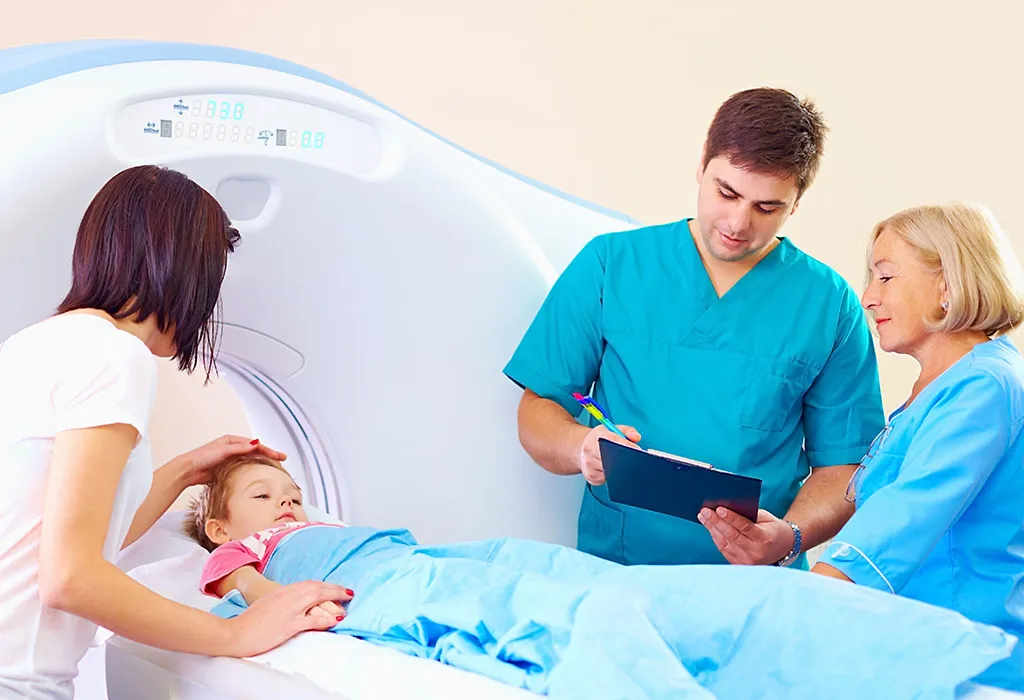
- A petit mal seizure is also diagnosed using an EEG. If the condition is confirmed, then your child will be put on medications to control the condition.
Treatment for Seizures in Children
There are multiple steps you can take to make sure that the effect of the seizure on your child is kept to a minimum. There are some that you can do in your home and others where you will need medical assistance (13).
Home Treatment
Sometimes, you might be in charge of overseeing a large group of kids’ play activities. Here is what to do if a child has a seizure.
- Clear the area of objects that may harm your child including anything your child was holding or wearing, such as his glasses.
- Loosen any clothing, especially around the area of the neck so that his breathing is not obstructed.
- Make sure your child is breathing. Call for help if he is not.
- Do not attempt to hold down your child as he goes through the seizure. You could end up hurting both your child and yourself.
- After the seizure, roll your child onto his side and observe his breathing. If he isn’t, then administer CPR. Do not attempt this while he is experiencing the seizure.
- Do not give your child any food, liquids or medications immediately after a seizure.
- Stay with your child until he is fully awake. Keep a track of the amount of time the actual seizure lasted as well as the recovery time.
Medical Treatment
The treatment for seizures in children is very different from that in adults. Unless the root cause of the seizures is pinpointed, doctors will not recommend medication to your child.
Most children suffer from seizures only once in their lives. This is one of the main causes for not medicating children who have had their first seizure. Some of the drugs used to treat seizures could cause damage to the liver or teeth apart from having other side effects.
If your doctor has prescribed medication for seizures, then this will be followed by multiple blood tests as the doctor carefully regulates the drug dosages.
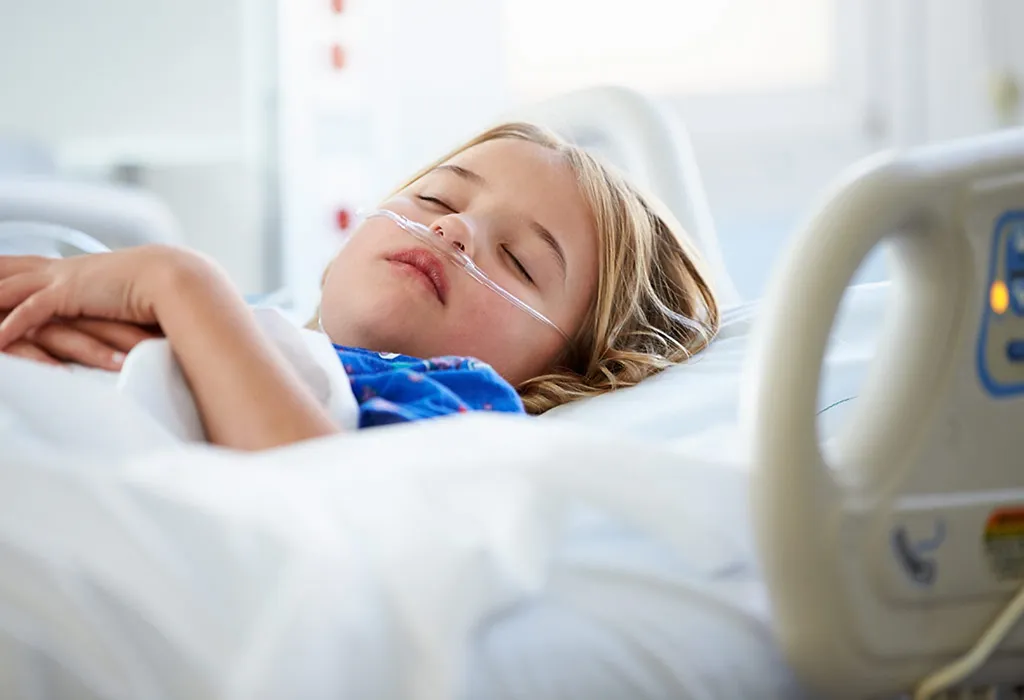
In the case of status epilepticus, your child will be admitted to the ICU and will be administered with anti-seizure medication.
Can Seizures in Children Be Prevented?
Unfortunately, most types of seizures cannot be prevented. Only in the case of febrile seizures in a child, can you take care to ensure that the fever is treated quickly. One of the best things you can do is ensure that your child does not get hurt when experiencing a seizure. Since most kids with seizures can enjoy a full and active life, care must be taken to ensure that an adult is around for supervision. Make sure you run the scenario of a seizure with the adult and should at least give them your emergency contact numbers. You must also have a shower in the bathroom your child uses as opposed to a bathtub as the latter runs the risk of accidental drowning in case of a seizure.
Prognosis for Seizures
Usually, children with seizures go on to have full and rewarding lives. Sometimes, their brains ‘outgrow’ their seizures and stop having them for years. This is a great time for your doctor to wean your child off medication and see if he can continue having a seizure-free life.
Even children who suffer from status epilepticus have a low risk of dying from this type of seizure. In fact, if your child gets timely medical help, there is no reason to assume that he will suffer from permanent damage.
However, children who suffer from developmental disabilities or have neonatal seizures can suffer from limitations and might need special attention as they grow. Your doctor will be able to best tell you what you can realistically expect.
Can Seizure Disorders in a Child Cause Brain Damage?
In case your child experiences many seizures that last for a short time, then your child will not suffer any brain damage. Damage is usually caused when the seizure continues for more than five minutes. It is imperative that you keep track of your child’s seizures and call for help as soon as you think the seizure is going to last for more than five minutes. Sometimes, seizures will be accompanied by periods of where your child does not breathe. If the brain’s supply of oxygen is cut-off for an extended amount of time, then this could also damage the brain (14).
You must ensure that your child receives immediate medical help when he has a seizure. It is best to leave it to your doctor to make the final diagnosis. Have an open and honest discussion with your doctor regarding the lifestyle of your child as well as any treatment your doctor would recommend.
FAQs
1. How long do seizures in children usually last?
Most seizures last from a few seconds to a few minutes. However, a seizure lasting five minutes or longer is a medical emergency and requires immediate treatment. Parents should time the children’s seizures and seek emergency help if it continues for five minutes.
2. Can seizures in children happen during sleep?
Yes, seizures can occur while a child is asleep. Parents may notice unusual jerking movements, sudden stiffening, unusual sounds, or confusion upon waking. If these episodes happen repeatedly, a doctor should evaluate the child to determine whether they are seizures.
Make sure you have a discussion with your child about his condition. Try to be as honest as you can without scaring him, and answer any and all questions he may have. Remember, your child is probably just as scared as you are and it would comfort him to know that he is not alone.
References/Resources:
2. National Library of Medicine – Focal Onset Seizure
3. International League Against Epilepsy – GENERALIZED ONSET SEIZURE
4. Mayo Clinic – Absence seizure
5. Epilepsy Foundation – Tonic-Clonic Seizures
6. Cleveland Clinic – Myoclonic Seizure
7. Epilepsy Foundation – Atonic Seizures
8. Mayo Clinic – Febrile seizure
9. CINCINNATI CHILDREN’S HOSPITAL – Seizures in Children
10. Epilepsy Foundation – Causes of Epilepsy in Childhood
11. Boston Children’s Hospital – Seizures in Children
12. Epilepsy Foundation – Diagnosing Seizures in Children
13. Nationwide Children’s – Seizure Treatment
14. PubMed – Do seizures cause brain damage?
Also Read:
Epilepsy in Kids
Causes of Febrile Seizures
Absence Seizures in Children
Was This Article Helpful?
Parenting is a huge responsibility, for you as a caregiver, but also for us as a parenting content platform. We understand that and take our responsibility of creating credible content seriously. FirstCry Parenting articles are written and published only after extensive research using factually sound references to deliver quality content that is accurate, validated by experts, and completely reliable. To understand how we go about creating content that is credible, read our editorial policy here.
- Author


Related Articles
-

Dealing with Croup in Kids
-
Typhoid Fever in Children – Symptoms, Causes, and Treatment
-

20 Home Remedies for Urinary Tract Infections (UTI) in Kids
-

Pediatric Vital Signs - What's Normal for Your Child and What's Not
-

Essential Oils for Babies and Kids - Safety, Uses and Benefits
-

Important Vaccinations for Children Above 1 Year