
Infant Car Seat vs Convertible Car Seat: Which Is Better?
Compare infant and convertible car seats to understand their features, safety, benefits, and which option best suits your baby's age and travel needs.




In this Article
- What Is an Infant Car Seat?
- What Is a Convertible Car Seat?
- Infant Car Seat vs Convertible Car Seat: What Are the Differences?
- What Should You Check Before Buying an Infant or Convertible Car Seat?
- Which Car Seat Is Right for Your Baby: Infant Car Seat or Convertible Car Seat?
- FAQs
View More
Key Takeaways
- An infant car seat faces the rear only and carries easily, while a convertible seat turns forward facing later.
- Infant seats suit newborns but are outgrown sooner because their weight and height limits are lower.
- Convertible seats stay in the car and cover more years, from baby to toddler.
- Check the approval label, weight and height limits, fit in your car and manufacture date before buying.
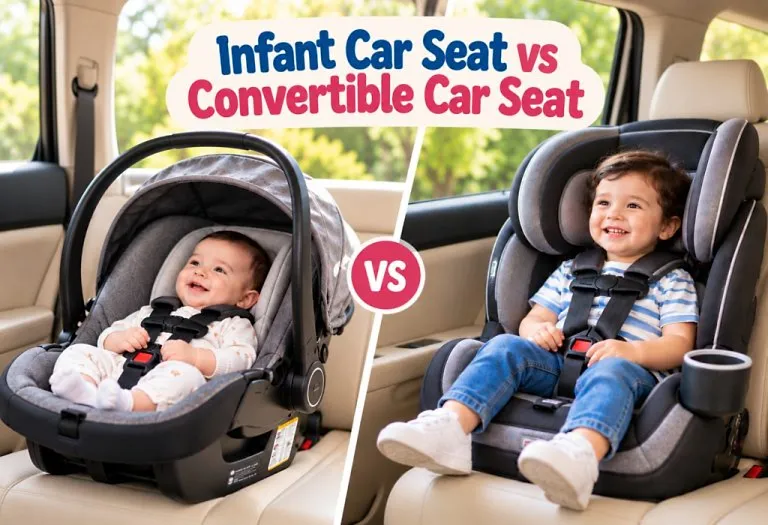
The infant car seat vs convertible car seat decision comes down to portability and long-term use. Infant seats are lightweight, easy to carry and designed for newborns, while convertible seats stay in the car and last longer. Parents comparing an infant car seat versus convertible should consider weight limits, fit, portability and cost. Both types can work for newborns, including during cab travel, when properly fitted and installed. Read on to explore how the two options differ, their pros and cons, and what to check before buying.
|
Key Facts Convertible seats allow longer rear facing. AAP advises rear facing as long as possible, and most convertible seats allow 2 years or more. Infant seats have lower weight limits. AAP gives 22 to 35 pounds (about 10 to 16 kg) for infant seats and up to 40 to 50 pounds (about 18 to 23 kg) for many convertible seats. Labels follow two standards. UNECE says R44 groups seats by child weight, while R129 uses child size and requires rear facing from birth to 15 months. |
What Is an Infant Car Seat?
An infant car seat is a small, rear facing only seat for newborns and young babies. NHTSA confirms that infant only seats can only be used rear facing. Most have a carrying handle and a base that stays in the car, so the seat clicks in and out. Weight and height limits are lower than in convertible seats.
Benefits of an Infant Car Seat
An infant car seat offers several conveniences for parents, especially during the early months. Here are some of its key benefits:
- Snug newborn fit: Very small babies who can sit semi reclined usually fit better in rear facing only seats, says AAP.
- Easy to carry: A handle makes the seat easy to lift in and out.
- Base stays in the car: The seat clicks into a base, and extra bases suit a second vehicle.
- Rear facing by design: The seat cannot be turned forward too early.
Limitations of an Infant Car Seat
While infant car seats make newborn travel easier, they also have a few drawbacks worth considering. Let’s look at the main limitations:
- Short usage window: Babies reach the weight or height limit sooner.
- Second seat needed: A convertible seat usually follows, adding to the cost.
- Travel use only: AAP says the seat is for travel only, not sleeping or feeding outside the car. Combined car seat and carry cot products need care.
- Heavy as baby grows: A growing baby makes the seat heavy to carry.
What Is a Convertible Car Seat?
A convertible car seat is a larger seat that starts rear facing and later turns forward facing as the child grows. The seat stays installed in the car and has no carrying handle. Higher rear facing limits let children ride rear facing for longer. Most use a 5 point harness over the shoulders, hips and between the legs.
Benefits of a Convertible Car Seat
A convertible car seat can make everyday travel more convenient as your child grows. Here’s what makes it a practical choice:
- Longer rear facing: Higher limits keep rear facing possible for longer, in line with AAP advice.
- More years of use: One seat serves the baby and toddler years.
- Stays installed: The seat stays in the car, so you install it once and recheck it.
- Adjustable fit: Recline positions and harness heights adapt as the child grows.
Limitations of a Convertible Car Seat
Of course, a convertible car seat may not suit every family’s needs. Here are a few things to consider before choosing one:
- Bulky with no handle: The seat is bulkier, with no handle or separate base.
- Fit in smaller cars: A larger seat can be a tight fit in a small car.
- Newborn minimums: Check the minimum weight on the label for very small newborns.
- Harder to move: Reinstalling in a cab or second car takes longer than clicking in an infant seat.
Infant Car Seat vs Convertible Car Seat: What Are the Differences?
The difference between convertible and infant car seat designs shows up in portability, limits and years of use. The table below compares six points parents check first.
|
Feature |
Infant Car Seat |
Convertible Car Seat |
|
Facing direction |
Rear facing only |
Rear facing, then forward facing |
|
Typical age |
Newborns and small babies |
Babies through the toddler years |
|
Weight limits |
Lower |
Higher |
|
Portability |
Handle and detachable base |
Stays in the car with no handle |
|
Installation |
Seat clicks into a base |
Installed directly in the car |
|
Years of use |
Shorter |
Longer |
What Should You Check Before Buying an Infant or Convertible Car Seat?
Choosing between an infant and convertible car seat involves more than comparing features and prices. Here’s what to look for before making a decision.
- Approval label: UNECE advises using only seats approved under ECE R44/04 or R129.
- Weight and height limits: Match the limits to your child’s size.
- Fit in your car: Test the seat in your car, since NHTSA notes not all car seats fit all vehicles.
- Installation method: Check for ISOFIX points, or follow the manual for seat belt installation.
- Harness and side protection: Look for a 5 point harness and side impact protection.
- Age and history: NHTSA says a used seat needs its manufacture date and model number and no moderate to severe crash history.
On FirstCry, a shopping destination parents turn to for baby and kids essentials, filter baby car seats by type, age, weight, installation system and safety standard. The Babyhug Expedition 3 in 1 convertible seat is named ECE R44/04 certified, with a 0 to 6 years age band.
Which Car Seat Is Right for Your Baby: Infant Car Seat or Convertible Car Seat?
The infant car seat vs convertible car seat for newborn decision comes down to fit, car use and budget. An infant seat is the better choice for a small newborn, for families who move the seat between cars or use cabs, and for parents who prefer to carry the seat. A convertible seat is the better choice when the seat stays in one car, when buying once matters, or when the baby has outgrown the infant seat. Many families start with an infant seat and move to a convertible seat at the seat’s limit. Whichever seat you pick, keep your baby rear facing, since NHTSA says children under age 1 should always ride rear facing. Neither option removes the need for a tight installation and snug harness on every trip.
FAQs
1. Which car seat is better for frequent travel with a baby?
An infant car seat is convenient for frequent travel because it is lightweight, portable and easy to carry between vehicles. A convertible car seat stays installed in the car, making it more suitable for families who mostly travel in their own vehicle.
2. Are infant car seats compatible with all strollers?
No, infant car seats are not compatible with all strollers. Compatibility depends on the stroller and car seat models. Some work together directly, while others require specific adapters. Always check the manufacturer’s compatibility guidelines before buying.
3. Should parents buy a car seat with ISOFIX or a seat-belt installation system?
Both installation systems can provide secure installation when used correctly with a compatible vehicle and car seat. ISOFIX uses dedicated vehicle anchor points, while seat-belt installation relies on the vehicle’s seat belt. Parents should check their vehicle’s compatibility and follow the car seat manufacturer’s instructions.
4. Which car seat features are worth paying extra for?
Features such as side-impact protection, adjustable harnesses, multiple recline positions, easy-to-remove covers and clear installation indicators can make everyday use more convenient. Prioritise features that meet recognised safety standards and suit your child’s needs rather than paying extra for unnecessary additions.
5. When should you switch from an infant car seat to a convertible car seat?
Switch when your baby reaches the infant seat’s height or weight limit, or no longer fits within its manufacturer-specified requirements. You don’t need to wait until your baby reaches a particular age. Check the seat’s manual before making the transition.
6. Can a convertible car seat be used from birth?
Yes, many convertible car seats are designed for newborns and can be used from birth in the rear-facing position. However, check the minimum weight and height requirements, newborn insert instructions and recline settings to ensure a proper fit.
7. Which car seat is easier to install and remove: infant or convertible?
Infant car seats are generally easier to remove and carry, especially when used with a compatible detachable base. Convertible car seats are designed to remain installed in the vehicle, so moving them between cars can take more time and effort.
8. How long can a baby use an infant car seat?
A baby can use an infant car seat until they reach its specified height or weight limit, whichever comes first. This varies by model, so check the manufacturer’s guidelines. Some babies outgrow their infant seats within their first year, while others use them longer.
9. Is a rear-facing infant car seat safer than a forward-facing convertible car seat?
Rear-facing travel provides better support for a young child’s head, neck and spine during a crash. A convertible car seat can also be used rear-facing. Children should remain rear-facing until they reach the seat’s specified rear-facing height or weight limit rather than switching to forward-facing too early.
10. Do infant and convertible car seats expire?
Yes, both infant and convertible car seats have expiration dates. Materials can deteriorate over time, and safety standards may change. Check the manufacturer’s label or manual for the expiry date, and avoid using a seat that has expired or been involved in a crash unless the manufacturer confirms it remains usable.
11. Which are the best car seat brands for babies?
No single brand suits every baby, so compare approval label, limits, installation method and fit in your car. UNECE advises only R44 or R129 approved seats. On FirstCry, home brand Babyhug lists the Expedition 3 in 1 convertible seat, with a 0 to 6 years age band.
12. Where can I buy a reliable infant or convertible car seat?
Buy a car seat only where the listing states the approval standard, weight range and age band. On FirstCry you can filter baby car seats by type, age, weight, installation system and safety standard. Check the label on arrival.
An infant car seat suits newborns and easy carrying, while a convertible seat suits longer use in one car. Keep your child rear facing as long as the seat allows, and never in front of an active airbag. Before buying, check the approval label, weight and height limits, fit in your car and manufacture date. Many families use an infant seat first, then a convertible. Ask your paediatrician if unsure.
Was This Article Helpful?
1. American Academy of Pediatrics – Rear-Facing Car Seats for Infants & Toddlers
2. United Nations Economic Commission for Europe – UN Regulation No 129
3. National Highway Traffic Safety Administration – Car Seats and Booster Seats
4. National Highway Traffic Safety Administration – Used Car Seat Safety Checklist
- Author


Related Articles
-

Watery Discharge During Pregnancy – Is It Normal?
-

Your Baby this Week
-

Airport Scanners When Pregnant: Are They Safe for You & Your Baby?
-

Blighted Ovum (Anembryonic Pregnancy): Signs, Causes & Treatment
-

Plagiocephaly (Flat Head Syndrome) - Reasons & Treatment
-

Handling Preschoolers with Fussy Eating Habits