

Eczema in Pregnancy – Causes Symptoms and Treatment
Learn the causes, symptoms, and safe treatment options for eczema (dermatitis) during pregnancy, plus tips to relieve itchy skin.





Medically Reviewed By
Dr. Rashmi Sriram
(Dermatologist)

In this Article
- Types of Eczema
- Causes of Pregnancy Eczema
- Signs and Symptoms Eczema During Pregnancy
- Who Is More Prone to Eczema During Pregnancy?
- How Is Eczema During Pregnancy Diagnosed?
- Does Eczema Affect the Baby?
- Pregnancy Eczema Treatment and Medication
- Management of Eczema During Pregnancy
- Things You Can Do to Keep Skin Healthy and Hydrated During Pregnancy
- When to Consult a Doctor?
- FAQs
View More
This health content has been medically reviewed by qualified experts and follows the FirstCry Parenting editorial policy to ensure accuracy and reliability.
Eczema during pregnancy can be frustrating and can appear as itchy, dry, or inflamed skin; harder to control. According to the American Academy of Dermatology, dermatitis and pregnancy is one of the most common dermatological combinations women face (1). The condition can either develop for the first time during pregnancy or worsen in someone who already has the condition. What triggers eczema in a number of pregnant women is fluctuating hormones. You may also wonder whether it could have any effect on the developing baby or the course of pregnancy. Rest assured; with simple and dedicated practices, eczema flare-ups can be controlled. A gentle skincare routine, fragrance-free moisturisers, and appropriate medical treatment prove to be a great help. It is advisable for pregnant women to consult their doctors if they face persistent eczema before starting or changing any medication.
Types of Eczema
Here are some common types of eczema:
1. Contact Dermatitis
In contact dermatitis, the skin irritation is triggered when the skin comes into contact with the typical triggering element. The Cleveland Clinic states that most of the elements are specific soaps or fragrances, certain kinds of fabrics that are synthetic, dyes, dust, or other things. Once these objects come in contact with the skin, they may trigger eczema (2). By replacing the entity causing the trigger, further aggravation can be prevented.
2. Atopic Dermatitis
Atopic dermatitis is slightly different from contact dermatitis. This isn’t due to skin contact as such, so it cannot be easily combated. This kind of dermatitis may occur due to sensitivity towards a specific type of food, any allergens in the environment, or even abrupt weather changes. As per the Mayo Clinic, it could be due to a weak skin barrier function or excessive presence of the bacteria Staphylococcus aureus on the skin (3). At times, the change in hormones in a pregnant woman’s body can cause the skin to become inflamed and itch, resulting in eczema (4).
Causes of Pregnancy Eczema
- In pregnancy, eczema usually occurs in the earlier months due to fluctuating hormones (5). Primarily, in the early stages of pregnancy, the mother’s immunity is lower than usual since the body is working beyond its usual capacity to prepare for the changes yet to come.
- As the foetus is undergoing formation and requires as much protection as possible, the mother’s body is left vulnerable in ensuring the safety of the newborn child.
- In such a case, the body’s immune system develops antigens that aggressively fight any and every sign of attack. This results in them, at times, attacking the cells of the body itself, which results in eczema.
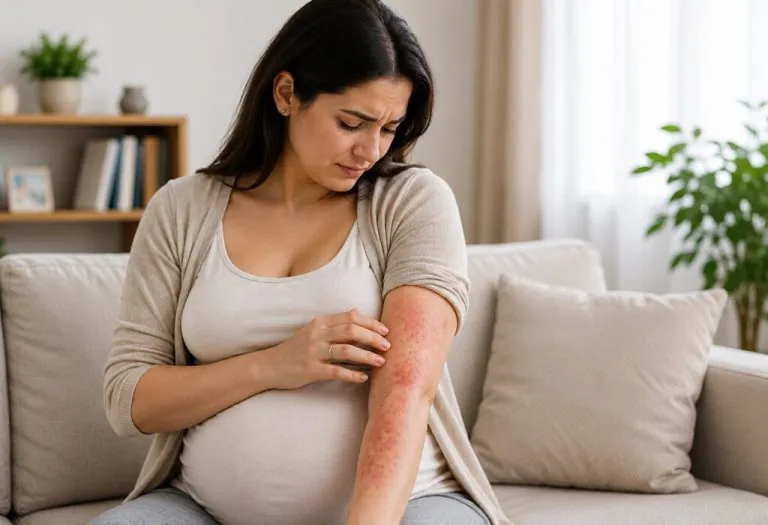
- Tiny red rashes form on the skin; they itch a lot with a burning sensation and turn red. These are the tell-tale signs of eczema. With undue stress and any chronic disease, this condition can continue to exist or worsen further.
- Inflamed oral cavities, sinusitis, and a number of other diseases that cause various pathogens to exist in the body further increase the aggression of the antigens. This aggression then causes eczema to grow further.
Signs and Symptoms Eczema During Pregnancy
Here are some more signs and symptoms of eczema during pregnancy:
- Multiple rashes
- Red bumps that are rough and itchy
- Bumps that are often grouped together in clusters
- Bumps that have a crust-like layer
- Visibility of certain pustules
- Previous history of eczema
Who Is More Prone to Eczema During Pregnancy?
In most cases, pregnancy-induced eczema is the first time that most women have experienced eczema in their lives. Furthermore, any history of eczema earlier in life could cause it to flare up again during pregnancy. Estimates point to roughly 20-40 per cent of cases being in women who have experienced eczema before. Nearly 60-80 per cent women experience eczema for the first time during their pregnancy.
How Is Eczema During Pregnancy Diagnosed?
The diagnosis of eczema is generally made by visual examination. Most doctors can instantly tell the presence of eczema by looking at the skin. In certain cases, a biopsy might be conducted to confirm it.
The doctor might ask you to recall any changes you noticed in your body during the months of your pregnancy. They will primarily work towards ruling out any other causes that might lead to similar red spots to appear, ensuring your baby is safe.
It’s best to personally note the specific time around when you first spotted the changes in your skin, if any lifestyle or routine changes have been undertaken following which the spots began to appear, any particular aspect that helped reduce eczema or worsened it, and so on.
Do remember to tell your doctor all the medication you are currently taking during pregnancy, as well as any treatment you might have tried previously for eczema.
Does Eczema Affect the Baby?
Eczema does not directly harm the baby at all, since it cannot reach the foetus via the placenta. The presence of eczema, however, can irritate the mother and cause stress, which could affect the baby. Being emotionally and mentally stable without undue stress is highly required for the baby.
Pregnancy Eczema Treatment and Medication
Treatment for dermatitis in pregnancy varies with the severity. In a majority of cases, eczema cream for pregnancy is generally recommended along with moisturisers and ointments to keep it under control. Below are the treatments for pregnancy eczema.
- A prescription for a steroid ointment might be authorised in case the eczema is too severe. Though topical steroids and emollient products are safe during pregnancy, it’s best to reconfirm the same with your doctor (6).
- Certain people have undertaken UV light therapy to clear eczema, too (7).
- Any treatment methods involving Trexail, Rasuva or PUVA are harmful to the foetus and should be avoided during pregnancy as well as breastfeeding (8).
You may try some home remedies to manage eczema during pregnancy. They can give you relief and reduce the intensity of the irritation. Here are some practical natural remedies for eczema during pregnancy:
- Warm showers should be preferred over hot showers.
- Use moisturisers right after the shower to keep the skin hydrated.
- Opt for clothing that is made from 100% cotton. Clothes made from hemp or wool might end up irritating your skin.
- Make sure your clothes are not snug or tight, but loose and comfortable.
- Replace soaps with moisturising gels.
- If your home is in a hot area, try using humidifiers inside to keep your air from drying up.
- Regularly drink a good amount of water for yourself and the baby.
Management of Eczema During Pregnancy
Here are some things you can do to manage eczema during pregnancy.
1. Avoid Irritants
The first step is to remove the triggering entity that causes eczema in the first place. It is always in your favour to see if replacing your soaps or lotions can keep it in check. Sometimes, cleaning detergents or certain food items could also be the culprits. These might not be the only reason behind your eczema. However, replacing them can prevent chances of it occurring again and keep it in check.
2. Curbing the Itch
The itching sensation is extremely irritating, and any itching done to the affected area will further aggravate it. It can, however, be curbed in a few ways.
- Massage the area by applying pressure with your fingertips instead of scratching it.
- Use a washcloth to rub the area to get some instant relief.
- Place dampened and wrung pyjamas or gloves on the affected area. It will soothe the itch and help some moisture enter the skin.
- Using peppermint oil is yet another way to combat the itch. Start by applying some coconut oil or olive oil over the entire area. Then, add just a single drop of peppermint oil and spread it as widely as possible. This dilution is necessary to prevent any further irritation. Do not use it where the skin has broken since it will sting a lot. Avoid using this oil once you are in the third trimester of pregnancy.
- Add some baking soda to your bath water and soak in the affected area. Remember to moisturise immediately after.
- This is admittedly a weird option, but some people have found oatmeal baths quite soothing.
- The standard coconut oil is also a great moisturiser and also prevents the broken skin from catching any infection.
- Go for cotton woven pyjamas and bedsheets. The smooth texture will help the skin recover sooner.
- Wear cotton socks in case eczema has affected your feet. For hands and palms, using long-sleeved shirts and cotton gloves goes a long way.
- Contrary to popular opinion, the sun can actually help in reducing the itch and heal the skin sooner. Without letting yourself get burnt, try staying out in the sun for slightly longer than usual.
Things You Can Do to Keep Skin Healthy and Hydrated During Pregnancy
The constant scratching and itching can break down the skin completely and render it unable to hold the moisture required. It’s necessary to reduce the chances of dry skin by rebuilding healthy skin for yourself.
- Drinking judicious quantities of water is necessary. It shouldn’t be a lot since it does not directly hydrate the skin, but remember to consume the daily quota that’s required.
- Moisturising the skin is similar to rebuilding the first line of defence for the skin. With a damaged lipid barrier failing to hold the skin’s moisture, a moisturiser helps keep the skin soft.
- Showers, when long and hot, dry out the skin rather than keeping it wet. Go for small warm showers and use a moisturiser right after you’re done.
- Avoid manual shavers and go for electric razors instead to avoid any scratches or injuries to the skin.
When to Consult a Doctor?
We suggest consulting a doctor if the current treatment for eczema doesn’t bring any relief, the eczema symptoms interfere with work and personal life or affect your sleep cycle, or if you see the following signs of infection:
- pus or scabs
- red streaks
FAQs
1. Can a mother’s eczema affect her developing baby?
The American Academy of Dermatology Association states that a mother’s eczema during pregnancy doesn’t directly harm the baby, but it increases the chances for the baby to develop eczema. Some complications, such as staph infection, arising from severe maternal eczema could increase the risk for both the mother and the baby (9).
2. What eczema treatments should pregnant women avoid?
Certain eczema medications, including Methotrexate, Mycophenolate mofetil, and PUVA phototherapy, can have adverse side effects during pregnancy. In fact, your doctor may even suggest that you use contraception while taking these treatments and stop them weeks and months before planning to conceive.
3. Can I continue the same eczema medication while breastfeeding that I used during pregnancy?
Yes, you may continue the topical steroid creams and moisturisers in the breastfeeding phase that you used while pregnant. In most situations, breastfeeding is ok with eczema treatments.
4. Is pregnancy eczema contagious?
No, eczema during pregnancy does not transmit through physical contact from one person to another. It is not contagious.
Eczema and pregnancy are not meant to go hand-in-hand but usually end up so. As irritating as it might be, it is necessary to remember and maintain a positive attitude while fighting against it. Keeping eczema in check and keeping your spirits high are the best ways to maintain your health and the baby’s, too.
Also Read:
Itching in Pregnancy
Rashes while Pregnant
Dry Skin during Pregnancy
Was This Article Helpful?
Parenting is a huge responsibility, for you as a caregiver, but also for us as a parenting content platform. We understand that and take our responsibility of creating credible content seriously. FirstCry Parenting articles are written and published only after extensive research using factually sound references to deliver quality content that is accurate, validated by experts, and completely reliable. To understand how we go about creating content that is credible, read our editorial policy here.
1. American Academy of Dermatology Association – HOW TO TREAT ECZEMA DURING PREGNANCY
2. Cleveland Clinic – Contact Dermatitis
3. Mayo Clinic – Atopic dermatitis (eczema)
5. MotherToBaby – Shedding Light on Atopic Dermatitis and Pregnancy: Understanding Light Therapy
6. Ducray – What is pregnancy eczema?
7. ScienceDirect – The management of severe eczema in pregnancy
- Author
- Expert Reviewer

Related Articles
-
Maternity Leave and Maternity Benefit Act 2017
-

Metabolic Changes During Pregnancy - Can Pregnancy Boost Your Metabolism?
-
Taking Melatonin During Pregnancy - Benefits & Side Effects
-
Rhinitis in Pregnancy: Causes, Symptoms, and Home Remedies
-
Can You Get a Root Canal While Pregnant? Know the Risks
-
CT Scan During Pregnancy - Is It Risky?