


Breastfeeding Dehydration – Signs, Causes and Remedies
Learn how dehydration can affect breastfeeding mothers, its symptoms, causes, and simple ways to stay hydrated.





Image Credit : AI Generated Image
In this Article
- Why Is it Important for Nursing Mothers to Stay Hydrated?
- Does Breastfeeding Cause Dehydration?
- How Much Water Should Lactating Mothers Drink Per Day?
- What Can Cause Dehydration When Breastfeeding?
- Signs of Dehydration While Breastfeeding
- Risk of Dehydration During Breastfeeding
- How to Treat and Prevent Dehydration During Breastfeeding?
- When to Visit a Doctor
- FAQs
View More
When you breastfeed your little one, you’re hydrating him and providing them with the necessary nutrients and antibodies they need for their proper growth and development and to fight off infections. Breast milk also contains human oligosaccharides (HMOs) that help an infant make up good gut bacteria to aid digestion. The HMOs also assist in preventing infectious diseases. Breast milk is the best source of nutrition for a baby for the six months of his life, but it is also about 90% water.
Dehydration when breastfeeding is a common health concern among nursing women. This means you should keep yourself hydrated to ensure you produce sufficient breast milk for your baby and avoid dehydration while breastfeeding. In this article, we’ll look into the telltale symptoms of breastfeeding dehydration, common causes, and simple yet effective ways to keep you and your little one thriving.
Why Is it Important for Nursing Mothers to Stay Hydrated?
Nursing mothers need to stay hydrated and increase their fluid intake because breast milk comprises about 90% water (1) (2). When an infant feeds, the mother’s bodily fluids deplete. Therefore, nursing mothers need to drink more than the recommended quantity of water.
That said, a breastfeeding mother need not force herself to drink excess water. Instead, it would be best if you drank enough to satisfy your thirst. You can drink water enough to quench your thirst, but you can also drink other fluids to make up for lost fluids. To maintain your milk supply, other than keeping yourself hydrated, you should also eat healthy foods.
Does Breastfeeding Cause Dehydration?
Many first-time moms ask, ‘Does breastfeeding make one dehydrated?’ The answer depends on your fluid intake. Breastfeeding your baby won’t dehydrate you if your fluid intake is regular and you are healthy. But if you are busy with your newborn and forget to drink water or are ill, you are at risk of getting dehydrated (1). While drinking to thirst is really important, it is not just water from drinking ample amounts of water that fuels you but also from fruits, vegetables, and other foods. So eating watermelon or cucumber also helps! Being dehydrated can cause a temporary decrease in your milk supply, so make sure you are drinking enough and continuing the frequent removal of the milk from your breasts to maintain your supply (3).


How Much Water Should Lactating Mothers Drink Per Day?
Most health authorities suggest that an average adult woman should drink over 1.5 to 2.5 litres of water every day. That being said, if you’re a breastfeeding mother, you could add 1 litre for a total of 2.5 to 3 litres per day (16 cups of water) to stay hydrated while breastfeeding (4). Drinking water and other fluids from foods can keep you healthy and hydrated.
What Can Cause Dehydration When Breastfeeding?
If you are breastfeeding and not drinking enough water to quench your thirst, you may get dehydrated. Apart from that, other possible reasons for dehydration while breastfeeding, like the ones mentioned below (3) (5):
1. Diarrhoea and Vomiting
If you suffer from diarrhoea or are vomiting due to food poisoning or any other illness, your bodily fluids may get depleted rapidly. To prevent dehydration during breastfeeding, avoid eating unhealthy food and street food that may be contaminated.

2. Inadequate Intake of Fluids
As a first-time mom, you may get so preoccupied with your baby that you can forget to pay attention to yourself. If you forget to take care of your bodily needs and do not drink water in adequate amounts, you may get dehydrated.
3. Dieting or Fasting
It is not good to diet or fast when breastfeeding, as this can deplete your bodily fluids. To prevent your body from dehydrating, eat nourishing foods and drink plenty of water.
4. Caffeine Intake
Too much caffeine intake in the form of tea, coffee and cola can lead to dehydration while nursing and fussiness in babies. So, instead of caffeinated drinks, you can have water or fresh fruits instead. It is better to have no more than two cups of coffee for caffeine a day while you’re breastfeeding.
Signs of Dehydration While Breastfeeding
Here are the signs and symptoms of dehydration while breastfeeding (6) (7):
- Fatigue
- Cramps in muscles
- Giddiness
- A decrease in milk production
- Headaches
- Breasts feeling lighter
- Dryness around the lips and inside your mouth
- Nausea
- Dry, itchy skin
- Moodiness
Risk of Dehydration During Breastfeeding
Yes, there is a risk of dehydration during breastfeeding. Dehydration due to breastfeeding can lead to serious health problems in a mother and her baby. If the mother is dehydrated for more than two days, her composition of breast milk can change, and the quantity of milk produced may not be enough for the baby. As a result, the baby’s health will be affected. Dehydration can also cause muscle cramps in your body when you hold your baby while nursing.
How to Treat and Prevent Dehydration During Breastfeeding?
Breastfeeding and dehydration in a mother can put extra strain on her body, making it essential to stay hydrated for both her well-being and her baby’s nourishment. One can prevent dehydration in breastfeeding mothers by eating healthy food, exercising regularly, and drinking plenty of fluids. Here are some ways to treat dehydration when breastfeeding (8) (9) (10):
1. Drink Plenty of Fluids
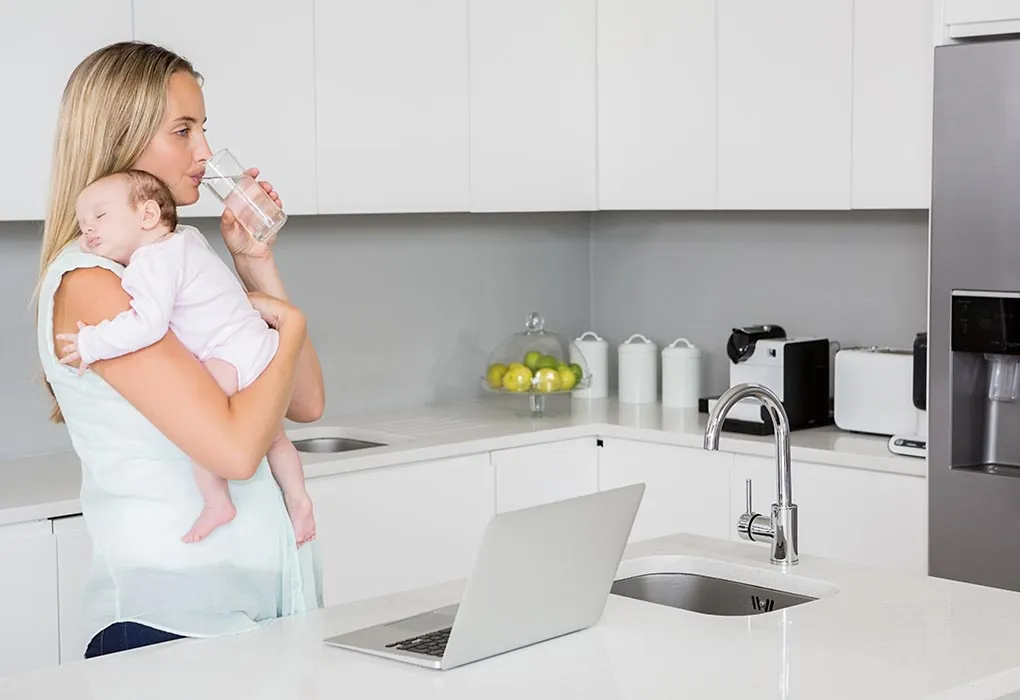
Drink plenty of fluids like water, fresh fruit juices, tender coconut water, whole milk, and fruit smoothies.
2. Eat Hydrating Fruits and Vegetables
You can also replenish your bodily fluids by eating hydrating fruits and vegetables like cucumber, lettuce, watermelon, tomato, zucchini, radish, spinach, cabbage, strawberries, pineapples, carrots, honeydew melon, muskmelon, oranges, peaches, raspberries, apricots, and blueberries. Eating hydrating fruits and vegetables will help you avoid toxic chemicals like bisphenol-A found in plastics that hold bottled water.
3. Try ORS
If you have vomiting or diarrhoea, visit a doctor. He/she will probably recommend some oral rehydration solution (ORS) to remedy your dehydration. Along with taking ORS, you should also eat hot, home-cooked meals made from fresh produce to avoid the risk of dehydration from food poisoning. Also, drink purified water from trusted sources to prevent water-borne diseases.
4. Limit Caffeine and Sugary Drinks
While a cup of coffee is fine, too much caffeine can have a diuretic effect, leading to fluid loss. Instead, opt for herbal teas, infused water, or coconut water for better hydration (11).
5. Listen to Your Body’s Thirst Cues
Thirst is your body’s natural way of signalling the need for more fluids. Don’t ignore it! Sip water throughout the day, especially before and after nursing sessions.
6. Take Regular Small Sips
Instead of waiting until you feel very thirsty, drink small amounts of water regularly throughout the day. Keeping a water bottle nearby while nursing makes it easier to stay hydrated consistently.
7. Monitor Urine Colour
A simple way to check hydration is to observe the colour of your urine. Pale yellow usually indicates proper hydration, while dark yellow suggests you need to drink more fluids.
When to Visit a Doctor
Not drinking enough water while breastfeeding results in medical issues. If you suffer from long-term health conditions and show symptoms of dehydration such as a headache, dizziness, fatigue or muscle cramps, rush to a doctor. You may need intravenous fluids to restore the fluids that you have lost immediately. Do not take medication, electrolyte solutions, or oral rehydration solutions without speaking to your doctor. If you have not been drinking enough water and yet feel dizzy, overtired, or have muscle cramps and cracked lips, it is a sign that you are dehydrated. Visit your physician immediately (8).
FAQs
1. Does breastfeeding lead to electrolyte imbalance?
Electrolytes are lost daily by people through urine and sweat. In nursing mothers, electrolytes are also lost through breast milk as they feed. Therefore, breastfeeding moms should be careful about replenishing their bodies with enough water so they stay charged and do not have any electrolyte imbalance.
2. Can you breastfeed when dehydrated?
Breast milk is around 88% water. If you are dehydrated, the breast milk supply is reduced, ultimately affecting the baby’s feed.
3. Can an increase in water intake boost breast milk production?
Adequate water intake is important for sufficient breast milk production. As per the medical expert from UT Southwestern Medical Center, the amount of liquid you have affects the quantity of breast milk production proportionally. Nursing moms can put up reminders to drink water at frequent intervals or drink one glass of water every time they breastfeed their baby.
4. Can the consumption of cold water impact the production of breast milk?
No, the cold water fluid consumption does NOT have any ill effect on breast milk production. There is nothing to worry about, and you can continue enjoying the cold beverages of your choice.
5. Does dehydration affect the taste of breast milk?
Yes, mild dehydration can slightly change the taste of breast milk, making it more concentrated and potentially less palatable for some babies. This can sometimes lead to fussiness during feeding, even if milk volume seems normal. Proper hydration helps maintain both milk quantity and taste.
Dehydration and nursing don’t mix well, as inadequate fluid intake can lead to fatigue, dizziness, reduced milk supply, and overall discomfort for both mother and baby. Adopting a healthy lifestyle where you eat nutritious foods, exercise regularly, and drink plenty of fluids will prevent dehydration. Try the suggestions in this article to avoid getting dehydrated while nursing your infant.
Also Read:
Detox while Lactating
How Much Water should Breastfeeding Drink
Benefits of Lemon Water while Breastfeeding
Was This Article Helpful?
Parenting is a huge responsibility, for you as a caregiver, but also for us as a parenting content platform. We understand that and take our responsibility of creating credible content seriously. FirstCry Parenting articles are written and published only after extensive research using factually sound references to deliver quality content that is accurate, validated by experts, and completely reliable. To understand how we go about creating content that is credible, read our editorial policy here.
2. University of Hawai – Infancy
4. Academy of Nutrition and Dietetics – Nursing Your Baby – What You Eat and Drink Matters
5. British Heart Foundation – Dehydration: signs, causes, and tips to drink more water
7. Cleveland Clinic – Dehydration
9. Nemours KidsHealth – Breastfeeding FAQs: Your Eating and Drinking Habits
10. March of Dimes – Keeping breast milk safe and healthy
11. Centers for Disease Control and Prevention – Maternal Diet and Breastfeeding
- Author
 About the Author
Aarohi Achwal
Related Articles
-

25 Funny Breastfeeding Memes That Every Mom Can Relate To!
-
Breastfeeding With Hypoplastic (Tubular) Breasts - Causes and Symptoms
-

Drinking Coffee or Caffeine While Breastfeeding: Is It Safe?
-
Alfalfa in Pregnancy and During Breastfeeding
-
Is Using Birth Control during Breastfeeding Safe?
-
10 Side Effects of Using a Breast Pump


.svg)