

Diaper Blowouts – Why It Happens and How to Prevent It
Understand why diaper blowouts happen and how simple changes can help prevent leaks and keep your baby dry and happy.




Image Credit : AI Generated Image
If you’ve ever opened your baby’s diaper and thought, “How did it get all the way up there?” welcome to the messy world of diaper blowouts. Almost every parent faces this surprise at some point, whether at home, in the car seat, or five minutes before leaving the house. It’s the kind of surprise that turns a normal day into an instant outfit change for everyone involved.
But blowouts aren’t just something you have to accept as part of the job. While they can feel unpredictable (and a little dramatic), there are real reasons why they happen. And yes, there are ways to prevent them. Keep reading to learn what causes diaper blowouts and how you can prevent them before they start.
What Is a Diaper Blowout?
A diaper blowout is when your baby’s poop escapes the diaper and spreads beyond where it is supposed to stay. Instead of being neatly contained, it leaks out through the back, sides, or leg openings, often reaching clothes, blankets, or even you. They are messy, inconvenient, and very common, especially in young babies.
What Causes Diaper Blowouts?
If you are tired of asking yourself why do diaper blowouts happen, you are in the right place. The answer is simpler than it seems, and there are ways to stay ahead of the mess. Let us start by looking at what actually causes diaper blowouts.
1. The Diaper Is the Wrong Size
A diaper that is too small fills up quickly and cannot handle pressure, while a diaper that is too big leaves gaps. Either way, poop finds a way out.
2. Loose Leg or Waist Fit
Even the right size can fail if it is not fastened correctly. Gaps around the legs or a loose waistband give poop an easy escape route.
3. Baby’s Position and Movement
Blowouts often happen when babies are sitting, lying flat, or being held in a curled position. Pressure from these positions pushes waste upward and out of the diaper, especially during feeds or naps.
4. Runny or Newborn Poop
Newborn and breastfed babies often have softer, runnier stools (1). This type of poop spreads quickly and can leak past a diaper before you realise what is happening.
5. Waiting Too Long Between Changes
A diaper that is already full has less room to contain anything new. When poop is added to a heavy diaper, overflow becomes much more likely.
How to Prevent Diaper Blowouts?
While you cannot prevent every mess, the right habits can reduce how often they occur. Here are a few ways to stop diaper blowouts.
1. Choose the Right Diaper Size
A diaper that fits well can handle movement and pressure without leaking. If the diaper feels too tight or leaves gaps, it is likely time to size up or try a different fit.
2. Check the Fit Every Time
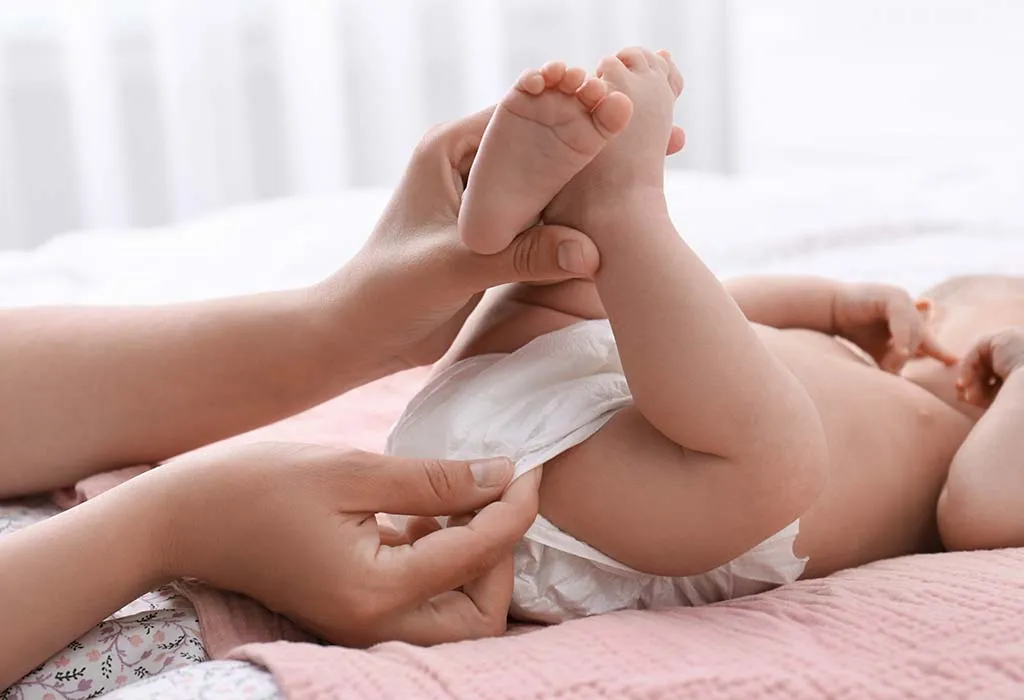
Before closing the diaper, make sure the waistband sits snugly, and the leg cuffs are pulled out (2). These small adjustments help keep everything contained where it belongs.
3. Change Diapers More Often
A full diaper has less room to do its job. Frequent changes reduce pressure and lower the chance of overflow, especially during feeds or long naps (3).
4. Dress Your Baby for Easy Movement
Tight clothing can push waste upward and out of the diaper. Looser outfits give the diaper space to work properly and reduce pressure during movement.
How to Handle Newborn Diaper Blowouts?
Now that we’ve covered the causes and how to prevent diaper blowouts, let’s focus on what to do when one actually happens. Because no matter how prepared you are, some messes still sneak through. Here’s a simple step-by-step way to manage it (1) (2) (4):
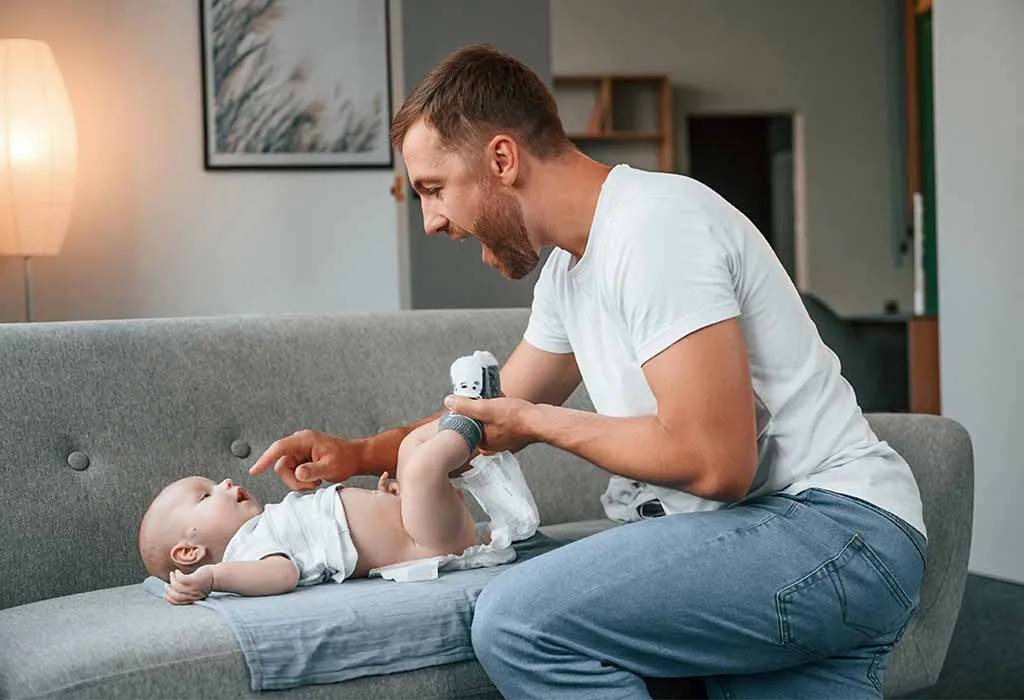
Prepare Your Supplies
Have these ready:
- Clean diapers
- Baby wipes or a soft washcloth
- Extra clothes and a towel
- Diaper cream (if needed)
Step-by-Step Cleanup
- Place your baby on a changing table or flat surface where you can clean up without spreading the mess further.
- Pull clothes down instead of over your baby’s head whenever possible. This helps avoid smearing poop onto their face or hair.
- Newborn skin is sensitive, so clean thoroughly without rubbing. Use soft wipes and take your time to avoid irritation.
- Always wipe from front to back to reduce the risk of infection, especially for baby girls (3).
- After cleaning, look for redness or rashes. Blowouts often sit against the skin longer than usual and may need extra care.
- A thin layer of diaper cream can protect your baby’s skin from moisture and irritation after a messy change (3).
- Make sure the diaper isn’t too small or too loose. Pull out the leg ruffles so they sit outside the thighs. Consider sizing up if blowouts happen often.
FAQs
1. How often should I change my baby’s diaper to prevent blowouts?
Frequent diaper changes help prevent overflow. It’s a good idea to check and change your baby every 2-3 hours, and always soon after a bowel movement.
2. Why do blowouts happen more at night?
Blowouts happen more often at night because babies usually go longer without a diaper change. As the diaper becomes heavy with urine, it has less room to absorb a bowel movement. Lying flat for hours also allows poop to spread more easily.
3. Is it normal for babies to have diaper blowouts every day?
Most of the time, this happens because the diaper is the wrong size, doesn’t fit well, or your baby has loose poops (which is common in newborns). If your baby seems uncomfortable or has very runny poop, it’s best to talk to your paediatrician.
Diaper blowouts might not be the most glamorous part of parenting, but they’re definitely one of those “you’re officially a parent now” moments. And somehow, even the messiest situations turn into stories we laugh about later. Do you have a funny diaper blowout to share? Tell us in the comments below; we’d love to hear it!
Also Read:
Baby Diaper Leaks
Diaper Size Chart By Weight
Using Diapers Safely for Newborns and Babies
How Many Diapers Does a Baby Needs Per Day?
Was This Article Helpful?
Parenting is a huge responsibility, for you as a caregiver, but also for us as a parenting content platform. We understand that and take our responsibility of creating credible content seriously. FirstCry Parenting articles are written and published only after extensive research using factually sound references to deliver quality content that is accurate, validated by experts, and completely reliable. To understand how we go about creating content that is credible, read our editorial policy here.
- Author
 About the Author
Sapna Tyagi
Related Articles
-

Why My Child Keeps So Much Importance in My Life
-
Cloth Diapers Versus Disposable Diapers - Which One You Need to Choose?
-
A Sunny Start: Baby Sunscreen Tips Every Parent Should Know
-
5 Facts About Your Baby's Skin We Bet You Didn't Know Before
-
Baby Shoe Bronzing - Tips and Process
-
14 Tips for Baby Hair Growth






.svg)