Chamomile Tea for Babies – Is It Safe?
A gentle guide to chamomile tea for babies, covering safety, benefits, and when to avoid it.





Medically Reviewed By
Dr. Arti Sharma
(Paediatrician)

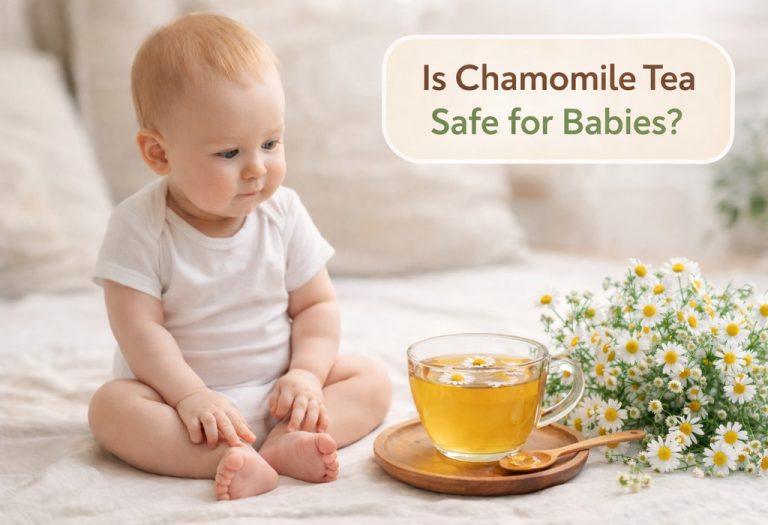
Image Credit: AI Generated Image
Chamomile tea is one of the most popular teas for calming and helping you sleep. If you love to steep one cup Chamomile tea is one of the most popular teas for calming and helping you sleep. If you love to steep one cup for yourself, you might wonder, Is chamomile tea safe for babies? or Does it have the same effect on babies? While chamomile tea for babies is considered safe, it isn’t recommended for all babies. Yes, although this tea is full of rich minerals and antioxidants, infusing it for your baby who is delicate and still growing without proper knowledge may have dangerous effects. To learn whether tea made out of chamomile for babies is safe or not, read the following article.
What Is Chamomile Tea?
Chamomile is an herb derived from a flower that resembles a daisy, belonging to the Asteraceae family. Made from dried chamomile flowers, chamomile tea is popularly counted among healthy teas known to help soothe nerves, aiding sleep and settling digestive issues. The use of chamomile as medicine is so ancient that it can be traced back to the pharaohs of the Egyptian empire.
Can Babies Have Chamomile Tea?
Chamomile is a herbal ingredient. That means while it works well for adults, it is not so sure for babies. Before experimenting with any herb or herbal ingredient, consulting a paediatrician and getting a go-ahead on whether a certain ingredient is safe or not is always wise.
Most experts are of the opinion against introducing chamomile to babies under 12 months old. That means it may be given to babies 12 months old and above. Since it is a herb, chamomile could carry the risk of infant botulism due to the possible, occasional presence of botulism spores in chamomile, more often in loose-leaf chamomile tea (1). Thus, opting for properly packaged chamomile may be better when purchasing for young toddlers. The occurrence of infant botulism may be rare from chamomile tea; however, it is still probable and potentially fatal for babies under the age of 1 year.
Regarding its safety, there is no data on chamomile safety in infants, although rare sensitisation may happen (2).




It is important to understand that chamomile tea is not recommended for infants and babies under the age of 6 months. Reputed health organisations, including the WHO and the American Academy of Pediatrics, suggest exclusive breastfeeding for the first six months (3) (4).
Since chamomile tea contains water, and babies under 12 months old do not have developed kidney function to support water intake, it is highly recommended to avoid giving chamomile tea to babies before 1 year of age. You may introduce it after they reach 12 months, only after a consultation with your paediatrician.
When Can You Introduce Chamomile Tea to Your Baby?
Chamomile tea is full of rich minerals and antioxidants that are great for our bodies, but when it comes to its use for babies, it is very important to learn when you can safely introduce it.
0 to 12 months old:
Do not serve chamomile tea unless your paediatrician recommends it. There is no scientific evidence on its safety for children under 1 year old.
12 to 24 months old:
Only after a paediatrician’s approval, you may introduce lukewarm chamomile tea to toddlers and children in very moderate, safe amounts, not more than 4 ounces a day. To avoid the risk of infant botulism, opt for properly packed and pre-bagged chamomile instead of loose-leaf tea. It can help combat colic in babies (5).
Nutritional Information of Chamomile Tea
Chamomile tea is a beloved caffeine-free alternative. That said, when chamomile is steeped, the tea simply doesn’t contain enough of these nutrients in typical serving sizes.
- Nutritional data show very low levels of vitamin A, folate, calcium, magnesium, and other micronutrients per 100 g of brewed chamomile tea
- Chamomile contains antioxidants and plant compounds like flavonoids (e.g., apigenin), which are associated with general antioxidant and mild anti-inflammatory effects in laboratory studies.
Benefits of Chamomile Tea for Children
Chamomile tea has immense benefits for both adults and children. Here are a few benefits of chamomile tea for older babies, toddlers, and children:
1. May Treat Colic
Chamomile tea may aid digestion and soothe the stomach, helping combat colic in a colicky or fussy baby. Colic is believed to be a type of discomfort in young children that causes fussiness and frequent crying. According to an article published in the Pediatrics in Review, only two clinical studies have investigated the effectiveness of chamomile in treating colic in children, and both trials combined chamomile with additional herbs (6).
Chamomile tea with other herbs may be studied in colic, but evidence for chamomile alone is limited.
4. Aids Sleep
Chamomile tea is a natural sedative that relaxes nerves and helps calm a person. Apart from soothing effects, chamomile is also known to reduce anxiety and induce sleep due to a common flavonoid called apigenin. However, evidence in children or infants is very limited, and major reviews found either mixed or insufficient proof for a strong sleep-inducing effect (7).
2. Improves Digestion
Chamomile tea is considered a great digestive aid, known to relieve infrequent bowel movements in children. Young babies are known to have gas, constipation, and other digestive issues that can cause discomfort in your little one.
Note: Although chamomile tea may have mild calming effects due to plant compounds, this is not solidly established in infants. Any herbal remedy in infants or children should only be used after consulting a paediatrician or qualified healthcare provider to evaluate safety and need, particularly because dosing, allergy risks, botulism contamination, and dehydration concerns exist.
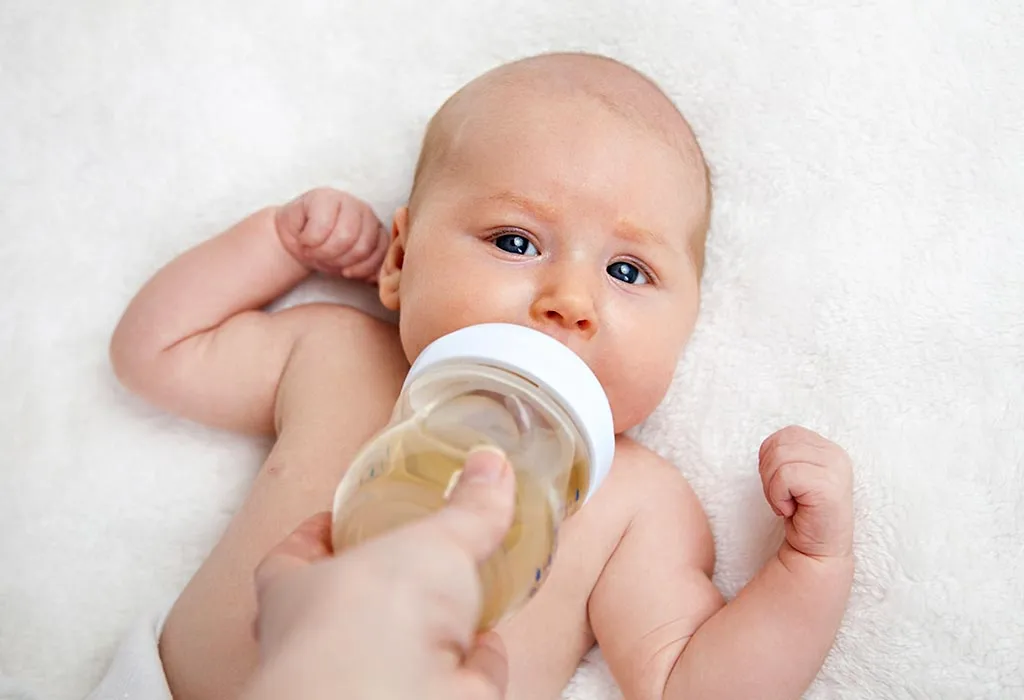
How Much Chamomile Tea Can You Give to Your Baby?
Some research suggests that chamomile tea might be helpful in alleviating infant colic and diarrhoea (8).
However, it’s important to note that this research focused on a combination tea rather than solely on chamomile. While small quantities (around one or two ounces) of chamomile tea are generally considered safe for children, chamomile tea does not have a universally accepted pediatric guideline as a standard part of an infant’s diet. Thus, it’s advisable to check with your paediatrician for guidance on the appropriate amount of chamomile tea to offer your baby.
How to Buy the Best Chamomile Tea for Your Young Child
It is important to remember that buying the right kind of chamomile tea for your older baby is as important as the dosage or preparation technique. Here are a few tips to help you buy the best chamomile tea for older babies or toddlers:
- Buy pure chamomile tea without any added ingredients or flavours.
- Buy chamomile tea bags instead of loose chamomile leaves; they might be contaminated with Clostridium botulinum bacteria.
- Buy organically produced chamomile tea without added caffeine.
Are There Any Risks or Side Effects of Chamomile Tea on a Young Child?
Side effects of chamomile are uncommon in both children and adults, such as nausea, lethargy, dizziness, and diarrhoea. Nonetheless, there is a high risk of your baby developing a reaction, especially if it’s your first time giving them the chamomile tea.
1. Serious Health Issues
A recent study observed that about 9% of U.S. infants were given botanical teas and supplements, including chamomile, the most common reasons being treatment for fussiness and colic, and aid in digestion. Some of the infants were only one month old. Several children developed infections and seizures from herbal teas and remedies, mercury/lead poisoning from traditional remedies, and damage to the liver from dietary supplements (9).
2. Allergies
Administering botanical remedies to young children can cause allergic reactions. Chamomile can cross-react with other relatives in the chrysanthemum family (9). Those allergic to plants, such as ragweed, chrysanthemums, marigolds, or daisies, may show allergic reaction to chamomile. Products containing chamomile may even cause irritation in the eyes.
3. Digestive Issues
In limited doses, chamomile tea eases gas, prevents and combats constipation, and improves digestion. When consumed in more than appropriate doses, it can cause diarrhoea and tummy aches.
4. Skin Problems
Possible reactions to chamomile tea in infants and young babies can include lethargy, nausea, swelling of the face, and itchiness around the lips and tongue.
5. Breathing Trouble
Within limits, chamomile tea can ease a sore throat due to its anti-inflammatory properties. However, in some children, a severe reaction can lead to an anaphylactic shock, unconsciousness, or breathing difficulties (7).
6. Reaction to Medicines
There is a good chance of chamomile reacting with some medications, but not all. Thus, it’s essential to consult your baby’s paediatrician prior to introducing chamomile, particularly if your baby is taking any medications.
Thus, it is highly recommended to consult your child’s paediatrician about the safety of chamomile for babies before including it in their diet.
Get emergency help if your child shows an allergic reaction.
How to Make and Serve Chamomile Tea for Babies
Here are a few tips on how to make chamomile tea for your baby:
- Boil some water in a kettle or saucepan.
- In the boiled water, steep a chamomile tea bag for about 10 minutes.
- Let the steeped brew cool to room temperature.
- Serve this tea to your older baby in a sippy cup or spoon-feed them.
FAQs
1. Is chamomile tea safe for babies?
There is limited evidence regarding chamomile tea’s safety for infants, even though the United States government categorises it as “generally recognised as safe” for human consumption. It is important to mention that a study indicated certain sources of chamomile may contain botulism spores, especially in dried, loose-leaf varieties, so when providing it to young toddlers, it is crucial to purchase bagged chamomile or commercial preparations. Although it is quite rare, it can be fatal.
2. How many times can you give chamomile tea to your baby?
How much chamomile tea for a newborn is safe should only be determined by a paediatrician.
3. Can chamomile cause choking issues in babies?
No, chamomile tea does not pose a choking hazard in children. Although one could choke on food or liquid, in general.
4. Can you bathe your baby with chamomile tea?
A chamomile bath for a baby is usually not recommended, as it may cause skin irritation or allergic reactions. Please consult a doctor.
5. Are chamomile tea and gripe water the same?
No, chamomile tea and gripe water are not the same, although they both are herbal concoctions. In fact, chamomile is a common ingredient in gripe water, which is a mixture of water, ginger, fenner, chamomile, sweetener, etc. Chamomile tea is a steeped beverage, whereas gripe water is a solution of various ingredients. Both are locally known to be used for colic in babies.
6. Is chamomile tea a suitable substitute for breast milk or formula for infants?
Absolutely no. Chamomile is a herbal beverage with very low nutrients and a good profile for allergies and irritation. It does not provide the necessary nutrients to the developing child. Thus, it is not recommended to substitute chamomile tea with breast milk or formula for babies. Infants under 6 months old should be exclusively fed on breast milk or formula (in case of medical exceptions).
7. Can you add any flavours to your child’s chamomile tea?
No, adding flavours to chamomile tea brewed for children is not recommended.
While chamomile tea is a great caffeine-free potion for adults, for babies, it’s tricky. Just make sure your baby is at least 6 months of age before you offer them any herbal concoction. Most importantly, not all herbal teas are safe for babies, and different herbal teas have different reactions. Plus, chamomile tea may cause allergies in some babies or interact with some medications. Thus, before you introduce chamomile tea or any herbal drink to your child, get a clear confirmation from your paediatrician.
If your doctor gives a go-ahead, start with a small quantity and check for their response to the tea as you would with any other food.
Also Read:
Gripe water for Babies
Rice Water for Infants
Ajwain and Ajwain Water for Babies
Is It Safe to Give Bottled Water to Babies?
Was This Article Helpful?
Parenting is a huge responsibility, for you as a caregiver, but also for us as a parenting content platform. We understand that and take our responsibility of creating credible content seriously. FirstCry Parenting articles are written and published only after extensive research using factually sound references to deliver quality content that is accurate, validated by experts, and completely reliable. To understand how we go about creating content that is credible, read our editorial policy here.
2. National Library of Medicine – Chamomile
3. WHO – Exclusive breastfeeding for optimal growth, development and health of infants
4. American Academy of Pediatrics – Breastfeeding and the Use of Human Milk
5. The Journal of Pediatrics – Efficacy of herbal tea preparation in infantile colic
6. American Academy of Pediatrics – Complementary, Holistic, and Integrative Medicine: Chamomile
8. National Library of Medicine – Chamomile: A herbal medicine of the past with bright future
9. National Capital Poison Control – Don’t Give Herbal Supplements to Infants
- Author
- Expert Reviewer
 About the Author
Mrunal

Related Articles
-

Food Chart for 9 Month Old Baby with Complete Schedule and Guide
-
Best Vitamins and Minerals for Kids - Benefits, Sources, & Daily Needs
-
Diet Plan for 7 Month 4 Week Old Baby
-
Giving Jaggery (Gur) to Babies - When, Benefits and Risks
-
7 Months Old Baby Food Chart & Recipes
-
Biscuits for Babies - Which Are Good & What to Avoid?




.svg)